 Blaine Siding
 Decks Built for Dakota Creek, Not a Generic Coastline
Dakota Creek sits close enough to the water that every deck built here is doing a different job than a deck built twenty miles inland. Salt-laden air off the water accelerates corrosion on fasteners and hardware. Whatcom County's long wet season keeps wood surfaces damp for weeks at a stretch. And the shade and moisture that come with the tree cover common in this area mean moss and algae get a serious head start on any deck that isn't built to shed water fast. None of that makes deck building here impossible — it just means the material choices, the framing details, and the fastener spec all need to account for conditions a generic "deck contractor" checklist doesn't cover.
We work in this specific stretch of Blaine regularly, which matters more than it sounds like. A crew that only shows up once might build a technically sound deck on paper that still struggles here in year three, because the details that actually matter in this climate aren't the ones that show up in a standard spec sheet.
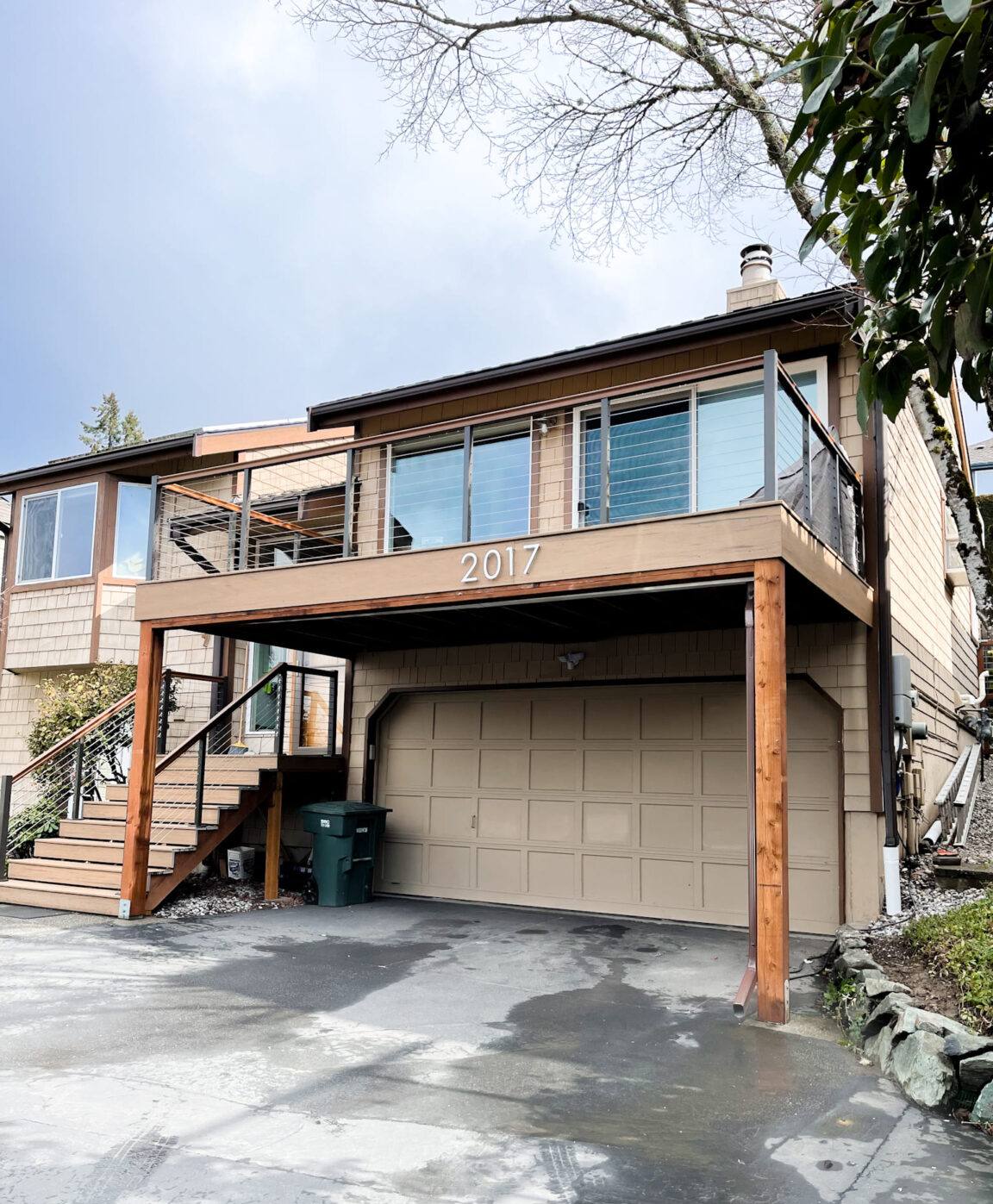
What a Dakota Creek Deck Is Actually Up Against
Salt Air and Metal Hardware
Airborne salt doesn't need direct ocean spray to do damage — a persistent marine breeze is enough to slowly corrode standard fasteners, joist hangers, and structural screws over a period of years. Corrosion at these connection points is one of the more serious failure modes for a deck, because it's invisible from above until the hardware has already lost a meaningful amount of strength.
Driving Rain and Standing Moisture
Rain here doesn't just fall straight down — wind-driven rain gets pushed sideways into ledger connections, under railing posts, and into any gap where two pieces of material meet. Combined with our long stretches of overcast, low-drying-potential weather, any spot on a deck that traps water instead of shedding it stays wet far longer than it would in a drier climate.
Moss, Algae, and Shade
A long moss season is one of the most visible ways this climate shows up on decks. Moss and algae aren't just cosmetic — they hold moisture against the decking surface, make boards slick and unsafe underfoot, and on wood decking can contribute to surface breakdown over time if left unaddressed.
Decking Material: What Actually Holds Up Here
There's no single "best" decking material for every project — the right choice depends on budget, how much sun and shade the deck gets, and how much maintenance the homeowner actually wants to do. Here's how the common options compare specifically under Dakota Creek's conditions.
| Material | Moisture & Salt-Air Behavior | Moss/Algae Resistance | Maintenance Load |
|---|---|---|---|
| Pressure-treated lumber | Handles moisture well when properly sealed and maintained; hardware corrosion is the main risk | Low — needs regular cleaning and periodic sealing to resist buildup | Higher — annual cleaning and resealing recommended |
| Cedar | Naturally moisture- and rot-resistant, but softer surface wears with driving rain over time | Moderate — still benefits from periodic cleaning | Moderate to higher |
| Composite decking | Very stable in wet, salt-air conditions; doesn't absorb moisture the way wood does | Better — smoother/capped boards shed algae growth more easily than raw wood | Lower — occasional washing, no sealing or staining |
| PVC decking | Fully moisture-resistant, unaffected by salt air | Best of the common options — least surface texture for moss to grip | Lowest — periodic washing only |
We're straightforward with homeowners about the trade-off: composite and PVC cost more up front but ask much less of you over the life of the deck in this climate. Wood costs less to install but only performs as well as the maintenance schedule behind it — skip a season of sealing here and a wood deck falls behind faster than it would somewhere drier.
Framing and Substructure: Where the Real Failures Start
Almost every deck problem we get called out to fix in this area started below the visible decking boards, not on top of them. A deck can have brand-new composite boards on top and still be failing structurally underneath if the framing wasn't built for this climate. The substructure needs to actually shed water, not just support weight.
What Correct Framing Looks Like Here
- Joists and beams rated for exterior exposure, not interior-grade lumber pressed into outdoor service
- Proper spacing and slope so water moves off the frame instead of pooling on top of joists
- Blocking and bridging sized to the actual span, not the minimum the budget allows
- Post bases that keep wood off standing water and off direct soil contact
- Ventilation gaps left under low decks so the substructure can actually dry between rain events
A deck built on a dry, sunny day can look identical whether it was framed correctly or not. The difference only shows up years later, which is exactly why it has to be done right the first time.
Ledger Attachment and Flashing: The Single Most Important Detail
The ledger board — where the deck attaches to the house — is the single highest-risk point on any deck in a climate like this one. Wind-driven rain gets pushed directly into that seam, and if the flashing detail is wrong, water works its way behind the ledger and into the house's wall framing where nobody sees it until there's rot or a soft spot in the siding. This is not a place to cut corners or use a generic flashing approach borrowed from a drier region.
Correct ledger flashing means a proper flashing membrane integrated with the house's existing water-resistive barrier, correct lap sequencing so water sheds outward and downward at every layer, and structural fasteners rated for the load and spaced to code — not just enough screws to make it feel solid. We treat this connection as the most important few feet of the entire project, because it's the one spot where a mistake doesn't just shorten the deck's life — it can damage the house behind it.
Our Process for a Dakota Creek Deck Project
1. Site Walk and Honest Assessment
We look at sun exposure, drainage, existing grade, and how exposed the site is to prevailing wind and rain before recommending a material or design. A deck tucked under tree cover needs a different plan than one facing open water.
2. Material and Design Conversation
We walk through the trade-offs above in plain terms — what each material costs up front versus what it asks of you in upkeep — so the decision fits the budget and the amount of maintenance you actually want to take on.
3. Framing Built for the Climate, Not the Minimum Code Pass
We build the substructure to shed water and resist corrosion, using hardware rated for coastal exposure rather than standard interior-grade fasteners.
4. Ledger and Flashing Done Right, Every Time
This connection gets the same careful attention on every project, regardless of budget, because it's the point where a shortcut causes the most expensive damage.
5. Final Walkthrough
We go over drainage, expected maintenance, and what to watch for in the first year so there are no surprises once the deck sees its first full wet season.
Living With a Deck in This Climate: What Upkeep Actually Looks Like
Whatever material you choose, a Dakota Creek deck needs a maintenance rhythm that accounts for the moss season and the amount of rain the region sees. This isn't about babying the deck — it's a short seasonal routine that protects the investment.
- Clear leaves and debris out of gaps between boards before they trap moisture
- Rinse or gently clean surfaces where moss and algae are starting to establish, before they get slick
- Check that drainage paths under and around the deck are still clear of buildup
- Inspect visible fasteners and hardware yearly for early signs of corrosion or loosening
- For wood decking, keep up with sealing on the schedule the product calls for — don't let a season slip
- Look at the ledger and house connection point once a year for any staining or soft spots nearby
Why Hiring a Crew That Already Works This Area Matters
A deck built to a generic national spec will hold up fine in a lot of the country. Dakota Creek's combination of salt air, driving rain, and a long moss season is a narrower, more demanding set of conditions than that, and it rewards experience specific to this part of Whatcom County. Knowing which fastener grade actually holds up here, how much slope a deck really needs to shed water in this rainfall pattern, and where moss tends to establish first on a shaded lot isn't something you get from a manual — it's something you get from building and maintaining decks in this exact environment over time.
If you're planning a new deck, replacing an aging one, or want a second opinion on a deck that's already showing moss, soft spots, or corroded hardware, we're glad to take a look. Reach out for a free, no-pressure estimate using the form below — we'll walk the site, answer your questions honestly, and give you a straightforward plan for what your deck actually needs.