 Blaine Siding
 Siding Repair in Dakota Creek: Why Local Conditions Change the Job
Homes in the Dakota Creek area of Blaine sit close to the water, tucked into a corner of Whatcom County where marine air, wind-driven rain, and heavy shade combine to put more stress on exterior siding than most inland neighborhoods ever see. A siding repair here isn't the same job as a repair in a dry, sun-exposed subdivision twenty miles inland. The moisture load is higher, the exposure to salt-laden air is constant, and the growing season for moss and algae is long enough that a north-facing wall can stay damp for weeks at a stretch during the fall and winter.
That combination doesn't just mean more frequent repairs — it means repairs have to be done differently. A patch that would hold up fine in a drier part of Washington can fail within a season near Dakota Creek if it doesn't account for how water actually moves across a wall in this climate. This page walks through what local homes need, what a correct repair involves, and how we approach the work when we're called out to a Dakota Creek property.
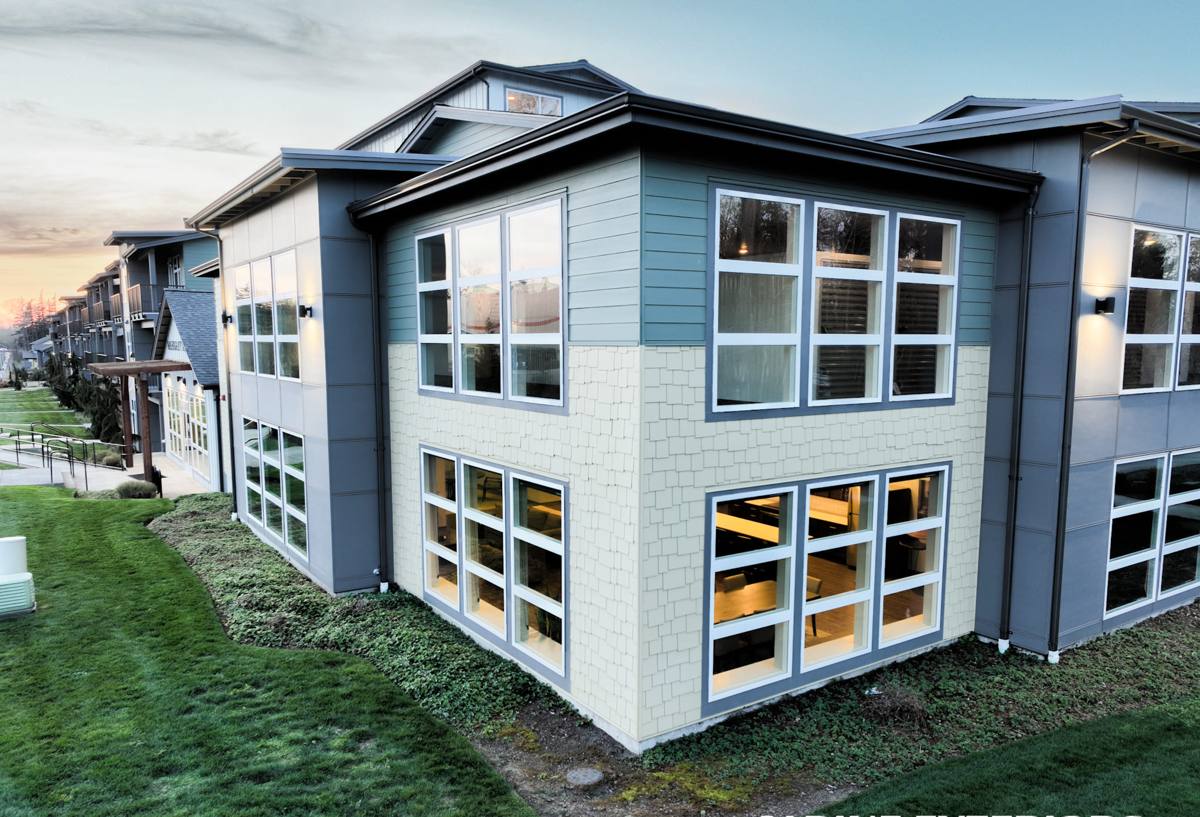
What Blaine's Marine Climate Does to Siding
Salt Air and Corrosion
Proximity to saltwater means a fine, near-constant film of salt-laden moisture settles on exterior surfaces, including siding, trim, and — critically — the fasteners and flashing holding everything together. Salt accelerates corrosion on exposed steel nail heads, cheap flashing, and unprotected metal trim pieces. On siding materials that rely on paint film alone for protection, that corrosion often shows up first as rust streaking below fastener heads or trim joints, long before the siding panel itself shows visible damage.
Driving Rain and Wind-Driven Moisture
Blaine gets weather that comes in sideways as often as it comes straight down. Wind-driven rain doesn't behave like a gentle vertical rainfall — it gets pushed up under laps, into seams, and behind trim that would stay dry in calmer conditions. Siding systems and flashing details that are only designed for straight-down rain tend to underperform here, which is why repair work in this area has to pay close attention to lap geometry, caulking placement, and flashing overlap, not just whether the surface material looks intact.
Moss, Algae, and Extended Shade Season
Between tree cover, cloud cover, and the sheer number of damp months on the calendar, north- and east-facing walls near Dakota Creek often stay wet longer than they dry out. That's ideal growing conditions for moss and algae, which hold moisture directly against the siding surface. Over time this traps water at seams and fastener penetrations, softens caulking, and — on wood-based products — creates the exact conditions that lead to rot.
Common Siding Repair Issues We See in This Area
Not every repair call is the same, but certain patterns show up again and again on homes exposed to this kind of coastal, shaded, high-moisture environment. The table below summarizes what we typically find, what causes it, and the early warning signs homeowners can look for before it becomes a bigger job.
| Issue | Typical Cause | Early Warning Signs |
|---|---|---|
| Soft or crumbling siding at the bottom courses | Splash-back moisture, poor grade slope, or failed flashing at the water table | Paint bubbling, a spongy feel when pressed, visible swelling |
| Rust streaking near seams or trim | Salt-accelerated corrosion of exposed fasteners or metal flashing | Orange-brown streaks below nail heads or trim joints |
| Moss or algae buildup on shaded walls | Extended damp periods, limited sun exposure, tree cover | Green or black discoloration, especially on north-facing walls |
| Cracked or gapped caulking at joints and penetrations | UV and temperature cycling combined with constant moisture exposure | Visible gaps at trim boards, window returns, or utility penetrations |
| Warping or buckling panels | Moisture intrusion behind the siding, often from a failed water-resistive barrier | Wavy sections that catch light differently than surrounding siding |
What a Correct Siding Repair Actually Involves
Diagnosing the Real Problem, Not Just the Visible Damage
The most common mistake in siding repair — anywhere, but especially in a wet climate like this one — is treating the visible symptom instead of the underlying cause. Replacing a stained or soft board without finding out why it got wet in the first place just buys a homeowner a few more years before the same spot fails again. A correct repair starts with figuring out how water is getting in: a flashing gap, a caulking failure, a grading issue at the foundation, or a water-resistive barrier that's been compromised behind the siding.
Matching Material and Finish
A visible patch job — mismatched panel profile, a slightly different color, or exposed fasteners where the rest of the wall has none — doesn't just look bad, it often performs worse too, because mismatched materials expand, contract, and absorb moisture differently. Matching the existing reveal, profile, and finish as closely as possible is part of doing the repair correctly, not just an aesthetic nicety.
Flashing and Water Management First
Given how much of the damage we see near Dakota Creek traces back to water getting behind the siding rather than the siding material failing on its own, any repair we do addresses flashing, kick-out details, and lap sequencing before we worry about the cosmetic finish. Siding is the last layer of a water management system, not the whole system — a repair that ignores that is a repair that won't last.
Repair vs. Replacement: How We Decide
Not every damaged section needs a full re-side, and not every problem can be solved with a patch. We look at a few practical factors to figure out which approach actually makes sense for a given home.
| Factor | Favors Repair | Favors Replacement |
|---|---|---|
| Extent of damage | Isolated to one or two wall sections | Widespread across multiple elevations |
| Underlying water barrier | Intact, moisture is a localized entry point | Compromised broadly, found in more than one spot |
| Age and condition of existing siding | Newer material still within its useful service life | Original siding is near or past its expected lifespan |
| Material match availability | Existing profile and finish can be closely matched | Discontinued product or significant color mismatch |
| Prior repair history | First repair on this wall | Same wall has needed repeated repairs |
When damage is limited and the rest of the siding is sound, a targeted repair is the honest, cost-effective answer. When we find the same moisture problems repeating across a home, or the existing material is failing on its own terms, we'll say so directly rather than patching something that's going to keep coming back.
Our Process for Dakota Creek Siding Repairs
- On-site inspection of the damaged area and a check of adjacent walls, since coastal moisture damage rarely stays isolated to just the spot a homeowner noticed
- Investigation of the cause — flashing, grading, caulking, or a barrier failure — before any material is removed
- A clear explanation of what we found, what it will take to fix it correctly, and an honest repair-versus-replace recommendation
- Removal of damaged material back to sound substrate, checking the water-resistive barrier and framing underneath for hidden moisture damage
- Correction of the underlying water management issue — flashing, sealant, or drainage — so the repair addresses the cause, not just the symptom
- Installation of matching siding material, detailed to shed water the way the original wall was designed to
- A final walkthrough so the homeowner understands what was repaired and why
Why We Repair and Install Only James Hardie Fiber Cement
We stopped installing vinyl, LP SmartSide, primed wood, and other fiber cement brands because, in a climate like Blaine's, the trade-offs weren't worth it. Vinyl can warp under heat and gets brittle in cold, and its seams are a constant moisture risk in wind-driven rain. Wood-based products, even engineered ones, are more vulnerable to the rot that this area's extended damp season encourages once moisture finds a way in. James Hardie fiber cement is non-combustible, dimensionally stable, and doesn't feed the kind of moisture-driven decay that drives most of the repair calls we get near the water.
Hardie's ColorPlus factory finish also matters for repair work specifically: because the color is baked on at the factory rather than field-applied, a matched replacement board holds its color and finish the same way the rest of the wall does, instead of fading or weathering at a different rate. That's a real advantage when the goal is a repair that blends in and lasts, not one that stands out as an obvious patch in five years.
What to Look for When Hiring a Siding Repair Crew in Blaine
Not every contractor who can hang a siding panel understands how to diagnose and repair moisture problems in a coastal environment. Before hiring for a repair near Dakota Creek, it's worth confirming a few things:
- They inspect for the underlying cause of the damage, not just the visible symptom
- They check flashing, caulking, and the water-resistive barrier as part of the repair, not as an afterthought
- They can explain, in plain terms, why the damage happened in this specific spot
- They carry proper licensing and insurance for exterior work in Washington
- They have direct experience working on homes in marine or high-moisture environments, not just general siding experience
- They give a clear, honest answer on repair versus replacement rather than defaulting to the bigger job
Maintaining Siding After a Repair in a Coastal Climate
A correct repair buys years of performance, but coastal conditions mean siding near Dakota Creek benefits from periodic attention rather than a "fix it and forget it" approach. A simple annual check — looking at caulking joints, watching for new moss growth on shaded walls, and confirming gutters and downspouts are directing water away from the foundation — catches small issues while they're still small. Homes with heavy tree cover or limited sun exposure on one side should pay particular attention to that elevation, since it will always be the first place moisture-related problems show up again.
If you're seeing soft spots, staining, moss buildup, or gaps in your siding on a Dakota Creek property, we're happy to take a look and give you a straight answer on what's going on and what it will take to fix it right. Reach out for a free, no-pressure estimate using the form below.