 Blaine Siding
 Decks in Birch Bay Take a Different Kind of Beating
Birch Bay sits right on the water, and that changes what a deck has to survive. It's not just rain — it's salt-laden air moving off the bay, driving rain that hits at an angle instead of falling straight down, and long stretches of shade and dampness that keep moss and algae growing for most of the year. A deck built the same way you'd build one inland won't hold up the same way here. We see it constantly: fasteners rusting out years before the wood around them fails, ledger boards holding moisture against the house long after a normal rain has passed, and railings that look fine from a distance but are soft or corroding at the connection points.
Repairing a deck correctly in Birch Bay means understanding those specific stressors, not just patching whatever looks bad. A board replacement that ignores the moisture source underneath it is a repair that fails again in two or three years.
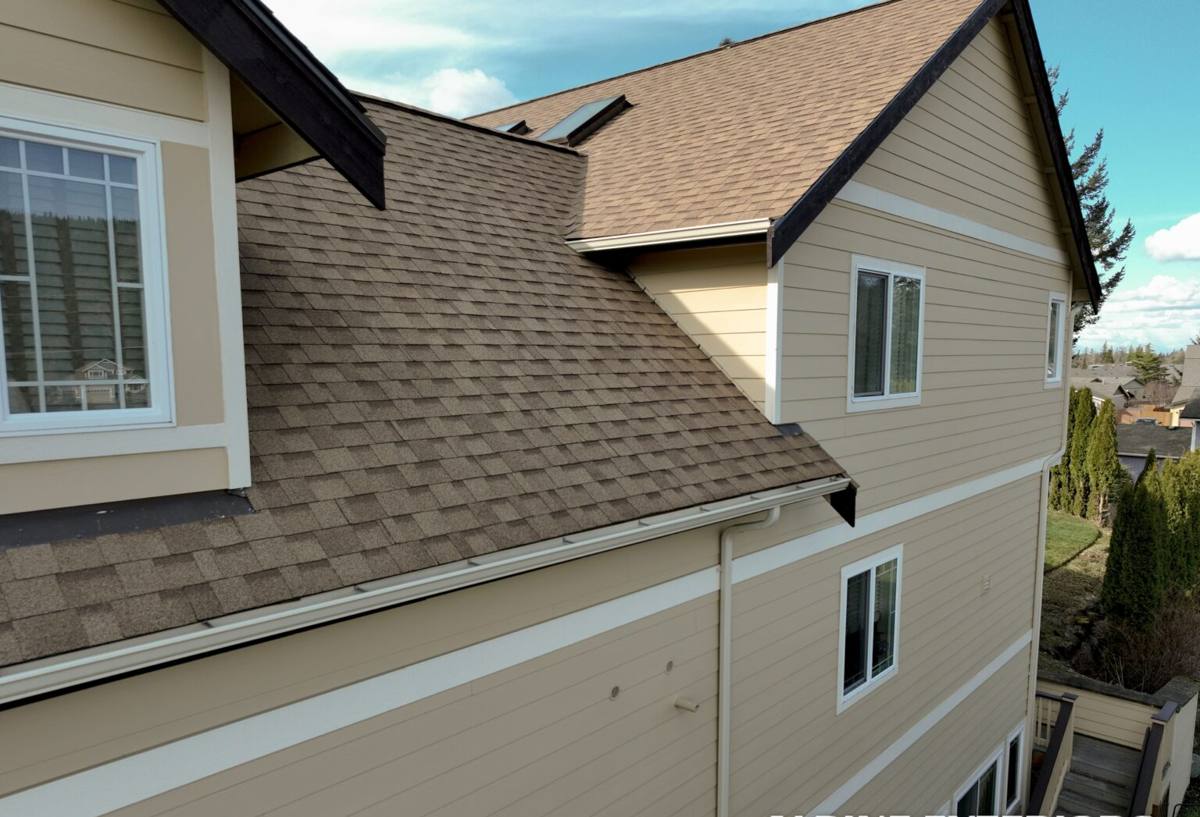
What Salt Air and Driving Rain Actually Do to a Deck
Fastener and Hardware Corrosion
Standard fasteners — screws, nails, joist hangers, bolts — corrode faster this close to salt water. Once a fastener starts rusting, it loses holding strength long before it looks obviously bad. A deck board can appear solid while the screws underneath it are already compromised. This is one of the most common failure points we find on repair calls in this area, and it's often invisible until a board works loose or a railing starts to flex.
Moisture Trapped at the Ledger and Framing
Driving rain off the bay doesn't just fall on the deck surface — it gets pushed sideways and upward into gaps, under flashing, and behind the ledger board where the deck attaches to the house. That's the single most important structural connection on any deck, and it's also the spot most prone to hidden rot, because moisture gets trapped there and has nowhere to dry out. A soft or spongy ledger board is a serious structural issue, not a cosmetic one.
Moss, Algae, and Surface Breakdown
Whatcom County's long wet season means moss and algae get a real foothold on any deck surface that doesn't see much direct sun — and a lot of Birch Bay properties have exactly that kind of shaded, water-facing exposure. Moss holds moisture against the wood or composite surface, which accelerates rot in wood decks and can stain and degrade the surface layer on composite ones. Left alone, it also makes the deck genuinely slippery, which is a safety issue as much as a maintenance one.
Common Damage We Find on Birch Bay Deck Calls
- Rusted or failing fasteners and joist hangers, especially on decks over 8-10 years old
- Soft or spongy decking boards, particularly near the house or in shaded corners
- Rot at the ledger board connection where the deck meets the siding or rim joist
- Loose, wobbly, or corroded railing posts and connections
- Moss and algae buildup on the deck surface and along the edges of stairs
- Gaps or failed caulking/flashing where the deck meets the house wall
- Warped, cupped, or splitting boards from repeated wet-dry cycles
What a Correct Repair Actually Involves
A good deck repair starts with figuring out why the damage happened, not just where. We probe boards and framing members with a screwdriver or awl to find soft spots that aren't visible from the surface, check the ledger connection specifically since it's the highest-consequence failure point, and look at fastener condition rather than assuming hardware is fine because the deck itself still looks okay.
Structural Repairs Come First
If there's any rot or corrosion in the framing, ledger, or posts, that gets addressed before anything cosmetic. Replacing surface boards over a compromised structure just hides the problem and sets up a future failure — and on a raised deck, a structural failure isn't a minor inconvenience.
Matching Fasteners and Hardware to the Environment
Given the salt air exposure here, we use fasteners and hardware rated for coastal or corrosive environments rather than standard galvanized hardware that's fine inland but degrades faster this close to the water. It costs a bit more upfront and saves you from redoing the same repair in a few years.
Addressing the Moisture Path, Not Just the Symptom
If rot showed up at the ledger, we look at the flashing and the water path that let moisture in — that might mean correcting flashing details, adjusting how the ledger sheds water, or improving drainage under the deck. Replacing the wood without fixing the water path is a temporary fix.
Cleaning and Treating for Moss
Once repairs are done, we clean the surface and treat problem areas to slow moss and algae regrowth. We won't claim a one-time treatment stops moss permanently in this climate — it doesn't — but it buys real time and makes routine maintenance easier.
Repair vs. Full Rebuild: How to Tell Which You Need
Not every deck with problems needs to be torn out. But sometimes a repair is just delaying an inevitable rebuild, and it's worth being honest about that upfront rather than nickel-and-diming a deck that's past the point of patching.
| Condition | Repair Usually Makes Sense | Rebuild Should Be Considered |
|---|---|---|
| Ledger board | Solid, no soft spots | Soft, rotted, or previously repaired more than once |
| Framing/joists | Isolated soft spots | Widespread rot across multiple joists |
| Decking boards | A handful of boards affected | Most boards cupped, splitting, or soft |
| Railings/posts | Loose but structurally sound wood | Posts rotted at the base or connection |
| Deck age | Under 15 years, built reasonably well | Original construction is old or was built without proper flashing |
When we come out for an estimate, we'll give you a straight answer on which category your deck falls into — including telling you when a repair is the right call, even if a rebuild would be a bigger job for us.
Wood vs. Composite: What Holds Up Better Near the Bay
This comes up on almost every repair estimate in Birch Bay, so it's worth addressing directly rather than as an upsell. Both materials can work here — the right choice depends on your budget, your maintenance tolerance, and what's already on the deck.
Wood Decking
Pressure-treated wood and cedar are common in this area and can perform well, but they need more regular attention near salt air — sealing on a consistent schedule, prompt attention to any soft spots, and periodic cleaning to keep moss from taking hold. The tradeoff is a lower upfront cost and a straightforward repair process, since damaged boards are simple to replace individually.
Composite Decking
Composite resists rot and doesn't need sealing, which is appealing given the moisture here. It's not maintenance-free, though — it still needs cleaning to prevent moss and algae staining, and the fasteners and framing underneath are still wood or metal and still need the same attention to corrosion and moisture. Composite also has a higher upfront cost. We'll walk you through both honestly based on what you already have and what you're trying to solve.
Why It Matters to Hire a Crew That Already Works This Area
A lot of deck damage in Birch Bay looks similar from the surface but has different root causes depending on the specific exposure — how close the deck is to the water, how much shade it gets, which direction the prevailing weather hits it from. A crew that regularly works decks along this stretch of Whatcom County recognizes those patterns quickly instead of treating every deck like a generic textbook case. That matters for getting an accurate diagnosis the first time, not after a repair fails and has to be redone.
It also matters for material and fastener choices. Someone who doesn't normally work this close to salt water might default to standard hardware because it's cheaper and it's what they always use — and it'll hold up fine most places. Here, it often won't last as long as it should.
Our Repair Process
- On-site inspection. We check the ledger, framing, fasteners, railings, and surface boards — not just the obviously damaged areas.
- Honest assessment. We tell you what actually needs to be fixed now, what can wait, and if a rebuild would serve you better than continued repairs.
- Written estimate. Clear scope of work, so you know exactly what's being replaced and why.
- Repair work. Structural issues addressed first, then surface repairs, using fasteners and hardware suited to this environment.
- Cleanup and moss treatment. Surface cleaned, problem areas treated, and a walkthrough so you know what to watch for going forward.
Maintaining Your Deck Between Repairs
A little regular attention goes a long way toward avoiding bigger repairs down the road, especially given how much moisture and moss this area deals with.
- Sweep debris off the deck regularly, especially in shaded corners where moisture lingers
- Check for soft or spongy spots once or twice a year, particularly near the house
- Keep gutters and downspouts clear so water isn't dumping onto or near the deck
- Reseal wood decking on a consistent schedule rather than waiting until it looks obviously weathered
- Clean composite surfaces periodically to prevent algae staining from setting in
- Have railings and posts checked for looseness, especially before they see heavy use
If your deck has soft spots, loose railings, visible moss buildup, or you just haven't had it looked at in a few years, we're glad to come take a look. We'll give you a straightforward assessment of what's going on and what it would take to fix it right — no pressure, no upsell, just an honest read on your deck. Use the form below to request a free estimate.