 Blaine Siding
 Windows in California Creek Work Harder Than People Think
California Creek sits close enough to Semiahmoo Bay and the Strait of Georgia that homes here deal with a steady diet of salt-laden air, wind-driven rain, and long stretches of gray, damp weather that can run from October through May. That combination is hard on windows in ways that don't always show up right away. A window that looks fine from the outside can be quietly losing its seal, letting moisture into the frame cavity, or bleeding heat out through a tired gasket long before anyone notices a draft.
Energy-efficient windows are usually sold on the promise of a lower power bill, and that's real, but for homes in this part of Whatcom County the bigger issue is often durability. A window that's rated for energy performance in a lab somewhere inland isn't necessarily built to shrug off salt air corrosion or repeated soaking from sideways rain. The right choice for California Creek is one that solves both problems at once: it has to perform thermally and it has to survive the coastal climate without breaking down early.
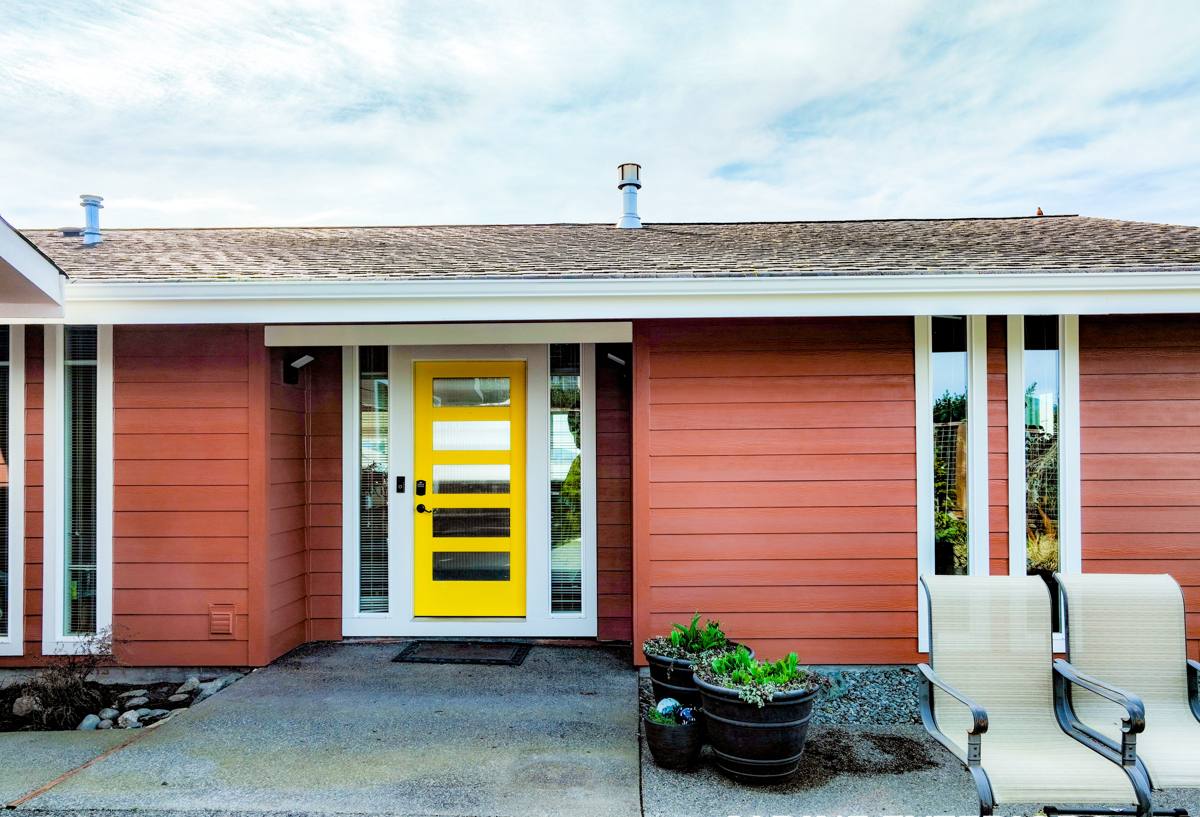
What This Coastal Climate Actually Does to a Window
Salt Air and Hardware
Salt in the air accelerates corrosion on exposed metal — hinges, locks, balance mechanisms, and screen frames all take the hit over time. Cheaper hardware finishes can pit or seize up within a few years in a location like this, which is one reason we pay attention to hardware specs, not just glass specs, when we're speaking with homeowners here.
Driving Rain and Frame Seals
Wind off the water doesn't just bring rain, it pushes it sideways and forces it into any gap it can find. A window that relies on a single line of defense against water intrusion is more likely to leak in a California Creek storm than the same window installed somewhere sheltered. Proper flashing and a well-designed sill pan matter as much as the window unit itself.
Moss and Prolonged Dampness
Long moss season means extended periods where exterior surfaces around a house stay damp — siding, trim, and window sills included. Wood-frame windows with any gap in their protective coating are especially vulnerable to rot starting at the sill or corners. Even vinyl and fiberglass frames need attention to how water sheds off the exterior trim, since standing moisture anywhere near a window opening eventually finds a way in.
Signs a California Creek Home Needs a Window Upgrade
- Condensation building up between the panes, which means the seal has failed
- Visible fogging or a cloudy band around the edge of the glass
- Drafts you can feel near the frame even when the window is fully latched
- Wood sills or frames that feel soft, discolored, or show early rot
- Locks or cranks that have become stiff, corroded, or hard to operate
- Noticeably higher heating costs during the wet months compared to prior years
- Visible gaps between the window frame and the siding or trim
What "Energy-Efficient" Should Actually Mean Here
Energy efficiency for a window isn't one number — it's a combination of glass performance, frame material, and installation quality. In a marine climate like Blaine's, we weight these differently than a contractor working in a drier, more temperature-extreme region would.
| Factor | Why It Matters in California Creek |
|---|---|
| U-Factor (heat loss) | Keeps heating costs down through our long, mild but persistently damp winters |
| Frame Material | Needs to resist both moisture absorption and salt air corrosion, not just insulate well |
| Glazing (double vs. triple pane) | Double-pane with a good low-E coating is often sufficient here; triple-pane adds cost that may not pay back given our moderate temperature swings |
| Weatherstripping & Seals | Has to hold up against wind-driven rain, not just still-air drafts |
| Installation Flashing | Determines whether wind-blown rain stays out of the wall cavity, which matters more here than in sheltered inland areas |
A window with excellent lab-tested energy ratings but a mediocre installation will still underperform in this climate. We treat the installation — the flashing, the sill pan, the sealant detailing — as equally important to the product itself.
Frame Material Trade-Offs for This Location
Vinyl
Vinyl frames handle salt air and moisture well since they don't corrode or rot, and they're generally the most cost-effective option for a straightforward energy upgrade. The trade-off is that vinyl has less structural rigidity than fiberglass, so larger openings sometimes call for reinforced frames.
Fiberglass
Fiberglass holds up extremely well in wet, salty coastal conditions and expands and contracts with temperature at almost the same rate as glass, which helps seals last longer. It costs more than vinyl but tends to need less attention over its life in a climate like ours.
Wood and Wood-Clad
Wood windows offer a look some homeowners want, especially on older or character homes, but they require real commitment to maintenance in a climate with this much sustained moisture. Wood-clad units with an aluminum or fiberglass exterior shell can be a reasonable middle ground, since the cladding protects the wood from direct weather exposure while keeping the interior wood appearance. We're upfront with homeowners about this maintenance burden rather than downplaying it — it's a legitimate trade-off, not a flaw in any particular product.
Aluminum
Aluminum conducts heat and cold efficiently, which works against energy efficiency goals unless the frame has a proper thermal break. In a marine climate it also needs a durable finish to resist salt corrosion over time. We don't recommend it as a first choice for an energy-efficient upgrade here, though it can still make sense for certain architectural styles when detailed correctly.
How We Approach a California Creek Window Project
1. On-Site Assessment
We start by looking at each window opening individually — not every window in a house is in the same condition, and a coastal home often has one exposure (usually facing the water or prevailing wind) that's taken more punishment than the rest. We check for soft framing, failed seals, and existing water intrusion before recommending anything.
2. Product Selection Based on Exposure
Windows on the weather side of a California Creek home may warrant a different frame material or hardware spec than windows on a sheltered side. We match the product to the actual exposure rather than applying one spec to the whole house by default.
3. Removal Without Collateral Damage
Old windows come out carefully so we can inspect the framing and sheathing underneath. This is often where hidden problems from years of water intrusion actually get found — and it's much better to catch that during a planned replacement than to discover it later as a bigger repair.
4. Proper Flashing and Sealing
This is the step that determines whether the new window actually performs in wind-driven rain. We install sill pans and flashing sequenced correctly with the house wrap or building paper so water is directed out and down, never trapped behind the window.
5. Final Fit and Function Check
Every window gets checked for square, level, and smooth operation before we consider the job done, along with a check that hardware is properly seated and won't bind or corrode prematurely.
Cost Factors to Expect
Every home and project scope is different, so we don't quote pricing without seeing the actual openings, but a few things reliably move the number up or down:
- Number of windows being replaced and whether it's a full-house project or a targeted upgrade
- Frame material chosen (vinyl typically costs less than fiberglass or wood-clad)
- Whether any framing repair is needed once old windows come out
- Window size and style — large openings, bays, or custom shapes cost more than standard sizes
- Exposure-driven upgrades, such as heavier-duty hardware or flashing detail on weather-facing walls
We'd rather walk a homeowner through these factors honestly than throw out a number that doesn't hold up once we're actually on-site.
Why Hiring Local Experience Matters in California Creek
A crew that regularly works this stretch of Whatcom County knows which exposures tend to take the worst weather, how far wind-driven rain actually travels up a wall, and where moss and moisture problems typically start. That's the kind of judgment that doesn't come from a product spec sheet — it comes from having installed and repaired windows on homes facing the same wind and rain patterns, year after year. It also means we're not learning on your house how this particular climate behaves.
If your California Creek home has windows that are drafty, fogged, hard to operate, or just older than their expected service life, we're happy to take a look and talk through options honestly, including cases where a repair makes more sense than full replacement. Reach out for a free, no-pressure estimate — the form below gets you started.