 Blaine Siding
 Asphalt Shingle Roofing in Everson
Everson sits inland from the water compared to our waterfront service areas around Blaine and Semiahmoo Bay, but it shares the same weather engine that shapes roofing needs across Whatcom County: long stretches of wet weather, mild temperatures that rarely dry a roof out completely, and a moss and algae season that runs most of the year on shaded slopes. Asphalt shingle roofing remains the most common roof covering on homes in and around Everson for good reason — it's a proven, cost-effective system when it's specified and installed correctly for this climate. The problems we get called out for aren't usually about the shingle itself failing early; they're about ventilation, flashing, and underlayment details that were rushed or skipped the first time around.
This page focuses specifically on asphalt shingle roofing for homes in the Everson area. We also handle siding, windows, and decks, and we treat the roof as one connected system with the rest of the exterior rather than an isolated project — water that gets past a roof edge doesn't stop at the fascia, it works its way into siding and trim below.
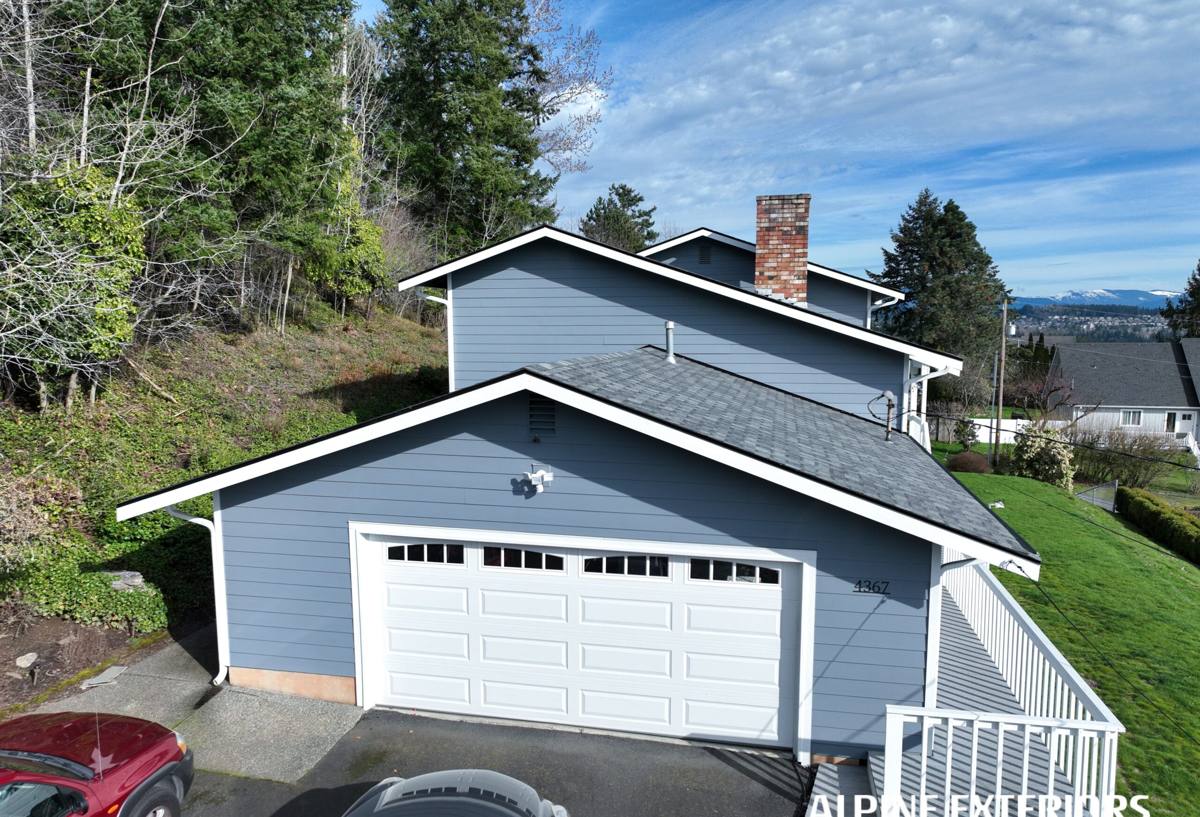
What Everson's Climate Does to a Shingle Roof
Driving Rain and Sustained Moisture
Whatcom County storms don't just drop rain straight down. Wind pushes it sideways and up under shingle edges, into valleys, and around any penetration in the roof plane — vent pipes, chimneys, skylights. A shingle roof that's properly lapped, underlaid, and flashed sheds that water without issue. One with shortcuts at those transition points is where leaks start, often slowly enough that the damage is well underway inside the attic before it shows up as a stain on a ceiling.
A Long Moss and Algae Season
Mild temperatures combined with near-constant moisture give moss and algae a long growing window on shaded, north-facing, or tree-covered roof slopes — which describes a large share of Everson's tree-lined, semi-rural lots. Moss doesn't just sit on top of shingles; its root structure works into the granule surface and lifts shingle edges over time, giving water a path underneath. Roofs that stay damp the longest, usually under mature trees or on low-slope sections with poor airflow, are the first to show it.
Lighter, but Still Real, Salt Air Influence
Everson is far enough inland that salt exposure is noticeably lighter than it is on homes right along Semiahmoo Bay or Drayton Harbor. It isn't zero — Pacific storm systems that move through the county still carry some salt-laden air with them, and it's one more reason we don't cut corners on fastener quality or flashing metal, even on inland roofs. The bigger factors for Everson specifically are the sustained rain and moss pressure described above; salt is a secondary consideration here rather than the primary design driver it is closer to the water.
What a Correct Asphalt Shingle Roof Actually Involves
A shingle roof is a system, not a single product. Each layer does a specific job, and skipping or shortcutting any one of them shows up as a problem years down the road, usually after the workmanship warranty has expired.
Underlayment and Ice-and-Water Protection
Synthetic underlayment goes down first as the roof's secondary water barrier, and self-adhered ice-and-water membrane belongs at eaves, valleys, and around penetrations — the spots most likely to see standing water or wind-driven rain get behind the shingle surface. This membrane matters more in a climate like Whatcom County's, where roofs rarely get long dry stretches to fully shed moisture between storms.
Ventilation, Intake and Exhaust
Balanced attic ventilation — intake low at the eaves, exhaust high at the ridge — keeps the underside of the roof deck at a stable temperature and moisture level. Without it, trapped moisture condenses on the underside of the sheathing, which rots decking from the inside and shortens shingle life from the top down at the same time. It's one of the most common issues we find on tear-offs of roofs that failed well before their expected lifespan, and it's invisible from the ground.
Flashing at Every Transition
Step flashing at walls, counter-flashing at chimneys, and properly formed valley metal or woven valleys all need to direct water down and away rather than relying on sealant or roofing cement to do a flashing detail's job. Sealant is a backup, not a substitute for correctly lapped metal. This is one of the more common places we find prior shortcuts on Everson roofs — a bead of caulk covering a gap that should have been flashed.
Correct Nailing and Exposure
Manufacturers specify nail count, placement, and shingle exposure for a reason tied directly to wind resistance and warranty coverage. Overdriven, underdriven, or misplaced nails are a leading cause of shingles blowing off in a windstorm — an outcome that's entirely preventable with correct installation technique and has nothing to do with the shingle product itself.
Choosing the Right Shingle for an Everson Roof
Most homes in the area land on either a standard three-tab shingle or a heavier architectural (laminated) shingle. The difference isn't just appearance — it affects wind resistance, moss resistance, and how long the roof holds up under this climate's rain and shade patterns.
| Option | Wind & Moisture Performance | Typical Lifespan Here | Best Fit |
|---|---|---|---|
| Three-tab asphalt shingle | Adequate on open, sun-exposed roofs; less margin on shaded or steep-wind sites | 15-20 years | Budget-focused projects, simpler roof lines |
| Architectural (laminate) shingle | Heavier profile sheds water and resists wind uplift better; algae-resistant granule options slow moss growth | 25-30 years | Most Everson homes, especially shaded or tree-covered lots |
| Impact-rated architectural shingle | Reinforced mat resists granule loss and physical damage over time | 25-30+ years | Homes wanting extra durability margin, higher wind exposure sites |
For most of the shaded, tree-lined lots common around Everson, an architectural shingle with algae-resistant granules is the more practical choice over a basic three-tab — the moss-resistance and wind performance difference tends to pay for itself over the life of the roof. We'll walk through the specific trade-offs for your roof's pitch, shade exposure, and budget rather than defaulting to one answer for every house.
Our Roofing Process
1. Inspection and Honest Assessment
We start on the roof and in the attic, not just from the ground. That means checking deck condition, existing ventilation, flashing condition at every penetration, and signs of past leaks before recommending a full replacement versus a targeted repair.
2. Tear-Off and Deck Check
A full tear-off exposes the roof deck so we can replace any soft or delaminated sheathing before new underlayment goes down. Roofing over an existing layer hides problems instead of solving them, which is why we don't recommend it on roofs showing any sign of moisture damage.
3. Underlayment, Flashing, and Shingle Installation
Ice-and-water membrane at vulnerable areas, synthetic underlayment across the field, new flashing at every wall, valley, and penetration, then shingles installed to manufacturer nailing and exposure specs. Ridge and soffit ventilation gets addressed as part of the same job, not treated as an optional add-on.
4. Final Walkthrough and Cleanup
We walk the finished roof and go over what was done, then handle magnetic sweep and site cleanup so old nails and debris don't end up in the yard or driveway.
Signs an Everson Roof Needs Attention
Most shingle roof failures give warning signs well before an active leak shows up inside the house. Worth checking for, especially before or after the wettest months of the year:
- Granules collecting in gutters or at downspout outlets, a sign shingles are wearing past their protective surface
- Moss visibly established on shaded slopes, especially along ridges and valleys
- Curling, cupping, or cracked shingles, particularly on south- or west-facing slopes with more sun exposure
- Dark streaking across shingle surfaces, typically algae rather than dirt
- Soft spots or noticeable sag when walking the roof or viewing the roofline from the ground
- Daylight visible through the roof deck from inside the attic
- Rusted, lifted, or missing flashing around chimneys, vents, or skylights
Repair vs. Replace
Not every roof problem calls for a full replacement. The right call depends on the roof's age, how localized the damage is, and what shows up during inspection.
| Factor | Favors Repair | Favors Full Replacement |
|---|---|---|
| Roof age | Under 12-15 years | Approaching or past expected lifespan for the material |
| Damage extent | Isolated to one slope, flashing point, or storm event | Widespread granule loss, multiple leak points, or deck damage found |
| Ventilation | Already balanced and functioning | Inadequate — often worth correcting during a full re-roof |
| Underlayment condition | Sound, only surface shingles affected | Deteriorated or original underlayment past its service life |
We'll give a straight answer on which category your roof falls into rather than defaulting to the larger job. A well-timed repair on a roof with years of service life left is often the more honest recommendation, and we'll say so.
Why a Crew That Already Works Everson Matters
Roofing done right for this area isn't guesswork — it comes from having actually worked on enough Everson-area roofs to know how shade patterns, tree cover, and this region's rain load play out over years, not just at the moment of installation. A crew unfamiliar with Whatcom County's specific moss pressure and driving-rain patterns can still install a technically adequate roof, but the details that matter most here — ventilation balance, valley and flashing work, algae-resistant shingle selection on shaded lots — are exactly the ones that get shortcut by crews treating every job the same regardless of climate. Working this area regularly means we've seen which shortcuts show up as failures five or ten years later, and we build to avoid them the first time.
If your roof is showing wear, due for replacement, or you just want an honest read on what condition it's actually in, we're glad to take a look. Reach out for a free, no-pressure estimate using the form below — no obligation, just a straight assessment of what your roof needs.