 Blaine Siding
 Deck Repair Built for Everson's Weather, Not a Generic Climate
Everson sits inland along the Nooksack River, but it still gets the same weather systems that move across the rest of Whatcom County — the same driving rain off the Salish Sea, the same long stretches of gray, damp winters, and the same moss season that can run from October well into April. Add river-valley humidity and morning fog that lingers longer here than it does closer to the water, and you have a climate that is genuinely hard on an exterior wood or composite structure sitting a few feet off the ground. A deck built anywhere else in the country might go a decade with only cosmetic wear. A deck in Everson works harder every single year just to shed water, resist rot, and keep from growing a green film across every horizontal surface.
This page is about one thing: repairing decks for homeowners in and around Everson. Not a national checklist, not a generic "deck maintenance" article — the specific problems we see on local decks, what a correct repair actually involves, and why the work should be done by a crew that already understands this stretch of Whatcom County.
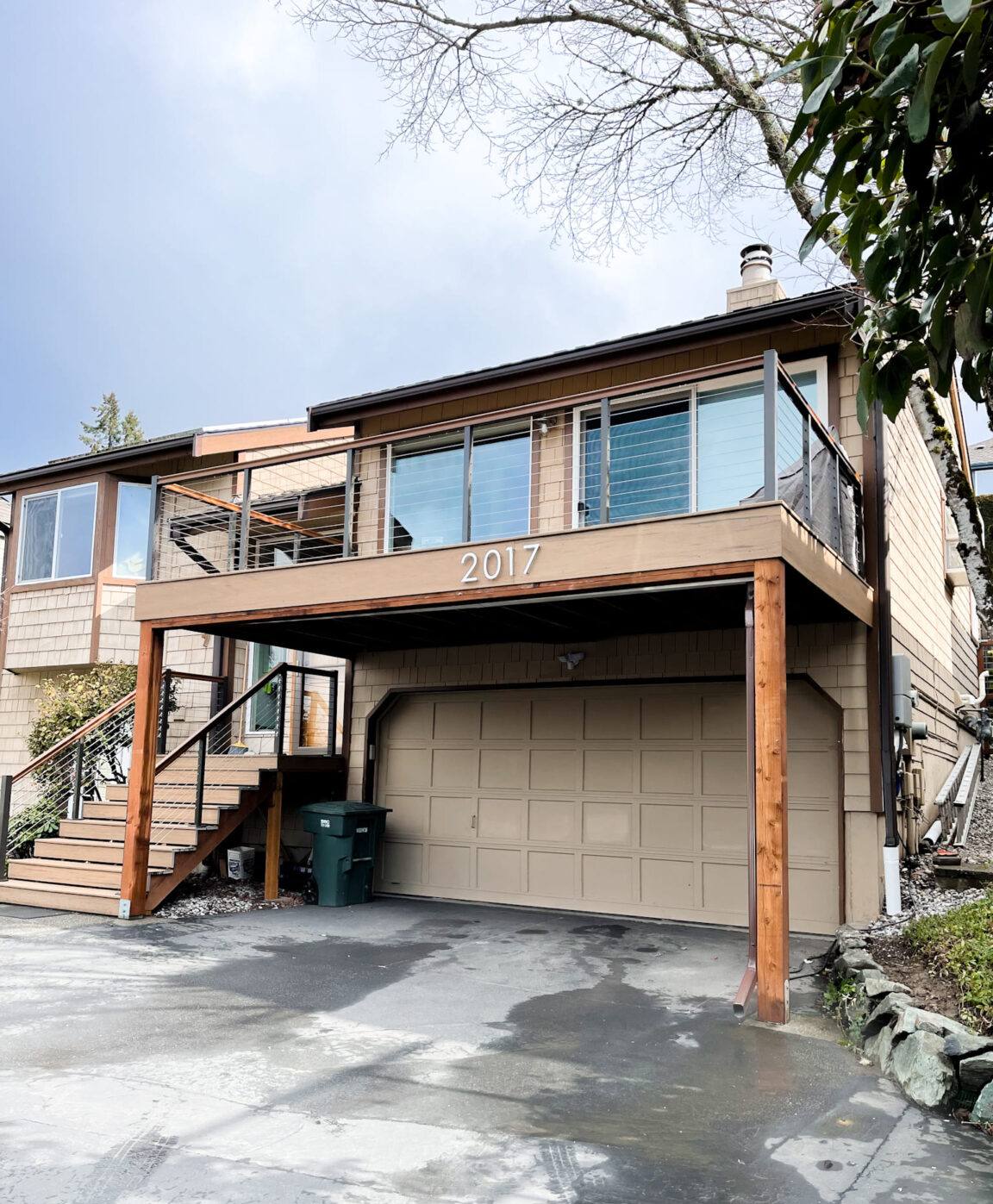
Why Everson Decks Fail Differently Than Decks in Drier Climates
Wood and even composite decking don't fail because of one bad storm. They fail because moisture gets trapped somewhere and never fully dries out between rain events. In a climate with long dry summers, a deck gets a chance to reset. In Everson, the drying window is shorter, and the moss and algae that grow in the shoulder seasons hold moisture against the surface even on days it isn't actively raining.
The specific stressors we account for
- Driving rain angle: Wind-driven rain gets pushed sideways into ledger boards, fascia, and the gap between decking boards, not just straight down onto the surface.
- Moss and algae growth: A shaded or north-facing deck can stay damp under a moss layer for weeks, which accelerates wood decay and makes composite surfaces slick and discolored.
- River-valley humidity: Higher ambient moisture near the Nooksack slows drying time for framing lumber, especially underneath the deck where airflow is already limited.
- Freeze-thaw cycling: Whatcom County gets enough cold snaps each winter that water trapped in a crack or a fastener hole can freeze, expand, and widen the damage before spring.
Signs Your Everson Deck Needs Repair, Not Just Cleaning
A lot of homeowners power-wash a deck, see it look better for a few weeks, and assume the problem is solved. Moss and surface graying are cosmetic. The issues below are structural or moisture-related, and pressure washing won't fix any of them — in some cases it makes them worse by forcing water deeper into the wood.
- Boards that feel spongy, springy, or noticeably softer underfoot in one area
- Visible gaps, cupping, or splitting in individual deck boards
- Rust streaks or corrosion around fastener heads
- A ledger board (where the deck attaches to the house) that looks stained, swollen, or separated from the siding
- Railings or posts that wiggle more than they used to
- Persistent moss or black staining in the same spot after every cleaning
- Stair stringers or footings that look uneven or have shifted
Any one of these, on its own, might be a small fix. Several at once usually means water has been getting into the structure for a while and it's worth a full inspection before booking a repair.
What a Correct Deck Repair Actually Involves
Deck repair gets treated as a cosmetic trade more often than it should. Swapping a rotted board for a new one that matches is the easy part. The part that actually determines whether the repair lasts is what's underneath and around it.
Structural inspection first
Before any board gets replaced, we check the framing it's attached to — joists, beams, ledger board, and the connections between them. A new deck board fastened to a rotted joist is a repair that fails again within a season or two. This is the step that gets skipped most often when a job is priced too low or rushed.
Ledger board and flashing
The ledger board is where the deck meets the house, and it's the single most common point of hidden water damage because it's also where the house's own water management (siding, flashing, weep holes) has to work correctly with the deck's. If flashing is missing, damaged, or was never properly installed, water tracks behind the siding and into the rim joist — a problem that often isn't visible until boards are pulled back.
Fasteners and hardware
Everson's moisture profile is hard on fasteners. We replace corroded screws, nails, and structural hardware with coated or stainless fasteners rated for ground contact and wet exposure, not whatever matches on the shelf. Mismatched metals (e.g., the wrong screw in treated lumber) accelerate corrosion and can void hardware warranties.
Drainage and airflow underneath
A deck that can't shed water or breathe underneath will keep rotting no matter how many boards get replaced. Where it's practical, we address grading, gaps, or vegetation that's trapping moisture against the framing.
Repair or Replace? An Honest Comparison
Not every deck problem needs a full rebuild, and not every deck is worth patching. The table below covers the factors that actually decide which way to go — we'll give you a straight answer on your specific deck during the estimate rather than defaulting to whichever is more profitable for us.
| Factor | Leans toward repair | Leans toward replacement |
|---|---|---|
| Framing condition | Joists and beams are solid, only surface boards affected | Rot has reached multiple structural members |
| Age of structure | Under 12-15 years, built to a reasonable standard | Older deck, outdated fastening or footing methods |
| Extent of damage | Isolated to one section or a handful of boards | Damage is spread across the whole deck |
| Ledger connection | Ledger and flashing are intact | Ledger board is compromised or was never flashed correctly |
| Budget goals | Want to extend usable life a number of years | Want a long-term reset and possibly a design change |
Decking Material Considerations for This Climate
When boards are being replaced, the material choice matters more in Everson's climate than it would somewhere drier. This isn't about one brand being better than another — it's about matching the material to how much upkeep you're willing to do and how the wood or composite actually behaves when it stays wet for extended periods.
| Material | How it holds up here | Maintenance reality |
|---|---|---|
| Pressure-treated lumber | Good rot resistance when properly sealed and maintained; most affordable option | Needs re-staining or sealing every 2-3 years to stay ahead of moss and moisture |
| Cedar | Naturally rot-resistant, ages well visually, but softer surface | Regular sealing recommended; more prone to surface scratching and staining |
| Composite decking | Doesn't rot, resists moisture absorption in the board itself | Lower maintenance overall, but can still grow surface algae/moss and needs regular cleaning; framing underneath is still usually wood and needs the same attention |
We're honest with clients that composite reduces board-level maintenance but doesn't eliminate the need to protect the framing, fasteners, and ledger connection underneath — that structural layer is still the part that determines how long the whole deck lasts.
Our Repair Process
- On-site inspection: We walk the deck, check underneath where possible, and test suspect boards and framing for softness before quoting anything.
- Honest scope of work: You get a clear breakdown of what's cosmetic, what's structural, and what we'd recommend versus what's optional.
- Repair or rebuild the framing first: Any compromised joists, beams, or ledger connections get addressed before new decking goes down.
- Replace decking and hardware: Matching or upgraded boards, correct fasteners for the material and exposure.
- Seal and protect: Where applicable, we treat exposed wood to give it a fighting chance against next season's moss and rain before we consider the job done.
Why Hire a Crew That Already Works in Everson
A deck repair crew that mostly works drier climates tends to under-spec fasteners, skip flashing details, or assume a board will dry out between rains the way it would somewhere else. We work throughout Whatcom County, and Everson's combination of river humidity, shade, and driving rain is something we plan for from the first inspection — not something we discover after the repair has already failed. That means fewer callbacks, and it means the fix we recommend the first time is the one that actually holds up through a full Whatcom County winter.
Keeping Your Deck in Good Shape Between Repairs
Once a deck is repaired correctly, a small amount of seasonal upkeep goes a long way in this climate:
- Sweep leaves and debris off the surface regularly in fall — trapped debris is where moss gets its start
- Clean moss and algae with a deck-safe cleaner rather than a straight pressure wash, which can drive water into seams
- Check the ledger board area at the house connection once a year for staining or soft spots
- Re-seal or re-stain wood decking on the schedule appropriate to the product, not just when it looks faded
- Keep gutters and downspouts near the deck clear so runoff isn't dumping directly onto or under it
If you're noticing soft spots, persistent moss, or a deck that just doesn't feel as solid as it used to, we're glad to take a look. Estimates are free and there's no pressure to book anything on the spot — just an honest read on what your deck actually needs.