 Blaine Siding
 Siding Installation Built for Everson's Climate, Not Just Its Curb Appeal
Everson sits in a part of Whatcom County where weather isn't an occasional inconvenience — it's a year-round design constraint. Long stretches of driving rain, a humid growing season for moss and algae, and the kind of damp cold that lingers into spring all put steady pressure on a home's exterior. Siding here isn't just about how a house looks from the road. It's the single largest barrier between your framing and a climate that rarely gives your walls a chance to fully dry out.
When we talk about siding installation for Everson homes, we're talking about a system: material, moisture management, fastening, and flashing all working together. Get any one piece wrong and the others can't compensate. That's the standard we hold every Everson project to, and it's why we're selective about both the product we install and how we install it.
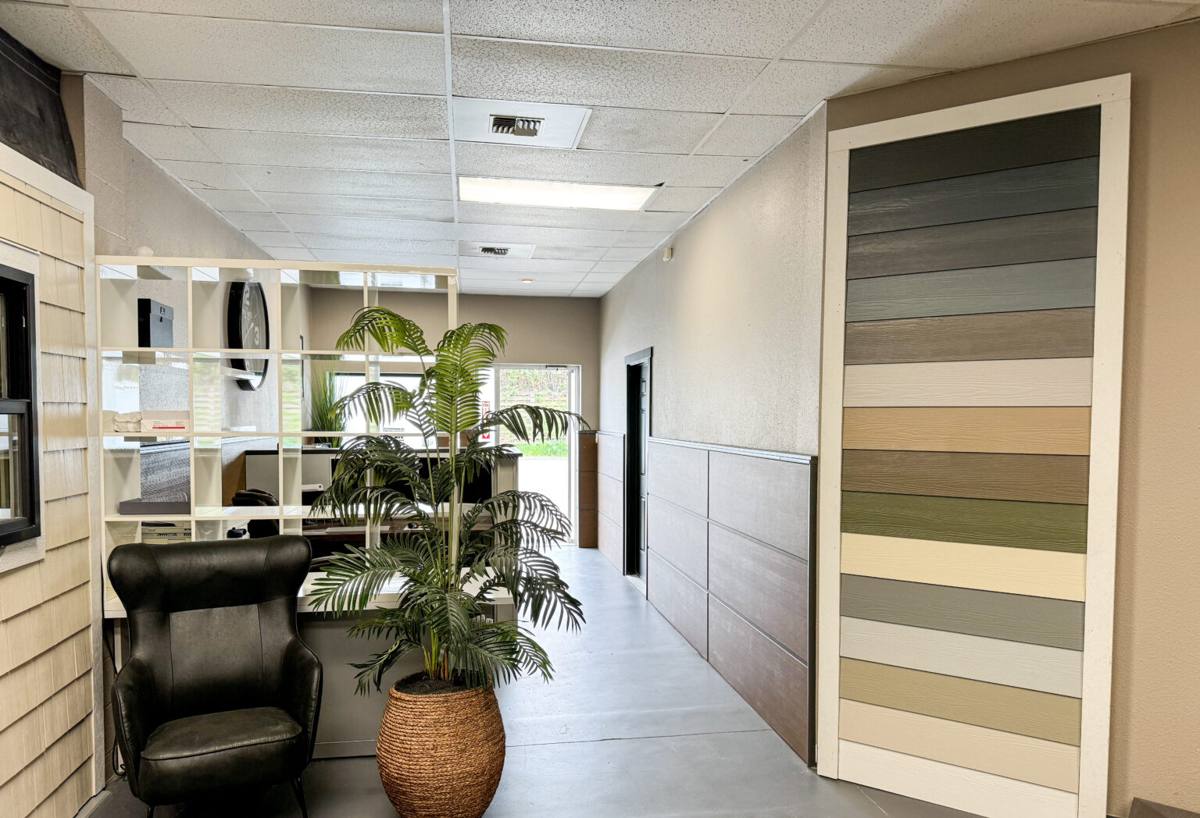
What This Climate Actually Does to Exterior Walls
Moisture That Doesn't Let Up
Whatcom County's rain isn't usually the dramatic kind — it's the slow, sideways, weeks-at-a-time kind that finds every gap in a poorly installed siding system. Over years, that steady moisture load works its way behind panels through unsealed joints, missing flashing, or siding that was nailed too tight to the wall. Once water gets behind the cladding, it doesn't dry quickly in a climate this humid.
Moss, Algae, and a Long Growing Season
Shade, moisture, and mild temperatures are exactly what moss and algae need to thrive, and Everson's tree cover and damp air give them plenty of both. On some siding materials, that growth is mostly cosmetic. On others — especially wood-based and untreated products — trapped organic growth can hold moisture against the surface and accelerate rot underneath.
Freeze-Thaw and Temperature Swings
Whatcom County doesn't see brutal winters, but it does see enough freeze-thaw cycling to matter. Siding materials that absorb water expand when that water freezes, and repeated cycles of swelling and contracting can crack finishes, loosen fasteners, and open small failures into larger ones over a few seasons.
Why We Install Only James Hardie Fiber Cement Siding
We made a deliberate decision to install one siding system across every home we work on, and we don't deviate from it: James Hardie fiber cement. We don't install vinyl, LP SmartSide, primed spruce, cedar, or other fiber cement brands, and that's worth explaining honestly rather than just stating as policy.
Vinyl siding is affordable and easy to install, but it's a plastic product that expands and contracts significantly with temperature swings, can crack in cold snaps, and offers limited protection where impact or fire resistance matters. Wood-based products like cedar or primed spruce look good when new, but they require an ongoing maintenance commitment — recoating, caulking, and moisture monitoring — that most homeowners underestimate until the first signs of rot show up. Engineered wood products like LP SmartSide perform reasonably well when installation is precise, but they remain wood-based at the core, meaning moisture intrusion at a poorly sealed joint has real consequences.
James Hardie fiber cement is cement, sand, and cellulose fiber — it doesn't rot, it isn't a food source for insects, and it holds up to sustained damp weather without the swelling or warping that plagues wood-based sidings. It's also non-combustible, which matters more each year as wildfire smoke and fire risk become part of Pacific Northwest summers. The factory-applied ColorPlus finish is baked on under controlled conditions and backed by a substantial warranty against fading and peeling — something a field-applied paint job on wood siding simply can't match.
None of this means other products are junk. It means that for the climate Everson homes sit in, and for the standard we want to stand behind years after installation, fiber cement is the material that gives homeowners the least to worry about.
What a Correct Hardie Installation Actually Involves
Fiber cement siding is only as good as the installation behind it. Hardie engineers detailed installation specifications for a reason — deviating from them is the single biggest cause of premature siding failure, on any brand.
- Proper starter strip placement so the first course sits correctly and sheds water from day one
- A code-compliant weather-resistant barrier installed behind the siding, with seams lapped correctly to direct water down and out
- Correct flashing at every window, door, and roofline intersection — the majority of siding leaks trace back to flashing details, not the siding itself
- Minimum clearance between siding and grade, decks, roofs, and other horizontal surfaces so water doesn't wick into the bottom edge
- Fasteners driven to the depth and pattern Hardie specifies — overdriven nails crack panels and underdriven ones let siding move and fail over time
- Properly sealed and caulked joints at trim, corners, and penetrations, using products rated for the exposure
- Visible cracking, warping, or bulging panels, especially on shaded or north-facing walls
- Persistent moss or algae growth that returns quickly after cleaning
- Soft spots or a spongy feel when pressing on siding near the base of the wall
- Paint that's peeling or bubbling rather than just fading evenly
- Rising energy bills that suggest the wall assembly isn't insulating or sealing the way it should
- Visible gaps at trim, corners, or window edges where the old siding has pulled away slightly
Every one of those details is invisible once the job is finished. That's exactly why it matters who's doing the work — a rushed or unfamiliar crew can produce a wall that looks identical to a correctly installed one for the first year or two, with the problems only surfacing later.
Our Process for Everson Siding Installation Projects
1. On-Site Assessment
We start by walking the home with you, looking at the current siding's condition, the state of the sheathing and moisture barrier underneath where accessible, and any problem areas — north-facing walls with heavy shade, low clearance spots, or areas showing existing moisture damage.
2. Removal and Substrate Check
Old siding comes off and we inspect what's underneath. In a climate like this, hidden rot or compromised sheathing isn't rare, and we'd rather find it and address it before new siding goes up than cover it and let it keep working against the house.
3. Weather Barrier and Flashing
A new, correctly lapped weather-resistant barrier goes down, followed by flashing at every window, door, and penetration point. This step does more to determine long-term performance than almost anything else in the job.
4. Hardie Panel or Lap Installation
Panels or lap siding go up following Hardie's fastening and clearance specifications exactly, course by course, with attention to how the specific product line — HardiePlank, HardiePanel, or HardieShingle depending on the home — is meant to be installed for this region's exposure.
5. Trim, Caulking, and Finish Detail
Trim boards, corners, and joints get sealed with appropriate products, and we do a final pass checking reveals, fastener lines, and finish consistency before calling the job done.
6. Walkthrough and Cleanup
We walk the finished exterior with you, answer questions about care and warranty, and make sure the site is cleaned up before we leave.
Signs an Everson Home May Need New Siding Soon
Any one of these on its own isn't necessarily urgent. Several together, especially combined with siding that's original to an older home, is usually a sign it's worth getting an honest look before a small issue becomes a sheathing repair.
What Drives Siding Installation Cost in Everson
Every home is different, and we don't publish blanket per-square-foot numbers because they're rarely honest once your specific home is factored in. What we can tell you is what actually moves the cost up or down on a real project.
| Factor | Why It Matters |
|---|---|
| Home size and wall complexity | More corners, dormers, and roof intersections mean more cutting, flashing, and labor time |
| Condition of existing sheathing | Hidden rot or moisture damage found during tear-off needs repair before new siding goes on |
| Siding profile chosen | Lap siding, panel siding, and shingle-style Hardie products differ in material and labor cost |
| Trim and detail work | Custom trim, extra window/door casing, and accent details add time and material |
| Access and site conditions | Steep grades, tight lot lines, or limited equipment access can affect labor time |
| Existing siding removal | Tear-off and disposal of old material is a separate cost from new installation |
The only way to get a real number is to have someone look at your specific home — which is exactly what a free estimate is for.
Why It Matters That We Already Work in Everson
A crew that regularly works siding jobs in and around Whatcom County has already seen how this specific climate treats different wall exposures, roof lines, and lot conditions. That's not a marketing point — it changes real decisions on the job, like where extra flashing attention is worth it, how a north-facing wall in a shaded lot behaves differently than a south-facing one, and what moisture patterns to expect once the old siding comes off.
It also means straightforward logistics: local permitting familiarity, no travel premiums built into your quote, and a crew that isn't learning the region's weather patterns on your home for the first time. When something needs a follow-up visit — a warranty question, a small repair years down the line — you're calling a company that's still working in your area, not chasing down someone who did one job in Everson and moved on.
Get a Straightforward Estimate
If your Everson home's siding is showing its age, or you're planning ahead before winter rain sets in again, we're happy to take a look and give you an honest assessment — no pressure, no inflated scope. Fill out the form below to schedule a free estimate.