 Blaine Siding
 Why Everson Windows Wear Out Faster Than the Brochures Suggest
Whatcom County weather is harder on windows than most homeowners realize until they're dealing with a failed seal or a rotted sill. Everson sits in a part of the county that gets the full seasonal cycle: soggy winters with weeks of driving rain, damp shoulder seasons where moss and algae get a foothold on anything that stays wet too long, and marine-influenced air moving in off the Salish Sea that carries salt and moisture even well inland. None of that is dramatic on its own, but stacked up year after year it's exactly the kind of slow, steady exposure that breaks down seals, swells wood frames, and corrodes hardware long before a window reaches the end of its expected life.
Older aluminum-frame and early-generation vinyl windows in particular tend to show their age here. Condensation between panes, drafts around the frame, and paint or finish that won't hold are usually symptoms of a window that was never built for this kind of sustained moisture load, not a sign that something was installed badly. Replacing those windows correctly — with materials and details suited to this climate — is the fix, and it's worth doing right the first time.
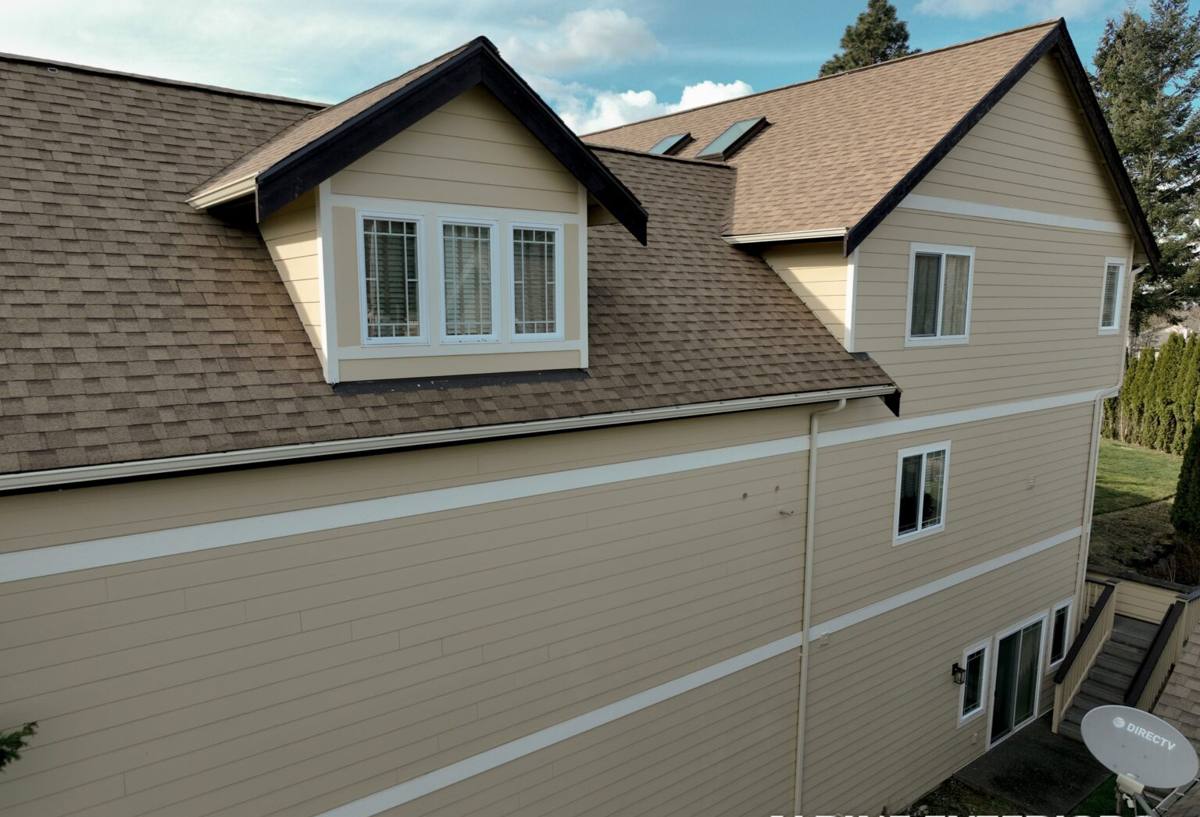
Signs an Everson Home Needs Window Replacement
Some warning signs are obvious. Others show up gradually and get written off as "just how old houses are." Here's what we look for, and what you can check yourself before calling anyone out.
- Fogging or a permanent haze between panes — the seal has failed and the gas fill (or air gap) is compromised
- Visible moss, algae, or black streaking on the sill, frame, or trim below the window
- Drafts you can feel with a hand near the frame on a windy day, even with the window latched
- Wood that's gone soft, spongy, or discolored at the bottom corners of the sash or sill
- Windows that are difficult to open, close, or lock — frames can warp slightly as they absorb moisture
- A noticeable jump in heating costs compared to similar homes nearby
- Paint that keeps peeling or bubbling on the interior or exterior trim around the window
- Visible daylight or gaps around the frame when the window is closed
Any one of these on its own might just need minor repair. Two or three together, especially fogged glass plus soft wood, usually means the window has reached the point where replacement is more cost-effective than continuing to patch it.
What a Correct Window Replacement Actually Involves
It's Not Just Swapping Glass
A proper window replacement is as much about what's happening inside the wall as it is about the window itself. In a climate like Whatcom County's, the flashing and moisture barrier details around the opening matter at least as much as the window unit — arguably more, since a good window installed with poor flashing will still let water into the wall cavity.
The Details That Actually Prevent Problems
A correct install includes removing the old unit down to the framing, checking that framing for hidden rot or moisture damage (which is common in older homes that have had a failing window in place for years), and rebuilding the flashing so water sheds down and out rather than pooling at the sill or working its way behind the siding. Sill pans, properly lapped house wrap, and sealed but not over-caulked joints are the difference between a window that holds up through twenty Whatcom County winters and one that causes hidden rot behind the wall in five.
Sizing and Fit
Replacement windows also need to be sized and shimmed correctly for square, plumb, and level — not just wedged into the existing rough opening. A window that's slightly out of square will stress the frame, bind the hardware, and let it fail early, no matter how good the glass package is.
Choosing the Right Materials for This Climate
Not every window product on the market is a good match for a marine, high-moisture climate. Here's how the common options generally compare for a home in this part of Whatcom County:
| Frame Material | Moisture Resistance | Maintenance | Typical Lifespan |
|---|---|---|---|
| Vinyl (quality, welded corners) | Very good — won't rot or corrode | Low — occasional cleaning | 20-30+ years |
| Fiberglass | Excellent — very stable in wet/dry cycles | Low | 30+ years |
| Wood (unclad) | Poor without diligent upkeep | High — regular repainting/sealing | Highly variable |
| Wood-clad (aluminum or vinyl exterior) | Good on the exterior face; interior wood still needs care | Moderate | 20-30 years |
| Aluminum (older, non-thermally-broken) | Prone to condensation and corrosion near salt air | Moderate | Variable, often shorter here |
We tend to steer Everson homeowners toward vinyl or fiberglass frames for most replacement projects specifically because of the moisture and salt-air exposure this region sees. That's a maintenance and durability call, not a knock on wood-frame windows in general — a well-maintained wood-clad window can look great, it just asks more of the homeowner over time. We'll walk through the honest trade-offs for your specific home rather than pushing one product line.
Glass Packages
Double-pane, low-E glass is the practical baseline for this climate and handles most homes well. Triple-pane adds extra insulation value and sound dampening, which some homeowners want on north- or west-facing walls that take the brunt of winter storms, but it's a real cost increase and not always necessary depending on the wall and the room.
Our Window Replacement Process
- On-site assessment — we look at every window being considered, check the surrounding wall and trim for hidden moisture damage, and measure openings precisely rather than assuming they're all the same size (in older homes they rarely are).
- Straightforward proposal — what we recommend, why, and what it costs, in plain language with no pressure to upsell products you don't need.
- Careful removal — old units come out cleanly, and we inspect the framing before anything new goes in. If we find rot, we tell you before covering it back up, not after.
- Correct flashing and sealing — this is the step that actually determines how the window performs in wind-driven rain, and it's where a lot of lower-effort installs cut corners.
- Precision installation — shimmed square and plumb, fastened per manufacturer specification, and insulated around the frame so there are no gaps for air or moisture to travel through.
- Final check and cleanup — operation, seal, and finish work confirmed before we consider the job done, with the site left clean.
What Affects the Cost
Every home is different, but the same handful of factors drive most of the cost variation we see on window replacement projects in this area:
| Factor | Why It Matters |
|---|---|
| Number of windows | Per-unit cost drops somewhat with larger whole-house projects |
| Frame material | Vinyl, fiberglass, and wood-clad carry different material costs |
| Glass package | Double-pane low-E vs. triple-pane vs. specialty coatings |
| Window size and style | Large picture windows, bays, and custom shapes cost more than standard sliders or double-hungs |
| Condition of the existing opening | Hidden rot or framing repair adds labor before the new window can go in |
| Access and site conditions | Second-story or hard-to-reach windows take more time and equipment |
As a broad range, straightforward single-window replacements on an easily accessible home tend to run in the low thousands per window installed, with whole-house projects scaling from there depending on the factors above. We don't quote a real number until we've actually seen the windows and the openings — anything else is a guess.
Why a Crew That Already Works in Everson Makes a Difference
Window replacement isn't a one-size-fits-all job, and a crew that's worked on homes throughout Whatcom County has already seen how the local climate plays out on real houses — which orientations take the worst weather, which older construction styles tend to hide moisture damage behind the trim, and which product choices actually hold up over time instead of just looking good in a showroom. That local track record means fewer surprises during the project and a better chance the recommendation you get is based on what actually works here, not a generic pitch.
It also matters for scheduling and follow-up. A contractor who's already established in the area is easier to reach if a question comes up after the install, and isn't disappearing to the next region once the job wraps.
Caring for Your New Windows Through the Seasons
New windows still need a little seasonal attention to get their full lifespan, especially in a climate this wet:
- Rinse frames and sills periodically to keep moss and algae from getting established, especially on shaded, north-facing windows
- Check weep holes on the exterior of the frame to make sure they're clear so water can drain out properly
- Inspect exterior caulking once a year and have any cracked or missing sealant addressed before winter rains set in
- Wipe down interior sills after heavy condensation events, particularly during cold snaps
None of this is heavy maintenance — it's the same handful of checks that keep any exterior feature on a Pacific Northwest home performing well, and it's a lot less work than dealing with a failed seal or hidden rot down the road.
Get a Straightforward Estimate
If you're noticing drafts, fogged glass, or moss creeping up around your windows, it's worth having someone take an honest look before those small issues turn into a bigger repair. We're happy to walk through your home, point out what we actually see, and put together a clear, no-pressure estimate — just fill out the form below to get started.