 Blaine Siding
 Building Decks for Ferndale's Coastal Climate
Ferndale sits close enough to the water and to the open farmland of the Nooksack lowlands that a deck here takes a different kind of beating than a deck fifty miles inland. Salt-tinged air off the Strait, long stretches of driving rain through fall and winter, and a moss season that can run six months or more all work against wood, fasteners, and finishes at the same time. A deck built to a generic national spec — the kind you'd find in a big-box how-to guide — is not built for that combination. It's built for a dry climate with occasional rain, not a wet one with occasional dry spells.
We build custom decks for homeowners throughout Ferndale and the surrounding Whatcom County area, and the design decisions we make on every project start from the same question: what does this specific deck need to survive out here, not just look good the day it's finished.
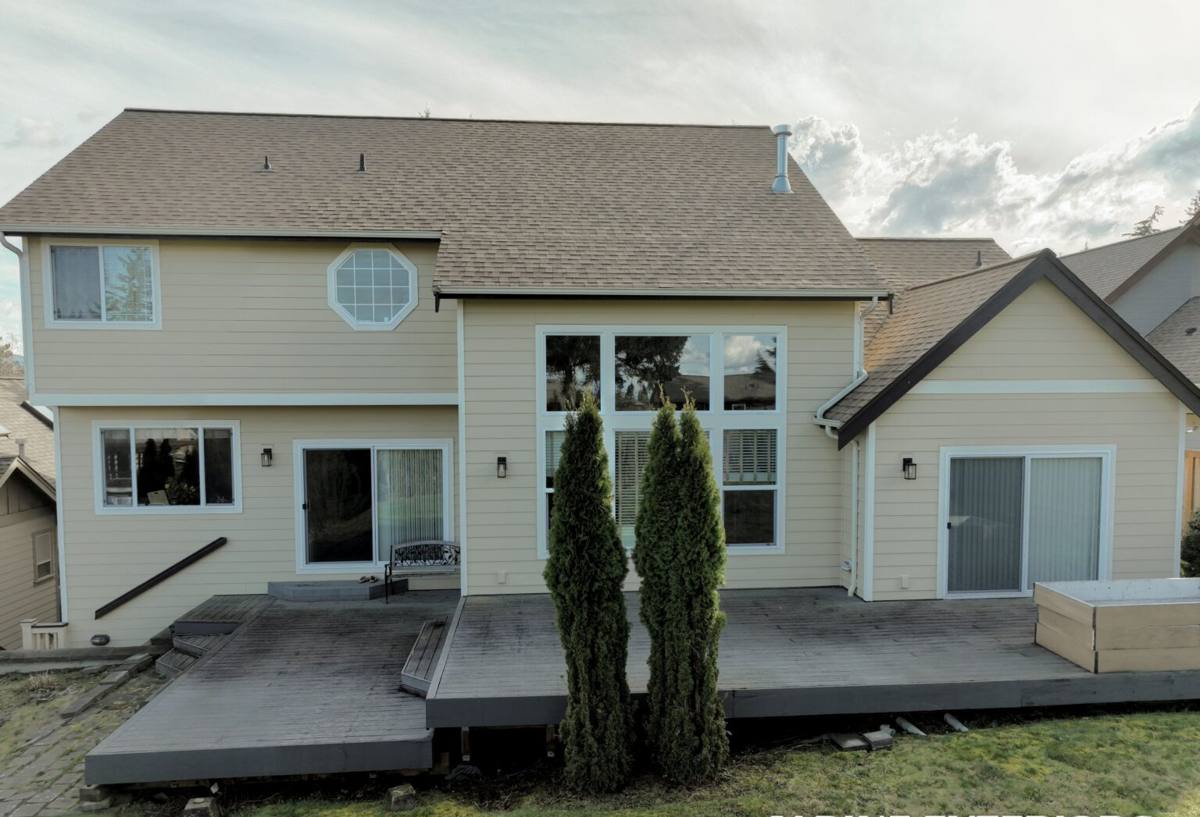
What Whatcom County Weather Actually Does to a Deck
It helps to understand the failure points before talking about the fix. Most deck problems we get called out for in this region trace back to one of a handful of causes, and all of them are climate-driven.
Moisture that never fully leaves
In a lot of the country, a deck gets wet, then gets a real chance to dry out over the following days. Around Ferndale, especially through late fall, winter, and early spring, that drying window can be short or nonexistent for weeks at a time. Wood that stays damp is wood that's set up for rot at joints, fastener points, and anywhere two boards sit tight against each other.
Moss and organic growth
Moss doesn't just look bad — it holds moisture directly against decking and structural members, and it's slippery underfoot on stairs and ramps. Decks with poor airflow underneath, tight board spacing, or shaded northern exposures (common on treed Ferndale lots) grow moss faster than open, sun-exposed decks.
Salt-influenced air
Proximity to Puget Sound and Georgia Strait means the air carries more salt than an inland location would. That accelerates corrosion on exposed hardware — screws, joist hangers, railing brackets — especially anything that isn't rated for it. A fastener that would last decades in eastern Washington can start showing rust streaks in a few seasons here if it's the wrong grade.
Freeze-thaw cycling at footings
Whatcom County doesn't get extreme cold, but it does get repeated freeze-thaw swings through the winter. Footings that aren't poured to the right depth or that sit in poorly drained soil can heave slightly over years, which is where you start seeing a deck that's developed a lean or a bounce that wasn't there originally.
What a Correctly Built Ferndale Deck Includes
None of this requires exotic materials or unusual techniques — it requires not skipping the parts of the job that don't show up in a quick estimate.
- Footings poured below frost depth and sized to the actual soil conditions on the lot, not a one-size-fits-all minimum
- Corrosion-resistant fasteners and structural hardware rated for coastal or high-moisture exposure, not standard interior-grade screws
- Joist hangers, ledger flashing, and any wood-to-house connection detailed to shed water away from the structure, not trap it
- Adequate board spacing and underside airflow so the deck can actually dry between rain events instead of staying damp
- A ledger board attachment that's properly flashed and sealed where the deck meets the house — this is the single most common source of hidden rot on older decks in this region
- Decking material chosen with this specific site's sun exposure, tree cover, and drainage in mind, not just budget
Choosing Decking Material for This Climate
There's no universally "best" decking material — there's a best material for a given site, budget, and maintenance appetite. Here's how the common options actually perform under Ferndale conditions specifically.
| Material | How it handles wet/moss conditions | Maintenance reality | Typical lifespan here |
|---|---|---|---|
| Pressure-treated wood | Resists rot chemically, but surface still holds moisture and grows moss without upkeep | Needs cleaning and sealing every 1-2 years | 15-20 years with upkeep |
| Cedar | Naturally rot-resistant, ages well visually, still needs airflow to avoid moss | Periodic cleaning and re-oiling to hold color | 20-25 years with upkeep |
| Composite decking | Doesn't absorb water the way wood does, but low-grade composites can still stain and grow surface algae in shade | Occasional washing, no sealing or staining | 25-30+ years, varies by product tier |
| PVC/synthetic decking | Fully resists moisture absorption; best option for heavily shaded or low-airflow sites | Lowest maintenance of the group | 30+ years |
We don't push one product line as the answer for every yard. A sun-exposed deck on an open Ferndale lot can do perfectly well in cedar with reasonable upkeep. A shaded deck tucked under fir cover, where moss is a constant fight, is usually better served by composite or PVC decking even at a higher upfront cost, because the maintenance burden of wood in that exact spot is real and ongoing. We'll walk the site with you and tell you honestly which category fits, rather than defaulting to whatever's easiest to sell.
Our Process, Start to Finish
1. On-site consultation
We walk the actual lot — sun exposure, tree cover, drainage, grade, and how the deck will connect to the house — before we talk materials or layout. Every one of those factors changes the right answer for that specific yard.
2. Design and material selection
We put together a layout and material plan based on how you'll actually use the space, your maintenance preference, and budget, then walk you through the trade-offs in plain terms.
3. Permitting
Most custom decks in Whatcom County require a building permit, particularly anything attached to the house or elevated more than a modest height. We handle that process rather than leaving it on you.
4. Footings and framing
This is where a deck's real lifespan gets decided. Footings poured to proper depth, framing sized correctly for the span and load, and every ledger and hardware connection detailed for moisture — done right the first time, because this structural work is nearly impossible to fix cheaply later.
5. Decking, railing, and finish work
Decking installed with the spacing and fastening approach appropriate to the material, railing set to current code height and spacing requirements, and stairs built to be safe underfoot even when wet or mossy.
6. Final walkthrough
We go over the finished deck with you, including what maintenance (if any) the material you chose will need, so there are no surprises a year or two down the road.
Maintenance That Actually Matters Here
Whatever material you choose, a few habits go a long way toward getting the lifespan you're expecting out of it in this climate.
- Clear leaves and debris out of gaps between boards before they trap moisture through the wet season
- Treat visible moss early — a stiff brush and a deck-safe cleaner is far easier than dealing with an established growth pattern
- Check railing and stair hardware annually for early signs of corrosion, especially on decks closer to open water
- Keep gutters and downspouts clear so runoff isn't dumping extra water directly onto or under the deck
- Re-seal or re-stain wood decking on the schedule the product actually calls for, not "whenever it looks bad"
Why a Ferndale-Based Crew Matters
A deck built by a crew that mostly works dry, inland climates will often make reasonable-sounding choices that don't hold up here — standard fasteners instead of coastal-rated hardware, board spacing that looks fine on day one but grows moss by year two, footing depths that meet a generic minimum but not what this soil and freeze-thaw pattern actually call for. None of that shows up as an obvious mistake at handoff. It shows up two, three, five years later as rot, corrosion, or a deck that's developed a wobble.
We work Blaine, Ferndale, and the rest of Whatcom County regularly, which means we're not guessing about how a given lot's sun exposure, tree cover, or proximity to the water will affect a deck over time — we've seen the pattern play out on other decks nearby. That local track record is also why we can give you an honest read on material choice and design instead of a one-size-fits-all pitch.
Common Mistakes We See on Existing Decks
When we're called out to repair or replace an older deck in the area, the same handful of issues show up repeatedly:
| Issue | Why it happens here | What it leads to |
|---|---|---|
| Rotted ledger board | Poor or missing flashing where the deck meets the house | Structural failure at the house connection, often hidden until probed |
| Corroded hardware | Standard-grade fasteners used instead of coastal-rated hardware | Weakened joist hangers and railing brackets over time |
| Persistent moss on decking | Tight board spacing or poor airflow underneath | Slippery surface, accelerated wood decay |
| Sagging or bouncy deck surface | Undersized framing or footings not set to frost depth | Progressive structural movement, costly to correct later |
Most of these are avoidable at the build stage for little or no added cost — they come down to using the right materials and details from the start, not cutting corners that only become visible years later.
Getting a Realistic Cost Picture
Custom deck pricing varies a lot based on size, material, height off grade, railing style, and site access, so we won't put a number here that wouldn't actually apply to your project. What we will say is that the biggest cost swings usually come from material choice (wood versus composite versus PVC) and from site complexity — a deck on a steep or hard-to-access lot costs more to build correctly than one on flat, open ground. We'll give you a clear, itemized estimate after seeing the site, not a ballpark that changes once work starts.
Let's Look at Your Project
If you're planning a new deck in Ferndale or looking at an older one that's showing signs of wear, we're happy to come take a look and give you a straight, no-pressure assessment of what it needs. Use the form below to request a free estimate.