 Blaine Siding
 Dakota Creek's Climate Is Tougher on Siding Than Most Homeowners Realize
Homes in the Dakota Creek area, tucked against the water on the edge of Blaine, sit in one of the more demanding microclimates in Whatcom County. The combination of salt-laden marine air rolling in off the water, long stretches of driving rain through fall and winter, and a moss season that can run eight months or longer puts real, sustained stress on exterior cladding. Siding here doesn't just need to look good for a season or two — it needs to survive decades of moisture cycling and airborne salt without trapping water behind it or breaking down at the surface.
Salt air is corrosive to exposed metal fasteners and trim, and it accelerates the breakdown of lower-grade paint films. Add in the region's near-constant humidity and the shade cover common on lots close to the creek and tree line, and you get ideal conditions for moss, algae, and mildew to take hold on any siding material that can't shed water quickly or resist organic growth. We see the results on homes across Blaine — siding that looked fine when installed but started failing at the seams, corners, and butt joints within a handful of years because it wasn't matched to this specific environment.
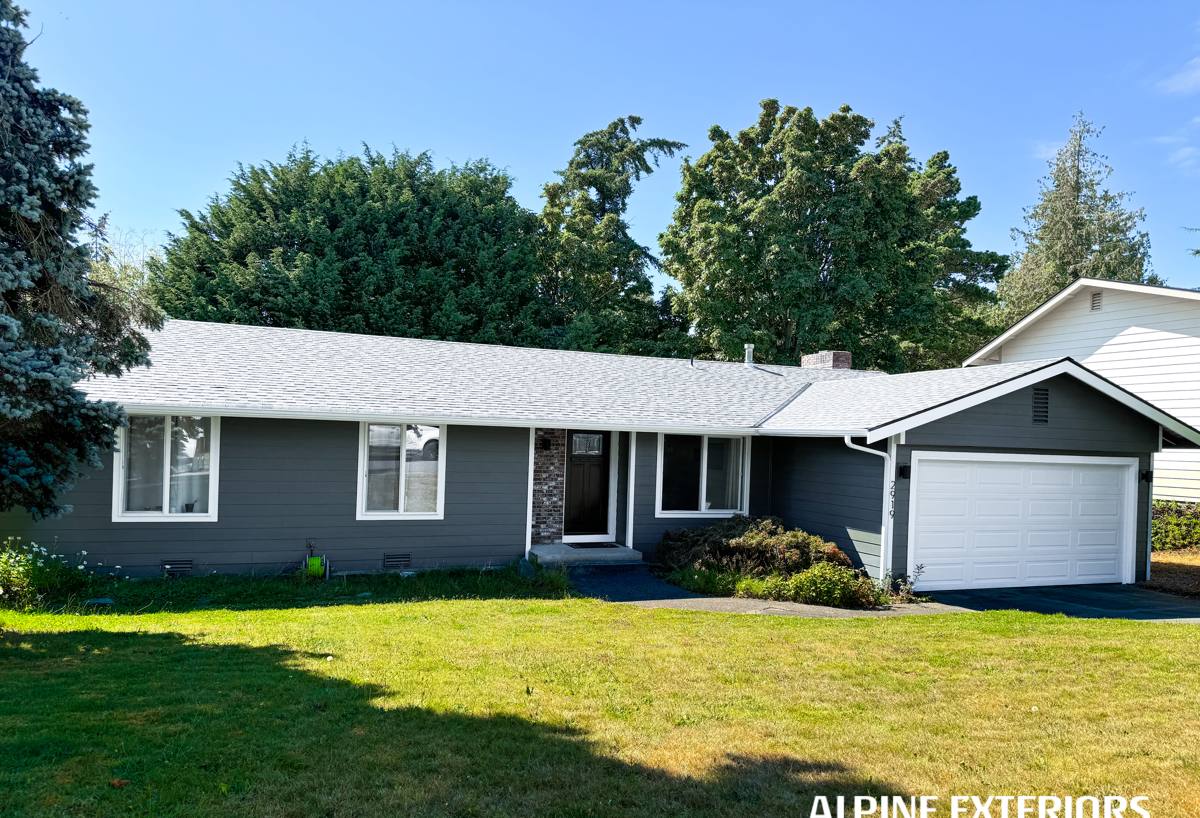
What Dakota Creek Homes Actually Need From Their Siding
Before talking about products or installation methods, it's worth being clear about what "correct" siding performance means for a home in this location. It isn't a single feature — it's a combination of material stability, moisture management, and a finish that can stand up to salt exposure without chalking or peeling.
- Dimensional stability so panels don't swell, cup, or warp when they take on repeated moisture
- A factory-applied finish that resists fading and doesn't rely on the homeowner repainting every few years
- Material that won't feed mold and mildew growth the way untreated wood-based products can
- Non-combustible construction, which matters as wildfire smoke and dry-season fire risk have become a bigger regional concern even in wetter coastal counties
- An installation detail package built around this climate — flashing, clearances, and fastening — not a generic install that assumes a drier region
This is the list we work from on every Dakota Creek project, and it's the reason we don't treat siding installation here as a one-size-fits-all job.
Why We Install Only James Hardie Fiber Cement
We are a James Hardie-only siding contractor. We don't install vinyl, LP SmartSide, primed wood, cedar, or other fiber cement brands, and that's a deliberate standard rather than a limitation of what we're capable of installing. James Hardie fiber cement is engineered specifically to handle the moisture and biological growth pressures common to Pacific Northwest coastal climates, and it's the product we're comfortable standing behind on a home that sits this close to salt water.
Fiber cement is a mix of cement, sand, and cellulose fibers, which gives it a dense, stable structure that doesn't absorb and release moisture the way wood-based siding does. That matters directly for Dakota Creek: less moisture absorption means less swelling, less paint failure, and far less opportunity for moss and mildew to get a foothold in the material itself. James Hardie's ColorPlus factory finish is baked on and cured under controlled conditions, which gives it better fade and adhesion performance than field-applied paint — an important distinction on a home that's going to see salt air every single day of the year.
James Hardie also builds region-specific product engineering into its HZ5 line, formulated for cold, wet climates like ours, as opposed to the HZ10 line built for hot, dry regions. That distinction is part of why we standardized on this manufacturer instead of treating all fiber cement as interchangeable.
Matching the Right Hardie Products to a Dakota Creek Home
Not every Hardie product or profile is the right fit for every part of a home this close to the water. We look at exposure, elevation, and how much direct weather a given wall face takes before recommending a lineup.
| Product | Best Use on Dakota Creek Homes | Why It Fits |
|---|---|---|
| HardiePlank Lap Siding | Primary wall cladding, all elevations | Workhorse product with strong water-shedding lap design; available in several exposure widths |
| HardiePanel Vertical Siding | Accent walls, gable ends, modern facades | Fewer horizontal joints where water can collect on wind-driven-rain elevations |
| HardieTrim Boards | Corners, window and door surrounds | Resists the swelling and rot common to wood trim in high-moisture, high-moss conditions |
| HardieSoffit Panels | Eaves and overhangs | Vented options help reduce trapped moisture in attic and soffit spaces near the water |
On most Dakota Creek homes, the water-facing and shaded north elevations are where we pay the closest attention — those are the walls that stay damp longest and are most prone to moss growth if the water-management details underneath the siding aren't right.
What a Correct Installation Actually Involves
Moisture Management Comes First
The siding itself is only part of the system. Behind every Hardie installation we do, there's a weather-resistive barrier, properly lapped and taped flashing at every window, door, and penetration, and a drainage plane that lets any moisture that does get behind the siding find its way back out instead of sitting against the sheathing. On a home exposed to this much rain and humidity, a poorly detailed water-resistive barrier is the single most common root cause of the rot and mold problems we get called out to fix on other contractors' work.
Fastening and Clearances
James Hardie publishes specific fastener, nailing pattern, and clearance requirements, and they exist for a reason — get them wrong and you create the exact gaps and stress points where water intrudes. We follow manufacturer installation specifications closely, including minimum clearance from grade, roofing, and decking, because those clearances are what keep splash-back and standing moisture away from the bottom edge of the siding.
Joints, Caulking, and Trim Details
Butt joints and trim transitions are where a lot of siding failures start. We use corrosion-resistant fasteners suited to marine air, back-prime and seal cut edges per manufacturer guidance, and keep joint patterns tight and consistent so water has as few entry points as possible.
Our Process for Dakota Creek Projects
- On-site assessment of every elevation, noting shade patterns, moss buildup, and existing moisture damage
- Inspection of the current wall assembly and sheathing condition once old siding is removed
- Repair of any rot, damaged sheathing, or compromised water-resistive barrier before new material goes up
- Installation of a new, properly lapped weather-resistive barrier and flashing system
- Installation of James Hardie siding, trim, and soffit per manufacturer specifications, matched to each elevation's exposure
- Final walkthrough covering caulk lines, paint touch-up on cut edges, and cleanup
Because we only work with one manufacturer's system, our crews aren't relearning installation specs from job to job — they're applying the same detail-level standards on every Dakota Creek home we touch.
Living With Fiber Cement Siding Near the Water
James Hardie siding is low-maintenance, not no-maintenance, and that's worth being upfront about. In a salt air, high-moss environment like this one, a little routine care goes a long way toward protecting the investment.
- Rinse siding with a garden hose once or twice a year to clear salt residue, pollen, and early moss spores
- Keep gutters clear so overflow doesn't run down and stain or saturate wall sections repeatedly
- Trim back vegetation and tree cover that keeps specific wall sections shaded and damp longer than the rest of the house
- Inspect caulking at trim and joints every year or two and have gaps resealed before they let water in
- Address any moss or algae growth early with a gentle wash rather than letting it establish and spread
None of this is heavy labor, but skipping it on a home this exposed shortens the life of any siding product, Hardie included.
Why Local Experience in Dakota Creek Matters
A contractor who has actually worked on homes in this specific area understands things a generic install crew won't — which elevations hold moisture longest, how much moss pressure to expect on a shaded lot near the tree line, and how the salt air here compares to a few miles inland in central Blaine or elsewhere in Whatcom County. That local knowledge shapes real decisions: where to be more conservative with flashing details, which product line and profile to recommend, and how to set homeowner expectations for maintenance.
It also means fewer surprises. We're not guessing at how this climate behaves — we've seen what happens when installation details are cut short on homes exposed to this much moisture, and we build every project to avoid repeating those problems.
Get a Straight Answer on What Your Home Needs
If you're weighing a siding replacement or new construction project near Dakota Creek, we're glad to take a look and give you an honest assessment of what your home's exposure calls for. There's no pressure and no obligation — just a straightforward evaluation and a written estimate you can take your time with. Use the form below to request your free estimate.