 Blaine Siding
 Grandview Sits in the Same Coastal Weather Pattern as the Rest of Blaine
Grandview doesn't get a break from what makes siding hard to keep up here. Like the rest of Blaine and this stretch of Whatcom County coastline, homes in the area sit within reach of salt-laden marine air, winter storms that push rain sideways instead of straight down, and a moss and mildew season that can run close to year-round on shaded walls. Some Grandview properties sit more open to the wind, others are more tree-sheltered, but the underlying pressure on exterior materials is the same across the neighborhood — it just shows up faster on some walls than others.
This page is specific to one thing: James Hardie fiber cement siding, installed correctly, on a Grandview home. We install Hardie exclusively — no LP SmartSide, no vinyl, no Cemplank, no Allura, no primed spruce or cedar — and the reasoning behind that standard matters more in a climate like this one than it would somewhere drier and calmer. Below is what Grandview homes actually need from their siding, what a correct Hardie installation involves, and how we run these jobs in this part of Blaine.
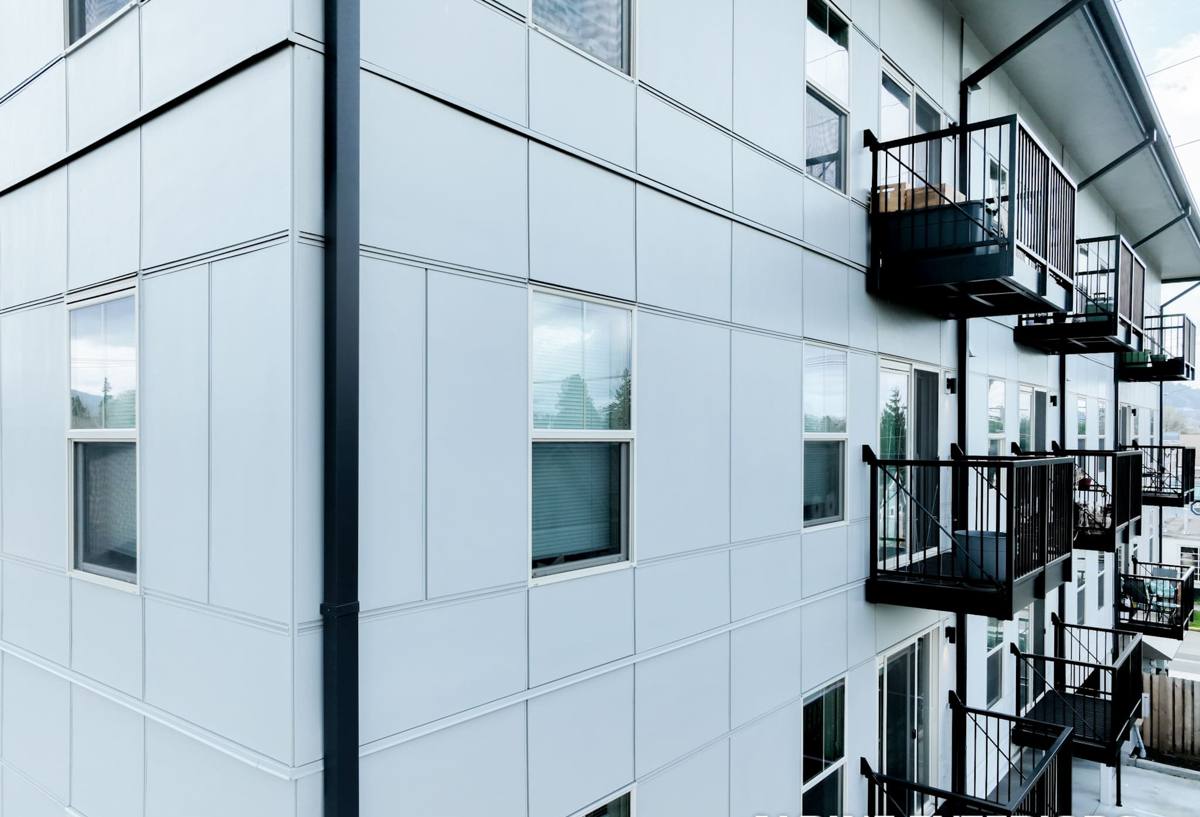
What Salt Air, Driving Rain, and Moss Actually Do to a Wall
Salt Air and Slow Corrosion
Airborne salt doesn't just sit on the surface of a house — it works its way into fasteners, flashing, and any lower-grade trim hardware, accelerating corrosion in ways that aren't obvious until a joint starts failing or a fastener head starts bleeding rust down the face of the siding. The closer a Grandview property sits to open water and prevailing wind, the more of this exposure it takes on, but no home in this part of Blaine is fully out of reach of it.
Driving Rain and Wind-Driven Moisture
Winter systems moving through this part of Whatcom County rarely bring rain straight down. Wind pushes it sideways into siding joints, trim seams, and the transitions where roof meets wall — exactly the details that separate a siding system that holds up for decades from one that lets water in behind the cladding within a handful of wet seasons. A material's moisture rating on paper matters less here than whether it was actually installed to shed wind-driven water at every seam and penetration.
A Moss Season That Doesn't Fully Let Up
Mild temperatures combined with near-constant moisture add up to a growing season for moss and mildew that runs long on shaded and north-facing walls, and Grandview's mix of open and tree-sheltered lots means that pressure varies from one side of a house to the other, sometimes significantly. Any siding material that's porous, or that traps moisture against the substrate instead of shedding it, becomes a growth surface over time regardless of how well it was painted going in.
Why James Hardie Is the Only Product We Install Here
We narrowed our siding offering to one system after seeing, on jobs across Blaine and the surrounding coastline, the gap between what performs well on a spec sheet and what actually holds up on a real Grandview wall a few winters in.
A Non-Combustible, Dimensionally Stable Core
Fiber cement doesn't feed a fire the way wood-based siding can, and it doesn't swell, cup, or warp the way engineered wood siding tends to after repeated wetting-and-drying cycles. In a climate that keeps a wall damp for long stretches of the year, that stability is doing real work every wet season, not just on the install day.
The HZ5 Climate-Engineered Line
James Hardie builds its products in formulations matched to different climate zones, and the HZ5 line is engineered for regions with sustained moisture exposure and freeze-thaw cycling — a close match for Grandview and the rest of the Whatcom County coastline. That's a meaningful difference from a generic fiber cement product built to a national average rather than to conditions like the ones this neighborhood actually sees.
A Factory-Applied ColorPlus Finish
Rather than being painted on-site after installation, ColorPlus finish is baked onto the board in a controlled factory process, giving it more consistent adhesion and color retention under sustained salt air and UV exposure than a field-applied paint job. It also carries its own finish warranty, separate from the substrate warranty — a distinction worth understanding before assuming all "painted siding" warranties are the same.
We don't install LP SmartSide, vinyl, Cemplank, Allura, primed spruce, or cedar, and that's a professional standard rather than a sales position. Each of those products has a place in the broader market, but in a neighborhood dealing with this much sustained salt and moisture exposure, we'd rather stand fully behind one system installed correctly than offer a cheaper alternative that quietly shifts maintenance risk onto the homeowner a few years down the road.
What a Correct Hardie Installation Involves
Checking the Sheathing Before Anything New Goes Up
Once old siding comes off a Grandview home, the sheathing underneath gets checked for rot or soft spots before new siding goes up. Covering damaged sheathing with new Hardie board doesn't fix the problem — it just hides it behind a fresh wall for a few more years until it resurfaces as a bigger repair.
Weather Barrier and Flashing Detail
Most coastal siding failure traces back to water getting behind the cladding, not through the board itself. That means the house wrap, window and door flashing, and every wall penetration get real attention on a Grandview job — this is the step that's easiest to rush and hardest to inspect once the siding is up, so we treat it as non-negotiable.
Fastening, Clearances, and Field Cuts to Spec
James Hardie's warranty depends on installation following their published specifications: correct fastener type and spacing, proper clearance above grade, roofline, and decks, and sealed, primed field cuts rather than exposed raw edges. We install to that spec as the baseline for every job, not as an upgrade option.
Choosing the Right Hardie Product for a Grandview Home
James Hardie makes several distinct product lines, and the right one depends on the home's existing style, trim detail, and how much of the exterior is siding versus accent material. Part of the estimate process is walking through which line actually fits the house rather than defaulting to one option for every project.
| Product | Typical use | What it's suited for |
|---|---|---|
| HardiePlank lap siding | Primary wall siding on most single-family homes | The standard choice for traditional lap profiles; wide range of widths and textures |
| HardiePanel vertical siding | Modern or mixed-material exteriors, gable accents | Clean vertical lines, often paired with lap siding or trim boards for contrast |
| HardieShingle siding | Accent gables, dormers, or full shingle-style homes | A shingle look without the moisture maintenance of real cedar shingles |
| HardieTrim boards | Corners, window and door surrounds, fascia | Matches the siding's finish and durability at the details most exposed to water |
How the Project Runs, Start to Finish
- Inspection and estimate: We look at current siding condition, signs of trapped moisture, and how exposure varies across the home's different walls before pricing the job.
- Tear-off and substrate check: Old siding comes off, and the sheathing underneath gets inspected before anything new is installed.
- Weather barrier and flashing: House wrap and flashing go in at every seam, window, door, and penetration, with particular attention to whichever walls take the most wind-driven rain.
- Installation to manufacturer spec: Fastening, clearances, and field-cut sealing follow James Hardie's published requirements, which is what keeps the warranty intact.
- Final walkthrough: We go over the finished job with the homeowner, cover maintenance expectations for this climate, and confirm the work matches the estimate.
Why a Crew That Already Works Grandview Matters
Working this part of Blaine regularly, not as an occasional stop between jobs elsewhere, shapes decisions on a Grandview project that a crew unfamiliar with the local weather pattern would likely miss — which walls stay wet longest given the prevailing wind, where extra flashing attention earns its keep, and which install-day details are worth the extra time so a homeowner isn't dealing with a callback two winters later. It also means that if a warranty question or maintenance issue comes up years down the line, it's a call to a crew still working in the same neighborhood, not one that's moved on to a different region entirely.
What Affects the Cost of a Grandview Siding Project
| Factor | Why it matters | Typical impact on cost |
|---|---|---|
| Home size and number of stories | More square footage and taller walls mean more material and labor time | Medium to high |
| Sheathing condition once old siding is off | Rot or moisture damage found during tear-off needs repair before new siding goes up | Variable — depends on what's found |
| Trim and detail complexity | Homes with more window trim, corner detail, or accent siding take more labor | Medium |
| Product line and profile chosen | Lap, panel, and shingle products have different material and labor requirements | Low to medium |
| Wind and water exposure of the specific lot | More exposed properties may need additional flashing detail or fastening attention | Low to medium |
Every estimate is specific to the house rather than a flat per-square-foot number, and we walk through which of these factors are actually driving the price during the estimate itself.
Keeping Hardie Siding Looking Right in This Climate
- Rinse siding once or twice a year to clear salt residue and early moss growth before it takes hold
- Keep gutters and downspouts clear so water isn't overflowing directly onto siding below
- Trim back vegetation and tree branches that keep a wall shaded and slow to dry
- Check caulking at trim joints and penetrations periodically, especially after a hard windstorm
- Watch shaded and north-facing walls for moss buildup, since they dry slower than sun-exposed sides
- Inspect flashing at windows, doors, and roof transitions after major storms
- Avoid pressure-washing at close range or high pressure, which can force water behind seams
If you're weighing a siding project for a Grandview home, we're glad to take a look and walk through what your specific property needs — no pressure, no obligation. Use the form below to request a free estimate.