 Blaine Siding
 Grandview's Climate Is Harder on Siding Than Most Homeowners Realize
Grandview sits close enough to the water around Blaine that salt-laden air is part of daily life, even on a clear day. That salt air doesn't just corrode outdoor metal — it works its way into siding fasteners, trim connections, and painted finishes, accelerating wear in ways that homeowners further inland never have to think about. Add in Whatcom County's driving rain, which comes in sideways during winter storms off the Salish Sea, and you have a climate that tests every seam, joint, and lap in a siding system.
Then there's moss. This part of Washington gets a long, damp shoulder season in spring and fall, plus a wet winter, which means shaded and north-facing walls stay moist for extended stretches. Moss and algae don't just look bad — they hold moisture against the siding surface long after the rest of the house has dried out, which is exactly the kind of sustained dampness that breaks down wood-based products and stresses paint films on any siding material.
None of this means siding is doomed in Grandview. It means the material, the installation detail, and the water management behind the surface all have to be right for the conditions, not just for a catalog photo. That's the standard we hold every replacement to.
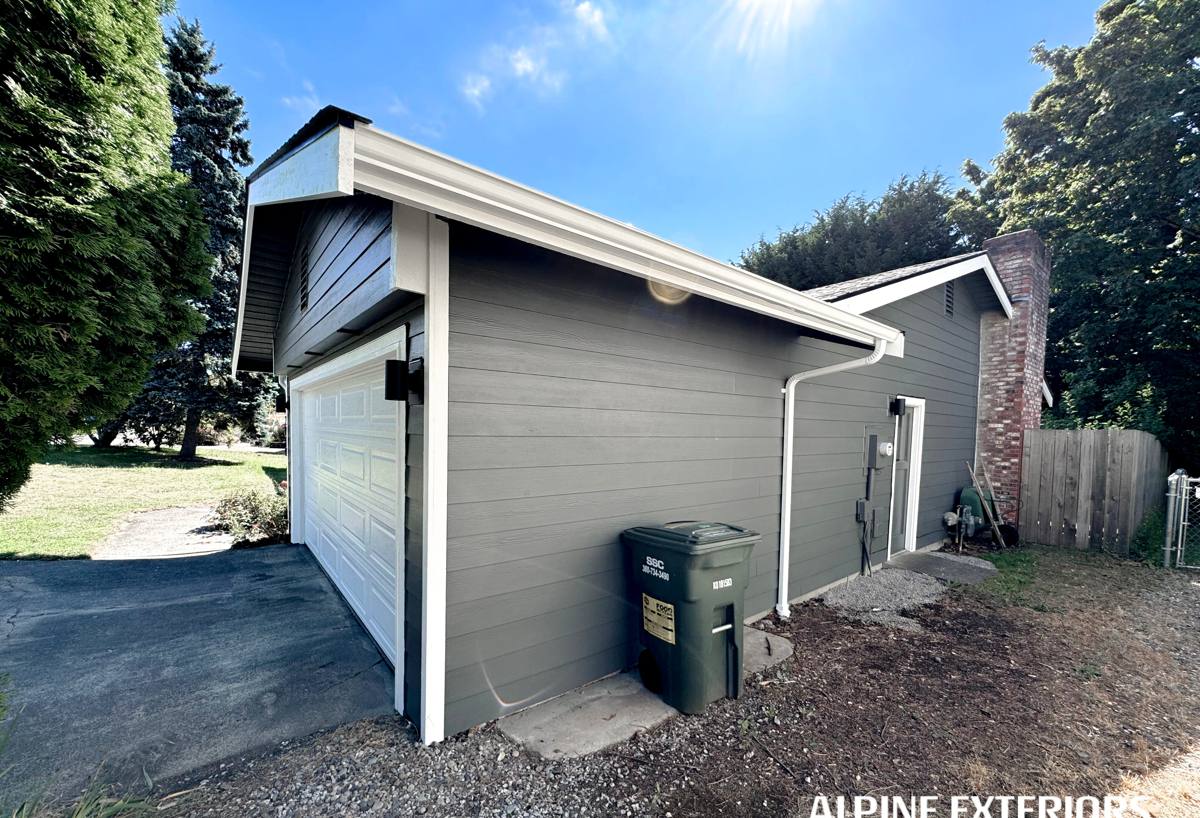
What a Correct Siding Replacement Actually Involves
A siding replacement is not just pulling off old boards and nailing up new ones. Done correctly, it's a full assembly — several layers working together to keep water out and let any moisture that does get in find its way back out.
Full Tear-Off, Not a Cover-Over
We remove the existing siding rather than installing new material over it. Covering over old siding traps whatever moisture damage is already there, hides problems that will keep getting worse, and prevents the new siding from sitting flat and true against the wall. A full tear-off is the only way to actually see what's happening underneath.
Sheathing Inspection and Repair
Once the old siding is off, we inspect the wall sheathing for soft spots, rot, and water staining — the kind of damage that's common on homes that have gone years with failed caulk joints or moss buildup holding water against the wall. Any damaged sheathing gets replaced before anything new goes up. Installing new siding over compromised sheathing just resets the clock on the same problem.
Weather-Resistive Barrier and Flashing
A correctly lapped weather-resistive barrier (WRB) is the actual first line of defense against wind-driven rain, not the siding itself. We install it shingle-style so water sheds downward and outward, and we pay close attention to flashing at every window, door, and roof-to-wall intersection — the spots where the vast majority of siding-related leaks actually originate.
Fastening and Field Detail
James Hardie siding has a specific fastening schedule, clearance requirements, and gap allowance that has to be followed to keep the manufacturer warranty valid and to let the product perform the way it's engineered to. Cut edges get sealed, joints get treated correctly, and nothing gets caulked as a substitute for proper flashing — caulk is maintenance, not waterproofing.
Signs a Grandview Home Needs Replacement, Not Just Repair
Not every siding issue means a full replacement. But in a climate this wet and salt-exposed, certain signs mean patching is just delaying the inevitable — and often costing more in the long run than doing the job right once.
- Soft or spongy siding when pressed, especially near the bottom courses or below windows
- Paint that's bubbling, peeling, or won't hold a fresh coat no matter how well it's prepped
- Visible warping, cupping, or separation at seams and joints
- Persistent moss or algae growth that comes back within a season of cleaning
- Rising utility bills alongside drafts or cold spots near exterior walls
- Rot or staining at trim boards, corner boards, or around window and door casings
- Siding that's original to a much older home and has already been patched multiple times
Why We Install Only James Hardie Fiber Cement
We made a deliberate decision to install James Hardie fiber cement siding exclusively, and it comes down to how the product handles the exact conditions Grandview and the rest of Blaine deal with every year.
Fiber cement doesn't absorb and swell with moisture the way engineered wood products can, and it holds its shape and paint adhesion in salt air and driving rain far more consistently over the long term. It's also non-combustible, which matters more each year as wildfire smoke and dry-season fire risk become a bigger part of Pacific Northwest summers, even in a coastal county like Whatcom.
We don't install vinyl siding or engineered wood products like LP SmartSide, and it's worth being straightforward about why. Vinyl expands and contracts significantly with temperature swings, which can loosen fastening over time and lead to visible waviness, and its color is baked into the material rather than factory-cured onto a fiber cement substrate, so fading shows differently and can't be refreshed without full replacement. Engineered wood products perform well when installed and maintained exactly to spec, but their wood-fiber core is more sensitive to sustained moisture exposure at cut edges and butt joints — exactly the kind of exposure a long, damp Whatcom County winter creates. These aren't reasons to call either product bad; they're the trade-offs that led us to standardize on one material we can install to a consistent standard and stand behind.
How James Hardie Compares on the Factors That Matter Here
The table below reflects general, well-documented differences between siding categories — not specific test numbers or warranty language, which varies by manufacturer and should always be confirmed in writing.
| Factor | James Hardie Fiber Cement | Vinyl | Engineered Wood |
|---|---|---|---|
| Moisture behavior | Dimensionally stable, resists swelling | Doesn't absorb moisture, but seams can allow water behind panels | Sensitive at cut edges and joints if not sealed and maintained |
| Fire classification | Non-combustible | Combustible | Combustible |
| Finish | Factory-applied ColorPlus finish | Color throughout material | Typically field-primed or factory-primed, painted on site |
| Typical maintenance | Periodic washing, repaint on a longer cycle | Low maintenance, limited repair options if damaged | Regular inspection of caulked joints and edges |
| Salt air / coastal exposure | Engineered climate-specific product lines available | Generally stable but can become brittle over time | Requires diligent edge sealing and upkeep |
James Hardie also builds its siding using the HardieZone system, which accounts for regional climate differences. Homes in Whatcom County typically fall into the HZ5 zone, engineered for areas with more moisture exposure and freeze-thaw cycling than the drier HZ10 zone used in the Southwest. We select the product engineered for our actual climate, not a generic national default.
Our Replacement Process, Start to Finish
- Free on-site evaluation. We walk the exterior, check for moisture intrusion and sheathing concerns, and talk through what we're seeing.
- Scope and product selection. We go over lap, shingle, or panel profiles, trim options, and ColorPlus color choices based on the home and your preferences.
- Tear-off and inspection. Old siding comes off, and sheathing is checked and repaired as needed before anything new goes up.
- Weather barrier and flashing. WRB and flashing are installed and lapped correctly at every penetration, window, and door.
- Hardie installation. Siding is installed to manufacturer fastening and clearance specifications, not shortcuts.
- Detail work and inspection. Trim, caulking where appropriate, and a full walkthrough before we call the job done.
- Cleanup. Job site debris, old siding, and fasteners are cleared so the property is left the way we found it — minus the old siding.
What Drives Cost on a Grandview Siding Replacement
Every home is different, and we don't quote sight-unseen numbers, but these are the factors that most affect the final cost of a project in this area.
| Cost Factor | Why It Matters |
|---|---|
| Total square footage | The largest single driver of material and labor cost |
| Sheathing condition | Rot or water damage found during tear-off adds repair scope |
| Siding profile and trim complexity | Detailed trim work and multiple profiles take more labor than a simple lap pattern |
| Number of stories and accessibility | Taller walls and tight access require more equipment and time |
| Existing moss or moisture damage | Areas with long-term moisture exposure often need more prep work |
| Color and finish selection | Factory ColorPlus options vary slightly in cost from standard primed products |
Why a Crew That Already Works in Grandview Makes a Difference
A contractor who works this part of Blaine regularly knows what to expect before the tear-off even starts — the moisture patterns on north-facing and shaded walls, the way salt air ages fasteners and trim faster than manufacturer literature assumes, and the kind of flashing detail that actually holds up through a full Whatcom County winter rather than just looking right on installation day. That experience shows up in fewer surprises mid-project and fewer callbacks after the fact.
It also means straightforward, local accountability. You're not waiting on a call center or a crew that drove in from out of the area for one job. We're installing siding on homes in the same conditions your house sits in, year after year, and we stand behind that work because we're the ones who'll hear about it if it doesn't hold up.
Ready to Talk Through Your Siding?
If your Grandview home is showing signs of wear, or you're just planning ahead, we're happy to take a look and give you an honest read on what it needs. Reach out for a free, no-pressure estimate using the form below.