 Blaine Siding
 Storm Damage Is a Different Problem in Grandview
Grandview homes sit close enough to open water that roofs here take a different kind of beating than roofs twenty miles inland. It's not just wind. It's wind carrying salt air, followed by weeks of driving rain, followed by a long stretch of damp, shaded moss season that never really lets a roof dry out completely. Each of those factors is manageable on its own. Stacked together, year after year, they're what turns a small storm-related problem into a roof that's actively leaking into someone's ceiling.
When we get called out to Grandview after a windstorm, we're rarely looking at one clean, obvious problem. We're usually looking at storm damage layered on top of slow, ongoing wear from the local climate — a lifted shingle here, a moss-clogged valley there, a flashing seam that's been quietly failing for a season or two before the wind finally pushed water through it. Repairing storm damage correctly in this neighborhood means understanding both parts of that picture, not just patching the spot that's dripping.
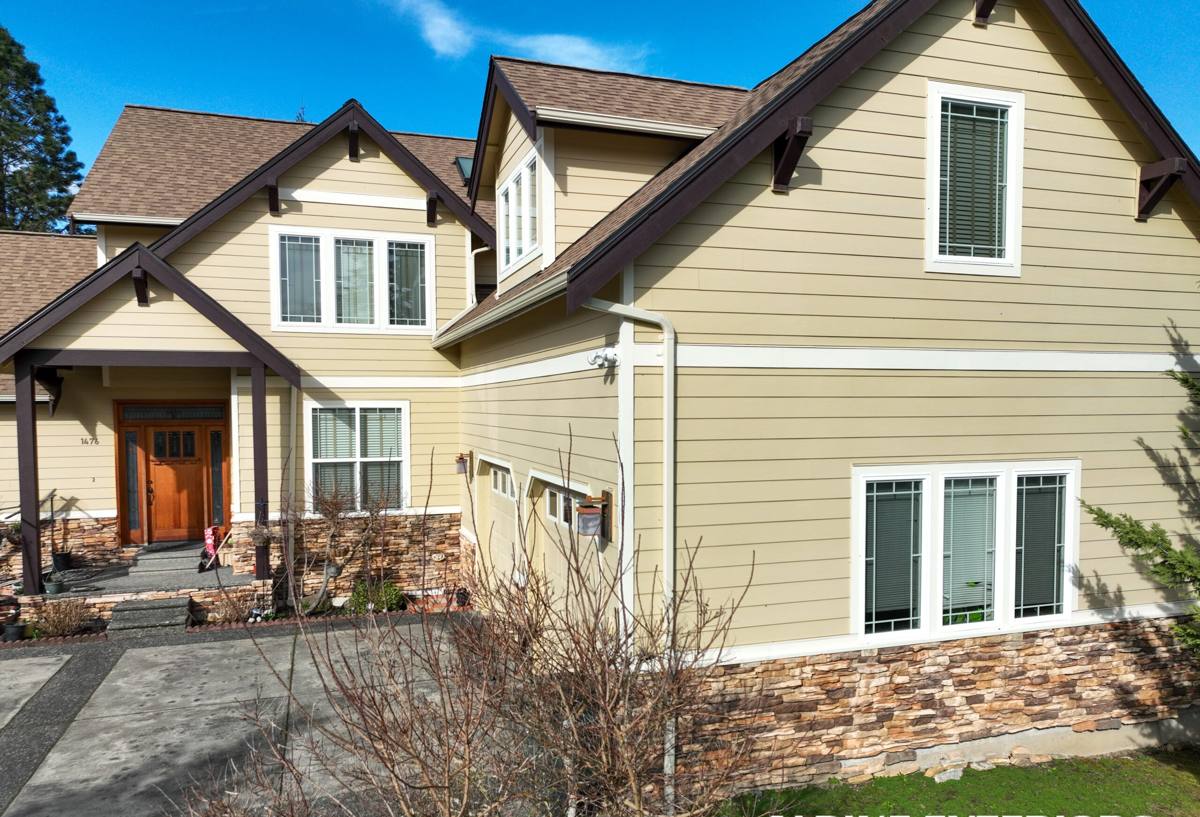
What Storm Damage Actually Looks Like on a Grandview Roof
Homeowners often expect storm damage to be dramatic — missing shingles scattered across the lawn, a visible hole. Sometimes it is. More often, especially in this area, it's subtle enough that it goes unnoticed until water shows up inside the house.
Wind Damage
Gusts off the water don't just blow shingles off, they lift the edges just enough to break the seal underneath without necessarily tearing the shingle loose. The shingle looks intact from the ground but is no longer watertight. The next rain finds that opening.
Moss and Debris Damage
Blaine's long, wet moss season means valleys, gutters, and lower roof edges accumulate organic debris for months at a time. When a storm dumps heavy rain on a roof with moss-clogged valleys or debris-packed gutters, water has nowhere to go but backward — under shingles and behind flashing, exactly where a roof is most vulnerable.
Flashing and Penetration Failures
Flashing around chimneys, vents, and roof-to-wall transitions is sealant and metalwork, not shingle. It's also the first thing salt air and repeated wet-dry cycling degrade. A storm with sustained wind-driven rain will find a compromised flashing seam faster than it will find a weak shingle.
Salt Air Corrosion
Metal roofing components — flashing, drip edge, fasteners, and vent caps — corrode faster this close to the water. Corroded metal doesn't fail all at once; it thins and weakens over years, then gives out during the exact kind of storm event it was supposed to protect against.
Why Fast, Correct Repair Matters More Here
A small storm-damaged area left unrepaired doesn't stay small in this climate. Whatcom County's wet season doesn't offer a roof much recovery time — once water gets under a shingle or behind flashing, the moisture has weeks or months of damp weather to keep working its way into the roof deck, insulation, and framing before a dry stretch gives it a chance to evaporate. That's how a single lifted shingle turns into rotted decking, and how a small ceiling stain turns into a repair that involves more than the roof.
There's also a documentation angle. If the damage is storm-related and you plan to file an insurance claim, the condition of the roof at the time of the storm — and how quickly it was addressed — matters. Waiting weeks to get someone out to look at it can complicate that conversation with your insurer.
What a Correct Storm Damage Repair Involves
A proper repair isn't just replacing whatever shingle or flashing piece is visibly damaged. It's confirming the full extent of what the storm affected, and making sure the fix addresses the cause, not just the symptom.
- Full roof assessment, not just the leak point. Wind and rain damage rarely stay confined to one spot — we check the whole roof plane, valleys, and penetrations, not just where the leak showed up inside.
- Temporary weatherproofing when needed. If a roof is actively exposed, we get it tarped or covered the same visit so it isn't taking on more water while repairs are scheduled.
- Deck inspection under the damaged area. If water got under the roofing material, the plywood or sheathing underneath needs to be checked for softness or rot before anything new goes down over it.
- Matching materials correctly. Repairs should match the existing roofing in type, weight, and where possible, color and age — patchwork that doesn't match shortens the life of the surrounding roof and looks like exactly what it is.
- Flashing and sealant renewal, not just spot caulking. If flashing contributed to the failure, it gets properly re-set and re-sealed, not smeared over with sealant as a quick fix.
- Valley and gutter clearing. Since moss and debris buildup is often part of why water backed up in the first place, we clear the areas that fed the problem, not just repair the point of entry.
- Ventilation check. Poor attic ventilation traps moisture and accelerates rot around a repair area — worth a quick check any time the deck has been exposed.
Our Process for Grandview Storm Calls
Storm damage calls move differently than a routine roof job, and homeowners are usually dealing with some stress on top of the physical damage. Here's how we handle it:
- Same-window response. We prioritize active leaks and exposed decking — the goal is to get water stopped before it does more damage, not to schedule around it.
- On-site inspection and photo documentation. We walk the roof, document the damage with photos, and note anything relevant to an insurance claim, including pre-existing wear versus storm-caused damage.
- Written scope and honest estimate. You get a clear explanation of what's damaged, what needs to be repaired versus what can wait, and a straightforward cost range — no inflated storm-chaser pricing.
- Repair work. We complete the repair with matched materials, proper flashing work, and cleanup of the debris that contributed to the failure.
- Follow-up look. For larger storm events, we're glad to check back after the next heavy rain to confirm the repair is holding before we consider the job closed.
Repair or Replace? What Actually Determines That
Not every storm-damaged roof needs full replacement, and not every roof that "just needs a patch" is actually a good repair candidate. The honest answer depends on a few things:
| Factor | Leans Toward Repair | Leans Toward Replacement |
|---|---|---|
| Roof age | Under 12–15 years, otherwise sound | Nearing or past expected lifespan |
| Extent of damage | Isolated to one area or slope | Multiple areas or widespread wind lift |
| Deck condition | Dry, solid sheathing under damage | Soft, rotted, or repeatedly wet decking |
| Moss/debris history | Manageable with cleaning and maintenance | Chronic buildup causing recurring failures |
| Material matching | Discontinued material still close enough to match | Material discontinued or badly weathered vs. new |
We'll tell you straight which side of that table your roof falls on. A repair that's likely to fail again within a couple of seasons isn't a favor to you — it's a bigger bill later.
Insurance and Storm Claims
Many storm-related roof repairs in this area are at least partially covered by homeowner's insurance, but coverage depends heavily on your policy, the cause of loss, and how the damage is documented. We're not a public adjuster and won't promise a claim outcome, but we can provide the photo documentation, written scope, and honest cause-of-damage assessment your insurer will likely ask for. If wind, not gradual wear, caused the failure, that distinction matters — and it's easier to establish soon after the event than months later.
Why a Local Crew Makes a Real Difference Here
Grandview roofs face a specific combination of exposure that a crew unfamiliar with this coastline won't necessarily catch. A contractor who mostly works drier, inland areas may not think to check for salt corrosion on fasteners, or may underestimate how much moss buildup contributed to a leak versus the storm itself. A crew that already works Blaine and the surrounding Whatcom County coastline knows what to look for because we're seeing the same conditions on roof after roof in this same stretch of weather.
What to Check When Hiring for Storm Repair
- Are they licensed and insured to work in Washington, and will they show proof without you having to ask twice?
- Do they inspect the whole roof, or just patch the visible damage and leave?
- Will they document damage with photos in case you need it for an insurance claim?
- Do they explain repair versus replacement honestly, or push straight to the more expensive option?
- Are they familiar with this area's moss and salt-air conditions, or treating it like a generic repair?
- Do they offer a written estimate before work begins, with no pressure to sign on the spot?
Storms bring out contractors from out of the area looking for quick work — sometimes called "storm chasers." They're not always a problem, but they're harder to reach if something about the repair doesn't hold up six months later. A crew that's still local next season is accountable in a way a crew that left town isn't.
Protecting the Repair Going Forward
Once storm damage is fixed, a little seasonal upkeep goes a long way toward keeping the next windstorm from causing the same problem again. In this climate, that mostly comes down to staying ahead of moss and keeping water moving off the roof instead of pooling or backing up.
- Clear valleys and gutters before the wet season sets in, not after the first big rain.
- Have moss treated or removed before it thickens into a mat that holds moisture against the shingles.
- Check flashing and sealant around chimneys and vents every couple of years — this is where salt air does its quiet damage.
- After any significant windstorm, a quick visual check from the ground for lifted or missing shingles can catch a problem before it becomes a leak.
If a recent storm has left you with a leak, missing shingles, or just a nagging feeling you should have someone look at the roof, we're happy to come take a look. We'll give you a straightforward, no-pressure estimate and tell you honestly what the roof actually needs — you can request one through the form below.