 Blaine Siding
 New Roof Installation Built for the Lynden Climate
Homes in and around Lynden deal with a specific combination of weather that most roofing crews from outside Whatcom County simply don't plan for correctly. Long, wet winters. Weeks of low clouds and drizzle that never quite dry out a roof deck between storms. Wind-driven rain that comes in at an angle instead of straight down. And a moss and algae season that, if a roof isn't built to shed it, can start working against the shingles within a year or two of installation. A new roof installed here needs to be detailed differently than the same roof installed in a dry inland climate, and that starts with material selection and doesn't stop until the last ridge cap is nailed down.
We install roofs specifically for this part of Washington. That means every job accounts for moisture management first — not as an afterthought, but as the organizing principle behind how the roof is built, layer by layer.
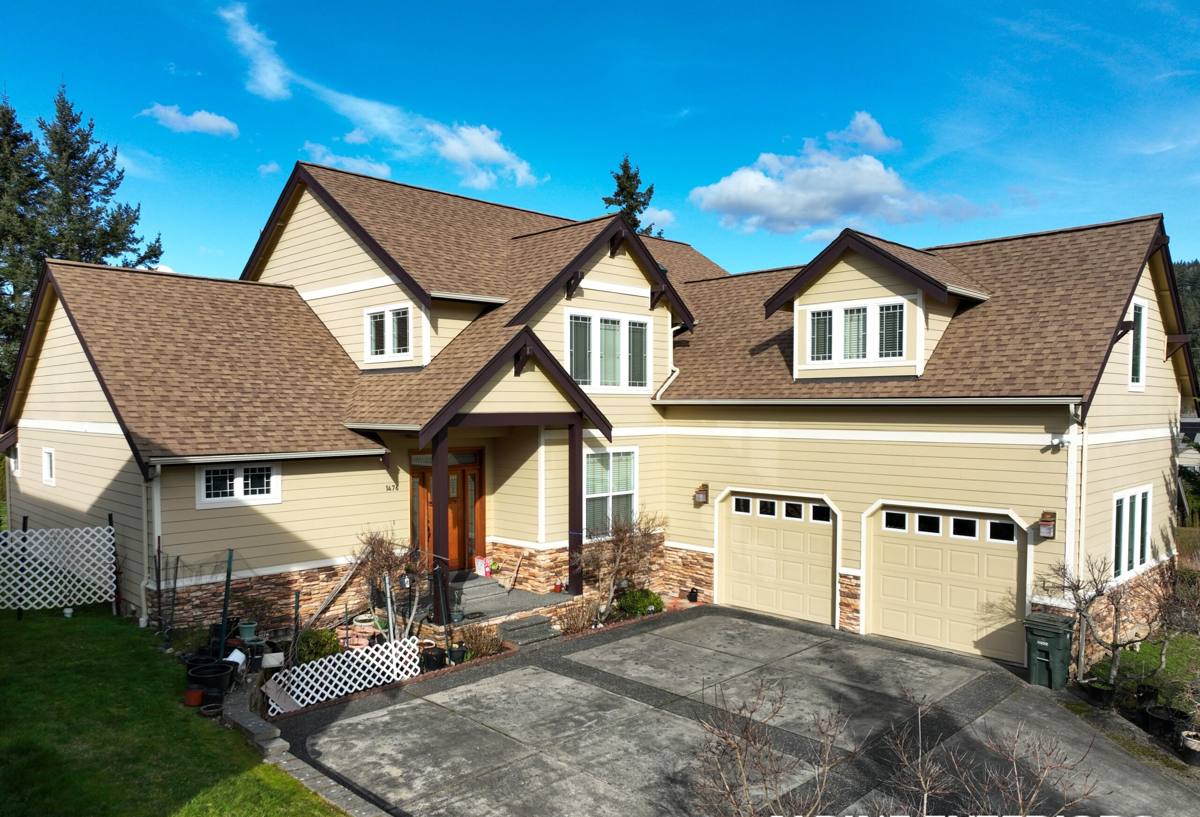
What Local Homes Actually Need From a New Roof
Moisture Is the Real Enemy, Not Just Rain
Most roof failures in this region aren't caused by a single storm — they're caused by moisture that gets trapped and never fully leaves. Poor attic ventilation, underlayment that isn't rated for extended wet exposure, and flashing details that were "good enough" for a drier climate all combine to shorten a roof's life well before its shingles are actually worn out. A correctly installed roof in Lynden has to manage water on the surface and manage humidity underneath the surface at the same time.
Moss and Algae Resistance
Shaded roof sections, north-facing slopes, and areas near trees are the first places moss takes hold locally. Once moss establishes itself, it holds moisture against the shingle surface, works into the granule layer, and can lift shingle edges over time — which is how small leaks start. A new roof gives you the chance to build in moss resistance from day one, rather than fighting an established colony later.
Wind-Driven Rain at the Edges and Penetrations
The vast majority of leaks on well-built roofs don't happen in the open field of the roof — they happen at valleys, chimneys, skylights, vent pipes, and roof-to-wall transitions. In a climate with sustained driving rain, these details need to be over-built relative to manufacturer minimums, not installed to the bare code requirement.
What a Correct New Roof Installation Involves
A quality tear-off and replacement is a sequence, and skipping or rushing any step is where long-term problems get built into an otherwise new roof.
- Full tear-off — removing existing roofing down to the deck, never installing a new layer over old, worn material.
- Deck inspection and repair — checking for soft spots, delamination, or rot, especially around old penetrations and eaves, and replacing any compromised sheathing before anything else goes down.
- Ice and water shield at vulnerable areas — eaves, valleys, and around penetrations get a self-adhering waterproof membrane, not just standard underlayment.
- Synthetic underlayment across the field — a water-resistant barrier across the full deck that holds up to weeks of exposure if weather interrupts the job.
- Flashing at every transition — new step flashing, counter-flashing, and valley metal rather than reusing old flashing that may already be compromised.
- Ventilation correction — balancing intake and exhaust so the attic can actually dry out between wet spells.
- Field installation — shingles, panels, or shakes installed to manufacturer spec and local wind exposure, with attention to nailing pattern and exposure.
- Ridge, hip, and penetration detailing — the finishing details that determine whether the roof sheds water correctly for the next several decades.
Choosing a Roofing Material for Whatcom County Weather
There's no single "best" roofing material for every home — it depends on your roof's pitch, shading, budget, and how the house looks. What matters locally is how each option handles sustained moisture and moss pressure.
| Material | How It Handles This Climate | Maintenance Consideration |
|---|---|---|
| Asphalt composition shingles (standard) | Good performance when ventilation and flashing are done correctly; algae-resistant granule options are worth the upgrade here | Periodic moss/debris removal, especially on shaded slopes |
| Architectural / laminate shingles | Thicker profile sheds wind-driven rain better than 3-tab; longer track record in wet climates | Same moss awareness as standard shingles, less prone to edge lift |
| Metal roofing (standing seam or panel) | Sheds water and moss very effectively due to smooth, slick surface and steep drainage paths | Higher upfront cost; fastener and sealant details matter long-term |
| Cedar shake | Traditional regional look, but requires disciplined ventilation and treatment to manage constant moisture exposure | Higher ongoing maintenance; not our default recommendation for low-maintenance homeowners |
We'll walk through these trade-offs honestly during an estimate — including where a given material might not be the right fit for your roof's shading or pitch, regardless of how it looks in a brochure.
Our Process, Start to Finish
Homeowners in Lynden want to know two things up front: what's actually happening on their roof, and how long their property will be disrupted. Here's how we run a new roof installation.
1. On-Site Assessment
We inspect the existing roof, attic ventilation, and any visible signs of past moisture issues before recommending materials — not before we've actually looked.
2. Written Estimate
You get a clear scope of work and pricing before any commitment, including what's included in tear-off, deck repair contingencies, and material options.
3. Scheduling Around the Weather
We plan installs with realistic windows for this climate, and we know how to sequence a tear-off so your home isn't left exposed if weather moves in faster than expected.
4. Installation and Daily Cleanup
Debris and old material are cleared from the property daily — we don't leave a job site exposed or cluttered overnight longer than necessary.
5. Final Walkthrough
Before we consider the job finished, we walk the roof and the property with you and confirm everything meets the standard we set at the estimate.
Ventilation: The Part of a Roof You Don't See But Always Pays For
Ventilation is one of the most under-discussed parts of a re-roof, and one of the most consequential in this specific climate. An attic that can't exhale trapped moisture will sweat from the inside, which shortens shingle life from underneath — regardless of how good the shingles themselves are. Correcting intake and exhaust balance during a new roof install is one of the highest-value things we do, and it's often something a previous roof never had done correctly in the first place.
What Affects the Cost of a New Roof
| Factor | Why It Matters |
|---|---|
| Roof size and number of facets | More valleys, hips, and transitions mean more labor and flashing detail |
| Deck condition | Rotted or soft sheathing found during tear-off adds material and labor |
| Material choice | Asphalt, architectural, metal, and cedar all carry different material and labor costs |
| Pitch and access | Steeper roofs and limited access require more safety equipment and time |
| Ventilation upgrades | Correcting intake/exhaust balance may require added vents or baffles |
We don't quote a job without seeing the roof — anyone offering a firm number over the phone for a full tear-off and replacement is guessing, and that guess usually shows up as a change order later.
Signs Your Roof Needs Replacing, Not Just Patching
- Granule loss showing up in gutters or downspouts consistently, not just after one storm
- Shingles that are curling, cupping, or lifting at the edges
- Visible moss or dark streaking across large sections, not just a shaded corner
- Soft spots or sagging visible from the ground or in the attic deck
- Daylight visible through the roof deck from inside the attic
- Repeated leak repairs in different spots each wet season
- A roof that's approaching or past the expected lifespan of its material
Why a Crew That Already Works Lynden Matters
A roof installed by a crew unfamiliar with this region's weather pattern is a roof that's more likely to be built to generic minimums — correct ventilation ratios guessed rather than calculated, flashing details built for a drier climate, or moss resistance treated as optional rather than standard. Working regularly in and around Blaine and Whatcom County means we're not learning the local climate on your roof. We know which slopes hold moss, which details fail first under sustained wind-driven rain, and which ventilation mistakes show up two winters later instead of two weeks later. That local pattern recognition is part of what you're paying for, not a separate line item.
If your roof is showing its age or you're planning ahead rather than waiting for a leak, we're happy to take a look and walk you through your options. Fill out the form below for a free, no-pressure estimate on your Lynden-area roof.