 Blaine Siding
 Why Lynden Homes Wear Out Their Siding Faster Than the Warranty Sticker Suggests
Most siding sold in this country is rated against a national average climate that doesn't exist anywhere near Whatcom County. Homes in and around Lynden sit inside a weather pattern that's genuinely harder on exterior materials than what a siding label's fine print assumes: damp marine air carrying salt inland from the Strait of Georgia and Puget Sound, long stretches of driving, wind-blown rain rather than gentle vertical rainfall, and a moss and algae season that can run eight months or more in shaded, north-facing, and tree-lined yards. None of that is dramatic on any single day. It's the accumulation, year after year, that separates siding that looks good at year twenty from siding that's chalking, cupping, or rotting at year twelve.
A siding replacement in this area isn't just a cosmetic upgrade. Done right, it's a chance to correct whatever the original installation got wrong — usually around moisture management, not the visible siding itself — and to put a product system on the wall that was actually engineered for this climate zone rather than a generic national spec.
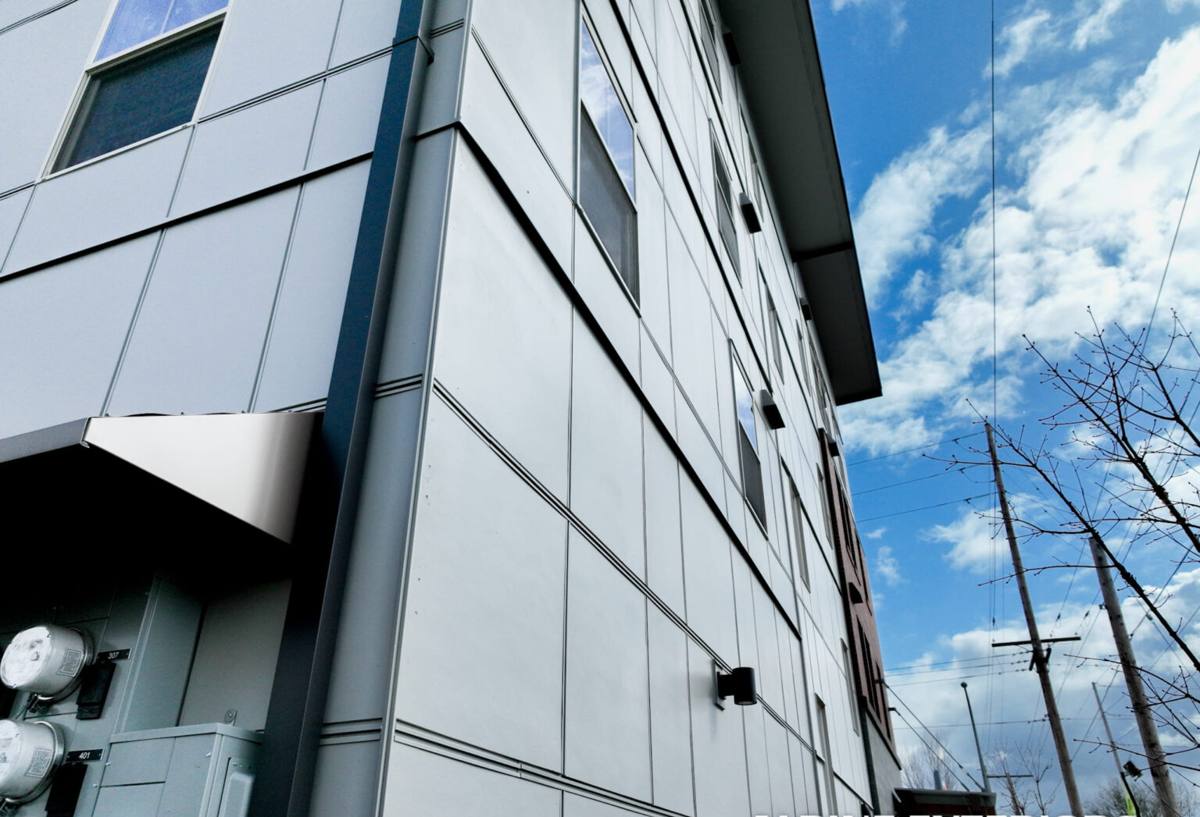
What Whatcom County Weather Actually Does to Siding Over Time
Salt Air and Coastal Moisture
Blaine and the surrounding Whatcom County coastline sit close enough to salt water that airborne salt is a real factor in material selection, not a coastal-city talking point. Salt-laden moisture accelerates corrosion on fasteners, trim flashing, and any metal components in the wall assembly. It also speeds up the breakdown of lower-grade paints and coatings, which is why factory-cured, baked-on finishes hold up so much better here than field-applied paint that's fighting salt exposure from day one.
Driving Rain
Pacific Northwest rain doesn't fall straight down as often as people assume — wind pushes it sideways into wall assemblies, seams, and butt joints. That means water-resistive barriers, flashing details, and caulk joints matter more here than in drier climates where a wall can get away with sloppier detailing. A siding job that looks fine from the curb can still be letting water behind the cladding if those details were rushed.
Moss, Algae, and Extended Damp Season
Shaded lots, mature trees, and long stretches of overcast, damp weather create ideal conditions for moss and algae growth on siding, especially on north- and west-facing walls and anywhere overhangs are shallow. Beyond the appearance issue, sustained moisture held against a wall by moss growth keeps the substrate wetter for longer, which matters a great deal if that substrate is wood-based.
Signs a Lynden Home Needs Full Replacement, Not Another Repair
Homeowners often ask whether a problem area can just be patched. Sometimes it can. But certain signs point to a wall system that's failing broadly, not locally, and patching those just delays a bigger repair later.
- Soft or spongy spots when you press on the siding, especially near the bottom courses, corners, and below windows
- Persistent moss or algae staining that returns within a season or two of cleaning
- Cupping, warping, or visible separation at panel or lap joints
- Paint that's failing uniformly across large wall sections rather than in isolated spots
- Visible gaps at trim, window, and door transitions where caulk has failed repeatedly
- A musty smell or interior moisture signs on exterior walls
- Siding that's original to a home built before modern water-resistive barrier standards were common
If two or more of these show up at once, it's usually a sign the underlying wall assembly — not just the visible siding — needs attention, and that's a replacement conversation, not a caulk-and-paint conversation.
What a Correct Siding Replacement Actually Involves
The siding you see is the last layer of a system. A replacement done to spec addresses everything behind it, in this order:
- Removal and inspection. Old siding comes off and the sheathing underneath gets inspected for rot, soft spots, or prior water damage that needs to be cut out and replaced before anything new goes up.
- Water-resistive barrier. A new weather barrier is installed correctly lapped, shingle-style, so water sheds down and out rather than getting trapped behind the wall.
- Flashing at every penetration. Windows, doors, hose bibs, vents, and any other wall penetration get properly flashed so driving rain can't work its way in around them — this is the single most common place older installations cut corners.
- Rainscreen or drainage gap where appropriate. Especially valuable in a climate like this, a small air gap behind the siding lets any moisture that does get past the surface drain and dry out instead of sitting against the wall.
- Correct fastening. Fastener type, spacing, and placement matter for both wind resistance and long-term panel performance, and they're specific to the siding product being installed.
- Finish work. Trim, corners, caulking, and touch-up painting are done to a standard that holds up under sustained coastal moisture, not just to a standard that looks clean on install day.
Skipping or rushing any one of these steps is how a wall ends up needing another full replacement in fifteen years instead of thirty or more.
Why We Install Only James Hardie Fiber Cement Siding
We made a deliberate decision to install one siding system: James Hardie fiber cement. We don't install vinyl, LP SmartSide, Cemplank, Allura, primed spruce, or cedar. That's not because those products have no legitimate uses — it's because after years of working on homes in this specific climate, we concluded that fiber cement, and Hardie's version of it specifically, is the product that best matches what a Lynden-area home actually has to withstand.
Hardie manufactures siding in climate-specific formulations — its HZ5 product line is engineered for regions with freeze-thaw cycles and sustained moisture exposure, which describes Whatcom County reasonably well. The material is non-combustible fiber cement, which doesn't absorb and swell with moisture the way wood-based products can, and it doesn't degrade under UV and salt exposure the way some vinyl formulations do over a long enough timeline. The factory-applied ColorPlus finish is baked on and warrantied separately from the substrate, which matters directly in a salt-air environment where field-applied paint has to work harder to hold up.
| Material | Moisture Behavior | Salt Air / UV Durability | Maintenance |
|---|---|---|---|
| James Hardie Fiber Cement | Does not swell, warp, or rot; engineered HZ5 formulation for this climate | Baked-on factory finish resists fading and coastal wear | Occasional cleaning; repaint cycle is long or optional depending on color program |
| Vinyl | Won't rot, but can warp or distort under heat and doesn't stop moisture behind it | Can chalk and fade faster under sustained UV and salt exposure | Low, but panels can crack in cold and are hard to color-match if damaged |
| Cedar / Wood | Absorbs moisture readily; vulnerable to rot in damp, shaded conditions | Needs regular sealing/staining to resist coastal weathering | High — regular refinishing required to prevent decay |
| Primed Spruce / Engineered Wood | Moisture-sensitive at cut edges and joints if not perfectly sealed | Performance depends heavily on installation quality and upkeep | Moderate to high; edge sealing and repainting needed over time |
We're not going to tell you a wood or vinyl home is doomed — plenty perform fine when installed and maintained carefully. But we build a business on standing behind what we install, and fiber cement engineered for this climate zone gives us a product we can back with a strong transferable warranty and confidence that the job still looks right in twenty years, not just twenty months.
Our Siding Replacement Process for Lynden Homeowners
The process is the same whether the home is right on the coast or further inland toward Lynden's farmland — the details just get adjusted for exposure and site conditions.
- Free on-site estimate. We walk the exterior with you, look at current siding condition, trim, flashing, and any trouble spots you've noticed, and talk through what a correct replacement involves for your home specifically.
- Written scope and product selection. You get a clear scope of work and help choosing the right Hardie product line, profile, and color for your home and site conditions — sun exposure, shade, and moss risk all factor in.
- Scheduling around weather windows. We plan installation around realistic Pacific Northwest weather rather than promising a date that ignores it — rushing a job into a rain window is how corners get cut.
- Tear-off and sheathing inspection. Old siding comes off, and we don't proceed over damaged sheathing without talking to you about it first.
- Full wall system installation. Weather barrier, flashing, fastening, and siding installation done to manufacturer spec, not just to "looks finished from the street" spec.
- Final walkthrough. We go over the finished work with you before calling the job done.
Cost Factors Specific to a Lynden Siding Replacement
Every home is different, and we're not going to put a fake number on this page. What we can tell you is what actually moves the price on a job like this in this area:
| Factor | Why It Matters Here |
|---|---|
| Extent of sheathing repair needed | Homes with hidden moisture damage from prior water intrusion need more than a straight re-side |
| Home size and wall complexity | Corners, dormers, and multi-story sections all add labor and material |
| Siding profile and trim detail | Lap width, shingle-style panels, and trim board choices affect material cost |
| Access and site conditions | Tree cover, slope, and setback affect scaffolding and staging needs |
| Whether a rainscreen gap is added | A worthwhile upgrade in this climate, but it adds a labor step |
| Color and finish selection | Factory ColorPlus finishes vary by line and can affect material pricing |
The only way to get a real number is a site visit — anyone quoting a firm price over the phone for a full replacement is guessing.
Why Hiring a Crew That Already Works This Area Matters
Siding installation quality depends heavily on whether the crew understands the specific conditions they're building for. A crew that primarily works in a drier climate, or that treats every job with the same generic detailing regardless of location, is more likely to under-build the moisture management side of the job — because in their normal working conditions, it doesn't fail as visibly or as fast. In Whatcom County, those shortcuts show up. Correct flashing, adequate drainage planning, and fastener choices that account for salt exposure aren't optional extras here — they're the difference between siding that performs for decades and siding that needs attention again in under ten years.
Local familiarity also means fewer surprises during permitting and inspection, a better read on which sides of a given home need the most moisture protection based on sun and wind exposure, and a realistic sense of how the region's damp season should shape a project schedule.
Living With Your New Siding: Keeping It Performing Long-Term
Fiber cement siding is low-maintenance, not zero-maintenance. A periodic rinse to keep moss and algae from establishing, especially on shaded or north-facing walls, goes a long way in this climate. Keeping gutters clear and downspouts directed away from the foundation reduces splash-back moisture at the base of the wall, which is one of the most common places siding takes on early wear regardless of material. Trimming back vegetation that keeps a wall section shaded and damp also helps — moss needs sustained moisture to take hold, and airflow is one of the simplest defenses against it.
If you're weighing whether your Lynden-area home is due for a full siding replacement, or you just want an honest look at what condition your current siding is really in, we're glad to come take a look. The estimate is free, there's no pressure, and you'll get a straight answer about what your home actually needs.