 Blaine Siding
 Building New in Birch Point: Why Window Choices Matter From Day One
If you're framing a new home or a major addition near Birch Point, the windows you choose and how they're installed will shape how that house performs for the next 30 years. New-construction windows are different from replacement units in one key way: they use a nailing flange that gets integrated directly into the wall's weather-resistive barrier during framing, rather than being retrofitted into an existing opening. Done right, this creates one continuous drainage plane from roofline to foundation. Done wrong, it creates a hidden path for water to get behind the siding and into the wall cavity — and in a marine climate like this one, that mistake doesn't announce itself for years.
Birch Point sits close enough to the water that homes here take a different kind of weather beating than inland Whatcom County properties. Salt-laden air, wind-driven rain off the Strait, and a moss season that can run eight months out of twelve all put extra demands on the building envelope. New construction is the one time you get to set that envelope up correctly before siding, trim, and finish work cover up the details.
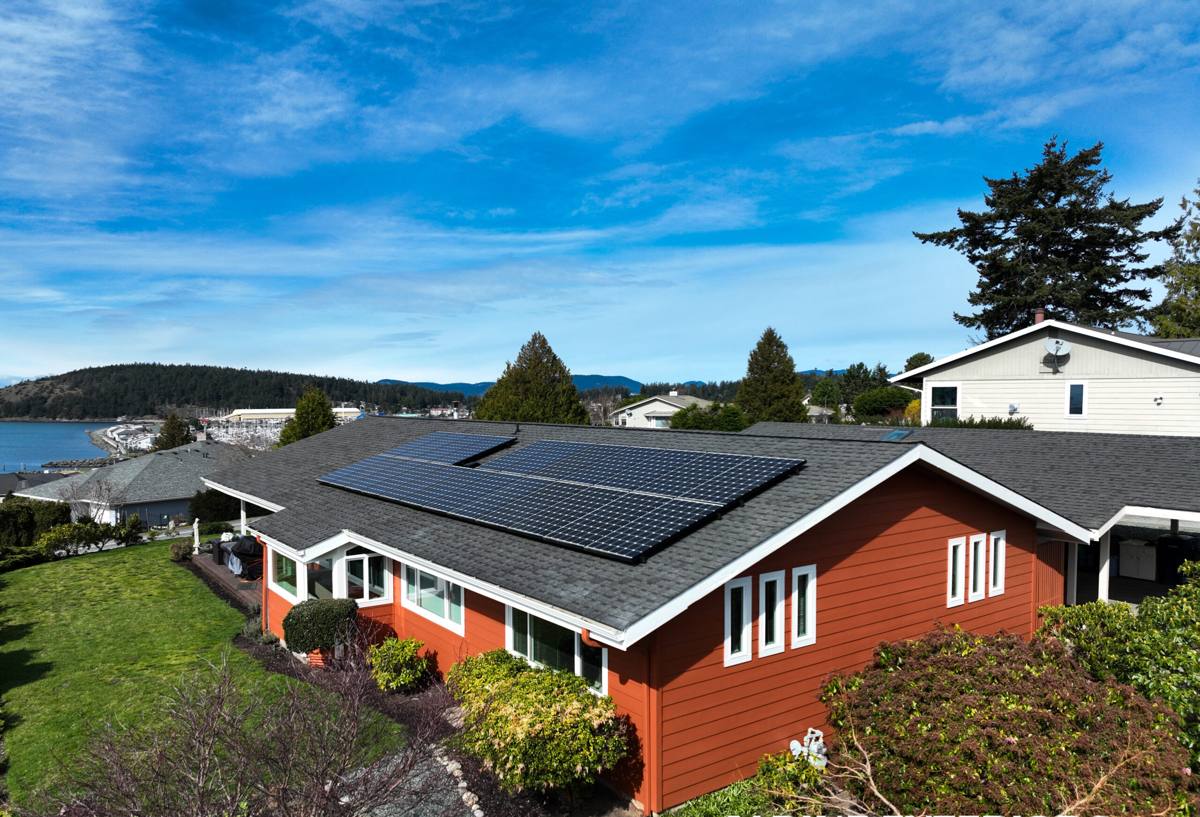
What Birch Point's Climate Actually Does to a Window Opening
Salt Air and Metal Components
Proximity to saltwater accelerates corrosion on exposed fasteners, hinge hardware, and lower-quality flashing metals. Windows and flashing materials that aren't rated for coastal exposure can start showing pitting or staining well before an inland home would see any wear. This is a specification issue, not just an installation issue — the wrong flashing tape or the wrong screw alloy is a slow failure waiting to happen.
Driving Rain, Not Just Rain
Blaine and the surrounding Whatcom County coastline get weather that arrives sideways as often as it arrives straight down. Wind-driven rain tests a window's water management at the sill and jambs far harder than a still, vertical rainfall would. A sill pan flashing detail that would be "good enough" in a drier, calmer climate can be inadequate here.
The Long Moss Season
Extended damp periods mean anything that traps moisture — poorly lapped house wrap, missing back-dam flashing, caulk used in place of proper flashing — stays wet longer and grows organic material faster. Moss and algae don't just look bad on trim and sills; sustained dampness against wood trim accelerates rot from the outside in.
What a Correct New-Construction Window Installation Includes
There's a specific sequence that has to happen in order, and skipping or reordering steps is where most water problems originate.
- Rough opening prep — squared, level, and sized to the window manufacturer's tolerance, with the sub-sill sloped slightly to the exterior.
- Sill pan flashing — a fully sealed pan, with corners formed or taped rather than just caulked, that directs any water that gets past the window back outside the wall.
- Weather-resistive barrier integration — house wrap or building paper lapped shingle-style (upper layers over lower layers) so water always sheds downward and outward, never into a seam.
- Window set and shim — unit set into the pan, shimmed plumb and square without over-compressing the frame, which can bind sashes or distort seals.
- Flange fastening — nailing flange fastened per manufacturer spec, then taped or flashed at head, jambs, and sill in the correct shingle-lap order.
- Head flashing — a drip cap or integrated head flashing that sheds water clear of the opening rather than letting it run down the face of the window.
- Interior and exterior sealant — backer rod and sealant at the right locations, sized to allow the assembly to move with temperature and moisture without failing.
Every one of these steps is inspectable at the time it happens and essentially invisible once siding goes on. That's exactly why the crew doing the work — and their habits when nobody's double-checking — matters more here than the brand name on the window sticker.
Choosing Window Products for a Coastal Whatcom County Build
There's no single "best" window brand for every project — the right choice depends on budget, the home's design, and how exposed the specific opening is to weather. That said, a few frame material trade-offs come up often enough on Birch Point builds to be worth laying out plainly.
| Frame Material | Coastal Performance Notes | Maintenance Reality |
|---|---|---|
| Vinyl | Good moisture and salt resistance; performance varies significantly by manufacturer quality tier | Low — occasional cleaning, no repainting |
| Fiberglass | Dimensionally stable in temperature swings, strong resistance to moisture-driven warping | Low to moderate — very durable, higher upfront cost |
| Wood (clad exterior) | Interior warmth with an exterior shell protecting from weather, but any breach in the cladding exposes wood to rot | Moderate — cladding needs to stay sealed and intact |
| Aluminum | Strong and slim sightlines, but conducts heat and cold and is more prone to condensation in this climate | Moderate — thermal breaks help, hardware needs coastal-rated fasteners |
We install a range of these depending on what the project calls for. Our standard is to size glazing and frame specs to the exposure of each elevation — a window on the water-facing side of a Birch Point lot often warrants a higher performance tier than one tucked on a sheltered wall, even on the same house.
Glazing Considerations Specific to This Area
Double-pane, low-E glazing with an argon fill is a reasonable baseline for most new builds in this region. On exposed elevations facing the water, some homeowners opt for a higher-performance glass package to cut down on both heat loss and condensation risk, since persistent dampness in the air makes condensation on interior glass more noticeable during the wetter months. We'll walk through what makes sense for each elevation rather than spec'ing the same package around the whole house by default.
Why Local Installation Experience Matters Here
New-construction window flashing is one of those trades where the difference between "correct" and "close enough" doesn't show up on move-in day. It shows up three, five, or ten winters later, as staining at a sill, soft trim, or a damp spot on drywall below a window after a hard rain. A crew that has installed windows through multiple wet seasons in this specific stretch of coastline has already seen what fails here and adjusts for it as a matter of habit — not as an afterthought when something goes wrong.
That local pattern recognition covers things like: which elevations on a typical Birch Point lot take the worst wind-driven rain, how much lap is actually needed on house wrap in a moss-prone microclimate, and which flashing tape products hold their bond through repeated freeze-thaw-damp cycles rather than just the first dry summer.
Our Process for a New-Construction Windows Project
- Walk the plans and rough openings with the builder or homeowner before windows arrive, checking sizes and elevation-specific exposure
- Confirm flashing and house wrap sequencing with the general contractor so trades aren't working out of order
- Install sill pans and flashing per manufacturer instructions, photographing each opening before it's covered
- Set, shim, and fasten each window to spec — square, plumb, and without frame distortion
- Integrate head flashing and complete shingle-lap sequencing with the house wrap
- Apply interior and exterior sealant at the correct locations only — not as a substitute for flashing
- Final walkthrough with the builder to confirm every opening is ready for siding and trim
We coordinate directly with framers, siding crews, and general contractors so the window installation fits cleanly into the overall build schedule rather than becoming a bottleneck or a rework item later.
Common Mistakes We Watch For on Coastal Builds
Most window-related water intrusion on new construction traces back to a handful of recurring issues, and they're worth knowing about even if you're hiring someone else for the work:
- Caulk used as the primary water barrier instead of proper flashing — caulk fails first and fails quietly
- House wrap lapped incorrectly, sending water into a seam instead of over it
- Sill pans skipped or improvised with tape alone, with no true back dam
- Windows over-shimmed or racked during install, straining seals and hardware from day one
- Fasteners or flashing metals not rated for salt air exposure, corroding ahead of schedule
- Head flashing omitted because "the siding will handle it" — siding is not a flashing detail
Cost Factors for New-Construction Window Installation
Pricing on new-construction window work depends on far more than window count, and homeowners are often surprised by which factors move the number most.
| Factor | Why It Matters |
|---|---|
| Number and size of openings | More openings and larger units mean more flashing details and labor hours per house |
| Elevation exposure | Water-facing walls near Birch Point may warrant upgraded flashing packages or higher-tier glazing |
| Frame material and glazing tier | Vinyl, fiberglass, wood-clad, and aluminum carry different material costs and performance |
| Coordination complexity | Working around a tight framing schedule with multiple trades can affect labor efficiency |
| Site access | Some Birch Point lots have limited staging space, which affects material handling and crew time |
We provide a written estimate broken down by these factors rather than a flat per-window number, so you can see exactly where the cost is coming from and where there's room to adjust the specification.
What Homeowners and Builders Should Ask Before Hiring
- Do you install a true sill pan flashing on every opening, or rely on tape and caulk?
- How do you handle house wrap lapping around window openings specifically?
- Can you show examples of flashing work before it was covered by siding?
- What frame materials and glazing packages do you recommend for a water-facing elevation versus a sheltered one?
- How do you coordinate scheduling with framers and siding crews on a new build?
A contractor who's done this work around Blaine and the rest of Whatcom County's coastline should be able to answer each of these without hesitation, because they've had to solve for salt air, driving rain, and long wet stretches on real jobs, not just in a training manual.
Get a Straight Answer for Your Birch Point Build
Every lot near Birch Point faces the weather a little differently depending on orientation, tree cover, and how close it sits to the water. We're happy to walk your plans, talk through window and flashing choices elevation by elevation, and give you a clear, no-pressure estimate for the new-construction window work on your project. Use the form below to get started.