 Blaine Siding
 A New Roof, Built for a Peninsula Surrounded by Water
Point Roberts sits on its own peninsula at the bottom of the Tsawwassen headland, bordered by Boundary Bay and the Strait of Georgia on three sides. That geography is part of what makes the community unusual, and it's also what makes roofing here different from a typical inland Whatcom County job. Homes get near-constant exposure to salt-laden air, wind that carries rain sideways instead of straight down, and a wet season long enough to grow a serious moss problem on any roof that doesn't dry out quickly. A new roof installed without those specific conditions in mind tends to show flashing leaks, corroded fasteners, or moss damage years before it should.
We install new roofs for Point Roberts homes regularly, which means the logistics and the climate factors below aren't theoretical for us — they're what every job on this peninsula actually involves. This page covers what a correct installation looks like here, what affects the cost, and why the practical realities of working in Point Roberts specifically matter for whoever ends up on your roof.
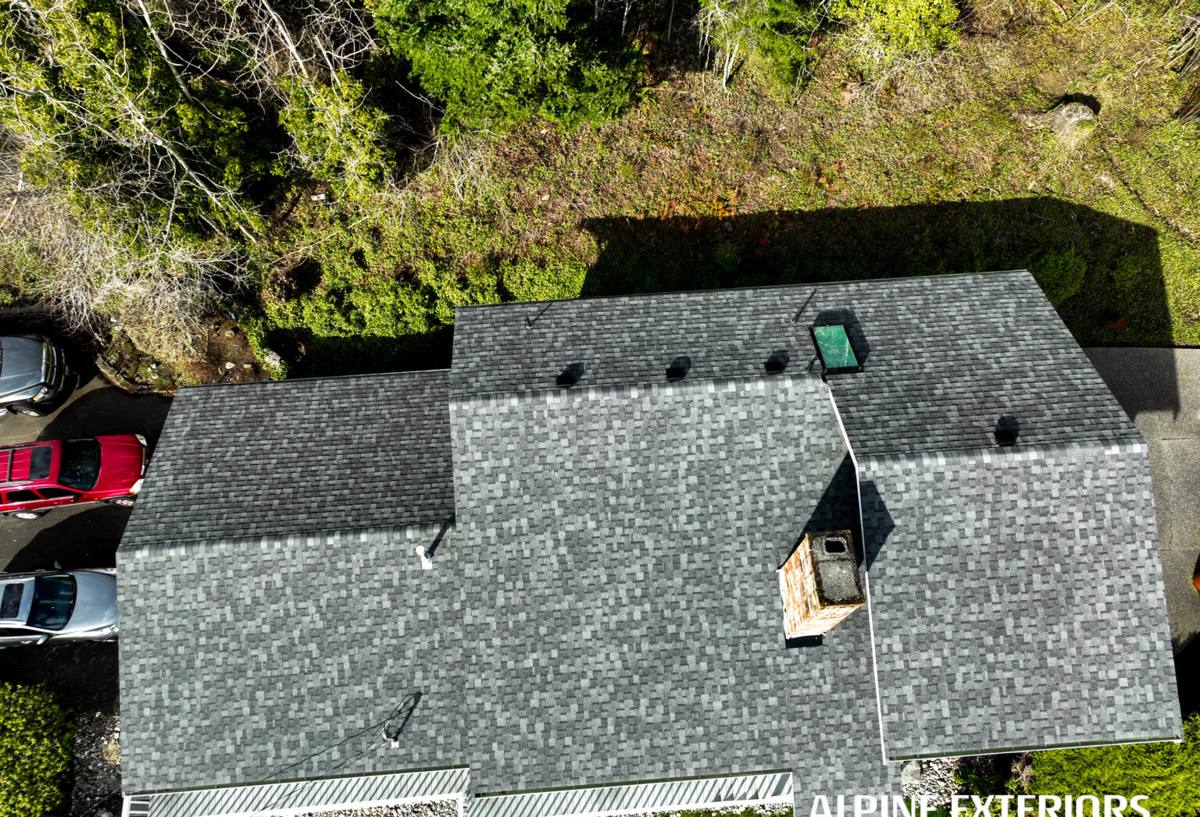
What Point Roberts' Climate Does to a Roof
Salt Air From Every Direction
Because the peninsula is surrounded by water rather than backing onto it from one side, salt exposure here isn't limited to homes with a water view — it reaches the whole community. Salt-laden air accelerates corrosion on exposed metal: roofing nails, drip edge, flashing, and vent stack boots all wear faster than they would twenty miles inland. When those components fail first, water finds its way in around them long before the shingles themselves are worn out, which is why fastener and flashing quality matters as much as the roofing material on top of them.
Wind-Driven Rain
Storm systems moving through this part of the Strait of Georgia usually bring real wind with the rain, and that wind pushes water sideways and upward under shingle edges, around chimneys, and into any gap in a flashing detail. A roof that would perform fine under calm, straight-down rainfall can still leak here if the underlayment coverage, shingle exposure, and flashing laps aren't installed correctly for a wind-exposed site.
A Long Moss Season
Many Point Roberts lots carry mature conifers, and the combination of tree shade and a mild, wet season that runs from fall through spring gives moss plenty of time to establish on north-facing slopes and shaded valleys. Moss holds moisture against the roof surface long after the rest of the roof has dried, lifts shingle tabs as it grows, and works its way under laps and around fasteners. Left alone, it shortens the life of an otherwise sound roof.
What a Point Roberts Roof Actually Needs
- Corrosion-resistant fasteners and flashing throughout — not just at the eaves, but at every penetration and transition
- Ice-and-water shield membrane at eaves, valleys, and around penetrations, not just standard felt or synthetic underlayment
- Step flashing and counter-flashing sized and lapped for wind-driven rain, not minimum-code shortcuts
- Balanced intake and exhaust ventilation, so trapped attic moisture doesn't add to the moss and rot problem from underneath
- A roofing material chosen with shaded, damp conditions in mind, particularly on north-facing or tree-covered slopes
Why Working in an Exclave Changes Who Should Do This Job
Point Roberts is a U.S. exclave — the only way in or out by land is through Canada, which means every truckload of shingles, roll of underlayment, and piece of equipment has to clear a border crossing to reach the site, as does every crew member. That's a fact of geography that doesn't affect most roofing jobs anywhere else in Whatcom County, but it affects every roofing job here.
A crew that doesn't work Point Roberts regularly tends to underestimate this. Material deliveries get scheduled without accounting for crossing times, crews show up short a truck of shingles, or a job gets started without the logistics fully lined up and ends up stalled partway through. On most projects that's an inconvenience. On a roof, a stalled tear-off means an open deck sitting exposed to Point Roberts' rain, which is one of the worst situations a home can be in.
Working this community regularly means staging materials ahead of the tear-off, knowing realistic crossing and delivery windows, and building the schedule around them from the start — not discovering the problem mid-job. It also means being a known, reachable local crew if a warranty question or a storm-related issue comes up after the job is done, rather than a company that isn't set up to come back easily.
What a Correct New Roof Installation Involves
Tear-Off and Deck Inspection
Old roofing comes off down to the deck so the sheathing underneath can actually be inspected, not covered over. Soft, delaminated, or rotted decking — most often found around old vent boots, chimneys, or valleys that have been leaking slowly — gets replaced before anything new goes down. Roofing installed over a compromised deck fails from underneath regardless of how good the shingles are.
Underlayment and Ice-and-Water Shield
Eaves, valleys, and every penetration get ice-and-water shield membrane, with synthetic underlayment across the rest of the field. This is the layer that protects the deck if wind-driven rain ever gets past the roofing material itself, and it's not a place to cut corners on a wind-exposed peninsula.
Flashing
Step flashing at wall intersections, counter-flashing at chimneys, and continuous drip edge at eaves and rakes — installed with laps oriented correctly for this site's prevailing wind and rain direction, not just to a generic code minimum. Flashing failures are the single most common source of "new roof, still leaking" calls, and they're almost always an installation detail issue, not a material one.
Field Installation and Ventilation
Shingles or panels go down to the manufacturer's nailing pattern and exposure spec, with attention to consistent alignment and fastener placement — under-driven or over-driven nails are a common source of early failure. Ridge and soffit ventilation get balanced so the attic can actually exchange air, which reduces the moisture buildup that feeds both rot and moss.
Cleanup and Walk-Through
Every job wraps with a full site cleanup, including a magnetic sweep for stray nails, and a walk-through where we point out what was done and answer questions before calling it finished.
Roofing Material Options for This Climate
| Material | How it holds up here |
|---|---|
| Architectural (dimensional) asphalt shingles | Good balance of cost and durability; algae-resistant (AR) shingle lines are worth choosing on shaded, moss-prone slopes |
| Standing seam metal | Sheds moss and moisture more effectively than shingles due to its smooth, steep-shedding surface, and holds up well to wind-driven rain when panels and flashing are properly seamed; higher upfront cost |
| Cedar shake | Traditional look but requires the most ongoing maintenance in a moss-prone, moisture-heavy climate like this one; we'll discuss the honest maintenance commitment before recommending it |
| 3-tab asphalt shingles | Lower upfront cost but thinner profile and shorter expected lifespan; generally not our first recommendation for a wind- and salt-exposed peninsula site |
Our New Roof Installation Process
- Inspection and estimate: We look at the current roof, deck condition where visible, ventilation, and how sun and wind exposure vary across your specific lot before putting together a number.
- Material selection: We walk through the options above against your budget, roof pitch, and how shaded or exposed your roof is, so the choice fits the house rather than a one-size answer.
- Scheduling and material staging: Because of the border crossing, we schedule deliveries and crew logistics with enough buffer that a tear-off isn't left open waiting on a truck.
- Tear-off and deck repair: Old roofing comes off, the deck gets inspected, and any needed sheathing repair happens before anything new goes down.
- Dry-in: Ice-and-water shield and underlayment go down promptly so the deck isn't left exposed longer than necessary given how often this area sees rain.
- Flashing and field installation: Flashing details, then the roofing material itself, installed to manufacturer spec and wind-appropriate technique.
- Ventilation check: Intake and exhaust venting confirmed and balanced.
- Cleanup and walk-through: Full site cleanup, nail sweep, and a final walk-through so you know exactly what was done.
What Affects the Cost of a New Roof Here
| Factor | Why it moves the estimate |
|---|---|
| Roof size and pitch | More square footage and steeper pitches both increase material and labor time |
| Number of tear-off layers | Removing multiple old layers of roofing takes more labor and disposal than a single layer |
| Deck condition | Sheathing repair or replacement found during tear-off adds material and time not visible from the ground |
| Material choice | Asphalt, metal, and cedar carry different material and installation costs, as shown above |
| Roof complexity | Valleys, dormers, chimneys, and multiple roof planes all add flashing work and labor time |
| Site logistics | Material staging and delivery scheduling for a Point Roberts job factor into overall project timing |
We walk through these specifics during the estimate so the number makes sense, rather than handing over a figure with no explanation behind it.
Signs Your Roof Needs Replacement, Not Just Repair
- Granule loss heavy enough that shingles look bare or patchy in spots
- Curling, cracking, or missing shingles across multiple areas rather than one isolated spot
- Moss coverage thick enough to hold visible moisture, especially on north-facing slopes
- Daylight visible through the attic decking, or staining on interior ceilings
- Rust streaking from flashing or fasteners
- A roof approaching or past 20-25 years old with no major work done
- Repeated leak repairs in different spots rather than one recurring problem area
None of these guarantee a full replacement is the only option, but each is worth an honest inspection before another wet season adds to the damage.
Choosing a Roofing Crew for a Point Roberts Home
- Are they licensed, bonded, and insured to do roofing work in Washington?
- Do they already work in Point Roberts, or would this be their first job crossing the border to get here?
- Can they explain how they'll schedule material deliveries around border crossing times?
- Do they inspect and address deck condition during tear-off, or just roof over it?
- Will they explain fastener and flashing material choices specific to a salt-air, wind-exposed site?
- Do they offer a clear, written estimate that explains what's driving the cost?
If your Point Roberts home needs a new roof, we're glad to come take a look and put together a straightforward, no-pressure estimate. Reach out using the form below to get started.