 Blaine Siding
 Roofing in Nooksack: What Whatcom County Weather Actually Does to a Roof
Nooksack sits inland from the coast, so it doesn't take the direct salt spray that beachfront parts of Whatcom County deal with — but it's not immune to it either. Marine air moves up the county on prevailing winds, and combined with the region's long wet season, that moisture works into roofing materials year after year. What really drives roof failure out here, though, is the combination of near-constant fall-through-spring rain and heavy tree cover. Nooksack's mix of open farmland and wooded lots means a lot of roofs sit under or near conifers, which drop needles into valleys and against flashing and create the shaded, damp conditions moss loves.
A roof in this area isn't fighting one enemy, it's fighting three at once: sustained rain load, slow-growing moss and lichen that lift shingle edges, and the freeze-thaw swings that happen a handful of times each winter. None of these are dramatic on their own. They're slow, cumulative damage — which is exactly why so many Nooksack roofs look fine from the ground for years before a homeowner discovers soft decking or a stained ceiling.
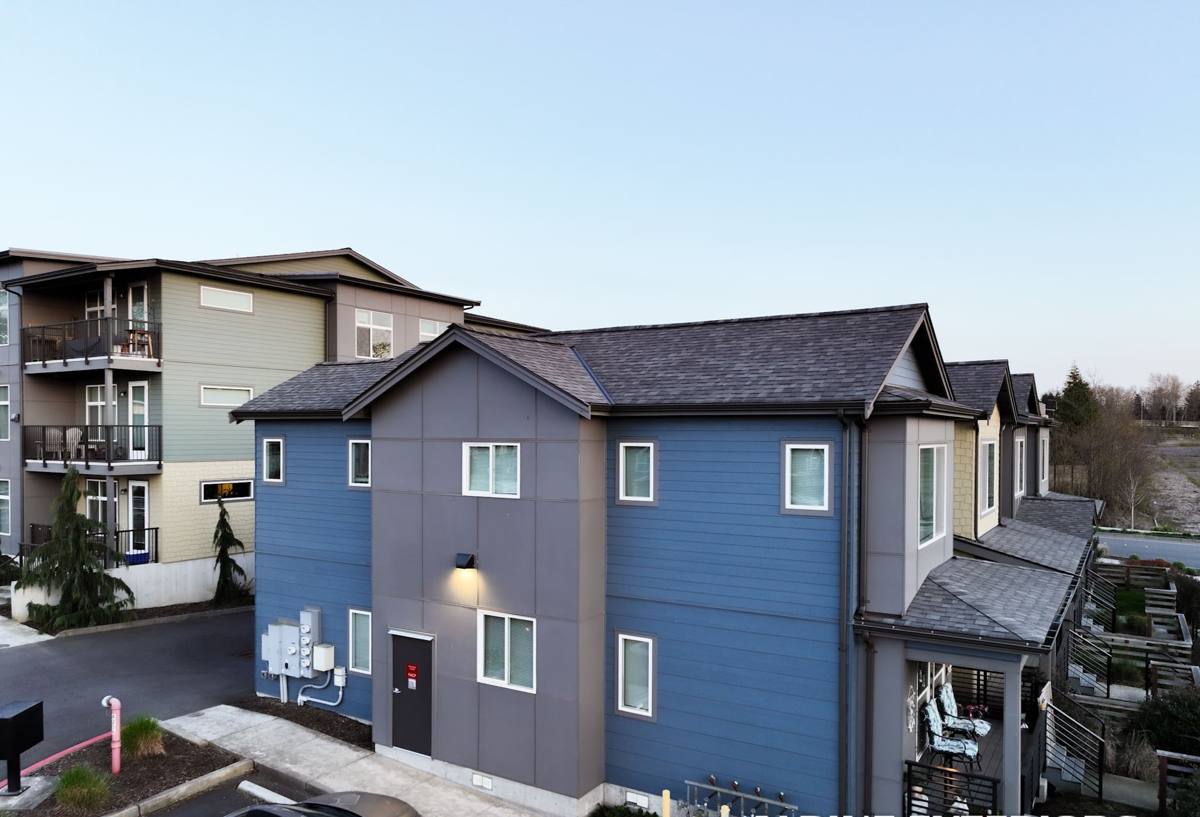
Signs a Nooksack Roof Is Due for Replacement, Not Another Repair
Repair makes sense when the damage is isolated. Replacement makes sense when the roofing system itself — not just one spot — has aged out. Here's how we tell the difference on a typical Nooksack home.
- Granule loss heavy enough that you're finding sand-like grit in gutters every time it rains
- Moss established along the ridge, in valleys, or under shaded eaves, especially if it's already lifted shingle tabs
- Shingles that are cupping, curling at the edges, or cracking when walked on
- Soft or springy decking felt underfoot, or daylight visible through the attic sheathing
- Repeated leaks in different spots after storms, rather than one recurring trouble area
- Roof is 20+ years old (asphalt) or original underlayment is failing even if shingles still look okay
- Flashing around chimneys, skylights, or vent stacks that's rusted, separated, or was never step-flashed correctly
If it's one or two of these, a targeted repair or a moss treatment and gutter clean might buy years. If it's several at once, patching one area just moves the problem — replacement is the honest recommendation.
Why Moss Is a Bigger Deal Than It Looks
Moss isn't just cosmetic. Its root structure holds moisture directly against the shingle surface and works into the gap under tabs, which accelerates granule loss and can eventually lift shingles enough for wind-driven rain to get underneath. On a shaded, north-facing slope — common on wooded Nooksack lots — moss can take hold within a couple years of a roof wash if the tree canopy isn't trimmed back and the roof doesn't have any zinc or copper strip protection at the ridge.
What a Correct Roof Replacement Involves
A roof replacement is more than swapping old shingles for new ones. The parts you don't see are what determine whether the roof actually performs through a Whatcom County winter.
| Layer | What It Does | Why It Matters Here |
|---|---|---|
| Decking inspection & repair | Confirms the plywood or OSB underneath is solid | Years of slow moisture intrusion soften decking before shingles show obvious damage |
| Ice & water shield | Self-adhering waterproof membrane at eaves, valleys, and penetrations | Covers the spots where wind-driven rain backs up under shingles |
| Synthetic underlayment | Water-resistant barrier across the full roof deck | A second line of defense during the months shingles are exposed to sustained rain |
| Drip edge & flashing | Metal edging and step/counter flashing at walls, chimneys, valleys | Most leaks trace back to flashing, not the shingle field itself |
| Ventilation (intake & exhaust) | Balanced airflow through the attic | Controls condensation and moisture buildup that rots decking from underneath |
| Field shingles or panels | The visible roofing material | Only as good as everything installed beneath it |
Skip any one of these and the roof will underperform its warranty regardless of how good the shingles are. We treat the underlayment and flashing package as non-negotiable on every replacement, not an upsell.
Material Options We Install
There's no single "best" roofing material — it depends on the home, the roof's slope and shading, and the homeowner's tolerance for maintenance versus upfront cost. Here's how the common options stack up for a property like the ones we see around Nooksack.
| Material | Typical Lifespan | Moss/Moisture Behavior | Maintenance | Notes |
|---|---|---|---|---|
| Architectural asphalt shingle | 25–30 years | Good with proper ventilation and zinc/copper strips; needs periodic moss removal in shaded areas | Low to moderate | Most common choice locally; wide color range, straightforward warranty |
| Standing seam metal | 40–50+ years | Sheds water and moss very well due to smooth, sloped surface | Low | Higher upfront cost; excellent for steep or heavily shaded roofs |
| Synthetic/composite shingle | 30–50 years | Resists moisture absorption better than organic-based products | Low | Mimics cedar shake or slate look without the moisture-retention issues those materials carry |
| Cedar shake | 20–30 years with upkeep | Absorbs moisture readily; moss and rot risk is significant without diligent maintenance | High | We'll install it if requested, but we walk homeowners through the maintenance commitment first — this is our standard advice given how much rain this region sees, not a knock on the product itself |
For most Nooksack homes we recommend architectural asphalt or metal, matched to the roof's pitch and how much shade it sits under. A steep, heavily treed roof is a strong candidate for metal simply because moss has almost nothing to grab onto.
Our Roof Replacement Process, Start to Finish
1. On-Site Inspection and Honest Assessment
We get on the roof, check the decking, flashing, ventilation, and attic moisture before recommending anything. If repair is genuinely the better call for your budget and timeline, we'll say so.
2. Written Estimate
Material options, scope, and price laid out clearly — no vague allowances that turn into change orders mid-project.
3. Tear-Off and Decking Check
Full removal of old roofing down to the deck, with any soft or damaged sheathing replaced before anything new goes down. This is the step that gets skipped by crews trying to save time, and it's the one that matters most.
4. Waterproofing and Flashing
Ice and water shield at vulnerable areas, new underlayment across the field, and new flashing at every penetration and wall intersection.
5. Ventilation Correction
We check intake and exhaust balance and correct it where needed — this is frequently overlooked on older Whatcom County homes and is a major contributor to premature roof aging from the inside out.
6. Material Installation
Installed to manufacturer spec, which is what keeps the material warranty valid — a detail that matters more than most homeowners realize until they need to file a claim.
7. Cleanup and Final Walkthrough
Magnetic sweep for nails, debris hauled off, and a walkthrough so you know exactly what was done and where.
Ventilation, Moss, and Moisture Control — Getting It Right the First Time
A lot of roof replacements in this climate fail early not because the shingles were bad, but because moisture management was an afterthought. Attic condensation from poor ventilation rots decking from below while the shingles above still look new. Moss recurs when zinc or copper strips aren't installed at the ridge and nearby trees aren't addressed. And valleys that don't get proper ice and water shield become the first place a roof leaks during a hard rain event.
We treat these as part of the replacement, not optional extras. It's a lot cheaper to build them in during installation than to chase a leak two winters later.
Cost Factors to Understand Before You Get Quotes
Roof replacement pricing varies by roof size, pitch, material, number of layers being removed, and how much decking repair is needed. Rather than quote a number that won't fit your specific roof, here's what actually moves the price:
- Roof size and complexity (number of valleys, dormers, penetrations)
- Pitch — steep roofs require more labor and safety equipment
- Number of existing layers to tear off
- Decking condition and how much sheathing needs replacing
- Material choice (asphalt vs. metal vs. synthetic vs. cedar)
- Ventilation upgrades needed
- Access — trees, landscaping, or steep lots that complicate staging
We give a firm, itemized number after the inspection, not a rough phone estimate — decking condition especially can't be judged accurately without getting eyes on the roof.
Why a Crew That Already Works in Nooksack Matters
Roofing companies that mostly work in drier climates or different regions often under-spec ventilation and skip the ice and water shield in places that don't need it where they're from. Whatcom County's rain volume and moss pressure aren't optional considerations here — they're the baseline every roof has to be built around. A crew that regularly works Nooksack and the surrounding area already knows which slopes hold moss, which valleys take the worst of wind-driven rain, and how the region's tree cover affects roof lifespan. That local pattern recognition shows up in better decisions on your roof, not just a lower price.
If your roof is showing its age or you just want an honest read on what shape it's in, we're glad to come out, walk it, and give you a straight answer along with a free, no-pressure estimate using the form below.