 Blaine Siding
 Building a Deck for Peace Arch's Marine Climate
Peace Arch sits close to the water at the northwest corner of Whatcom County, and that location comes with a specific kind of weather: salt-laden air blowing in off the Strait, driving rain that comes in sideways more often than it falls straight down, and long stretches of gray, damp winter where surfaces barely get a chance to dry out between storms. A deck built to a generic set of specs handles that combination poorly. A deck built for this specific site, with the right materials, the right flashing details, and the right slope, holds up for decades instead of needing major repair inside ten years.
We build and repair decks throughout the Blaine area, and Peace Arch properties get the same attention to moisture management and salt exposure that we would give any waterfront job in this county. This page walks through what that actually means: what the climate does to an improperly built deck over time, how we choose materials and detailing for this specific location, and what our process looks like from the first site visit to the final walkthrough.
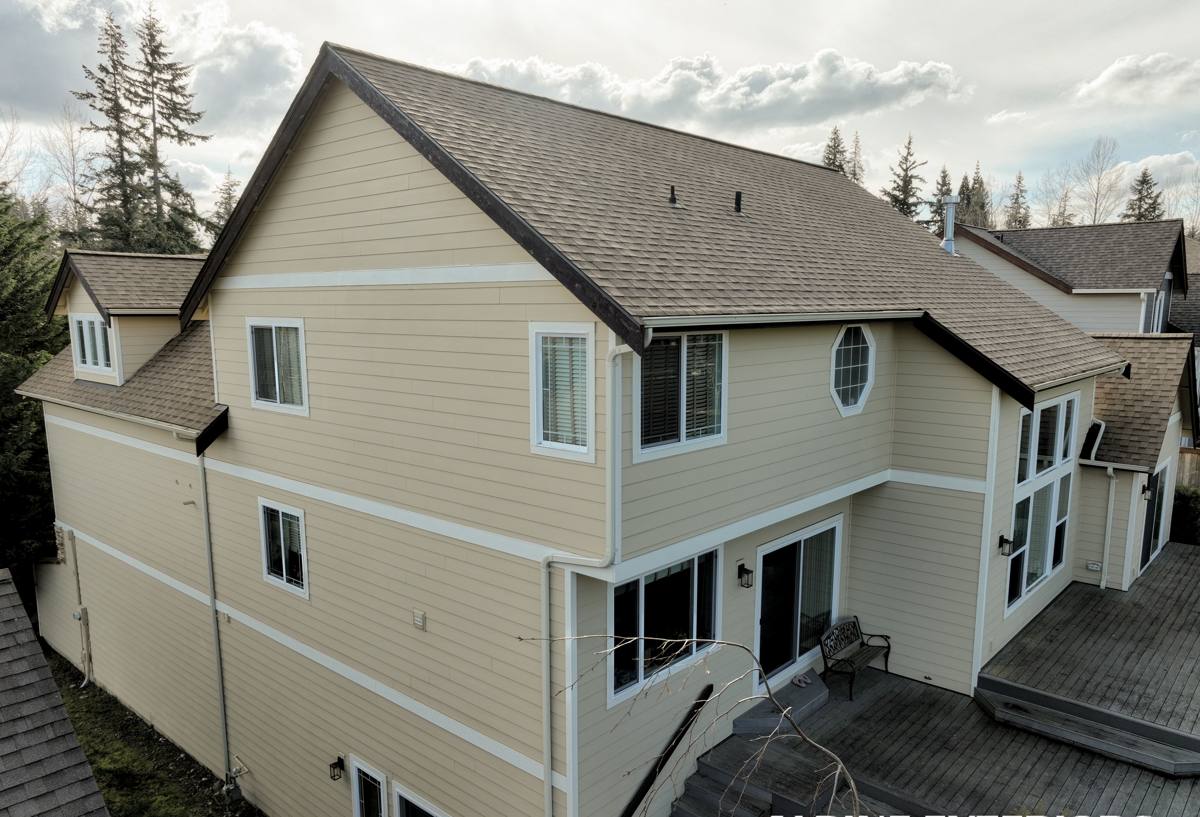
What Blaine's Weather Does to a Deck Over Time
Salt Air and Metal Fasteners
Airborne salt accelerates corrosion on anything metal, including screws, joist hangers, bolts, and railing hardware. Standard galvanized fasteners that would last a normal service life further inland can start showing rust streaks and pitting within just a few years this close to the water. Once a fastener corrodes it loses holding strength long before it looks obviously bad, which is part of why fastener choice matters more here than it does even twenty miles inland.
Driving Rain and Moisture Intrusion
Wind-driven rain off the Strait does not just fall on a deck surface, it gets pushed sideways and upward into places a deck built for calmer weather was never designed to shed water from. Ledger board connections, stair stringers, and the undersides of rail posts are common points where this kind of rain finds a way in if flashing and drainage gaps were not planned for from the start.
A Long Moss and Algae Season
Shaded, north-facing, or tree-covered sections of a deck in this area can stay damp for months at a stretch during our wet season. That extended dampness is exactly what moss and algae need to establish, and once they take hold on a deck surface they hold moisture against the wood and create a genuine slip hazard on stairs and walking surfaces. Decking choice and airflow underneath the structure both affect how much of a problem this becomes over time.
Choosing the Right Decking Material for This Site
There is no single best decking material for every budget and every homeowner's priorities. The right call depends on how much maintenance you want to take on and how long you want to go before major work is needed again. Here is how the common options compare for a Peace Arch property specifically.
| Material | Upfront Cost | Maintenance in This Climate | Moss/Moisture Resistance | Realistic Lifespan |
|---|---|---|---|---|
| Pressure-treated wood | Lowest | Annual cleaning and re-sealing to keep salt air and driving rain from working into the grain | Fair, needs consistent upkeep to stay ahead of moss in shaded spots | 10-15 years with consistent maintenance |
| Cedar | Moderate | Regular sealing; cedar's natural oils help but do not eliminate the need for care near salt air | Good, better natural rot resistance than treated lumber | 15-20 years maintained |
| Composite decking | Higher | Occasional washing; no sealing or staining required | Good against rot, though moss and algae can still grow on the surface film in shaded areas and need washing off | 25-30 years |
| PVC/capped decking | Highest | Lowest maintenance of the group; periodic rinsing | Best moisture resistance of the group; least affected by driving rain and salt exposure | 25+ years |
Framing underneath the decking is a separate decision from the surface material, and it matters just as much. We typically recommend pairing any of these decking surfaces with pressure-treated or engineered framing rated for ground contact or wet-use exposure, since the framing takes the same weather the surface does but is much harder to inspect and replace later.
What a Correctly Built Deck Requires Here
Regardless of decking material, several details separate a deck that holds up in Blaine's marine climate from one that starts having problems within just a few years:
- Ledger board flashing that directs water away from the house band joist, not just a bead of caulk behind the ledger
- Stainless steel or heavy-coated fasteners and hardware rated for coastal exposure, not standard interior-grade galvanized
- Proper slope away from the house, roughly 1/8 inch per foot, so water sheets off instead of pooling
- Gaps between deck boards sized to let water drain through rather than sit on the surface
- Adequate clearance and airflow underneath the deck so the framing and joists can dry out between rain events
- Post bases that keep wood off grade contact and standing water
Skipping any one of these details does not usually cause an obvious problem in year one. It shows up three, five, or eight years later as soft framing, a failing ledger connection, or a deck surface that never fully dries out, all of which cost far more to fix than they would have cost to do right at the start.
Footings, Ledger Attachment, and Railings
Whatcom County permitting has specific requirements for footing depth, ledger attachment to the house, and railing height and spacing, and those requirements exist for real structural reasons: frost depth, wind exposure, and fall protection among them. Attaching a deck ledger to a house also means cutting into the home's existing weather barrier, which has to be re-flashed correctly or a new path for water into the wall structure has just been created in the process.
We pull permits and build to code on every deck project rather than treating it as optional paperwork. It is not just about passing inspection. The same details that satisfy the county are the details that keep the structure sound in this climate for the long term.
Repair or Rebuild? Signs to Watch For
Because this climate ages a deck faster than a drier inland location would, it is worth knowing what to look for before a small problem becomes a structural one.
Usually Repairable
Isolated soft boards, a handful of corroded fasteners, surface moss that has not yet stained or pitted the wood beneath it, and railings that have loosened at their connection points are typically things we can address without touching the framing underneath.
Usually Points to a Rebuild
Soft or spongy framing near the ledger, widespread rust bleeding through the decking surface, a ledger connection that has separated or shows staining on the house siding behind it, and footings that have shifted or heaved are signs the structure itself has been compromised, and patching the surface will not fix the underlying issue.
Our Deck Building Process
- Site visit and assessment: we look at sun and shade exposure, drainage on the lot, how the new deck will attach to the house, and what condition any existing structure is in if we are replacing rather than building new.
- Design and material selection: we walk through the material comparison above in the context of your budget and how much upkeep you want to take on, and design footing and framing layout to match the size and use of the deck.
- Permitting: we handle the permit application and inspections required for the project rather than leaving that step to the homeowner.
- Demolition, if applicable: removal of an existing deck, checking the ledger area and house framing behind it for hidden moisture damage before building over it.
- Framing and footings: footings poured to required depth, framing built with coastal-grade fasteners and proper ledger flashing.
- Decking, railings, and stairs: installed with correct board spacing and slope, finished with the railing system you have chosen.
- Final walkthrough: we go over the finished deck with you, including what maintenance it needs and on what schedule.
Maintaining a Deck in Peace Arch's Climate
Even a well-built deck needs some ongoing attention in this environment. Here is what we recommend homeowners stay on top of:
- Sweep debris and standing water off the surface regularly, especially in shaded areas prone to moss
- Wash the deck surface at least once a year to remove salt residue, pollen, and early algae growth before it establishes itself
- Check fastener heads and hardware annually for early rust staining, especially on the water-facing side of the property
- Reseal wood decking on the schedule recommended for that specific product; waiting until it looks weathered usually means moisture has already gotten in
- Keep gutters and downspouts near the deck clear so roof runoff is not dumping extra water onto or under the structure
- Trim back vegetation that is shading sections of the deck and keeping them damp longer than the rest of the structure
Why Hire a Crew That Already Works in Peace Arch
A deck contractor who works this specific stretch of Whatcom County regularly already knows how wind off the Strait moves across a typical lot, which sides of a house take the worst of the driving rain, and what the county permitting office wants to see on a deck application before it is submitted. That familiarity means fewer surprises during the permit process and fewer callbacks after the build, because the detailing, flashing, fastener choice, and drainage, was planned around this climate from the design stage rather than adjusted after the fact.
It also means we are not guessing about how a given decking material actually performs here versus how it performs somewhere with a milder, drier climate. We have seen how each of these materials ages in salt air and long wet winters, and we will tell you honestly which option fits your budget and how much maintenance it is really going to need over time.
If you are planning a new deck or need to replace one that is showing its age, we are glad to take a look and give you a straightforward, no-pressure estimate. Use the form below to get in touch and we will schedule a time to walk the site with you.