 Blaine Siding
 Why Roofs in Peace Arch Take a Different Kind of Beating
Homes in the Peace Arch area of Blaine sit close to Semiahmoo Bay and Drayton Harbor, right along the international border where the Salish Sea funnels marine air across Whatcom County almost year-round. That mix of salt-laden air, wind-driven rain, and long stretches of shade from mature evergreens is hard on a roof in ways that inland Washington homes never deal with. A roof that would last a full service life in a drier climate can show real wear here much sooner if it wasn't built for these conditions in the first place.
We work on roofs in this neighborhood regularly, and the failure patterns are consistent: fasteners and flashing that corrode faster than expected, shingle granules that wash off under sustained wind-driven rain, and moss that establishes itself in shaded valleys and north-facing slopes before most homeowners notice. Understanding these three factors is the starting point for any roof replacement done right in this part of Blaine.
Salt Air and Marine Exposure
Proximity to the water means airborne salt settles on roofing materials and metal components year-round, not just during storms. Standard fasteners, drip edge, and flashing that aren't rated for coastal exposure can start corroding within a few years, well before the shingles or panels above them are due for replacement. This is one of the most overlooked details on a roof replacement — homeowners focus on the shingle brand and skip past the metal underneath it, which is often the first thing to fail.
Wind-Driven Rain Off the Strait
Blaine sees rain that doesn't fall straight down. Storms moving in off the water push rain sideways, which means laps, seams, and flashing details that would be fine in a calmer climate can leak here. Roof replacements in this area need tighter attention to underlayment coverage, step flashing, and valley details than a textbook installation in a low-wind region would require.
The Long Moss Season
Whatcom County's wet season runs long, and many Peace Arch lots have mature tree cover that keeps roof slopes shaded and damp well into the year. Moss doesn't just look bad — it holds moisture against the roof surface, works its way under shingle tabs, and lifts material as it grows, which accelerates leaks and shortens the life of an otherwise sound roof. A roof replacement here needs to plan for moss from day one, not treat it as an afterthought once it shows up.
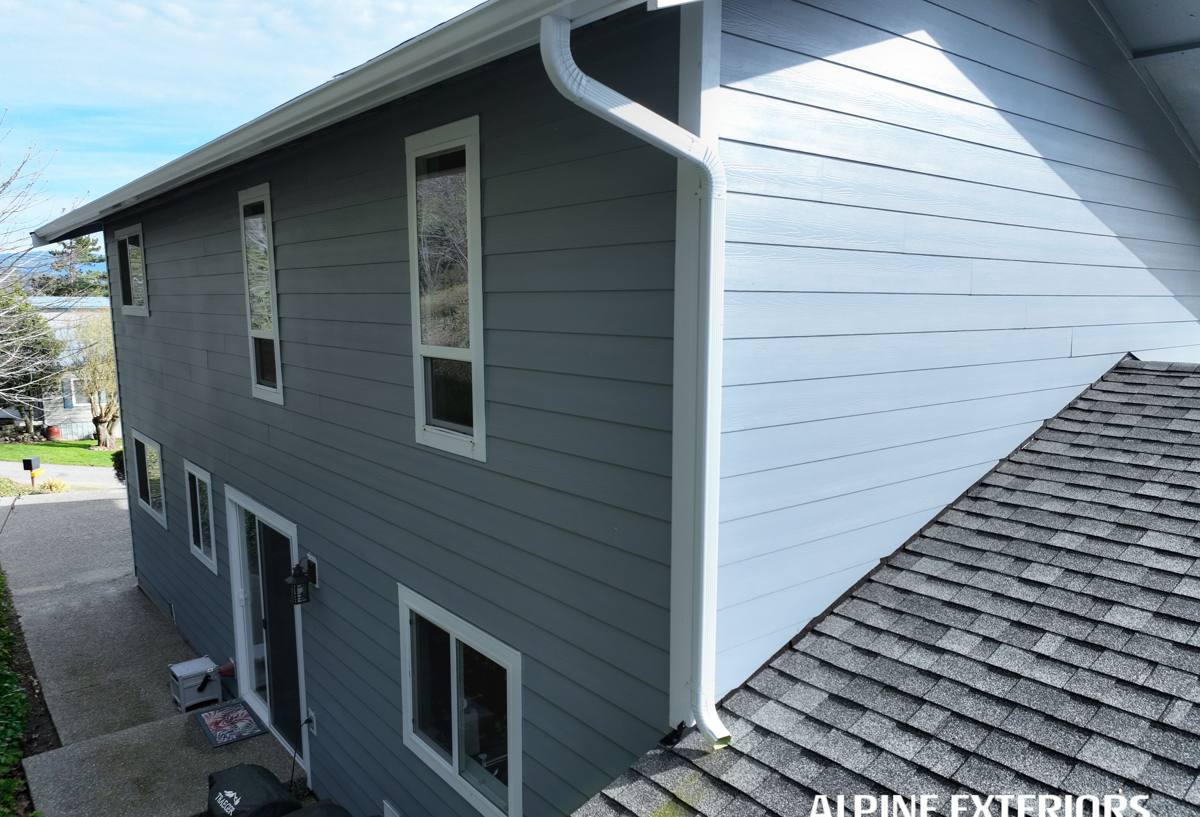
Is It Time for a Replacement, or Will a Repair Hold?
Not every roofing problem in Peace Arch means a full replacement. But there are signs that tell us a roof has reached the point where patching is throwing money at a problem that keeps coming back.
- Granules collecting in gutters or at downspout outlets, especially after wind-driven rain
- Shingles that are cupping, curling at the edges, or cracking when you look closely
- Moss or dark algae streaking established on more than a small patch of the roof
- Daylight visible through the roof deck from inside the attic
- Soft or spongy spots when walking the roof, a sign of a failing deck underneath
- Flashing around chimneys, vents, or skylights that's rusted, lifted, or missing sealant
- Interior water stains on ceilings or upper walls that reappear after rain
- A roof that's already had multiple repairs in the past few years without lasting results
If you're seeing two or more of these, it's worth having someone look at the whole system rather than patching the one spot that's actively leaking. Localized repairs on an aging roof often just relocate the leak to a different spot next season.
What a Correct Roof Replacement Involves in This Climate
A roof replacement done right for a Peace Arch home isn't just stripping old shingles and nailing down new ones. Given the salt air, rain exposure, and moss pressure described above, several details matter more here than they would on a typical inland job.
- Deck inspection and repair — any soft, delaminated, or water-damaged sheathing gets replaced before new material goes down, not covered over
- Full underlayment coverage, including water-resistant membrane at eaves, valleys, and around every roof penetration, where wind-driven rain is most likely to find a gap
- Corrosion-resistant flashing and fasteners suited to marine exposure, rather than standard-grade hardware that corrodes ahead of the roof it's meant to protect
- Balanced intake and exhaust ventilation so moisture from inside the home doesn't get trapped against the underside of the new roof deck
- Algae- and moss-resistant shingle products where appropriate, to slow regrowth on shaded slopes
Choosing a Roofing Material
There isn't one "right" material for every Peace Arch home — it depends on the roof's pitch, sun exposure, budget, and how the house looks overall. Here's how the common options compare for this specific climate.
| Material | Moss & Moisture Performance | General Maintenance Here |
|---|---|---|
| Standard 3-tab asphalt shingle | Wears fastest in shaded, damp areas without algae-resistant granules | Moss treatment needed more often |
| Architectural (dimensional) shingle, algae-resistant | Good — resistant granules slow algae and moss growth | Periodic moss and debris removal |
| Standing seam metal | Excellent — smooth surface sheds moisture, little for moss to grip | Low; occasional inspection of fasteners and seams |
| Cedar shake | Requires diligent upkeep — holds moisture and is prone to moss without regular treatment | High; regular cleaning and treatment required |
We're upfront with Peace Arch homeowners that cedar shake, while it has a traditional Pacific Northwest look many people want, carries a real maintenance burden in a climate this wet and shaded. It needs regular cleaning and treatment to keep moss from taking hold, and skipping that upkeep shortens its life considerably. For most homes here, an algae-resistant architectural shingle or a standing seam metal roof gives a better long-term balance of appearance, moisture performance, and manageable upkeep.
Our Roof Replacement Process
Every roof is different, but the sequence we follow on a Peace Arch replacement stays consistent:
- On-site inspection and estimate — we walk the roof, check the attic for ventilation and moisture issues, and measure for an accurate, itemized quote
- Material selection — we go over the options above based on your roof's exposure, budget, and the look you want
- Tear-off and deck inspection — old roofing comes off down to the deck, and any damaged sheathing is identified and replaced
- Underlayment and flashing installation — membrane and flashing go in at every high-risk point: eaves, valleys, and each penetration
- Roofing installation — shingles or panels are installed to manufacturer specifications, with attention to nailing patterns and exposure that hold up under sustained wind-driven rain
- Ventilation check — intake and exhaust are balanced so the new roof isn't fighting trapped moisture from day one
- Cleanup and final walkthrough — site cleared of debris and nails, and we walk the finished roof with you
Ventilation and Moisture: The Part Homeowners Don't See
A new roof covering can only do so much if the space underneath it isn't ventilating properly. In a climate as wet as Whatcom County's, trapped attic moisture condenses against the underside of the roof deck, and over time that leads to rot, mold, and premature failure of the very materials you just paid to replace. Part of doing a roof replacement correctly here is checking that intake vents at the eaves and exhaust at the ridge or gable are sized and balanced for the home — not just replacing the roof covering and leaving a ventilation problem sealed in underneath it.
Why Local Experience in Peace Arch Matters
Blaine sits right at the border, and homes in the Peace Arch area come with a few practical wrinkles that matter for scheduling and getting a job done right.
Weather windows for tear-off work are narrower here than in drier parts of the state — a crew that doesn't plan around Whatcom County's rain patterns can leave a deck exposed longer than it should be. Local permitting through the City of Blaine has its own process and timeline, and a contractor who works in the area regularly already knows what's expected. Because so many homes here share the same exposure to salt air and moss, a crew that has replaced roofs throughout this neighborhood has already seen what actually fails first on houses like yours, not just what a general roofing guide says should fail.
That local familiarity also means we're not guessing at material choices. We've seen which shingle lines hold their color and resist algae in this specific microclimate, and which flashing details actually keep water out during a real storm off the Strait — not just under ideal test conditions.
What Roof Replacement Costs Depend On
We don't publish a flat price because roof replacement costs vary by roof size, pitch, layer count, deck condition, and material choice. In general terms, a straightforward asphalt shingle replacement on a typical single-family home in this area tends to run in the low-to-mid five figures, with metal roofing and complex rooflines running higher. The factors below have the biggest effect on where a project lands within that range.
- Roof size and number of squares (100 sq. ft. units) to cover
- Roof pitch and accessibility — steep or multi-story roofs take more time and safety setup
- Number of existing layers to remove and haul away
- Deck condition — how much sheathing needs replacing once the old roofing comes off
- Material choice — asphalt shingle, metal, or cedar carry different material and labor costs
- Complexity of the roofline — valleys, dormers, chimneys, and skylights each add flashing work
The only way to get a number that means anything is a walk of your specific roof — square footage and a photo don't tell us enough about deck condition or flashing detail to quote accurately.
If your roof in the Peace Arch area is showing its age, or you just want an honest read on how much life it has left, we're happy to come out, walk it with you, and give you a straightforward, no-pressure estimate. Use the form below to get started.