 Blaine Siding
 Birch Point Roofs Work Harder Than Most
Birch Point sits close enough to the water that homes here take a different kind of beating than roofs ten or fifteen miles inland. Salt-laden air, wind-driven rain that comes in sideways off the water, and a moss season that can run most of the year all combine to shorten the working life of a roof that wasn't built or installed with this exposure in mind. We've replaced enough roofs in this stretch of Blaine to know that a roofing system spec'd for a dry, sheltered lot in a different part of Whatcom County often underperforms out here — even when the materials are technically the same.
This page covers what a roof replacement should actually involve for a Birch Point home: what the local climate does to roofing materials, what a correctly done tear-off and install looks like, how we price and schedule the work, and why local experience on this specific stretch of coastline matters more than it does in most parts of the county.
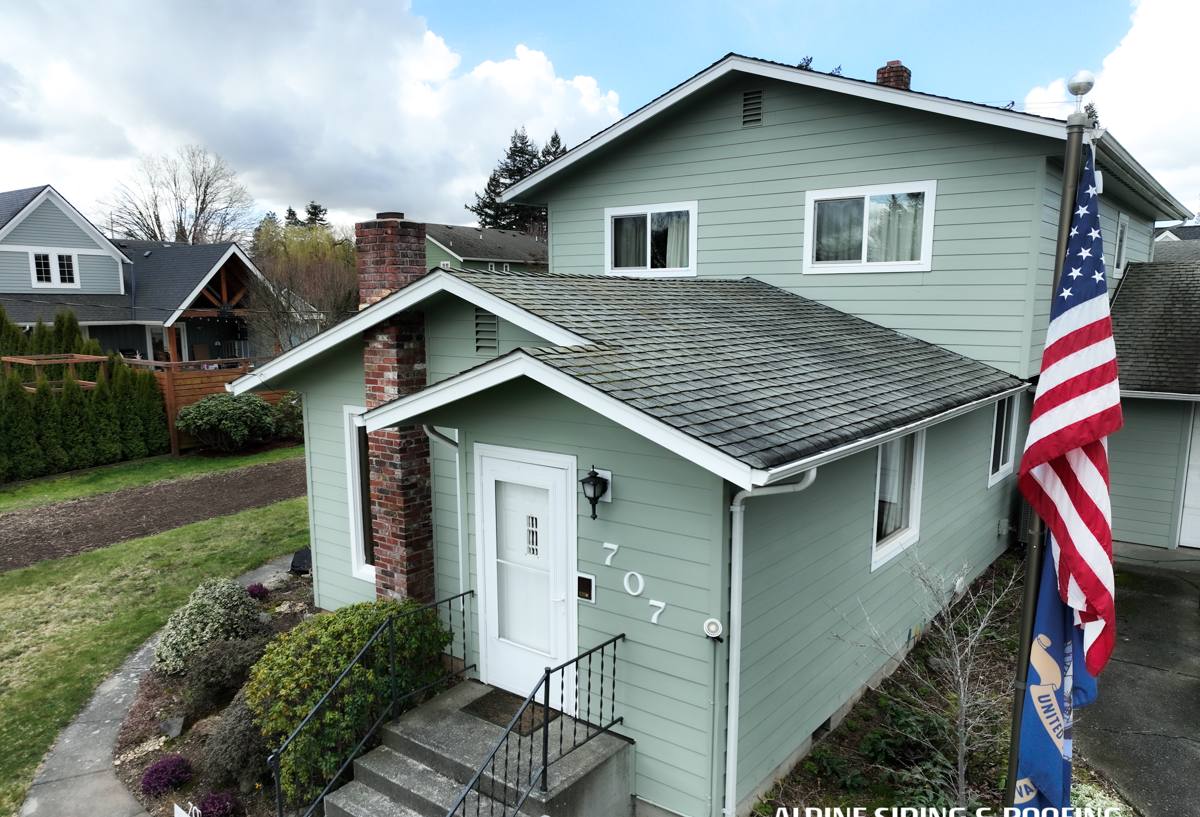
What Salt Air, Rain, and Moss Actually Do to a Roof
Salt Air and Corrosion
Airborne salt accelerates corrosion on anything metal — fasteners, flashing, drip edge, and the metal components inside ridge vents. On a roof installed with standard-grade fasteners or uncoated flashing, that corrosion shows up early as rust streaking, loosened fasteners, and flashing seams that fail years before the shingles around them do. Once a fastener corrodes and backs out, or a flashing seam opens up, water finds a way underneath the roofing material even if the shingles themselves still look fine from the ground.
Driving Rain and Wind
Rain that comes straight down is fairly forgiving — it runs off. Rain that's being pushed sideways by wind off the water behaves differently. It gets driven up under shingle laps, around vent flashing, and into any small gap that a calmer climate would never test. This is why lap spacing, fastener placement, and flashing details matter more here than the manufacturer's minimum install spec might suggest — the minimum spec assumes average weather, and Birch Point doesn't get average weather off the water.
Moss and Prolonged Moisture
Whatcom County's long, damp season gives moss plenty of time to establish itself, especially on north-facing slopes and anywhere shade keeps a roof from drying out between rain events. Moss isn't just cosmetic — it holds moisture against the roofing surface, works its way under shingle tabs and granule layers, and can lift shingle edges as it grows. A roof with a heavy moss mat has usually been retaining moisture far longer, and far more often, than the homeowner realizes.
Signs a Birch Point Roof Is Ready for Replacement
Not every roofing problem calls for a full replacement — but on a coastal roof, some warning signs point to a system that's past the point where repairs make sense. Worth checking for:
- Granule loss heavy enough that you can see bald patches or find granules collecting in gutters
- Shingle edges that are curling, cupping, or lifting, especially on moss-affected slopes
- Rusted or visibly corroded flashing around chimneys, vents, or valleys
- Soft spots in the roof deck when walked, or staining on interior ceilings near exterior walls
- A roof that's had recurring moss growth despite regular cleaning
- Multiple past repairs concentrated in the same area — a sign the underlying system is failing, not just the surface
- A roof approaching or past the upper end of its material's expected service life, especially if it's never been re-flashed
If you're only seeing one or two of these and the roof deck is sound, a repair may still be the right call. A proper inspection is the only way to know which situation you're actually in.
What a Correct Roof Replacement Involves
Full Tear-Off and Deck Inspection
We don't install new roofing over old. A full tear-off lets us see the actual deck — sheathing that's soft, delaminated, or stained from long-term leaks needs to be replaced before anything new goes down, and that's not something you can assess from on top of the existing layer. Skipping this step is how a new roof ends up failing from the deck up within a few years.
Underlayment and Ice-and-Water Protection
Given how much wind-driven rain this area sees, underlayment choice and coverage matter. We install self-adhered ice-and-water barrier at eaves, valleys, and around penetrations — the areas most likely to take on wind-driven moisture — and a synthetic underlayment across the rest of the deck for a durable secondary water barrier under the primary roofing material.
Flashing Done Right
Flashing is where most roof failures near the water actually start. We use corrosion-resistant flashing material at chimneys, valleys, sidewalls, and any low-slope transitions, and we don't reuse old flashing just to save a step — flashing that's already showing surface corrosion is not going to hold up for the life of a new roof.
Fastener Selection
Standard fasteners corrode faster in salt air. We use corrosion-resistant fasteners rated for coastal exposure rather than the standard-grade fasteners that are fine for an inland install but undersized for what this air does to bare metal over time.
Ventilation Balanced for Moisture Control
A roof deck that can't breathe traps moisture underneath the roofing material, which feeds moss growth from below and accelerates deck rot. We check intake and exhaust ventilation as part of every replacement and correct the balance where it's insufficient — this is a building-science issue as much as a roofing one, and it's frequently overlooked on older Birch Point homes.
Choosing a Roofing Material for This Exposure
There's no single "best" roofing material for coastal Whatcom County — the right choice depends on your home's slope, budget, and how much long-term maintenance you want to take on. Here's how the common options actually compare for a Birch Point install:
| Material | Salt Air Durability | Moss Resistance | Maintenance | Typical Lifespan |
|---|---|---|---|---|
| Standard architectural asphalt shingle | Good with coastal-rated fasteners/flashing | Moderate — benefits from algae-resistant granules | Periodic cleaning recommended | 20–30 years |
| Algae-resistant asphalt shingle | Good | Better — granules formulated to resist moss/algae staining | Lower, but not maintenance-free | 25–30 years |
| Standing seam metal | Very good with proper coating/fastener spec | Very good — smooth surface sheds moisture, little for moss to grip | Low | 40–50+ years |
| Composite/synthetic shingle | Good | Good, varies by product | Moderate | 30–50 years |
We don't push one material as universally right. A standard architectural shingle with the correct coastal detailing is a perfectly sound, cost-effective choice for most Birch Point homes. Metal earns its higher upfront cost on homes where the owner wants to minimize moss maintenance and long-term corrosion risk, or where the roofline suits it well. We'll walk through the honest trade-offs for your specific roof rather than defaulting to whatever's easiest to install.
Our Process for a Birch Point Roof Replacement
- On-site inspection — we get on the roof, check the deck condition where accessible, assess flashing and ventilation, and identify moss-affected areas.
- Written estimate — a clear scope and price range based on what we actually found, not a generic quote.
- Material selection — we go over the trade-offs above based on your budget and how the home is exposed to the water.
- Scheduling around weather — a full tear-off needs a dry window; we plan around Whatcom County's forecast rather than rushing into a system that gets rained into an open deck.
- Tear-off and deck repair — old roofing comes off completely and any compromised sheathing gets replaced before new materials go down.
- Install — underlayment, flashing, ventilation corrections, and roofing material installed to the coastal-specific standard described above.
- Final walkthrough — we cover what was done, what to expect from the new roof, and basic maintenance going forward.
Why Local Experience in Birch Point Matters
A roofing crew that mainly works dry, sheltered inland lots doesn't necessarily know to spec corrosion-resistant fasteners by default, or to double-check flashing details that would hold up fine elsewhere but fail here within a few seasons. Working this part of Blaine regularly means we already know which slopes tend to hold moss longest, which flashing details tend to fail first in wind-driven rain, and how to schedule tear-offs around this coastline's weather rather than a generic forecast. That local pattern-recognition is the difference between a roof that's technically installed to code and one that's actually built for where it sits.
What Roof Replacement Typically Costs Here
Roof replacement pricing varies enough by roof size, pitch, layers of existing roofing, deck condition, and material choice that a real number only comes from an on-site look. In general terms, expect coastal-specific details — corrosion-resistant fasteners and flashing, added underlayment coverage, ventilation corrections — to add modestly to a standard inland quote, because they're not optional line items on a Birch Point roof; they're what keeps the replacement from needing early repair. The bigger cost swings come from deck repair (only known once tear-off starts), roof complexity (valleys, dormers, multiple slopes), and material choice, with metal roofing carrying a meaningfully higher upfront cost than asphalt shingle in exchange for lower long-term maintenance.
Protecting the Investment After Installation
A correctly installed roof still benefits from basic upkeep in this climate. Keep gutters clear so water isn't backing up under the eaves, especially during the wetter months. Have moss growth addressed early rather than letting it establish — a light annual check catches it while it's still just a maintenance item, not a repair. And have the roof looked at after any major windstorm, since wind-driven rain events are exactly the conditions that expose a flashing or fastener issue before it becomes a bigger leak.
If your Birch Point roof is showing granule loss, moss buildup, or flashing wear, or you're just due for a straight assessment of what shape it's in, we're glad to take a look. Use the form below to request a free, no-pressure estimate — we'll tell you honestly whether you're looking at a repair or a full replacement.