 Blaine Siding
 Why Semiahmoo Decks Wear Differently Than Decks Inland
A deck built on the Semiahmoo peninsula lives right at the edge of Semiahmoo Bay, and that location changes what the deck is actually up against. Salt-laden air moves off the water and settles on every exposed surface, wind-driven rain comes in sideways off the bay during winter storms, and the marine layer keeps things damp far more often than a lot even a few miles inland in Blaine. Add in Whatcom County's long, grey moss season — months at a stretch where surfaces barely get a chance to fully dry between rain events — and a deck out here is doing more work than most homeowners realize.
Wood decking shows that stress early: graying, cupping, splintering, and softening around fasteners, often within a handful of seasons. Composite decking is built to resist that kind of punishment, but not all composite boards handle salt, moisture, and moss growth equally well, and the installation details matter just as much as the product. This page covers what a Semiahmoo home actually needs from a composite deck, what a correct build involves in this specific environment, and why hiring a crew that already works this stretch of Whatcom County makes a real difference.
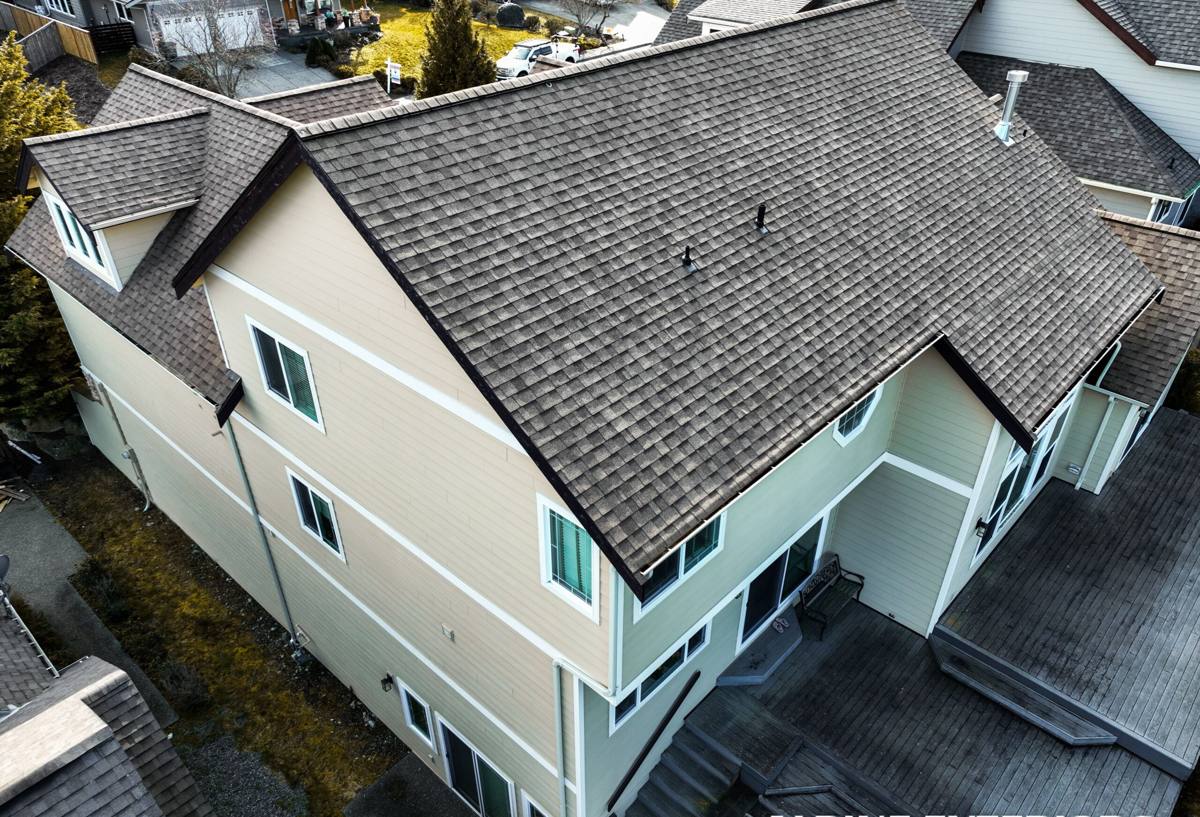
What the Semiahmoo Environment Actually Does to a Deck
Salt Air Off the Bay
Being close to Semiahmoo Bay means fasteners, brackets, and any exposed metal hardware take on salt exposure that inland Blaine or Whatcom County properties don't see nearly as much of. Salt accelerates corrosion, and a corroding fastener loses holding strength well before it looks obviously bad from the surface. On a deck this close to the water, fastener grade isn't a place to save money.
Driving Rain and Wind Off the Water
Storms coming across the bay push rain sideways into railing systems, board ends, and the gaps between boards rather than letting it fall straight down and drain off. That means water gets forced into places a straight-down rain wouldn't reach, which is why drainage beneath the deck surface and proper airflow around the substructure matter more here than on a sheltered, inland lot.
A Long, Damp Moss Season
Whatcom County's wet season stretches long, and Semiahmoo's proximity to the water keeps humidity and surface dampness high even between rain events. That combination is exactly what moss and algae need to take hold. On wood decking, moss growth traps moisture against the surface and accelerates rot. On composite decking, the concern shifts — moss and algae can still grow on the surface film of lower-quality boards, making them slick and requiring more frequent cleaning, which is one of several reasons cap quality matters as much as the core material underneath.
Temperature Swings and UV, in Smaller Doses
Semiahmoo doesn't get the intense year-round UV load that decking sees in the Southeast or Southwest, but the material still goes through repeated wet-to-dry and cool-to-mild cycles across the year. Composite boards need to hold their dimensional stability through that cycling without excessive expansion, contraction, or surface checking, and that's a construction-quality question as much as a climate one.
What "Composite Decking" Actually Covers
Composite decking isn't one product — it's a category that spans a wide range of quality and construction. Understanding the basic types helps explain why two boards that look similar in a showroom can perform very differently on a deck facing Semiahmoo Bay.
| Type | What It Is | How It Handles This Climate |
|---|---|---|
| Capped composite | Wood-plastic composite core wrapped in a protective plastic cap layer | Cap resists moisture absorption, staining, and moss adhesion far better than the uncapped core alone |
| Uncapped composite | Wood-plastic blend with no protective outer shell | More prone to moisture absorption, surface staining, and mold or moss growth in a damp marine climate |
| Cellular PVC decking | Fully cellular plastic, no wood fiber content | Excellent moisture resistance; some lines run cooler and resist staining well, generally at a higher price point |
For a bay-side property, we steer clients away from uncapped composite in almost every case. The moisture and moss exposure here simply asks too much of a product that isn't built to shed water and resist surface growth on its own.
What a Correct Installation Involves Here
Substructure First
The framing underneath the visible boards is doing the structural work, and it's usually the first thing to fail if it's built with the wrong materials or fastened incorrectly — long before the composite surface shows any wear. On a Semiahmoo lot, that means using framing material and fasteners rated for high-moisture, coastal-adjacent exposure, not standard interior-grade hardware.
Ledger Attachment and Flashing
Where the deck attaches to the house, proper flashing keeps wind-driven rain from working its way behind the ledger board and into the wall assembly. This is one of the most common places we find water damage on older decks in this area, and it's almost always a flashing detail that was skipped or done wrong the first time.
Fastener Grade
Stainless steel or coated fasteners rated for coastal exposure cost more up front than standard deck screws, but on a property this close to the bay, standard hardware can start corroding within a few seasons. We spec fastener grade to the environment, not to the cheapest line item.
Board Spacing and Airflow
Every composite product has a manufacturer-specified gap requirement between boards, sized to allow water drainage and airflow while accounting for the board's expansion and contraction. Getting that spacing right matters more in a wet climate — too tight, and water sits; too wide, and the deck feels and looks off.
Joist Span Ratings
Composite boards carry a maximum joist spacing rating specific to that product's thickness and core construction. Installing composite over standard wood-framing joist spacing without checking that rating can lead to flex or sagging between joists over time. We size the framing to the product, not the other way around.
Railing, Fasteners, and Hardware Near the Bay
Railing systems take the brunt of wind-driven rain and salt spray on a Semiahmoo deck, and they're often the first place corrosion shows up. A few details we treat as non-negotiable on jobs this close to the water:
- Stainless steel or marine-rated hardware for all railing connections, not standard zinc-coated fasteners
- Post bases and brackets sealed properly at the substructure connection to keep water from pooling at the base
- Cable or baluster systems selected for corrosion resistance if that's the style the homeowner wants
- Regular inspection points built into the design so hardware can be checked without pulling the deck apart
How Our Process Works
We start with a site walk to look at the existing deck or the build site, check drainage and grade around the foundation, and talk through how the space actually gets used. From there:
- We assess the substructure — existing framing condition if it's a replacement, or ledger and footing planning if it's new construction
- We recommend a composite product matched to the site's specific exposure, not a one-size-fits-all default
- We handle permitting through the City of Blaine or Whatcom County as required for the scope of work
- We build the substructure to coastal-exposure standards — fastener grade, flashing, and framing material included
- We install the decking to the manufacturer's span and gap specifications, not generic wood-decking assumptions
- We walk the finished deck with the homeowner and cover the maintenance that actually matters for this location
Cost Factors on a Semiahmoo Deck Project
Every deck project is different, and we'd rather walk your specific site than throw out a number that doesn't apply. In general, these are the factors that move the price on a job in this area:
| Factor | Why It Matters Here |
|---|---|
| Deck size and layout | More square footage and more complex shapes mean more board, framing, and labor |
| Composite product tier | Capped composite and PVC cost more upfront than uncapped composite but hold up far better against salt and moisture |
| Substructure condition | Replacing rotted or corroded framing on an older deck adds cost but is not optional if the structure is compromised |
| Height and railing requirements | Elevated decks need engineered railing and structural detailing that adds labor and material |
| Site access | Tighter lots near the water can slow material staging and add labor time |
| Permitting scope | New construction or structural changes typically require permitting through the City of Blaine or Whatcom County |
Maintaining a Composite Deck in This Climate
Composite decking cuts maintenance significantly compared to wood, but "low-maintenance" doesn't mean "no-maintenance," especially this close to the bay. A few habits go a long way toward keeping the deck looking and performing the way it should:
- Rinse the surface periodically to remove salt residue and organic buildup before it stains the cap layer
- Sweep or clear debris from board gaps so water and airflow can move through as designed
- Scrub any early moss or algae spotting promptly, especially in shaded or low-airflow corners of the deck
- Check railing hardware and post bases annually for corrosion or loosening, particularly after winter storm season
- Keep landscaping trimmed back from the deck edge so it doesn't trap moisture or block airflow underneath
- Address any soft framing or standing water at the substructure right away — that's structural, not cosmetic
Why It Matters That We Already Work Semiahmoo
A crew that mostly builds decks inland can still install composite decking competently, but a bay-side property has variables that don't come up nearly as often on a typical inland Whatcom County lot — salt exposure from the water, wind-driven rain during storm season, permitting that runs through the City of Blaine, and a moss season that stretches longer than most of the region sees. Working this area regularly means we're not guessing at those requirements or learning them on your project. We know what fastener grade actually holds up here, how the flashing needs to be detailed at the ledger, and what composite lines perform well against salt and moisture over years, not just in a showroom.
That familiarity also means being straightforward with homeowners about what a Semiahmoo deck realistically needs versus what's just an upsell — the goal is a deck that holds up through Whatcom County winters, not the most expensive option on the shelf.
Get a Straight Answer About Your Deck
Whether you're replacing an aging wood deck, building new, or just want an honest read on what composite decking would take on your Semiahmoo property, we're happy to walk the site with you and lay out the options plainly. Reach out below for a free, no-pressure estimate.