 Blaine Siding
 Why Decks in Semiahmoo Wear Differently Than Decks Inland
Semiahmoo sits right up against the water, and that changes how a deck ages. Salt-laden air corrodes metal fasteners and connectors faster than it does even a few miles inland. Driving rain off the Strait finds its way into any gap in flashing or decking. And Whatcom County's long, damp moss season — often stretching from fall through late spring — keeps deck surfaces wet for weeks at a stretch, which accelerates wood rot and turns boards slick and dangerous underfoot. A deck built with standard, big-box hardware and no real moisture plan will show problems here years before an identical deck would in a drier climate. We repair decks throughout Semiahmoo and the surrounding Blaine area, and the pattern is consistent: it's almost never the visible decking boards that fail first. It's the connections, the fasteners, and the hidden framing underneath.
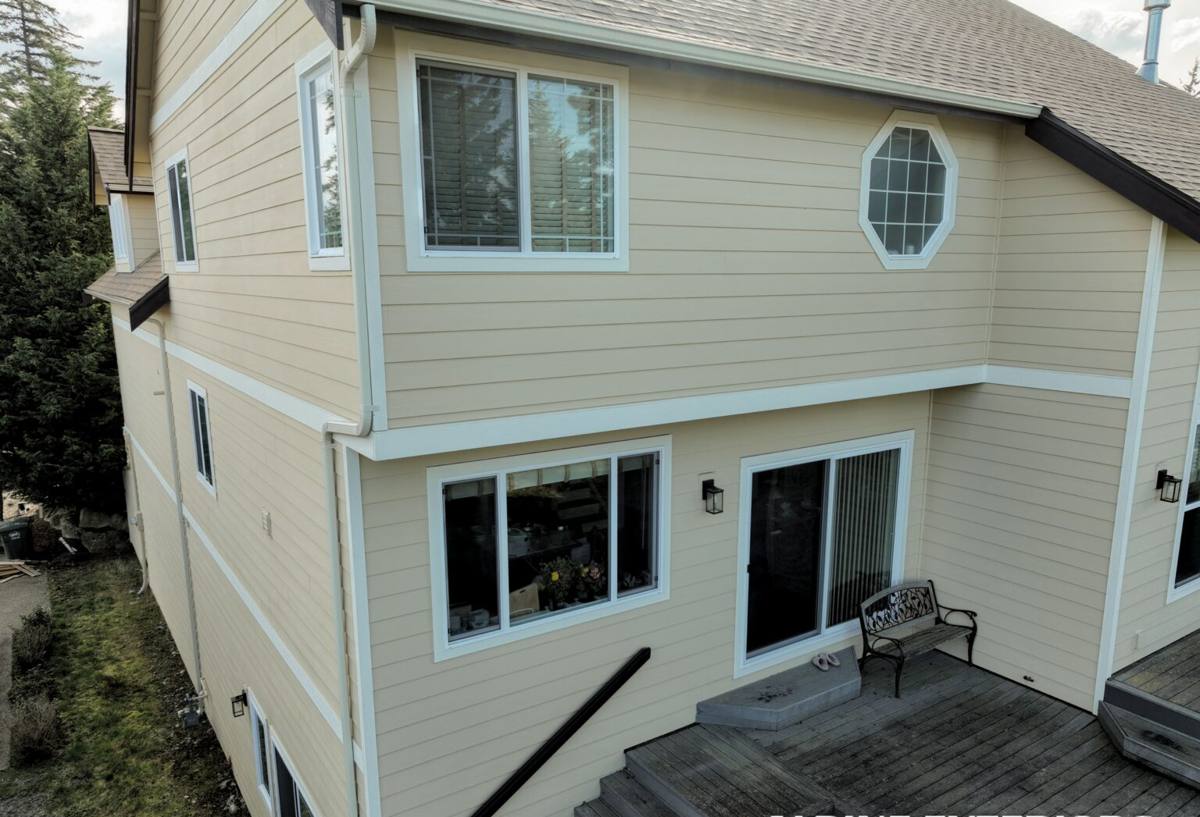
Signs Your Semiahmoo Deck Needs Repair
Homeowners often wait until a board gives way or a railing wobbles before calling. By then, the damage is usually more extensive than it looks from the surface. Here's what we tell people to check for, ideally before winter each year:
- Soft, spongy, or springy spots when you walk across the deck
- Rust streaks or corrosion visible around screws, bolts, or joist hangers
- Gaps opening up where the deck ledger board meets the house
- Railings or guardrails that flex or move when pushed
- Persistent moss or algae growth that won't scrub off, especially on the north or shaded side
- Water pooling instead of draining after rain
- Stair stringers or posts that feel loose at the base
- Visible daylight or gaps between deck boards that have shrunk or cupped
Any one of these on its own might be minor. Two or three together usually mean it's time for an inspection, not just a pressure wash.
The Problems We Actually Find in Semiahmoo
Ledger Board and Moisture Intrusion
The ledger board — the piece that bolts the deck to your house — is the single most important structural connection on most decks, and it's also the one most exposed to water tracking down the siding above it. If flashing was skipped or installed wrong when the deck was built, water has likely been getting behind it for years. We see soft, rotted ledger boards on homes that otherwise look fine from the yard. This is a safety issue, not a cosmetic one, since the ledger carries a large share of the deck's live load.
Fastener and Hardware Corrosion
Salt air off Semiahmoo Bay and Drayton Harbor accelerates corrosion on any metal that isn't rated for it. Standard electro-galvanized screws and joist hangers can start rusting within a few years out here, while a deck built with hot-dip galvanized or stainless hardware holds up far longer. Corroded fasteners lose holding strength gradually and invisibly — the deck can look solid right up until it isn't.
Board Rot and Cupping
Wood decking that sits under moss and standing moisture for months at a time softens from the inside out. By the time a board feels spongy to the foot, the rot has usually spread further than the surface discoloration suggests. Cupped or crowned boards are often an early warning that moisture is getting trapped underneath rather than draining away.
Framing and Substructure Damage
Joists and beams hidden under the decking are harder to inspect but do the real structural work. Once water tracks past failed flashing or a gap in the decking, it can sit on top of joists for long stretches during our wet season. We check the substructure on every repair call, because fixing the surface without checking what's underneath just hides the problem for another season.
Railings and Guardrails
Post bases that sit close to grade or in a low spot collect water and rot from the bottom up. A railing that flexes noticeably isn't just annoying — it's a fall risk, and it's usually a sign the post base or the blocking behind it has failed.
Repair or Replace? What Actually Drives That Decision
Not every deck problem calls for a full rebuild, and not every deck is worth patching. We base the recommendation on where the damage is and how far it's spread, not on the age of the deck alone.
| Factor | Favors Repair | Favors Replacement |
|---|---|---|
| Ledger board condition | Solid, no rot at attachment point | Soft wood, gaps, or visible rot at the house connection |
| Extent of damage | Isolated boards, posts, or fasteners | Rot or corrosion spread across multiple structural members |
| Framing/substructure | Joists and beams sound | Joists soft, undersized, or improperly spaced |
| Age and material | Under ~15 years, quality lumber | Original construction is older or built with untreated/undersized lumber |
| Code compliance | Railings, stairs, and spacing meet current code | Guardrail height, baluster spacing, or footings don't meet current code |
In a lot of cases the honest answer is a hybrid: replace the ledger connection and a section of framing properly, while keeping decking or railing sections that are still structurally sound. We'll tell you plainly which category your deck falls into and why, rather than defaulting to the bigger job.
How We Approach a Deck Repair
Inspection First
We start underneath the deck, not on top of it. That means checking the ledger board attachment, probing joists and beams for soft spots, and looking at every post base and connector for corrosion. Surface boards get checked too, but the structure comes first because that's what determines whether a repair is even the right call.
A Written Scope
Before any work starts, we walk you through exactly what's failing, what we're proposing to fix, and what materials and fasteners we'll use. No surprise add-ons mid-job.
The Repair Itself
Depending on what the inspection turns up, this can mean replacing the ledger flashing and re-securing the ledger board correctly, sistering or replacing damaged joists, swapping corroded hardware for hardware rated to handle a marine environment, replacing rotted or cupped decking boards, or rebuilding failed railing sections to current guardrail code. We match existing decking where practical and explain any visible differences up front if an exact match isn't available.
Final Check
We walk the finished deck with you, point out what was replaced versus what was sound and left alone, and go over basic care going forward.
Materials and Fasteners: Why the Choice Matters Here
A deck repair is only as good as the materials that go into it, and in a coastal climate like Semiahmoo's, cutting corners on hardware shows up fast. We use hot-dip galvanized or stainless steel fasteners and connectors rated for ground contact and coastal exposure — not the standard-grade screws that come with off-the-shelf lumber packages. For decking, both quality pressure-treated wood and composite boards can perform well here, but each comes with real trade-offs worth knowing:
- Pressure-treated wood: Lower upfront cost, needs regular cleaning and periodic sealing to resist moss and moisture, and shows wear sooner if maintenance lapses.
- Composite decking: Higher upfront cost, resists rot and moss growth better, but still requires correct ventilation and flashing underneath — composite boards don't fail from moisture, but the framing beneath them still can.
Whichever material a homeowner chooses, the framing and fasteners underneath matter just as much as the decking on top. A beautiful composite deck built over corroding hardware and a rotted ledger board is still a deck with a serious problem — it just hides it longer.
Maintenance That Actually Extends a Repair's Life
A repair holds up longer with a little seasonal attention, especially given how long our moss season runs:
- Sweep debris and standing leaves off the deck regularly through fall
- Treat visible moss growth before it spreads, rather than waiting until spring
- Check that gaps between boards stay clear so water can drain instead of pooling
- Look underneath once a year for early signs of rust or soft wood, before problems grow
- Reseal or restain wood decking on the schedule recommended for the product used
None of this replaces a periodic professional check, but it buys time between them and catches small issues before they become structural ones.
Why Hire a Crew That Already Works in Semiahmoo
Deck repair advice that works for a dry inland climate doesn't always hold up here. A crew that regularly works Semiahmoo and the greater Blaine area already knows which fasteners actually last against salt air, how aggressive the moss season gets on shaded, water-facing decks, and where flashing tends to fail first on homes exposed to driving rain off the Strait. That familiarity means fewer surprises during the inspection and a repair scope built around how the deck will actually hold up here — not a generic checklist. We're also familiar with the guardrail and structural code requirements that apply to deck work in Whatcom County, so a repair brings older railings or framing up to current standards where it's called for, not just back to how they looked before.
If your deck has a soft spot, a wobbly railing, or corrosion you can see around the fasteners, it's worth getting a professional look before another wet season sets in. We offer free, no-pressure estimates for deck repair work in Semiahmoo and throughout the Blaine area — use the form below to schedule a time for us to take a look.