 Blaine Siding
 Why Windows Fail Faster on the Semiahmoo Waterfront
Semiahmoo sits right on the water, and that location is exactly what makes window performance so different here than a few miles inland. Homes facing Semiahmoo Bay and Drayton Harbor take a steady diet of salt-laden air, wind-driven rain that hits glass and trim almost horizontally during winter storms, and the kind of persistent Pacific Northwest humidity that never really lets building materials fully dry out. Add in Whatcom County's long, cool moss season, and you have an environment that is genuinely tougher on windows than most manufacturers' warranty testing accounts for.
Salt air is corrosive to metal hardware, fasteners, and some low-quality window frames well before it does visible damage to glass. Wind-driven rain finds any weak point in flashing or sealant and pushes water sideways and upward, not just down. And moss and algae growth on north-facing exteriors holds moisture against trim and sills for weeks at a time. None of this means windows can't perform well in Semiahmoo — it means the product choice and the installation details matter more here than they would in a drier, more sheltered part of Blaine.
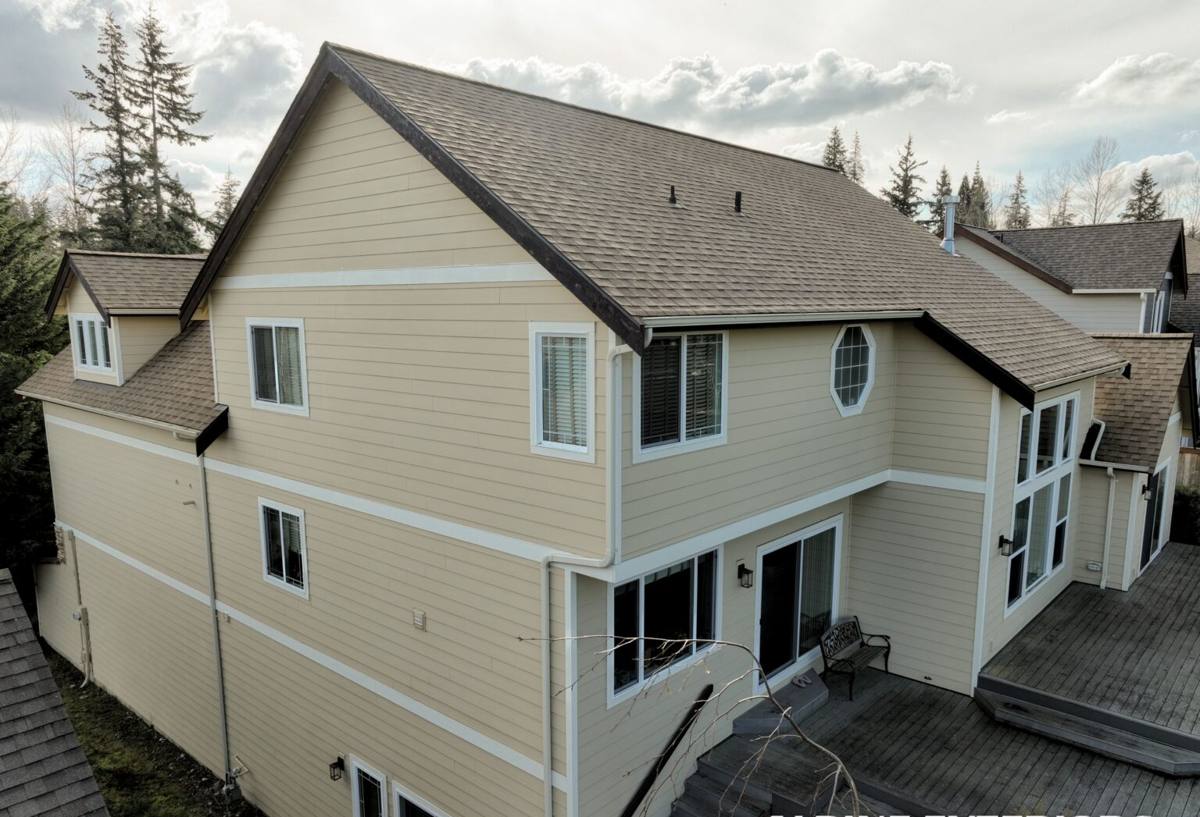
What "Energy-Efficient" Should Mean for a Home Like Yours
Energy efficiency in a marine climate isn't just about a good U-factor on a spec sheet. A window can be rated efficient in a lab and still underperform on a coastal wall if it isn't installed to shed wind-driven rain and resist the pressure differences that come with strong gusts off the water. For Semiahmoo homes, we look at efficiency as a combination of three things working together: the glass and frame performance rating, the physical durability of the materials in salt air, and an installation that keeps water and air moving the right direction — out, not in.
The Numbers That Actually Matter
Two ratings do most of the work when comparing window performance: U-factor (how much heat escapes through the window — lower is better) and Solar Heat Gain Coefficient, or SHGC (how much solar heat passes through the glass). In Whatcom County's climate, we generally aim for a low U-factor to hold onto heat during long, damp winters, while SHGC matters less here than it would in a sun-heavy climate, though east and south-facing rooms still benefit from a moderate SHGC to avoid overheating on the rare clear summer day.
Air and Water Infiltration Ratings
Less talked about, but just as important on a waterfront lot: air infiltration and water resistance ratings (tested to standards like AAMA/WDMA/CSA 101/I.S.2/A440). A window with an excellent U-factor but a mediocre water infiltration rating will still leak during a real Semiahmoo storm. For homes with direct water exposure, we weight these ratings heavily when helping you choose a product.
Signs a Semiahmoo Home Needs New Windows
Because of the marine exposure, window problems here tend to show up as moisture and hardware issues before they show up as an obvious draft. Watch for:
- Fogging or a permanent haze between panes — a sign the seal on a double or triple-pane unit has failed
- Sticky, stiff, or corroded locks and cranks, especially on windows facing the water
- Soft or discolored wood trim or sills around the window frame
- Visible moss, algae, or dark streaking on the exterior casing
- Cold air noticeably moving near the frame on a windy day, even with the window latched
- Condensation collecting on the interior glass or sill through fall and winter
- Paint or finish that's bubbling, peeling, or chalking faster than on other parts of the house
Any one of these on its own might just need a repair. Several at once, especially on a wall that faces open water, usually means the windows are past the point where patching makes sense.
Frame Materials: What Holds Up in Salt Air
Frame material choice matters more on a waterfront lot than almost anywhere else in Whatcom County. Here's how the common options compare for a home exposed to Semiahmoo's conditions:
| Frame Material | Salt Air / Corrosion Resistance | Maintenance | Notes for Semiahmoo |
|---|---|---|---|
| Vinyl | Good — won't corrode or rust | Low — occasional cleaning | Solid value option; verify UV and impact-resistant grade for coastal wind exposure |
| Fiberglass | Excellent — very stable in temperature swings and moisture | Low | Strong choice for direct water-facing walls; handles expansion/contraction well |
| Aluminum | Fair — prone to corrosion and thermal transfer near salt air unless thermally broken | Moderate | We steer clients away from standard aluminum on exposed elevations |
| Wood / Wood-clad | Poor to fair unmaintained — vulnerable to rot in constant moisture | High | Requires diligent upkeep; can work on sheltered elevations with a solid exterior cladding |
We're not tied to one manufacturer or product line — our job is to match the frame material and glass package to your home's exposure and budget, and to be honest when a product isn't a good fit for a wall that takes direct weather off the bay.
Glass Packages Worth Considering Here
For most Semiahmoo homes, we recommend at minimum a dual-pane window with Low-E coating and argon gas fill between the panes. On elevations with heavy direct wind and rain exposure, or for owners who want the quietest, most stable interior temperatures, triple-pane is worth pricing out — it adds cost and weight but improves both insulation and sound dampening from wind noise off the water.
Low-E Coatings
Low-emissivity coatings are a microscopically thin metallic layer that reflects heat back into the room in winter. They're standard on any quality energy-efficient window today, and there's rarely a reason to skip them in this climate.
Spacer Systems
The spacer between panes of glass is a common weak point in coastal climates because it's where seal failure usually starts. Warm-edge, non-metal spacer systems resist condensation and seal failure better over time than older aluminum spacers, which conduct cold and can accelerate seal breakdown in a persistently damp environment.
How We Approach Installation on Water-Facing Homes
Most window performance problems we get called out to fix in this area trace back to installation, not the product itself. On a wall exposed to wind-driven rain, flashing and sealing details are what actually keep water out — the window itself is only part of the system.
- We inspect the existing rough opening for hidden water damage or rot before anything gets ordered
- We confirm the right window size, frame material, and glass package for that specific wall's sun and wind exposure
- During removal, we check sheathing and framing condition and address any moisture damage found before installing the new unit
- We install proper flashing — sill pan, side, and head flashing — sequenced so water is shed downward and outward, never trapped behind the window
- We seal and insulate the gap between the frame and rough opening correctly, avoiding both air gaps and over-compressed insulation
- We finish and seal all exterior trim to shed water and resist the salt air these homes deal with year-round
This sequencing matters everywhere, but it matters more on a lot that takes direct wind and rain off the water than it does on a sheltered inland street.
Why Local Experience in Semiahmoo Specifically Matters
A crew that mostly works inland Whatcom County jobs may not think twice about flashing details or hardware choices that are non-negotiable on a waterfront wall. Working regularly in and around Semiahmoo means we already know which elevations tend to take the worst of the winter storms, how moss and algae behave on north- and west-facing trim here, and which frame and hardware choices hold up versus which ones start showing corrosion within a few seasons. That's the kind of judgment that only comes from doing this work in this specific environment, not from a general product catalog.
Keeping New Windows Performing Long-Term
Energy-efficient windows are not maintenance-free, especially this close to the water. A little seasonal attention goes a long way toward protecting the investment:
- Rinse salt residue and grime off exterior glass and frames a few times a year, more often on directly exposed walls
- Keep weep holes clear of debris, moss, and dirt so water can drain out of the frame properly
- Check and touch up exterior caulking annually, since sealants break down faster under constant UV, salt, and moisture exposure
- Remove moss or algae buildup on trim promptly rather than letting it sit against the wood or cladding
- Lubricate locks and hardware periodically to prevent corrosion from taking hold
What Affects Window Replacement Cost
Every home and window count is different, so we won't quote a number without seeing the job, but a few factors consistently drive cost up or down on projects like this:
- Frame material — fiberglass and higher-end vinyl cost more than basic vinyl but generally last longer in this climate
- Glass package — dual-pane Low-E versus triple-pane, and any upgraded spacer system
- Number and size of openings, and how many face direct wind and rain exposure versus a sheltered elevation
- Condition of the existing rough opening — hidden rot or water damage found during removal adds repair work
- Full-frame replacement versus insert (pocket) replacement, depending on your existing frame's condition
- Trim, siding, and interior finish work needed to properly close out the installation
We walk through all of this on-site so you understand exactly what you're paying for and why, rather than getting a number with no explanation behind it.
If you're dealing with drafty, foggy, or hard-to-open windows on a Semiahmoo property, we're happy to take a look and give you a straightforward, no-pressure estimate — just fill out the form below.