 Blaine Siding
 Siding Repair Built for Everson's Weather, Not Just Any Weather
Everson sits inland from the coast but still gets the full Whatcom County treatment: long stretches of driving rain off the Pacific, damp air that lingers in the valley, and a moss season that can run from fall through spring. Siding here doesn't fail because homeowners neglect it — it fails because water and organic growth find every seam, fastener hole, and caulk line that was cut a corner too short during the original install. Repairing siding correctly in this climate means understanding not just what's broken today, but why it broke, and what will break next if the underlying cause isn't addressed.
We work on homes throughout Whatcom County, and Everson's mix of older wood-sided farmhouses, mid-century ranch homes, and newer developments gives us a good cross-section of what goes wrong with different siding materials over time. The short version: whatever material is on the wall, moisture management is the whole game. Repair work that ignores that just delays the next call.
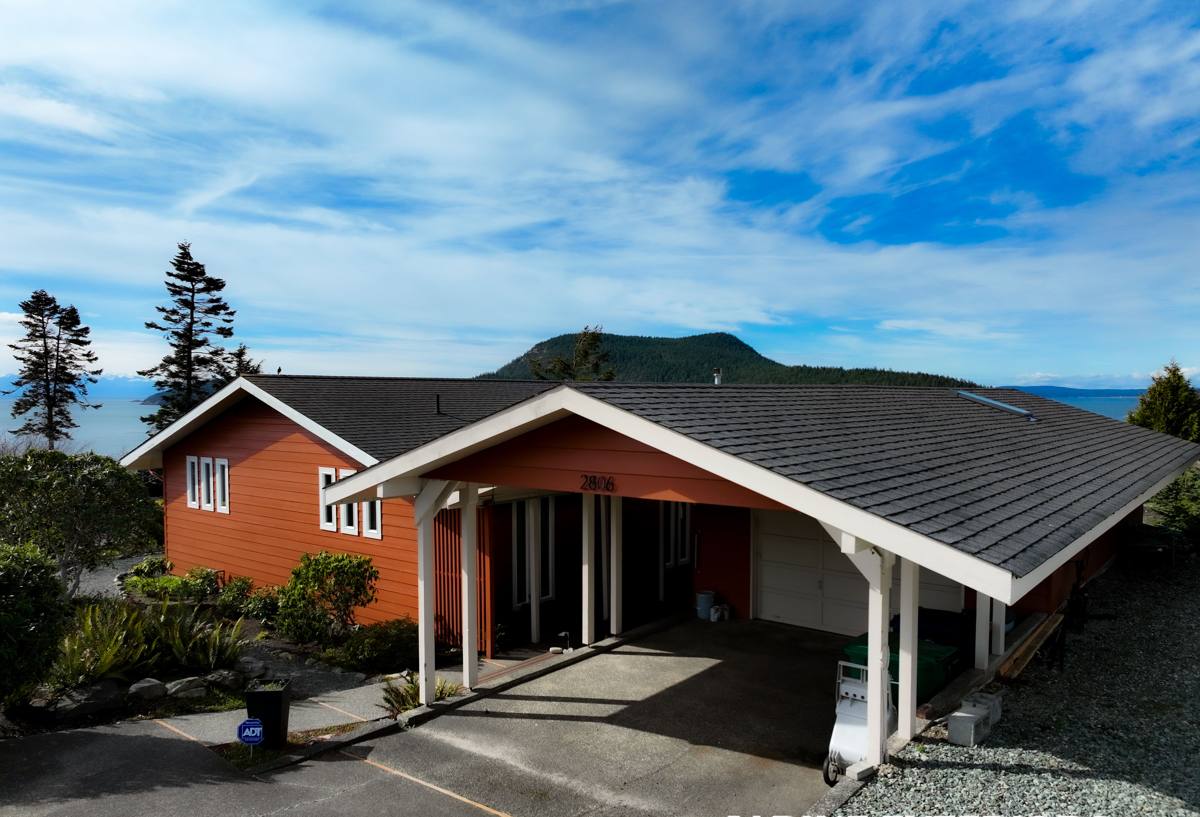
What Everson Homes Actually Need From a Siding Repair
A siding repair job in this area has to do more than patch the visible damage. It needs to address three things at once:
- Stop active water intrusion — find where water is getting behind the siding, not just where it's showing up on the surface
- Remove the conditions that let moss and mildew take hold — trapped moisture, poor airflow, and shaded, damp wall sections
- Match the repair to the material — a patch that doesn't move, weather, and finish the same way as the surrounding siding will stand out and often fail faster than the original damage
Homes with south and west exposure typically show different wear than north-facing walls. West-facing siding takes the brunt of driving rain during winter storms, while north-facing sections that stay shaded longer are where we most often find moss and soft, moisture-damaged material — even on walls that look fine from a distance.
Common Damage We Find on Everson Siding Calls
| Symptom | Likely Cause | Why It Matters |
|---|---|---|
| Soft or spongy siding panels | Trapped moisture behind the material, often from failed caulking or poor flashing | Can indicate rot in the sheathing underneath, not just the siding itself |
| Green or black staining, especially on shaded walls | Moss, algae, or mildew growth from prolonged dampness | Left alone, it holds moisture against the surface and accelerates material breakdown |
| Cracked or bubbling paint | Moisture moving through the siding material from behind | Surface repainting won't fix it — the moisture source has to be addressed first |
| Warped or buckled panels | Repeated wet-dry cycling, often on wood-based or engineered wood siding | Panels rarely flatten back out; they usually need replacement |
| Gaps at seams, corners, or trim | Original installation shortcuts or material shrinkage over time | Direct entry points for wind-driven rain |
Why We Only Repair and Replace With James Hardie Fiber Cement
We don't install LP SmartSide, vinyl, Cemplank, Allura, primed spruce, or cedar, and that standard applies to repair work too. When we're patching or replacing a damaged section, we use James Hardie fiber cement because it's non-combustible, dimensionally stable in wet climates, and backed by a warranty that transfers to future owners. That matters specifically in a climate like this one, where wood-based products swell, wick moisture, and eventually rot from the inside, and where vinyl can warp or crack under temperature swings and doesn't hold paint the way fiber cement does.
To be fair to the alternatives: engineered wood and vinyl siding aren't inherently bad products, and plenty of them are still performing fine on homes around the county. But when we're the ones doing the repair, we're not going to patch a moisture problem with a material that has the same moisture vulnerabilities that likely caused the damage in the first place. If your existing siding is one of these materials and the damage is isolated, we'll tell you honestly whether a like-for-like patch makes sense or whether it's worth transitioning that section — or the whole elevation — to Hardie.
James Hardie's HZ5 product line is engineered for climates with freeze-thaw cycling and heavy moisture exposure, which fits Whatcom County's weather pattern well. The factory-applied ColorPlus finish also matters for repairs specifically — matching field-painted siding years after the original install is difficult, but Hardie's finish system makes color-matching a repaired section far more predictable.
What a Correct Siding Repair Actually Involves
A repair that's done right takes more steps than most homeowners expect, and skipping any of them is usually why a "repaired" section fails again within a year or two.
1. Diagnose Before Touching Anything
We remove enough siding around the damaged area to see what's actually happening underneath — the house wrap, flashing, and sheathing. Surface damage is often a symptom, not the root cause.
2. Assess the Sheathing and Water-Resistive Barrier
If water has been getting behind the siding for a while, the sheathing or house wrap may need repair before new siding goes back on. Installing new siding over compromised sheathing just resets the clock on the same failure.
3. Correct Flashing and Drainage Details
A large share of the repair calls we get trace back to missing or poorly installed flashing at windows, doors, and horizontal trim — the exact spots where water needs a deliberate path away from the wall. This is where a rushed original install shows up years later.
4. Install Matching Material Correctly
Proper fastening, gapping, and caulking at seams — following manufacturer installation specs, not shortcuts — is what keeps a repair from becoming next season's callback.
5. Clean and Treat Affected Areas
Moss and mildew on and around the repair area get cleaned before new material goes up, so growth doesn't spread from an untreated section onto fresh siding.
Moss, Algae, and the Everson Shade Problem
Everson's tree cover and valley humidity create ideal conditions for moss and algae growth on siding, particularly on north-facing walls, shaded areas near mature trees, and anywhere gutters overflow or splash back onto the wall below. This isn't just cosmetic. Moss holds moisture directly against the siding surface for extended periods, which is exactly the condition that accelerates rot in wood-based products and can degrade caulk and paint systems on any material.
Fiber cement handles this better than wood siding because it doesn't absorb and hold water the same way, but it's not immune to surface growth — it still needs the same basic maintenance: keeping gutters clear, trimming back vegetation that shades and dampens a wall, and addressing growth before it spreads. Part of an honest repair visit is pointing out where these conditions exist on your property, since fixing the siding without addressing the moisture source just invites a repeat visit.
Our Process for Everson Repair Calls
- Free on-site inspection — we look at the damaged area and the surrounding wall, not just the spot you called about
- Honest diagnosis of the root cause, explained in plain terms, including whether it's isolated or points to a broader issue
- Written estimate covering the repair scope, material, and what to expect if hidden damage is found once we open the wall
- Repair work using James Hardie fiber cement, matched as closely as possible to your existing siding profile and color
- Final walkthrough so you can see exactly what was done and why
Because we work regularly throughout Whatcom County, we're familiar with how the region's weather patterns affect siding differently depending on a home's orientation, tree cover, and age — which shortens the diagnostic part of the visit and gets us to an accurate estimate faster.
Repair or Replace? A Practical Checklist
Not every damaged section needs full replacement, and not every "small" repair is actually small once the wall is opened. Use this as a starting point before you call anyone:
- Is the damage limited to one or two panels, or does it show up in multiple spots across the same wall?
- Does the siding feel soft or spongy when pressed, or is it just surface staining?
- Is there visible daylight or gapping at seams, corners, or trim boundaries?
- Has water intrusion reached the interior — stains on ceilings or walls near the affected exterior area?
- Is the siding original to the home, and if so, how old is it relative to its expected service life?
- Is moss or algae growth widespread across the wall, or contained to one shaded section?
If you're checking several of these boxes, it's worth having someone look at the whole elevation rather than just the one visible problem spot — hidden damage rarely stays hidden for long.
Why Hiring Local Experience Matters Here
Siding repair advice that works for a dry inland climate doesn't necessarily hold up in Whatcom County. A crew that already works in Everson and the surrounding area knows which wall orientations take the worst weather, how fast moss reestablishes itself locally, and what flashing details tend to fail first on homes built to older codes. That local pattern recognition is what separates a repair that actually solves the problem from one that just covers it up until the next wet season.
We stand behind fiber cement because we've seen how it performs against this specific climate over time, and we'd rather tell you honestly that a section needs full replacement than patch over a problem that's going to come back. If you're dealing with damaged, stained, or failing siding on your Everson home, we're happy to take a look and give you a straight answer — reach out for a free, no-pressure estimate and we'll walk the property with you.