 Blaine Siding
 Storm Damage Roof Repair for California Creek, Blaine WA
California Creek sits close enough to Drayton Harbor and the Strait of Georgia that homes here take a different kind of weather beating than roofs ten miles inland. It's not usually one dramatic event that causes trouble — it's the combination of wind-driven rain off the water, salt in the air, and a moss season that can run six or seven months out of the year. A roof that looks fine from the driveway can already have water finding its way under the shingles.
This page covers what storm damage repair actually means for a California Creek roof, what a correct repair looks like, and how our process works when you call us after a windstorm, a heavy rain event, or after you've finally noticed a stain on the ceiling that's been building for a while.
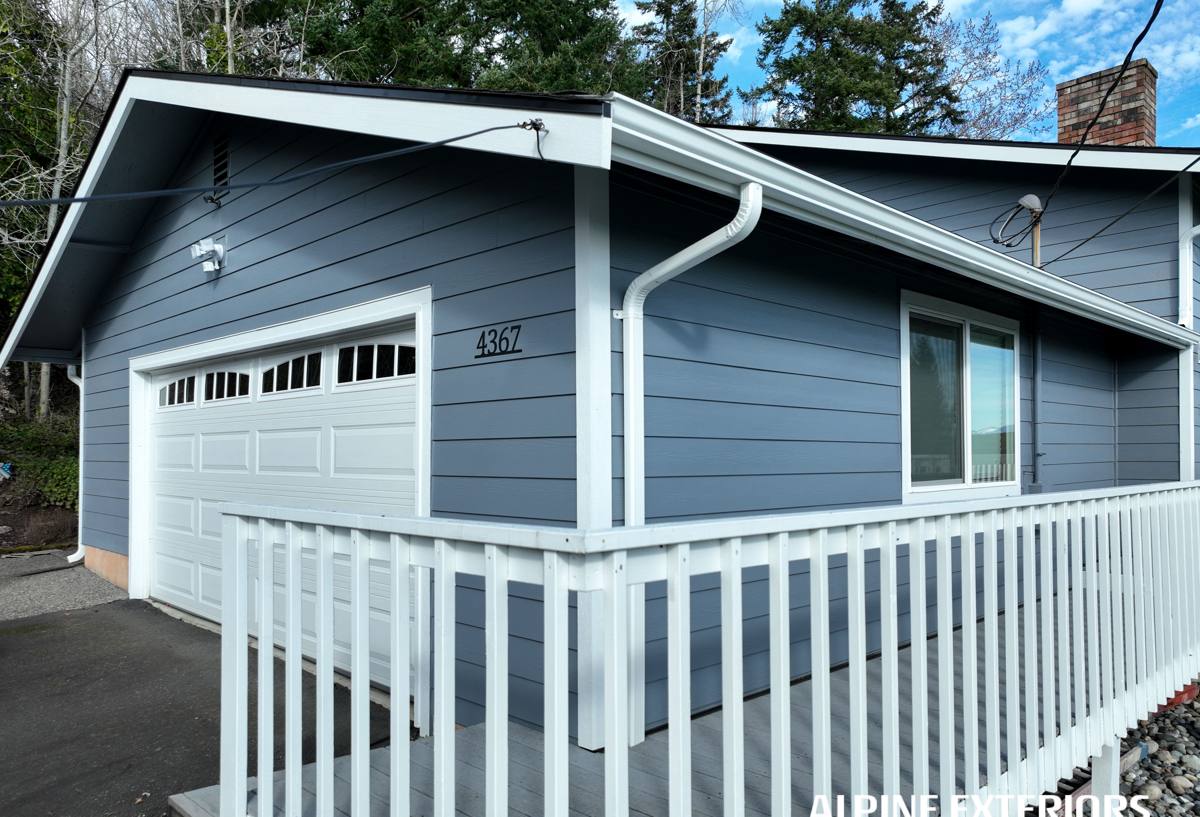
What Storm Damage Actually Looks Like Here
Whatcom County storms rarely rip a roof apart in one obvious way. More often, damage shows up as a series of smaller failures that add up over a season or two. On California Creek roofs, we most commonly find:
- Wind-lifted or creased shingles — tabs that have been flexed up and back down enough times that the seal is broken, even if nothing looks visibly missing from the ground.
- Flashing separation around chimneys, skylights, and roof-to-wall junctions, where repeated wind gusts work fasteners loose over time.
- Moss-driven lifting — moss doesn't just sit on the surface, it grows under shingle edges and pries them up, which then lets wind-driven rain in during the next storm.
- Gutter and downspout damage from branches or debris, which backs water up under the roof edge instead of carrying it away.
- Granule loss on older shingles, which shows up as bald patches and accelerates UV and moisture damage underneath.
The tricky part is that most of these don't cause a leak right away. They cause a leak the next time a storm pushes rain sideways instead of straight down — which, this close to the water, happens often.
Why Salt Air and a Long Moss Season Complicate Repairs
Two things make California Creek roofs different from a roof twenty miles inland: proximity to salt water and how long the roof stays wet.
Salt air and fasteners
Homes near Drayton Harbor and the Strait get airborne salt that settles on metal — flashing, fasteners, gutter hardware, and exposed nail heads. Over years, that accelerates corrosion faster than standard product warranties account for. A repair that reuses corroded flashing or standard-grade fasteners because they "still look okay" is a repair that fails again sooner than it should.
Moss season and moisture retention
Whatcom County's wet season keeps north-facing and shaded roof sections damp for long stretches, which is exactly what moss needs to establish. Once moss gets a foothold, it holds moisture against the shingle surface long after the rest of the roof has dried — that constant dampness is what actually shortens shingle life, more than the rain itself.
Put those two things together and you get a climate that's genuinely harder on roofing than most manufacturer specs assume. That's the honest reason local storm repairs need to go a step further than a quick patch.
What a Correct Storm Damage Repair Involves
A repair that actually holds up in this climate isn't just replacing the shingles you can see are missing. It involves:
- A full-roof inspection, not just the damaged section. Wind and rain rarely hit only one spot — we check the whole roof plane, valleys, and penetrations before quoting anything.
- Checking the decking underneath. If water has been getting in for a while, the plywood or OSB sheathing may be soft or delaminating. Shingling over compromised decking is a short-term fix that fails.
- Matching materials correctly. Shingle color, profile, and even manufacturer batch can vary — we match as closely as the market allows so the repair doesn't stand out or create a seam that traps water differently than the surrounding roof.
- Replacing flashing, not just reseating it. Once flashing has been worked loose by wind, it's usually been stressed enough that it's better replaced than bent back into place.
- Confirming ventilation is intact. Storm damage sometimes includes vent covers or ridge vents. If ventilation is compromised, moisture gets trapped in the attic — which feeds exactly the mold and rot problems this climate already pushes toward.
Skipping any of these steps is how a "repair" turns into a callback six months later, usually during the next storm.
Our Process for California Creek Homeowners
When you call us after storm damage, here's what actually happens:
1. Inspection and honest assessment
We look at the roof in person, document what we find with photos, and tell you plainly whether you're looking at a targeted repair or something more involved. We don't upsell a full re-roof when a repair will genuinely hold.
2. A clear, written scope
You get a written explanation of what's damaged, what needs replacing, and roughly what it costs — before any work starts. No surprise add-ons mid-job.
3. Insurance documentation, if you're filing a claim
If the damage came from a specific storm event, we document it in a way that's useful for an insurance adjuster — dated photos, a description of the likely cause, and a scope that separates storm damage from pre-existing wear. We're not your insurance company and can't promise a claim outcome, but we won't overstate or understate what we find.
4. The repair itself
We tarp and secure any active leak first if needed, then complete the repair with matched materials and corrosion-appropriate fasteners and flashing given how close you are to the water.
5. Walkthrough
Before we consider the job done, we walk the repair with you, from the ground and, if you want, from photos taken on the roof, so you know exactly what was done.
Repair vs. Replacement — What Actually Drives the Decision
Not every storm-damaged roof needs full replacement, and not every roof can be reasonably patched. Here's how we think through it:
| Factor | Leans toward repair | Leans toward replacement |
|---|---|---|
| Roof age | Under 12–15 years, still within useful life | Nearing or past expected lifespan |
| Extent of damage | Isolated to one section or a few areas | Widespread across multiple roof planes |
| Decking condition | Solid, no soft spots found | Soft, delaminated, or repeatedly wet |
| Moss history | Recently treated, minimal growth | Long-term moss with visible shingle lifting throughout |
| Material availability | Close match available for existing shingle | Discontinued product, mismatch would be obvious |
Cost for a targeted storm repair on a typical California Creek home is usually a modest fraction of a full re-roof — but the real number depends on how much decking and flashing needs replacing, not just square footage of shingles. We'll give you the honest range once we've actually inspected the roof, not before.
Why Local Experience on California Creek Actually Matters
A roofer who mostly works inland, drier neighborhoods will sometimes underestimate what this area needs — using standard fasteners where corrosion-resistant ones belong, or missing moss growth patterns that are specific to shaded, salt-air-exposed roof sections. A crew that already works California Creek and the broader Blaine area knows:
- Which roof orientations in this area tend to hold moisture longest and need extra attention during inspection.
- That fasteners and flashing near the water need to be corrosion-appropriate, not just code-minimum.
- How Whatcom County's wet season timeline affects when repairs should happen versus when they can safely wait.
- What local permitting and inspection expectations look like for roof repair work in the county.
That's not a sales pitch — it's the practical difference between a repair that's built for this coastline and one that's built for a roof somewhere drier.
After the Repair: A Simple Maintenance Checklist
Once your roof is repaired, a little seasonal attention goes a long way in this climate:
- Clear moss off north-facing and shaded sections before it re-establishes, ideally before the wet season builds.
- Keep gutters and downspouts clear so storm rain has somewhere to go besides under the roof edge.
- Trim back branches that overhang the roof — they're both a moss source and a wind-damage risk.
- Have the roof looked at after any storm strong enough to cause visible debris or fence damage in the yard.
- Check attic ventilation isn't blocked by insulation or debris, especially after any repair work near vents.
None of this requires a professional every time — but a quick seasonal check catches small problems while they're still small.
Get an Honest Look Before the Next Storm
If you're dealing with storm damage now, or you just want a roof checked before the next system rolls in off the Strait, we're glad to come take an honest look. There's no pressure and no obligation — just a straight answer about what your roof actually needs. Use the form below to request a free estimate.