 Blaine Siding
 Why Decks in Sumas Wear Out Faster Than Homeowners Expect
Sumas sits in a part of Whatcom County where the weather doesn't do decks any favors. The marine air that rolls in off the water carries salt inland on windier systems, driving rain is a fact of life more months than not, and the region gets a long stretch of gray, damp weather every year where moss and algae have nothing but time to take hold. None of that is dramatic on its own. It's the cumulative effect that gets people — a deck that looked fine two summers ago is suddenly soft at the stair stringers, or the boards have gone gray and slick in a way that no amount of pressure washing fixes.
A deck built or coated for a drier, milder climate will underperform here. Moisture gets into end grain and fastener holes, sits there because the air doesn't dry things out quickly, and the freeze-thaw cycles we do get in winter finish the job by expanding whatever water is already trapped. That's the pattern behind most of the deck replacement calls we get from this area — not one big failure, but years of moisture doing quiet damage in the same spots.
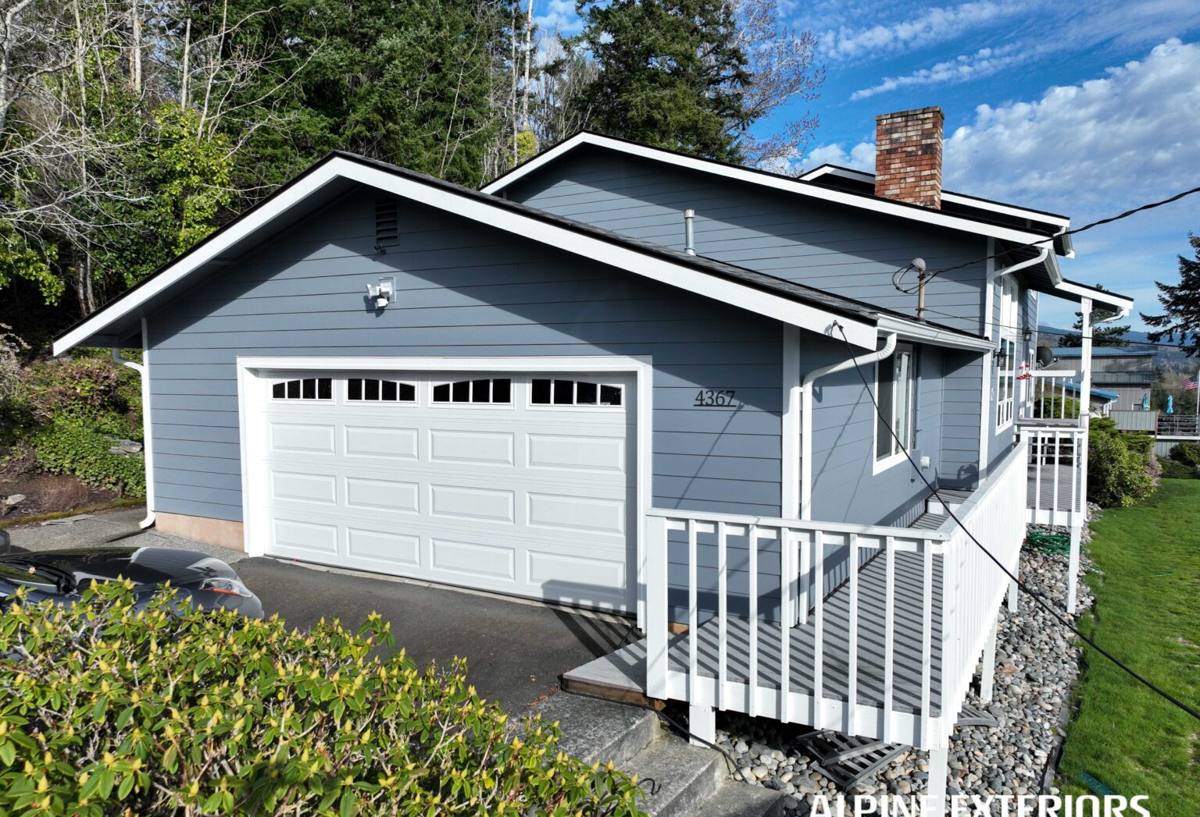
Repair, Restore, or Replace: How to Tell Which One You Actually Need
Not every tired-looking deck needs to come out. But there's a point where patching boards or re-staining is just delaying a bigger, more expensive problem — usually once the damage has moved from the decking surface into the structure underneath.
- Soft, spongy, or springy spots when you walk across the deck, especially near the house or stairs
- Fasteners that are backing out, rusted, or leaving dark streaks in the wood around them
- Ledger board (where the deck attaches to the house) that's dark, swollen, or separating from the siding
- Persistent moss or algae that returns within weeks of cleaning, even in the same season
- Visible rot, splitting, or checking in joists, beams, or posts — not just the surface boards
- Railings or stairs that feel loose or flex more than they used to
- A deck more than 15-20 years old that's never had the substructure inspected
If what you're seeing is limited to a few worn boards and the framing underneath is solid, a repair or partial board replacement can be the honest answer. We'll tell you that directly if that's what we find — a full replacement isn't the right call just because it's on the table.
What a Correct Deck Replacement Actually Involves
A deck replacement done right is not just pulling off old boards and screwing down new ones. The decking itself is the part homeowners see, but the framing, flashing, and connections underneath are what determine whether the new deck lasts 10 years or 30 in this climate.
The parts that don't show, but matter most
Every ledger-attached deck needs proper flashing where it meets the house — a detail that keeps water from working its way behind the siding and into the wall framing. Joists and beams need to be sized correctly for the span and load, sitting on posts and footings that are sound and set to the right depth for frost protection. Fasteners and structural connectors need to be rated for exterior, often coastal-influenced, exposure, not just whatever was on hand. Skipping any of this is how a deck that looks great for the first year or two starts failing from the inside by year five.
The parts homeowners see and live with
Board selection, spacing, fastening pattern, and stair and railing design are where the deck earns its keep day to day. Board gaps need to account for seasonal swelling from our wet winters without being so wide they become a hazard or a moss trap. Railings need to meet current code height and baluster spacing requirements, especially on any deck that's being fully rebuilt rather than resurfaced.
Decking Material Options, Compared Honestly
There's no single "best" decking material — there's a best fit for your budget, how much upkeep you want to take on, and how much sun or shade the deck gets. Here's how the common options actually perform in a climate like ours.
| Material | Upfront Cost | Maintenance | How It Handles Our Climate |
|---|---|---|---|
| Pressure-treated wood | Lowest | Regular cleaning and re-staining/sealing every 1-3 years | Prone to moss and graying without upkeep; performs well if maintained, struggles if neglected |
| Cedar | Mid-range | Periodic cleaning and finishing to hold color and resist moisture | Naturally more rot-resistant than treated pine, but still needs care in a wet climate |
| Capped composite | Mid to upper | Occasional washing; no staining or sealing | Resists moisture absorption well; still needs cleaning to stay ahead of surface moss/algae |
| PVC decking | Highest | Lowest — mainly washing | Doesn't absorb moisture at all, so rot isn't a concern; moss can still grow on the surface film if never cleaned |
Our standard on lower-maintenance materials is capped composite or PVC with a solid manufacturer warranty, installed to spec — proper gapping, hidden fastening where the product calls for it, and correct joist spacing for the specific product line. We don't install lower-grade uncapped composite in this climate; the maintenance burden and moisture behavior over time isn't a trade-off we're willing to put our name on, even though it's a cheaper material up front.
Our Replacement Process, Start to Finish
Homeowners generally want to know two things going in: how disruptive this will be, and whether the crew doing the work actually knows what they're doing underneath the surface. Here's the shape of a typical project.
- On-site assessment — we look at the existing deck, framing, ledger connection, and footings before quoting anything, not just the visible decking.
- Material and design conversation — we walk through decking options, railing style, and any layout changes, matched to your budget and how you actually use the space.
- Permitting — where required, we handle the permit process rather than leaving it to the homeowner.
- Demolition — full removal of the old decking and, where needed, the framing, with a real look at the ledger and house connection once it's exposed.
- Structural rebuild — framing, flashing, and footings brought up to spec before a single new board goes down.
- Decking, railing, and stairs installation — installed to the manufacturer's specifications for the product chosen.
- Final walkthrough — we go over the finished deck with you, including what maintenance (if any) it needs going forward.
Permits and Local Considerations
Most deck replacement projects in Whatcom County — especially anything involving new framing, footings, or a deck attached at a different height than before — require a building permit, whether the property sits inside city limits or in the unincorporated county. Requirements can differ depending on exact location, deck size, and height above grade, so we check what applies to your specific property rather than assuming. If your deck simply needs new decking boards on an existing, sound frame, the permit picture is usually simpler — but it's still worth confirming rather than guessing.
Keeping a New Deck Ahead of Moss and Moisture
The material you choose affects how much upkeep a deck needs, but every deck in this climate benefits from a basic seasonal routine. A little consistency goes a lot further here than an occasional deep clean.
- Sweep debris and standing leaves off the deck regularly, especially in fall and winter — trapped organic matter is what feeds moss
- Rinse or wash the surface a couple of times a year to interrupt moss and algae before it establishes
- Keep gutters and downspouts near the deck clear so runoff isn't dumping directly onto or under it
- Check that furniture, planters, and rugs aren't sitting in one spot long enough to trap moisture underneath
- For wood or cedar decks, stay on the re-staining/sealing schedule rather than waiting until it visibly needs it
- Have the substructure looked at every few years, even if the surface looks fine
Why It Matters That We Already Work in This Area
A deck built for a drier region, or built by a crew that hasn't spent real time dealing with Whatcom County's rain and moss season, tends to show its age fast here — even if the workmanship looked fine on install day. Framing decisions, flashing details, and even which decking products we're willing to stand behind all come out of having replaced and repaired decks in this specific climate, not a generic one.
Being a local Blaine crew also means we're not disappearing after the invoice clears. If a question comes up two years from now about how a section is holding up, we're still in the area and still reachable — that matters more with decks than almost anything else we build, since problems here tend to develop slowly and quietly before they show themselves.
Get a Straight Answer on Your Deck
If you're not sure whether your Sumas-area deck needs a full replacement or just some targeted repair, we're glad to come take a look and give you an honest read — no pressure, no upsell. Use the form below to request a free estimate, and we'll walk the deck with you and talk through what we actually find.