 Blaine Siding
 Siding Repair Built for Sumas's Valley Climate
Sumas sits in a low river valley in eastern Whatcom County, tucked against the foothills near the Canadian border. It's a different exposure than the coastal parts of the county — there's less direct salt air here than you'd find right on Drayton Harbor or Semiahmoo Bay, but Sumas makes up for it with its own set of siding problems. The valley traps humidity, the Nooksack River floodplain keeps ground moisture high much of the year, and the surrounding tree cover means moss and algae get a long, uninterrupted growing season on anything that stays shaded and damp. Add driving rain that comes sideways off the foothills during fall and winter storms, and you have a climate that's genuinely hard on exterior siding, even siding that looks fine from the curb.
Siding repair in Sumas isn't just patching a hole. Done right, it's about figuring out why that spot failed in the first place — usually water finding a way behind the cladding — and fixing the underlying cause, not just the cosmetic symptom. This page covers what we look for, what a correct repair actually involves, and why it matters to hire a crew that already knows this area rather than someone passing through.
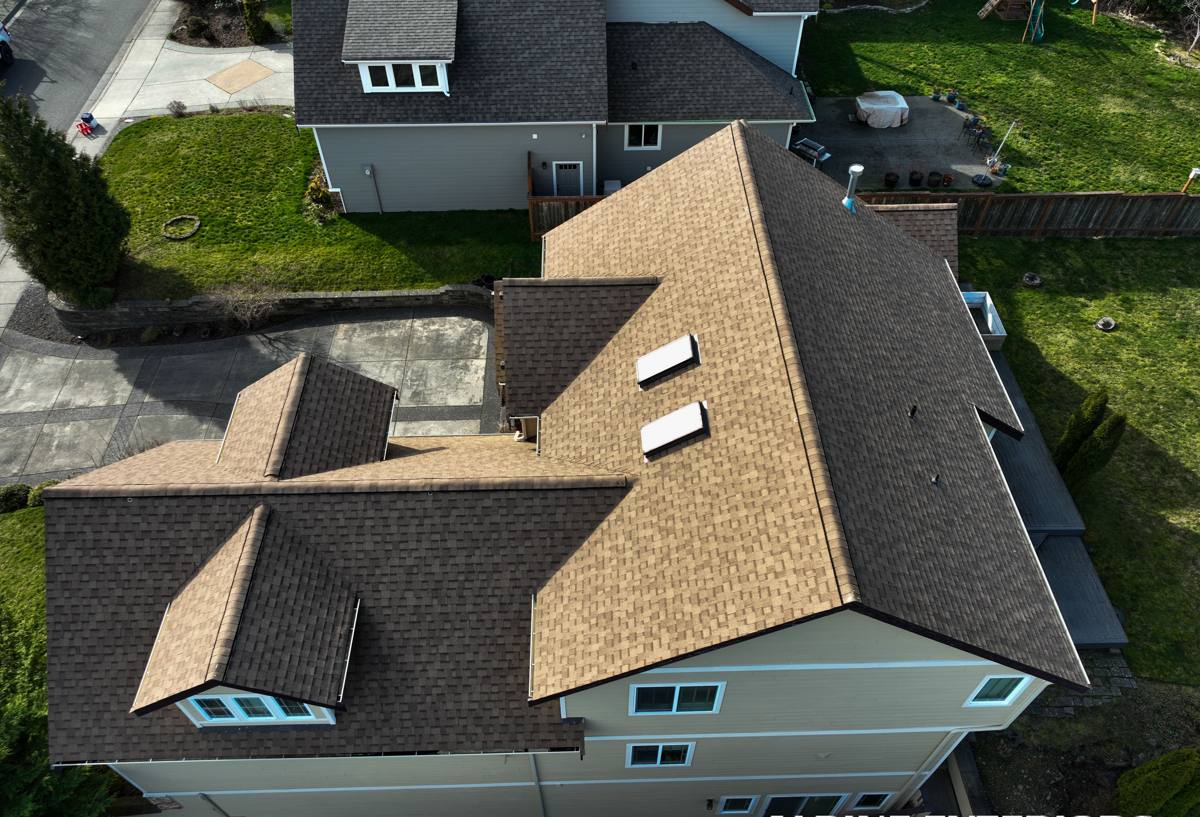
Signs Your Siding Needs Repair, Not Just a Look
Most Sumas homeowners call us after noticing something small — a soft spot, a dark streak, a corner that doesn't look quite right. Small signs are worth taking seriously, because siding damage in a wet valley climate rarely stays small.
- Soft, spongy, or bulging spots when you press on the siding, especially near the bottom courses or below windows
- Dark streaking or persistent green-black growth that keeps coming back after cleaning
- Visible cracks, splits, or chipped edges on individual boards or panels
- Gaps opening up at seams, corners, or trim where caulking has shrunk or pulled away
- Peeling, bubbling, or chalky paint that suggests moisture is working from behind rather than from weather exposure alone
- Warping or buckling boards, particularly on walls that get the least sun and stay damp longest
- Water stains on interior walls or ceilings near exterior walls — a sign moisture has already gotten past the cladding
Any one of these on its own might be a simple fix. Several of them together, especially on the same wall, usually means water has been getting behind the siding for a while and the damage runs deeper than what's visible.
What's Actually Causing the Damage
Moisture Intrusion
This is the root cause behind most siding repairs we do in this area. Water gets behind siding through failed caulking, gaps at trim, poorly flashed windows and doors, or siding that was installed too tight to the ground or a deck surface. Once it's behind the cladding, it doesn't dry out quickly in a valley climate with high ambient humidity — it sits, and it does damage to sheathing and framing that's invisible until the siding itself starts to fail.
Moss, Algae, and Organic Growth
With tree cover and a long damp season, north- and east-facing walls in Sumas can stay shaded and moist for months at a stretch. Moss and algae aren't just cosmetic — they hold moisture against the surface, and on materials that aren't built to handle that, sustained dampness accelerates rot and finish failure.
Freeze-Thaw Cycling
Sumas gets colder winter snaps than the immediate coastline, and moisture that's already trapped in siding or trim can freeze, expand, and crack material that was already weakened. It's a slower process than storm damage, but it's steady.
Impact and Storm Damage
Wind-driven debris, hail, and the occasional falling branch cause the more obvious repairs — cracked panels, dented trim, damaged corners. These are usually straightforward to isolate and fix, as long as the replacement material matches what's already on the wall.
Repair or Replace? How We Make That Call
Not every siding problem in Sumas needs a full re-side, and we don't push a bigger job than the house needs. The right call depends on how much of the wall is affected, what's causing the damage, and how the existing material has held up overall.
| Situation | Repair usually makes sense | Replacement usually makes sense |
|---|---|---|
| Damage extent | Isolated to one or two panels/boards or a single wall section | Recurring across multiple walls or the whole exterior |
| Cause | One-time impact, a single failed caulk joint, a localized flashing issue | Systemic moisture intrusion, widespread rot, original installation errors |
| Material condition | Rest of the siding is sound and the color/profile can be matched | Material is discontinued, badly faded, or failing broadly |
| Age of siding | Well within its expected service life | Nearing or past the end of its realistic lifespan |
| Underlying structure | Sheathing and framing test dry and sound | Sheathing shows rot or moisture damage behind the siding |
We'll tell you honestly which category your house falls into. If a targeted repair solves the problem, that's what we'll recommend — a full re-side isn't the right answer just because it's a bigger job.
What a Correct Repair Actually Involves
A siding repair that holds up in this climate takes more than swapping a damaged board. Our process on every repair includes:
- Diagnosing the cause first. We don't replace a board without figuring out why it failed — otherwise the replacement fails the same way.
- Checking the sheathing behind the damaged area. If water got in, we want to know how far it traveled before we close the wall back up.
- Correcting water management, not just cosmetics. That means proper flashing at the repair site, correct overlap and fastening, and re-caulking joints with a product rated for the exposure.
- Matching material and profile. Mismatched board width, texture, or color turns a repair into an eyesore. We match as closely as the existing product allows.
- Sealing and finishing to the same standard as new installation, not a shortcut patch.
Repairing Different Siding Types — and Why We Only Install James Hardie
Plenty of homes in Sumas were built or sided years ago with materials we don't install new anymore — vinyl, primed wood, or other fiber cement brands. We'll still repair what's already on your house when a targeted fix is the right call; we're not going to tell you to re-side a whole wall over one damaged panel. But when a repair area is large enough, or when a homeowner asks what we'd put back, our answer is always James Hardie fiber cement.
Vinyl siding repairs are limited by the material itself — it becomes brittle with age and temperature swings, and matching an older, sun-faded panel is often impossible since color runs are discontinued over time. Primed wood and spruce trim need ongoing paint maintenance to keep moisture out, and in a valley climate with this much sustained dampness, that maintenance window is short. Other fiber cement brands vary in how they're engineered for moisture and finish durability, and we've standardized on Hardie because of how consistently its HZ5 product line and factory ColorPlus finish perform in the Pacific Northwest specifically — non-combustible, engineered for wet climates, and backed by a strong transferable warranty. When a repair area on a Hardie-sided home needs new material, we're matching into a product line we already trust and install every day, which makes for a cleaner, more durable result.
Our Repair Process in Sumas
- Inspection. We walk the affected area and check surrounding walls for related issues, since valley moisture problems rarely stay isolated.
- Diagnosis. We identify the root cause — moisture path, impact, failed sealant, or material fatigue — before quoting the fix.
- Written estimate. You get a clear scope: what's being repaired, what material is used, and what it costs, before any work starts.
- Repair. We remove only what's damaged, correct any water management issues underneath, and install matched material to the same standard as new work.
- Cleanup and check. We clear debris and walk the repair with you before we consider the job done.
What Repairs Typically Cost
Every repair is priced on scope, but the factors below are what usually move the number up or down.
| Cost factor | Effect on price |
|---|---|
| Size of damaged area | Larger the affected wall, higher the labor and material cost |
| Access | Second-story or hard-to-reach walls take more time and equipment |
| Cause of damage | Rot repairs involving sheathing cost more than a straightforward panel swap |
| Material match | Matching an older or discontinued product can add time and cost versus a recent Hardie install |
| Underlying water damage | Discovering framing or sheathing damage during the repair adds scope |
We'll always flag it before we do additional work if we find something beyond the original scope — no surprise invoices.
Why It Matters to Hire a Crew That Already Works in Sumas
Siding repair is a job where local familiarity actually changes the outcome. A crew that regularly works Whatcom County's inland valley towns knows which wall orientations in Sumas hold moisture longest, recognizes moss and algae patterns tied to this specific tree cover and terrain, and understands how the area's driving rain and periodic high water affect where and how siding fails first. That's different knowledge than a crew that mostly works the immediate coastline or comes from outside the county entirely. It shows up in small ways — knowing to check a particular flashing detail, recognizing early signs of a moisture problem before it spreads, matching material correctly the first time — that add up to a repair that actually lasts.
If you're dealing with damaged, deteriorating, or suspicious-looking siding on a Sumas home, we're happy to take a look and give you a straight answer about what's going on and what it'll take to fix it. Reach out for a free, no-pressure estimate using the form below.