 Blaine Siding
 Semiahmoo sits out on a narrow spit between Semiahmoo Bay and Drayton Harbor, right at the edge of Blaine and the Canadian border. It's one of the most exposed residential settings in Whatcom County — water on more than one side, almost nothing to break the wind, and a marine climate that stays active for most of the year. Homes and condos built out here take a harder hit from the weather than properties set back even a few miles inland, and a window is usually the first place that difference shows up. It's the seam in the wall where the outside actually meets the inside, and on a spit like this, that seam gets tested constantly.
Window installation is its own specialty here, separate from a routine replacement job somewhere calmer. We treat every Semiahmoo window project — new construction, full replacement, or a handful of failing units on an older home — as work that has to account for salt air, sideways rain, and a moss season that runs most of the year, not as a standard install with a nicer view.
What This Climate Does to a Window Installation
Salt Air From Two Directions
Because Semiahmoo is bordered by water on more than one side, homes here get salt-laden air moving through from multiple directions instead of one prevailing exposure. That accelerates corrosion on window hardware, screen frames, fasteners, and lower-grade finishes faster than it would on a more sheltered inland lot. A window that would hold up for decades a few miles inland can show hardware pitting or stiffness within a handful of years out here if the finish and fasteners weren't chosen with that exposure in mind.
Wind-Driven Rain, Not Straight-Down Rain
With almost no windbreak, rain on the spit rarely falls straight down. It gets pushed sideways into window flashing, head trim, and sill pans with more force than a typical inland installation ever has to withstand. That sideways load is a much tougher test of the installation than of the window product itself — a quality window with a rushed flashing job will still leak here, while a modest window installed with a correctly pitched sill pan and properly lapped flashing usually won't.
A Moss and Mildew Season That Doesn't Take a Break
Mild temperatures and near-constant humidity give moss and mildew most of the year to work on any surface that stays damp or shaded, and Semiahmoo's waterfront location doesn't shorten that season any. Window sills that don't drain well, and wood trim that stays wet longer than it should, are exactly the kind of surfaces that season targets first.
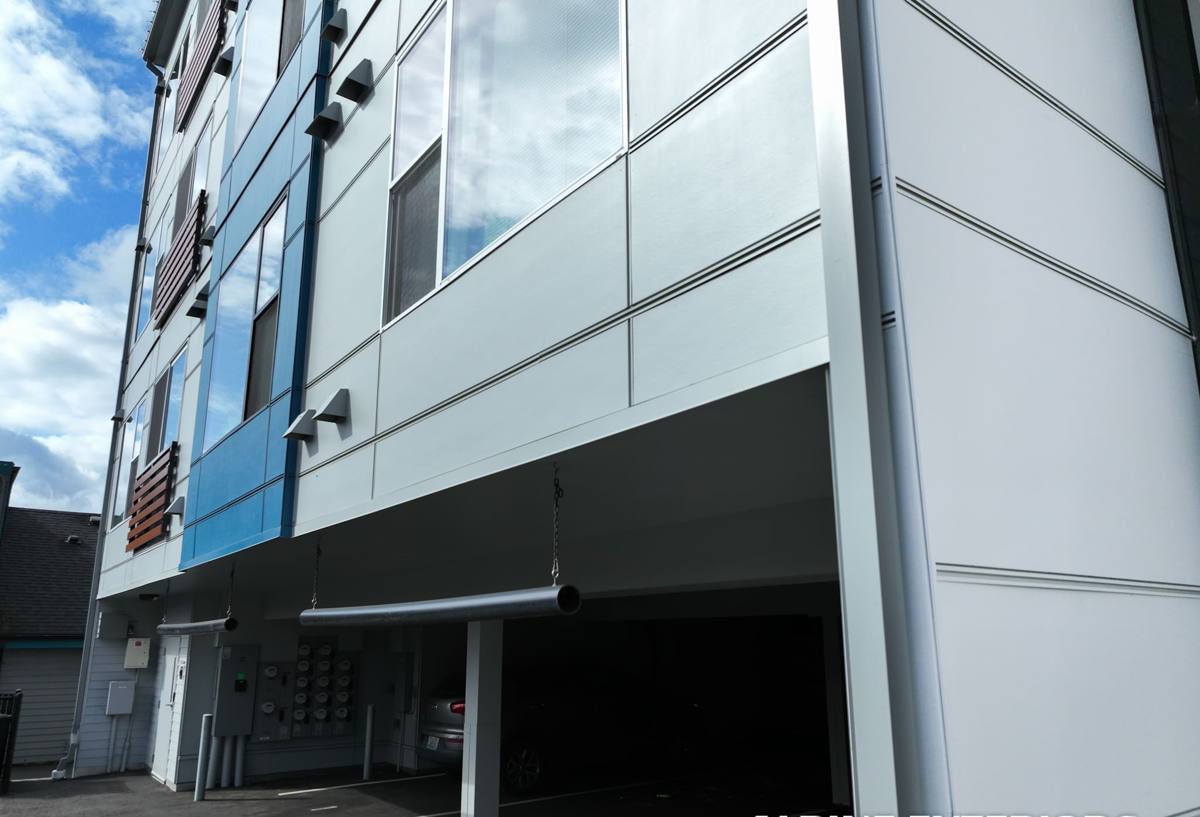
Full-Frame Replacement vs. Insert Replacement on the Spit
One of the first decisions on any Semiahmoo window project is whether to do a full-frame replacement, which removes the old window down to the rough opening and rebuilds the flashing from scratch, or an insert replacement, which fits a new window into the existing frame. Insert replacement is faster, less invasive to the surrounding siding and trim, and a reasonable choice when the existing frame is sound and was flashed correctly the first time. Full-frame replacement takes longer and costs more, but it's the honest answer whenever there's already moisture damage at the sill or jambs, or when the original flashing was never done right to begin with.
That distinction matters more here than in a calmer inland setting. Semiahmoo's mix of older cottages, newer waterfront construction, and condo units means the condition of what's actually behind the existing window varies a lot from property to property. We open things up and look before recommending either option — an insert replacement over hidden rot just seals a problem behind a new window instead of fixing it.
What a Correct Window Installation Actually Involves
The window unit itself is rarely what fails first on a well-chosen product. It's the installation sequence around it. On every Semiahmoo project, that sequence includes:
- Removing the old window carefully and inspecting the framing and sheathing underneath for rot or existing water damage before anything new goes in
- Taking precise field measurements of the actual opening, since older and custom-built homes on the spit don't always match standard dimensions
- Repairing any damaged framing, sheathing, or old flashing found during removal before the new unit is set
- Installing a properly pitched sill pan that sheds water outward instead of letting it pool under the frame
- Sequencing head and jamb flashing so each layer sheds water into the one below it, tied into the housewrap or building paper rather than relying on caulk alone
- Setting and shimming the new unit square and plumb, checked against actual wall conditions rather than assumed to be square
- Sealing and insulating the gap between frame and rough opening with appropriate materials, not spray foam and caulk as the only line of defense
- Finishing exterior trim so water is directed away from the new seams instead of pooling against them
Skip the flashing and sealing steps and even an excellent window can leak or rot the surrounding framing within a few wet seasons on a property this exposed. None of those steps add meaningfully to the cost of a job relative to the window itself — they're just the steps that get rushed on a low-bid installation.
Frame Materials That Hold Up to Salt Air
There's no single right answer for every home — budget, which direction a window faces, and how long you plan to stay in the house all factor in. What matters is understanding the real trade-offs before deciding, especially on a property that gets salt exposure from more than one direction.
| Frame Material | Moisture & Corrosion Behavior | Typical Maintenance | Realistic Fit for Semiahmoo |
|---|---|---|---|
| Vinyl | Won't rot; performance depends heavily on installation and weld quality | Low; occasional track and weep-hole cleaning | Solid budget option on most elevations |
| Fiberglass | Dimensionally stable, strong resistance to moisture and corrosion | Low | Often the best fit for the most exposed, water-facing walls |
| Wood, painted or clad | Attractive but vulnerable to moisture at joints and sills without diligent upkeep | Higher; regular paint or finish maintenance | Workable with a durable exterior-clad option and consistent upkeep |
| Aluminum | Conducts cold and can corrode in salt-influenced air unless well-finished | Moderate | Least suited to direct salt exposure without upgraded finishes |
We'll walk through which material fits your home's specific exposure and budget rather than defaulting to whatever's easiest to install. A shaded, sheltered wall and an open, water-facing wall on the same Semiahmoo property don't always call for the same answer.
Signs a Semiahmoo Window Needs Replacement, Not Just a Reseal
- Visible fogging or condensation trapped between panes, usually meaning a failed seal on a double- or triple-pane unit
- Noticeable drafts or a cold spot near a closed window, especially on walls facing the water
- Soft, discolored, or spongy trim and sill material
- Difficulty opening, closing, or latching a window that used to operate smoothly
- Hardware that's visibly pitted, stiff, or corroded
- Peeling paint or bubbling finish on wood-framed windows
- Water staining on interior walls or ceilings near a window, especially after a windy storm off the water
Any one of these is worth a professional look. On a property with this much exposure, catching it early is usually the difference between a straightforward repair and a full-frame replacement with hidden rot to deal with.
What Drives Cost on a Semiahmoo Window Project
| Factor | Insert Replacement | Full-Frame Replacement |
|---|---|---|
| Scope | New window fits into existing frame | Old frame removed to rough opening; flashing rebuilt |
| Timeline | Faster — often a single day for several windows | Longer, especially if framing repair is needed |
| Best fit | Sound, correctly flashed existing frame | Existing moisture damage, poor original flashing, or a resized opening |
| Cost | Lower | Higher, reflecting labor and materials to rebuild the opening |
| Risk if misapplied | Seals a hidden moisture problem behind a new window | Addresses the root cause directly |
Beyond that choice, the factors that actually move price from job to job are consistent: number of openings, size and glass area, frame material, whether hidden rot or old flashing failures turn up once the old window is out, and access — upper-floor or tight-lot conditions common on some Semiahmoo properties add labor time. We won't quote a number without seeing the openings in person, but we'll walk through which of these apply to your project before you commit to anything.
Why a Crew That Works This Spit Regularly Matters
Manufacturer installation instructions are written for average conditions in a moderate climate. Semiahmoo rarely matches that description. A crew that has actually pulled old windows off homes and condos out here, found what's really behind the siding, and flashed openings against wind-driven rain coming from more than one direction knows which parts of that manufacturer guidance are non-negotiable in this setting, and where extra time on flashing or sealant is worth spending even when it isn't strictly required elsewhere.
That experience shows up in decisions that don't come up in a sales conversation — how much lap a flashing course needs on a wall that takes rain from two directions, when a sill pan needs a steeper pitch than the standard detail calls for, which fastener grade actually holds up against sustained salt exposure instead of just the first year or two. Those are the choices that decide whether a Semiahmoo window installation is still performing cleanly in fifteen years or showing drafts and soft trim in five.
Our Process, and What to Ask Before You Hire
We start with an on-site assessment of the existing windows and the wall assembly around them, looking specifically at how the current installation has handled moisture and salt exposure over time. From there we put together a clear, written scope covering material, installation method, and timeline before any work begins. Flashing, drainage, and corrosion-resistant fastening are standard practice on every job here, not optional upgrades.
- Confirm current Washington contractor licensing and active liability insurance
- Ask how they sequence sill, head, and jamb flashing for a wall that takes wind-driven rain
- Ask whether they recommend insert or full-frame replacement for your specific windows, and why
- Ask about fastener and hardware corrosion resistance for a waterfront property
- Get a clear, written scope of work before signing anything
If you're weighing a window project for a Semiahmoo home or condo — a handful of aging units, a full-house replacement, or new construction — we're happy to walk the property with you and give an honest read on what it actually needs. Reach out below for a free, no-pressure estimate.