 Blaine Siding
 Why Roofs in Custer Take a Different Kind of Beating
Custer sits in the stretch of Whatcom County where storms off the Salish Sea arrive with almost nothing to slow them down first. That means rain here is more often driving and wind-blown than the straight-down kind, which pushes water sideways under shingle edges, into vent flashing, and through any seam that wasn't sealed correctly the first time. Add the salt-carrying air common to this part of the coast and you get faster corrosion on exposed fasteners, drip edge, and flashing — not just wear on the shingles themselves.
Then there's moss. Whatcom County's mild, wet winters give moss and algae a long growing season, and asphalt shingles are one of their favorite surfaces. Left unchecked, moss lifts shingle tabs, traps moisture against the roof deck, and can turn a shingle rated for 25 years into one that's failing at 15. None of this is unusual for any single house — it's the baseline every roof around Custer is working against, whether it's an older place on open farmland or a newer build tucked under trees.
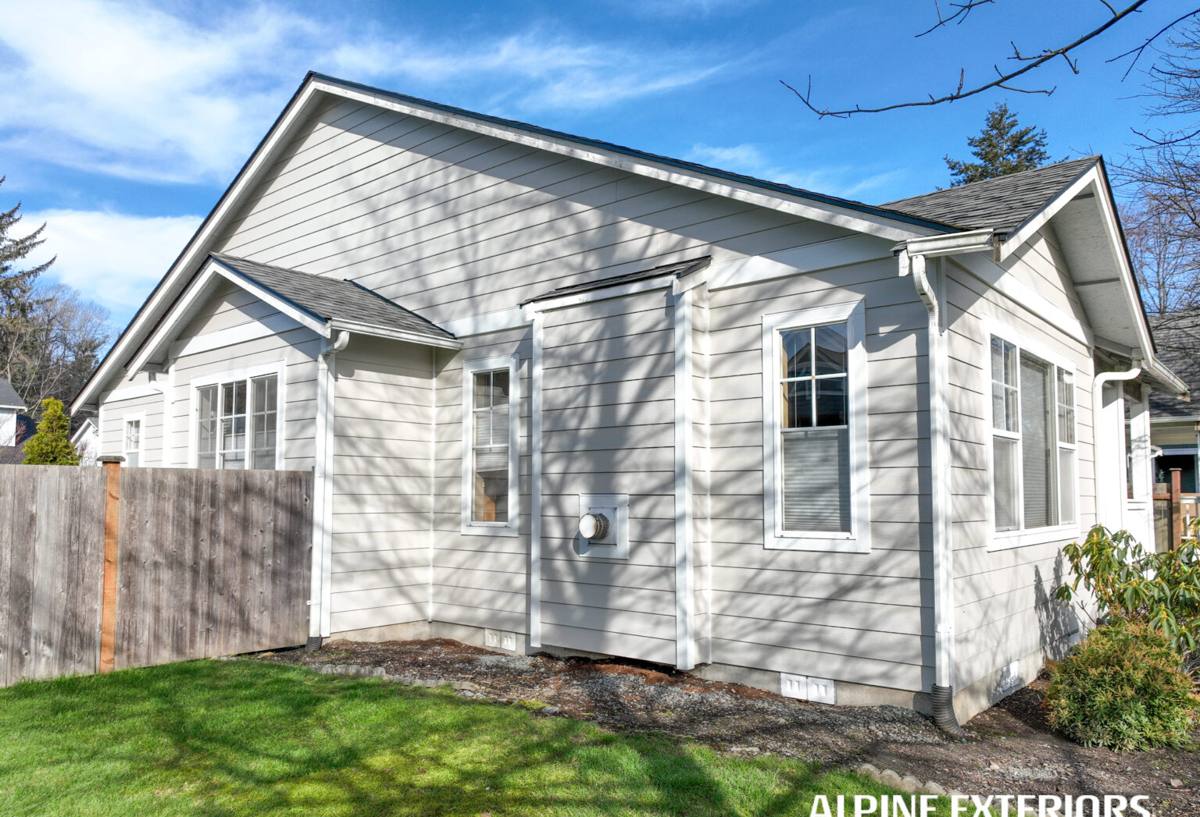
What We Typically See on Custer Roofs
Older and Rural Properties
Custer still has a good number of older homes on larger, more exposed lots. Roofs on these properties tend to show wind and rain damage first — lifted or missing tabs along the ridge and rake edges, worn-out pipe boot flashing, and moss colonies in the shaded north-facing slopes. Ventilation is often original to the house and undersized by today's standards, which speeds up deck rot from the inside even before the shingles look bad from the ground.
Newer Construction
Newer builds in and around Custer generally have better ventilation and code-compliant underlayment, but that doesn't make them immune. We still find valleys and skylight flashing installed without enough attention to wind-driven rain, and roofs surrounded by mature trees that shed needles and debris into valleys and gutters year-round, feeding moss growth even on a relatively young roof.
Choosing the Right Asphalt Shingle for This Climate
Not every asphalt shingle performs the same way under constant moisture and salt exposure. The right choice depends on your budget, how exposed the roof is to wind, and how much maintenance you're realistically willing to keep up with.
| Shingle Type | Best For | Trade-Offs in This Climate |
|---|---|---|
| 3-Tab | Budget-conscious projects, simple roof lines | Lower wind rating and thinner profile mean edges are more prone to lifting in driving coastal wind; shortest realistic lifespan here |
| Architectural / Laminate | Most homes in Custer | Heavier, multi-layer construction handles wind-driven rain and moss growth better; higher upfront cost than 3-tab but far less maintenance over time |
| Impact-Resistant (Class 4) | Exposed, tree-adjacent, or storm-prone lots | Best resistance to debris and hail impact; premium cost, and not every style comes with an algae-resistant surface as standard |
We also pay close attention to whether a shingle line has a built-in algae-resistant granule treatment. In a moss-and-algae climate like this one, that single spec can matter more than the shingle's headline warranty length, because it directly affects how much staining and biological growth you'll fight in years four through ten.
What a Correct Tear-Off and Install Actually Involves
A roof that's installed correctly the first time is the single biggest factor in how well it holds up to Custer's weather. Here's what that looks like in practice.
Tear-Off and Deck Inspection
We remove the old roofing down to the deck rather than layering over it. That's the only way to actually see the plywood or plank sheathing underneath — soft spots, delamination, or rot from long-term moss moisture only show up once the old shingles are off. Any damaged decking gets replaced before anything new goes down; skipping this step is the most common shortcut that leads to a roof failing early.
Underlayment and Ice-and-Water Barrier
A synthetic underlayment goes down across the whole deck as the roof's backup water barrier. In vulnerable spots — eaves, valleys, and around penetrations — we add a self-adhering ice-and-water membrane. Given how often this area sees sustained, wind-driven rain, these details matter more here than they would in a drier inland climate.
Ventilation
Balanced intake and exhaust ventilation keeps moist air from condensing on the underside of the roof deck. Poor ventilation is a slow, invisible cause of deck rot and can also void a shingle manufacturer's warranty outright, regardless of how well the shingles themselves were installed.
Flashing Details
Step flashing at walls, counter-flashing at chimneys, and properly lapped valley flashing are where most leaks actually start on an otherwise sound roof. These pieces get replaced, not reused, and installed to shed water in the correct direction rather than caulked over as a shortcut.
Shingle Installation and Fastening
Shingles are nailed according to the manufacturer's pattern and count — not the fewest nails that will hold, which is a common corner-cutting move that shows up as lifted shingles in the first big windstorm. Starter strips and ridge caps get the same attention, since those are the edges wind gets under first.
Cost Factors on a Custer Roofing Project
Every roof is priced individually, but the same handful of factors drive most of the difference between quotes. Knowing them up front makes it easier to compare estimates apples-to-apples.
| Factor | Why It Affects the Price |
|---|---|
| Number of tear-off layers | Removing multiple old roofing layers takes more labor and disposal than a single-layer tear-off |
| Deck condition | Rotted or delaminated sheathing found during tear-off has to be replaced before shingles go on |
| Roof pitch and access | Steeper roofs and difficult access require more safety equipment and time |
| Shingle class chosen | 3-tab, architectural, and impact-resistant shingles carry different material costs per square |
| Ventilation upgrades | Bringing older, undersized ventilation up to current standards adds material and labor |
| Roof complexity | Valleys, dormers, skylights, and chimneys all add flashing work and cutting time |
As a broad range, straightforward asphalt shingle replacements on homes this size in Whatcom County commonly run from the high single digits into the low five-figure range, with complexity, decking condition, and shingle class pushing it up or down. We won't know your real number until we're on the roof, but we'll always walk you through what's driving the price before any work starts.
Keeping Moss and Salt Air From Cutting a New Roof Short
A well-installed roof still needs some upkeep in this climate. None of it is complicated, but skipping it consistently is how a good roof becomes a problem roof ahead of schedule.
- Have moss physically removed and treated rather than pressure-washed, which can strip granules and shorten shingle life
- Keep overhanging branches trimmed back so shaded areas of the roof get more sun and airflow
- Clear gutters and valleys of needles and debris at least twice a year so water has a clean path off the roof
- Check exposed metal flashing and fasteners periodically for early signs of corrosion from salt-laden air
- Walk the roofline after major windstorms looking for lifted or missing shingles, especially along ridges and edges
- Schedule a roof inspection every couple of years even if nothing looks obviously wrong from the ground
Repair or Replace? Reading the Signs
Not every issue means a full replacement, but some do. A handful of missing shingles after a windstorm, an isolated flashing leak, or a small area of moss damage is usually a repair. Widespread granule loss, shingles that are curling or cracking across most of the roof, repeated leaks in different spots, or soft decking found during an inspection generally point to replacement being the more honest recommendation — patching a roof that's failing broadly just delays the same job at a higher eventual cost. Age matters too: an asphalt roof in this climate that's past 20 years old is worth a full evaluation even if it looks fine from the driveway, since moss and moisture damage often start on the underside before they're visible from above.
How We Work, From Estimate to Cleanup
- On-site inspection of the current roof, decking condition where visible, and ventilation setup
- A written estimate that spells out shingle class, underlayment, flashing scope, and any decking allowance
- Scheduling that accounts for Whatcom County's weather windows so tear-off and dry-in happen on the same day whenever possible
- Full tear-off, deck inspection and repair, underlayment, flashing, and shingle installation
- Job-site cleanup, including a magnetic sweep for stray nails around the house and driveway
- A final walkthrough so you know exactly what was done and what to watch for going forward
Why It Matters That We Already Work in Custer
A roofing crew that only shows up in this area occasionally doesn't have the same feel for how a Custer roof actually ages — which slopes hold moss longest, how much wind a given lot really sees, or how the local building department handles permitting and inspections. Working this part of Whatcom County regularly means we're not guessing at any of that, and it means if something needs a warranty follow-up down the line, we're not a stranger driving in from somewhere else. For a community with this much exposure to salt air, driving rain, and a long moss season, that local familiarity isn't a nice-to-have — it's part of what keeps a roof performing the way it's supposed to.
If you're weighing repair versus replacement, or just want an honest read on how much life is left in your current roof, we're happy to take a look. Reach out for a free, no-pressure estimate using the form below.