 Blaine Siding
 Why Decks in Cherry Point Wear Out Faster Than Expected
Cherry Point sits close enough to the water that every deck in the area is doing double duty: holding up furniture and foot traffic while absorbing a steady diet of salt-laden air, wind-driven rain, and the low, damp light that keeps this part of Whatcom County green most of the year. That combination is harder on a deck than inland exposure. Salt air accelerates corrosion on fasteners and metal connectors, driving rain finds its way into any gap in the flashing or decking joints, and the long moss season keeps surfaces damp for weeks at a time, which speeds up rot in wood that isn't detailing correctly.
None of that means a deck here is doomed — it means it has to be built for these specific conditions, not just built to a generic code minimum. A deck that would hold up fine in a drier climate can start showing soft spots, rusted hardware, and slick, moss-covered boards within a handful of years if it wasn't designed with this environment in mind. That's the gap we focus on closing when we replace a deck for a Cherry Point homeowner.
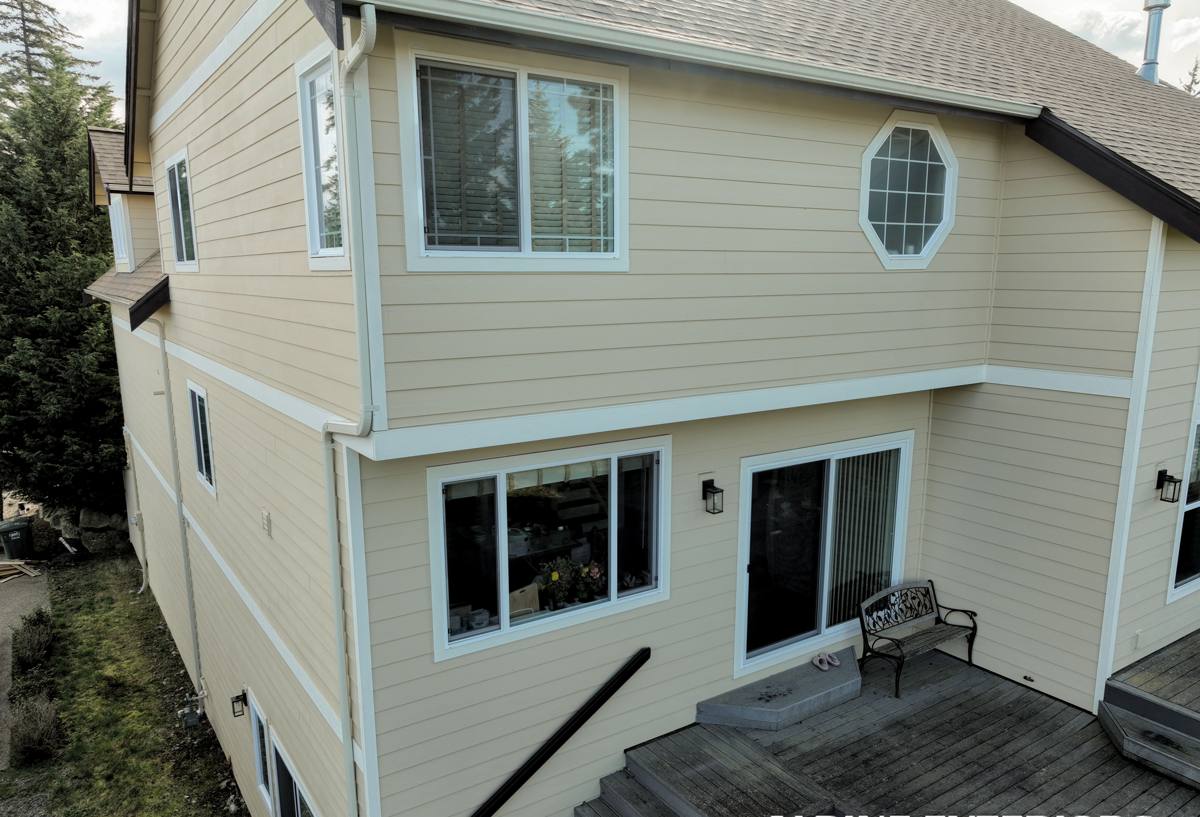
Signs a Deck Needs Replacement, Not Just Repair
A lot of homeowners call us wanting a few boards swapped out, and sometimes that's genuinely all that's needed. But there's a point where patching becomes a waste of money because the structure underneath is the real problem. Here's how we tell the difference on an inspection:
- Soft, spongy, or spring-back decking in multiple areas, not just one board
- Rust staining or visible corrosion on joist hangers, bolts, or ledger connections
- A ledger board pulling away from the house, or gaps where it meets the siding
- Posts or footings that have shifted, rotted at the base, or sit directly in soil contact
- Persistent moss or algae growth that comes back within weeks of cleaning
- A structure more than 20-25 years old built before current ledger flashing and fastening standards
If it's one or two of these, repair is often the right call. If it's several at once, especially anything involving the ledger or the framing, replacement usually costs less over time than repeated patch jobs — and it's the only way to fix moisture problems that are baked into the original build.
What a Correct Deck Replacement Actually Involves
The Ledger Connection
The ledger board — where the deck attaches to the house — is the single most common source of failure on decks in this region, and it's also the hardest part to inspect once a deck is built. A correct replacement means removing the old ledger, checking the rim joist and sheathing behind it for hidden rot, and installing new flashing that sheds water away from the house rather than trapping it against the wall. This is the step that gets skipped or done poorly on cut-rate jobs, and it's the one most likely to cause expensive damage to the house itself if it's wrong.
Footings and Framing
Footings need to sit below frost depth and bear on solid ground, not on fill or old, undersized concrete. We check post spacing and joist sizing against current code span tables rather than assuming the old framing was adequate — older decks in this area were sometimes built with wider spacing or lighter joists than current standards call for.
Fasteners and Hardware
In a marine-influenced climate, hardware matters as much as lumber. Standard galvanized fasteners corrode faster here than they would twenty miles inland. We use stainless steel or high-grade coated fasteners and connectors rated for the treated lumber and moisture exposure you get this close to salt water, so the metal doesn't become the weak point a few years down the road.
Drainage and Ventilation
Low decks with poor airflow underneath hold moisture and moss longer. Where the site allows it, we build in enough clearance and grade the ground beneath the deck to drain away from the house instead of pooling.
Material Options for This Climate
There's no single "best" decking material — it depends on your budget, how much upkeep you want to do, and how close your lot sits to open water or wind exposure. Here's how the common options compare for a Cherry Point property specifically:
| Material | Upfront Cost | Maintenance | How It Handles Salt Air & Moss |
|---|---|---|---|
| Pressure-treated wood | Lowest | Annual cleaning, periodic sealing | Needs consistent upkeep or moss and graying set in fast; hardware quality matters more |
| Cedar | Moderate | Regular sealing to hold color and resist moisture | Naturally rot-resistant but still needs maintenance in constant damp conditions |
| Capped composite | Higher | Occasional washing, no sealing or staining | Resists moisture absorption and moss staining well; good fit for wet, shaded lots |
| PVC decking | Highest | Lowest — mainly rinsing | Doesn't absorb moisture at all, most resistant to mold and moss buildup over time |
We don't push one material on every job. A shaded, damp lot with heavy moss pressure is a strong argument for composite or PVC, since wood in that setting will need more frequent cleaning and sealing to keep up. An open, sunnier spot can do fine with well-maintained wood at a lower upfront cost. We'll walk your specific site with you and give you a straight read on which option fits your maintenance appetite and budget.
Our Deck Replacement Process
- On-site inspection — we check the ledger, framing, footings, and grading, not just the surface boards, so the estimate reflects what's actually going on underneath.
- Written estimate — scope, materials, and pricing laid out clearly, with options if more than one material makes sense for your budget.
- Permit handling — we pull the required permit and coordinate inspections so the work is documented and code-compliant.
- Demo and structural assessment — once the old decking is off, we confirm the framing and ledger condition and flag anything that changes the plan before proceeding.
- Rebuild — new ledger flashing, footings or framing repairs as needed, corrosion-resistant hardware, and your chosen decking material.
- Final walkthrough — we go over the finished deck with you, including basic care for whichever material you chose.
Permits and Code in Whatcom County
Deck replacement in this area typically requires a building permit, especially when the ledger, footings, or framing are being replaced rather than just the surface boards. Skipping the permit might save a little time up front, but it creates real problems later — unpermitted work can complicate a home sale, an insurance claim, or a future remodel. We handle the permit process as part of the job so you don't have to navigate it yourself, and so the finished deck is inspected and documented, not just built and hoped for.
Keeping a New Deck Ahead of the Climate
A properly built deck still needs some seasonal attention in this environment. A little consistency goes a long way toward getting the full lifespan out of the materials:
- Sweep off standing debris and needles regularly — trapped organic matter holds moisture and feeds moss
- Clean moss and algae off the surface at the first sign of growth rather than waiting until it's established
- Check that gaps between boards stay clear so water can drain through instead of pooling
- Inspect the ledger flashing and any visible hardware once a year for early signs of corrosion or gaps
- Reseal wood decking on the schedule recommended for the product — don't stretch it out to save time
- Keep gutters and downspouts near the deck clear so runoff isn't dumping extra water onto or under it
Why Local Experience in Cherry Point Matters
A deck built to a national code minimum, with generic hardware and no thought given to the specific moisture load this stretch of Whatcom County deals with, is more likely to need early repairs. Crews who work regularly in and around Blaine and Cherry Point see the same failure patterns over and over — corroded ledger bolts, moss-slick low decks, rot starting at the same handful of predictable spots — and build to prevent them from the start rather than reacting to them later. That's the difference between a deck that needs attention every year and one that just quietly holds up.
If your current deck is showing its age, or you're planning ahead before it becomes a safety issue, we're happy to take a look and give you a straightforward, no-pressure estimate for a Cherry Point deck replacement. Use the form below to get in touch and we'll set up a time to walk the site with you.