 Blaine Siding
 Asphalt Shingle Roofing Built for Sumas Conditions
Sumas sits in a corner of Whatcom County where weather doesn't do anything halfway. Homes here take on a long, wet winter, stretches of driving rain pushed in off the Pacific, and a marine-influenced air mass that moves through the region and leaves everything from fences to rooflines carrying a fine film of moisture for weeks at a time. Add the shade from mature trees common on rural and semi-rural lots in this part of the county, and you get a near-perfect environment for moss, algae, and slow-motion shingle failure. An asphalt shingle roof that's installed correctly for this climate can go the distance. One that's installed generically, the way it might be in a dry inland climate, tends to show problems years before it should.
This page is about one thing: doing asphalt shingle roofing right for Sumas homes specifically — not a national average, not a showroom pitch, but what actually holds up here.
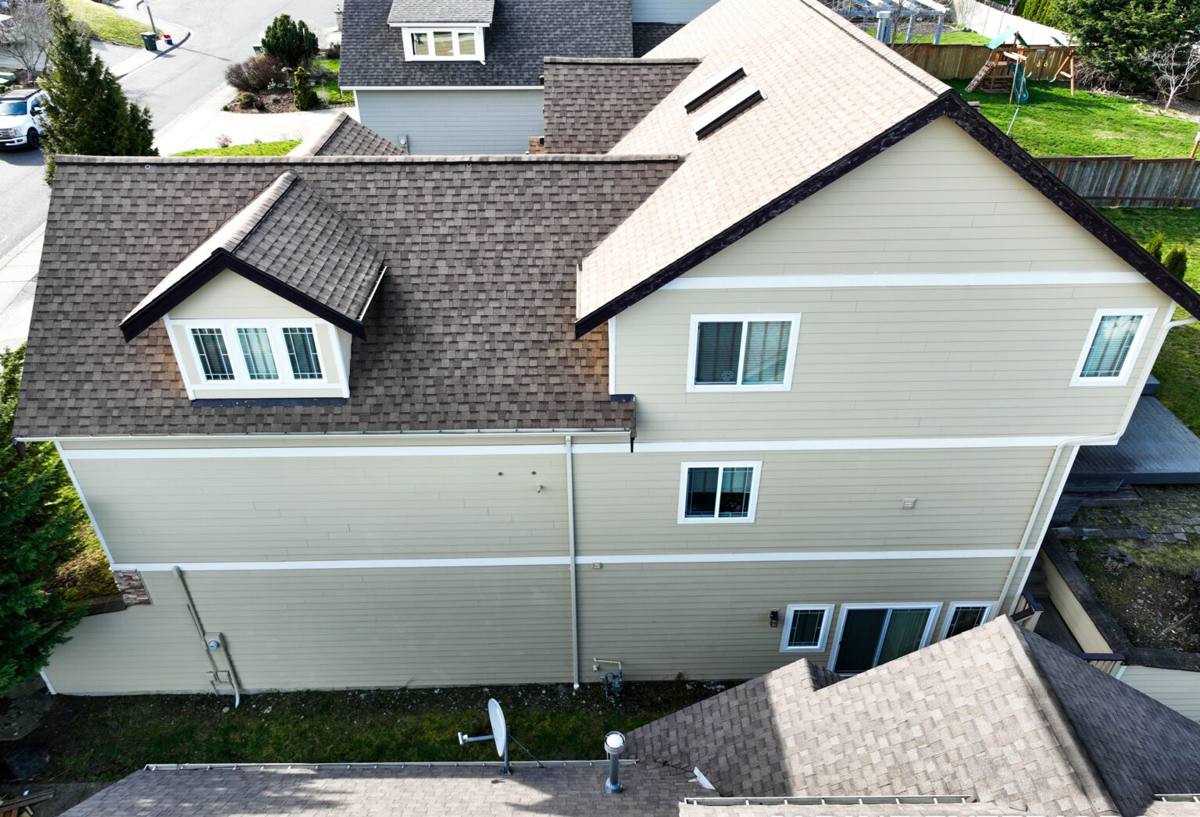
What This Climate Actually Does to a Roof
Moss and Algae Pressure
Whatcom County's long moss season isn't a cosmetic issue — it's a structural one if left alone. Moss holds moisture against the shingle surface long after a storm has passed, which accelerates granule loss and, over years, can lift shingle edges enough to let water track underneath. North-facing slopes and roof sections shaded by trees are the first to show it, and once it establishes, moss is far easier to prevent than to remove without damaging the shingle mat underneath.
Driving Rain and Wind-Driven Water
Storms in this part of the state don't always fall straight down. Wind-driven rain finds its way sideways under shingle tabs, around flashing, and into any gap in the underlayment that a fair-weather installation might get away with. Roofs here need every seam, valley, and penetration point sealed with that sideways rain in mind, not just vertical drainage.
Temperature Swings and Freeze-Thaw Cycling
Sumas gets colder overnight lows than the immediate coast, especially in winter cold-air drainage from the Fraser Valley. That means more freeze-thaw cycling on a damp roof deck than you'd see closer to Blaine's shoreline. Trapped moisture that freezes and expands is one of the more common hidden causes of early shingle cracking and nail pop.
What a Correctly Installed Roof Includes
An asphalt shingle roof is a system, not a single product. Every layer has a job, and skipping or shortcutting one is where most premature failures start.
| Component | Purpose | Why It Matters Here |
|---|---|---|
| Deck inspection & repair | Confirms solid, dry nailing surface | Hidden rot from old leaks is common under long-standing moss |
| Ice & water shield | Self-adhering waterproof membrane at eaves, valleys, penetrations | Backs up the shingles where wind-driven rain and ice dams concentrate |
| Synthetic underlayment | Secondary water barrier under the whole field | Extra protection during the wet months before final drying |
| Drip edge & flashing | Directs water off edges, seals roof-to-wall and chimney transitions | Most local leaks start at flashing, not the shingle field itself |
| Balanced attic ventilation | Intake and exhaust airflow through the attic | Reduces trapped moisture that feeds moss and rots the deck from below |
| Shingle installation | Correct nailing pattern, exposure, and sealant activation | Wind and rain exploit any shortcut in nail placement or count |
Ventilation deserves its own callout. A shingle roof can be installed perfectly on top and still fail early if the attic underneath is trapping humid air. In a climate this damp, we treat intake and exhaust ventilation as part of the roofing job, not an afterthought.
Choosing the Right Shingle for a Sumas Home
Not every asphalt shingle is built for this kind of exposure. We steer homeowners toward products and details that hold up under sustained moisture rather than the ones that simply look good on a sunny installation day.
- Algae-resistant granules: Copper- or zinc-infused granules slow the growth of the algae that causes dark streaking, which shows up faster here than in drier climates.
- Architectural (dimensional) shingles: Thicker laminate construction sheds water more effectively and resists wind lift better than basic three-tab shingles.
- Wind-rated sealant strips: Look for a shingle with a proven wind rating appropriate for exposed or elevated lots, common around Sumas' more open, rural parcels.
- Manufacturer warranty structure: We review what's actually covered — materials only versus workmanship — since a strong material warranty means little if a shortcut installation voids it.
We're upfront when a lower-cost option isn't the right fit for a given roof's slope, shade, or exposure. That's a maintenance and moisture conversation, not a knock on any one product — it's about matching the shingle to the roof it's going on.
Our Process, Start to Finish
- On-site inspection: We walk the roof and attic, checking deck condition, existing ventilation, flashing points, and moss or moisture damage before quoting anything.
- Honest scope and estimate: You get a clear breakdown of what's needed versus what's optional, in plain language, with no pressure to upsell.
- Deck prep and repair: Any soft, rotted, or delaminated decking is replaced before a single shingle goes down.
- Waterproofing layers: Ice and water shield at vulnerable points, then underlayment across the full field.
- Flashing and ventilation work: New flashing where needed, and ventilation corrected or upgraded to match the home's attic conditions.
- Shingle installation: Installed to manufacturer spec for nailing and exposure, adjusted for this region's wind and rain patterns.
- Cleanup and final walkthrough: Site cleaned, magnetic sweep for nails, and a walkthrough so you understand your new roof and its maintenance needs.
Signs a Sumas Roof May Need Attention
- Moss or dark green growth building up on north-facing or shaded slopes
- Granules collecting in gutters or at downspout outlets
- Curling, cupping, or cracked shingle tabs
- Daylight visible through the attic roof deck
- Water stains on interior ceilings, especially near valleys or chimneys
- Shingles missing or lifted after a windstorm
- Sagging areas anywhere on the roof plane
- Ice buildup at the eaves during cold snaps
Any one of these on its own isn't necessarily an emergency, but catching them early is almost always cheaper than waiting for a leak to show up inside the house.
Maintenance That Actually Fits This Climate
A roof in Sumas needs a bit more upkeep than the same roof would in a drier part of the state, and that's just the reality of the moss season and rainfall here. We recommend gutters cleared at least twice a year so water isn't backing up under the eaves, periodic moss treatment on shaded slopes before it takes hold rather than after, and a visual check after any major windstorm. None of this is complicated, but skipping it is how a well-installed roof ages faster than it should.
Why Hiring a Crew That Already Works in Sumas Matters
A lot of roofing problems in this area aren't installation defects in the obvious sense — they're a roof built to a generic standard instead of a Whatcom County one. A crew that already works this area knows to check ventilation as a matter of course, knows which shingle lines actually resist algae staining under sustained moisture, and knows that flashing detail matters more here than in a drier climate. That's not something you can fully verify from a brochure — it comes from having done the work on homes with the same rain, the same shade patterns, and the same moss pressure as yours.
What Roofing Work Typically Costs
Every roof is different, and the only way to get an accurate number is an on-site look. In general terms, cost is driven by a handful of factors:
| Factor | Why It Affects Cost |
|---|---|
| Roof size and pitch | Steeper, larger roofs take longer to work safely and use more material |
| Deck condition | Rot or soft spots found during tear-off mean added repair before shingles go on |
| Layers of existing roofing | Full tear-off of old layers adds labor versus a single-layer removal |
| Shingle tier chosen | Basic three-tab versus architectural versus premium impact-rated products |
| Ventilation and flashing upgrades | Correcting inadequate attic airflow or outdated flashing adds scope but reduces future risk |
| Access and site conditions | Tree cover, steep grades, or tight access affect labor time |
We'd rather walk your roof and give you real numbers than throw out a broad range that doesn't mean much until we've actually seen the deck and attic.
Ready to Talk About Your Roof?
If your Sumas home is dealing with moss buildup, an aging shingle roof, or storm damage from a recent windstorm, we're happy to take a look and give you a straightforward assessment. Fill out the form below for a free, no-pressure estimate — there's no obligation, just an honest read on where your roof stands.