 Blaine Siding
 Why Bellingham Siding Wears Differently
Bellingham sits close enough to Bellingham Bay and the greater Puget Sound corridor that homes here deal with a specific combination of stresses most inland siding never sees: salt-laced air, wind-driven rain that hits walls sideways instead of straight down, and a wet season that runs long enough to let moss and algae get a foothold on anything that stays damp for more than a day or two. Add in the shade from mature Pacific Northwest tree cover on a lot of Whatcom County properties, and you get siding that's fighting moisture on two fronts at once — from the outside during storms, and from trapped humidity underneath tree canopy that never fully dries out between rains.
None of that is unusual for this part of Washington. But it does mean that siding repair here isn't just about patching a crack or replacing a cracked board. It's about understanding why that board failed in the first place, and making sure the repair doesn't just fail again in two years. A crew that works Bellingham regularly has already seen the failure patterns specific to this area — they're not guessing.
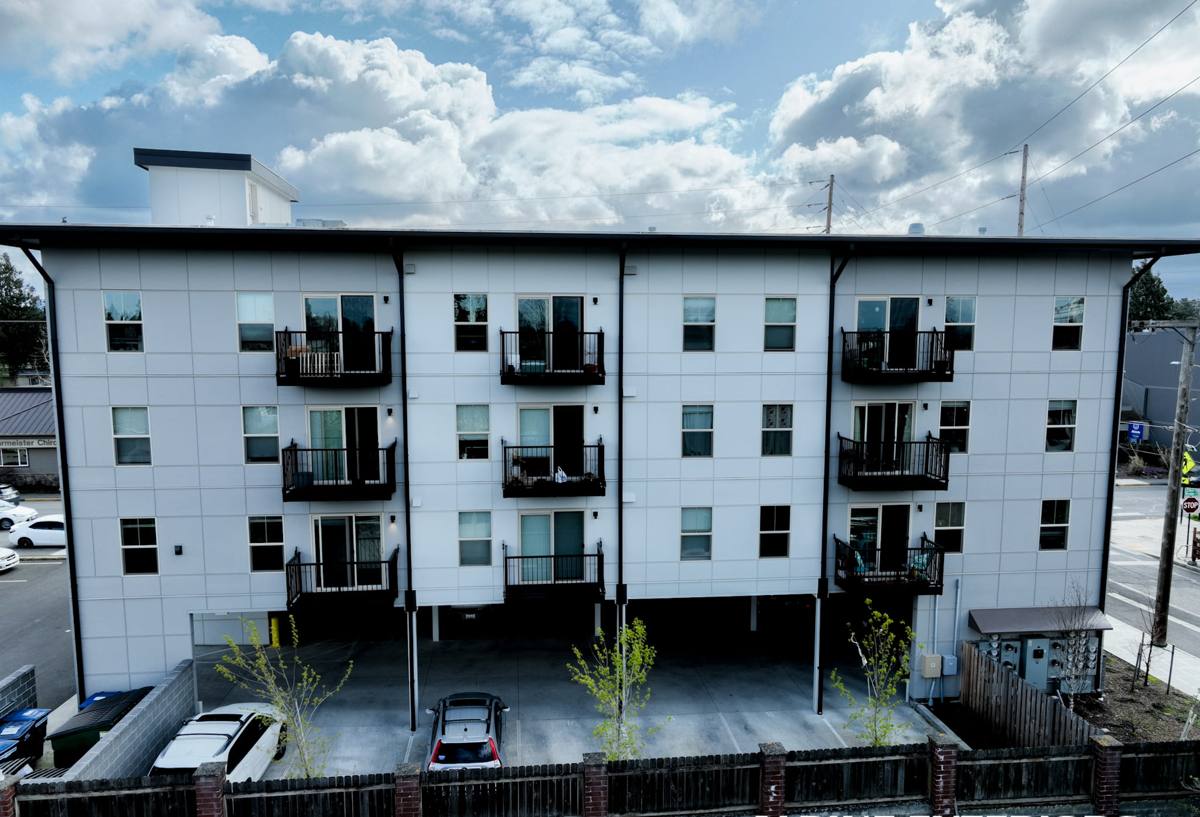
The Signs That Mean It's Time to Call
Most siding problems don't show up overnight. They build slowly, and by the time they're visible from the street, there's often already damage happening behind the siding that you can't see. Here's what we look for, and what you should too:
- Soft or spongy spots when you press on a panel or board, especially near the bottom courses close to grade
- Visible cracking, splitting, or bowing in individual boards or panels
- Persistent moss, algae, or black streaking that keeps coming back after cleaning
- Paint that's bubbling, peeling, or failing faster than it should on one section of the house but not others
- Gaps opening up at seams, corners, or around window and door trim
- A musty smell near exterior walls inside the house, or visible staining on interior drywall along an exterior wall
- Nail heads popping or streaking with rust down the face of the siding
Any one of these on its own might be minor. Several together, or any of them clustered on one side of the house — usually the side that takes the most wind-driven rain or the least sun — usually means water has been getting behind the siding for a while.
Why the Bottom Courses and North Walls Go First
In Bellingham, the lowest few courses of siding and the walls that face prevailing wet weather and get the least direct sun tend to show damage well before the rest of the house. Splash-back from grade, reduced drying time, and moss growth all concentrate in these zones. When we walk a property, these are the first places we check — not because the rest of the house is fine, but because these areas tell us the most about how the whole system is holding up.
What a Correct Siding Repair Actually Involves
A lot of siding "repair" in this region amounts to caulking over a crack or face-nailing a loose board back down. That approach hides the symptom for a season or two, but it doesn't address what let water in to begin with — and in a climate with this much sustained moisture exposure, that shortcut almost always comes back as a bigger repair later.
A repair done right starts with finding out why the original material failed, not just where. That means:
- Removing the damaged section fully, not just the visibly cracked or stained portion
- Inspecting the weather-resistive barrier and flashing underneath for tears, gaps, or improper laps
- Checking for and correcting the actual moisture path — often a failed caulk joint, a missing kick-out flashing, or a trim detail that was never sealed correctly during the original install
- Confirming the framing and sheathing behind the damaged area haven't been compromised by sustained moisture
- Replacing with matching material, properly primed and finished on all cut edges, not just the face
- Re-flashing and re-sealing to the same standard as new construction, not a quick patch standard
Skipping the inspection step is the most common shortcut in this trade, and it's the one that costs homeowners the most in the long run. A board can be swapped out looking brand new and still fail again within a year or two if the underlying moisture path was never fixed.
Repair, or Time to Replace a Section?
Not every damaged area needs full replacement, and not every damaged area should be patched. The right call depends on how far the damage has spread and what's driving it.
| Situation | Likely Approach | Why |
|---|---|---|
| One or two isolated boards cracked from impact, framing sound underneath | Targeted repair | Localized damage with no underlying moisture problem |
| Recurring moss and staining on one wall, siding still structurally sound | Repair plus drainage/ventilation correction | Fixing the moisture source prevents repeat failure |
| Soft sheathing or framing found behind siding during inspection | Section replacement, sometimes wider than the visible damage | Damage has already spread past what's visible from outside |
| Original material is a product prone to widespread edge swelling or moisture absorption | Broader replacement discussion | Patching one spot doesn't stop a systemic material issue elsewhere on the wall |
| Siding is original and near the end of its practical service life | Full re-side conversation | Repeated repairs on aging material become false economy |
We'll always tell you honestly which category your house falls into. There's no benefit to us in talking a straightforward repair into a full re-side, and there's no benefit to you in patching a wall that's going to need the same fix again next winter.
Why We Repair With James Hardie Fiber Cement
When we're matching into or extending existing siding, and when a repair area is large enough that patching in a different material would look wrong or perform differently, we work with James Hardie fiber cement. It's the only siding product we install, on repairs and full replacements alike, and that's a deliberate standard, not a default.
Fiber cement doesn't absorb water the way wood-based products do, so it isn't prone to the swelling, softening, and rot that drive most of the repair calls we get in wetter parts of Whatcom County. It's non-combustible, holds paint and factory finish far longer than wood siding, and James Hardie's HZ5 product line is engineered specifically for the freeze-thaw and moisture cycling that Pacific Northwest climates produce. When we do need to replace a full section, the ColorPlus factory finish means the new material will hold its color and resist fading in step with the rest of the wall, rather than visibly mismatching within a year or two the way field-painted patches often do.
We won't pretend every home we walk into already has Hardie siding — plenty don't. When we're repairing a different product, we'll tell you plainly what we're seeing in terms of moisture behavior and expected lifespan, and if a full re-side is on the table down the road, we'll explain why Hardie is what we'd put on in its place.
Matching Into Existing Siding
One of the trickier parts of any repair job is making the new material blend with what's already on the wall — in color, profile, and reveal. With ColorPlus finishes, James Hardie maintains consistent color lines, which gives us a much better shot at a clean match than trying to field-match a custom paint color on a different material years after the original install.
How Our Process Works
When you call about a repair, here's what to expect:
- Initial walk-through. We inspect the damaged area and the surrounding wall, not just the spot you called about — moisture problems rarely stay contained to one board.
- Diagnosis, in plain language. We tell you what's failed, why, and whether it's isolated or part of a broader pattern on the house.
- Written estimate. You get a clear scope and price before any work starts — no surprise change orders for work we should have caught during the walk-through.
- Repair or replacement. Damaged material comes out, the moisture path gets corrected, and new material goes in matched to the existing wall wherever possible.
- Final check. We confirm flashing, caulking, and paint or finish match are done to the same standard we'd use on new construction.
What Drives the Cost of a Repair
| Factor | Effect on Cost |
|---|---|
| Size of the damaged area | Larger sections cost more in material and labor, but small isolated repairs can sometimes cost more per square foot due to setup and matching work |
| Whether framing or sheathing damage is found | Hidden structural repair adds cost beyond the visible siding work |
| Height and access | Second-story or hard-to-reach areas require additional equipment and time |
| Color and finish matching | Matching an aged or custom finish takes more care than a straightforward swap |
| Flashing and drainage corrections | Fixing the actual water path, not just the visible damage, adds labor but prevents repeat calls |
We give honest, itemized estimates rather than a single lump number, so you can see exactly what you're paying for and why.
Why a Blaine Crew That Already Works Bellingham Matters
Whatcom County isn't uniform. A crew that mostly works drier inland areas may not immediately recognize the moisture patterns that show up on homes closer to the water, and a crew unfamiliar with the region entirely may not know which failure points to check first. Working Blaine, Bellingham, and the surrounding communities regularly means we've already seen how local siding fails — where moss builds up first, which wall orientations take the worst weather, and which original installation shortcuts tend to cause problems years later.
That local pattern recognition is what separates a repair that actually solves the problem from one that just covers it up until the next wet season.
Keeping Your Siding in Good Shape After a Repair
- Rinse siding annually to keep moss and algae from establishing, especially on shaded or north-facing walls
- Keep gutters clear so overflow doesn't run down the wall face repeatedly
- Trim back vegetation and tree limbs that keep siding shaded and slow to dry
- Re-caulk trim and seam joints as part of routine exterior maintenance, not only when a gap becomes visible
- Walk the exterior once or twice a year and press-test any area that looks discolored or feels different underfoot from a ladder-safe distance
A repair done correctly should last as long as the surrounding siding, not just until the next storm season. If you're seeing damage, staining, or soft spots on your Bellingham home, we're happy to take a look and give you a straight answer on what it needs — no pressure, no upsell, just an honest assessment and a free estimate.