 Blaine Siding
 Windows Built for Whatcom County's Weather, Not Just the Showroom
Homes in and around Bellingham sit in one of the more demanding window environments in the state. You've got salt-laden air rolling in off the water, long stretches of driving rain that hits window walls sideways instead of straight down, and a moss season that stretches for months and keeps everything around your house damp longer than it should be. Windows here don't fail because they're old in the way a window in Spokane gets old. They fail because moisture finds a way in through a seal, a sill, or a flashing detail that was never quite right to begin with, and then it just sits there working on the wood and framing behind the trim.
We're a Blaine-based crew that works Bellingham regularly, and the pattern we see is consistent: window replacement jobs that look fine from the curb but were installed without real attention to water management underneath. Caulk was used as a substitute for flashing. Nailing fins were sealed but the sill pan was skipped. The result is a window that performs fine for a few dry summers and then starts showing soft trim, fogged glass, or interior staining right around the time the warranty runs out.
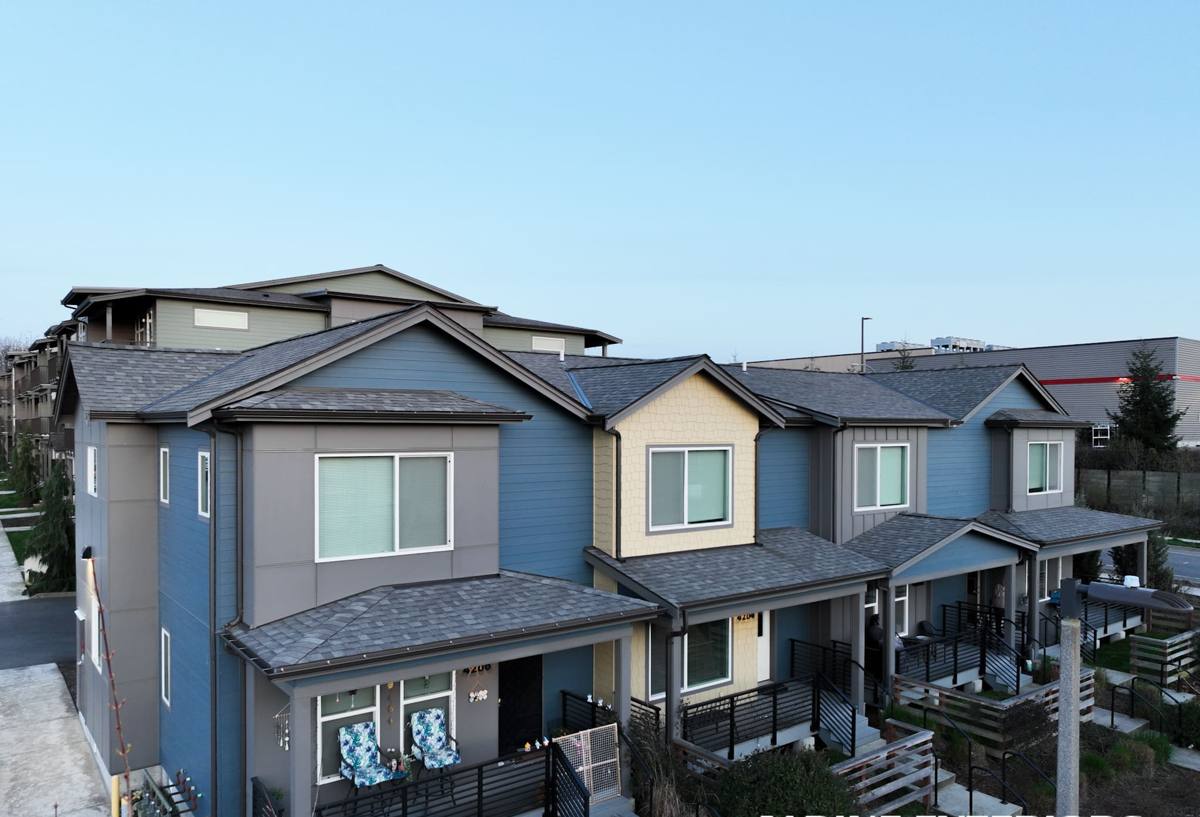
How This Climate Attacks a Window Assembly
It helps to understand what's actually happening behind the frame, because it explains why some replacement jobs last decades and others need attention again in five or six years.
Salt Air and Metal Components
Coastal air carries fine salt particles that accelerate corrosion on anything metal — screws, hinges, balance hardware, and lower-grade aluminum cladding. Once corrosion starts on a fastener or hinge, moisture gets a foothold that spreads to the surrounding wood or composite material.
Driving Rain and Wind-Driven Water
Rain here doesn't just fall on a window, it gets pushed into it. Wind-driven rain tests every seam, joint, and sealant line on a window in a way that vertical rain never does. A window that's watertight in a calm downpour can still leak under wind pressure if the flashing and sill pan weren't detailed correctly.
Extended Moss and Damp Season
The long stretch of overcast, damp weather most of the year means anything that traps moisture stays wet longer. Wood sills and jambs that would dry out in a sunnier climate stay saturated, which is exactly the condition rot and mold need. It's also why moss and algae get a foothold on horizontal surfaces near windows, including sills and trim, holding moisture against the material even longer.
Signs a Bellingham-Area Home Needs Window Replacement, Not Just Repair
Not every issue means full replacement. But these are the signs we look for that usually mean repair won't hold:
- Fogging or a visible haze between the panes of a double-pane window — the gas seal has failed and can't be repaired, only replaced
- Soft, spongy, or discolored wood at the sill or lower corners of the frame
- Visible daylight or a noticeable draft around the sash when the window is closed and locked
- Paint that keeps bubbling or peeling at the same spot no matter how often it's redone
- Difficulty opening, closing, or locking that isn't fixed by cleaning the tracks or hardware
- Interior condensation on the glass or frame that shows up consistently during cold, damp weeks
- Musty smell near a window that doesn't go away with cleaning
If you're seeing one or two of these, a repair might buy time. If you're seeing several, or the same window keeps coming back on the list, replacement is usually the more honest answer — patching a failing seal or rotted sill often costs a meaningful fraction of replacement without actually solving the underlying moisture path.
What a Correct Window Replacement Job Actually Involves
The window unit itself is only part of the job. The install detail is what determines whether the window performs for 20-plus years in this climate or starts leaking again in a handful of seasons.
Removal and Opening Inspection
Once the old window is out, we inspect the rough opening before anything new goes in. This is the point where hidden rot, damaged sheathing, or old flashing failures show up. It's also the only real opportunity to fix them — once a new window is sealed in place, that framing is inaccessible again.
Sill Pan and Flashing
A sill pan gives any water that gets past the window a way to drain back out instead of soaking into the framing. Combined with correctly lapped flashing tape around the head, jambs, and sill — integrated with the home's weather-resistive barrier — this is the single biggest factor in whether a window stays dry under wind-driven rain.
Air Sealing and Insulation
The gap between the window frame and the rough opening needs to be sealed and insulated correctly — not overpacked with expanding foam, which can bow the frame, and not left with unsealed gaps that let air and moisture through.
Exterior Trim and Caulking
Caulk is a finish detail, not a waterproofing strategy. It's applied last, over a system that's already managing water correctly, not used to cover for a missing sill pan or poorly lapped flashing.
Window Options for Bellingham-Area Homes
There isn't one right window for every house — the right choice depends on your home's exposure, your budget, and how much upkeep you want to take on. Here's how the common options compare for this climate specifically.
| Frame Material | Moisture Resistance | Upkeep | Typical Fit |
|---|---|---|---|
| Vinyl | Very good — won't rot or corrode | Low — occasional cleaning | Most homes; strong value for the climate |
| Fiberglass | Excellent — dimensionally stable, resists warping | Low | Homes with more direct wind/rain exposure |
| Wood-clad | Good if the cladding stays intact; vulnerable where cladding is damaged | Higher — exterior cladding and interior wood need monitoring | Homes prioritizing an interior wood look |
| Aluminum | Poor in salt air without upgraded coatings — prone to corrosion and condensation | Moderate to high | Generally not our first recommendation this close to the water |
For most Bellingham-area homes, vinyl or fiberglass frames make the most sense given the salt air and rain exposure — both resist moisture damage without the ongoing upkeep that wood or bare aluminum demand. Where we do install wood-clad windows, it's because the homeowner wants that look and understands the maintenance commitment that comes with it.
Glass Package
Double-pane, low-E glass with argon fill is the practical standard here — it manages heat loss and condensation risk well without pushing cost into triple-pane territory, which usually isn't necessary in this climate. We'll talk through glass options based on which direction a room faces and how exposed it is to wind and rain.
Our Process for a Bellingham-Area Window Replacement
- On-site assessment. We look at every window being considered, check for existing moisture or rot issues, and measure openings.
- Honest scope. We tell you which windows genuinely need replacement, which could be repaired, and why — we're not selling a bigger job than the house needs.
- Written estimate. Clear pricing by window, materials specified, and a realistic timeline.
- Removal and opening inspection. Old windows come out and we check the framing before anything new goes in.
- Correct installation. Sill pan, flashing, air sealing, and trim done in the right order, every time.
- Walkthrough. We check operation, sealing, and finish work with you before calling the job done.
What Drives Window Replacement Cost
Costs vary by home, but these are the main factors that move the price up or down on a typical Bellingham-area job:
| Factor | Why It Matters |
|---|---|
| Number and size of windows | Larger openings and full-house replacement carry more material and labor |
| Frame material | Vinyl is typically the most economical; fiberglass and wood-clad cost more upfront |
| Existing rot or framing damage | Hidden damage found during removal adds repair work before the new window goes in |
| Glass package | Upgraded low-E coatings or specialty glass add cost per unit |
| Access and site conditions | Second-story or hard-to-access windows take more labor time |
We give a straightforward, itemized estimate before any work starts, and we flag any hidden damage as soon as we find it during removal rather than after the job is finished.
Why Hiring a Crew That Already Works Bellingham Matters
A window installer who mostly works drier inland climates can put in a technically fine window and still get the flashing and drainage detail wrong for what this area actually throws at a house. Crews who work Blaine, Bellingham, and the rest of Whatcom County regularly build sill pans and flashing systems around wind-driven rain and long damp stretches as a matter of habit, not as an afterthought.
Being local also means we're not far away if a question comes up after the job — settling, a stuck sash, a trim question — during the first season the windows are living through actual coastal weather.
- Familiarity with how salt air and moisture behave on homes in this specific area
- Installation details built around wind-driven rain, not generic manufacturer minimums
- Straightforward answers about which windows need replacing and which don't
- Nearby if a follow-up question comes up after installation
If your Bellingham-area home has windows showing any of the wear signs above, or you're just ready to stop losing heat and dealing with drafts every winter, we're glad to come take a look. The estimate is free, there's no pressure, and you'll get a straight answer about what your windows actually need — use the form below to get started.