 Blaine Siding
 Window Replacement Built for Lynden's Weather
Lynden sits inland from the coast, but it still lives inside the same wet, marine-influenced weather system that defines Whatcom County. Long stretches of drizzle, driving rain that comes in sideways during winter storms, humid air off the Salish Sea, and a moss season that can run eight months out of the year all put steady pressure on a home's windows. Old or poorly sealed windows in this climate don't fail dramatically — they fail slowly, through fogged glass, soft trim, and drafts that show up gradually enough that homeowners often don't notice until a heating bill spikes or a windowsill starts to feel spongy.
Window replacement here isn't just a cosmetic upgrade. It's weatherproofing work. A window that's correctly selected, flashed, and sealed for this climate keeps wind-driven rain out of the wall cavity, resists the condensation that feeds mold and moss growth, and holds up to freeze-thaw cycles that aren't extreme but are frequent. We approach every Lynden job with that reality in mind, not a generic install.
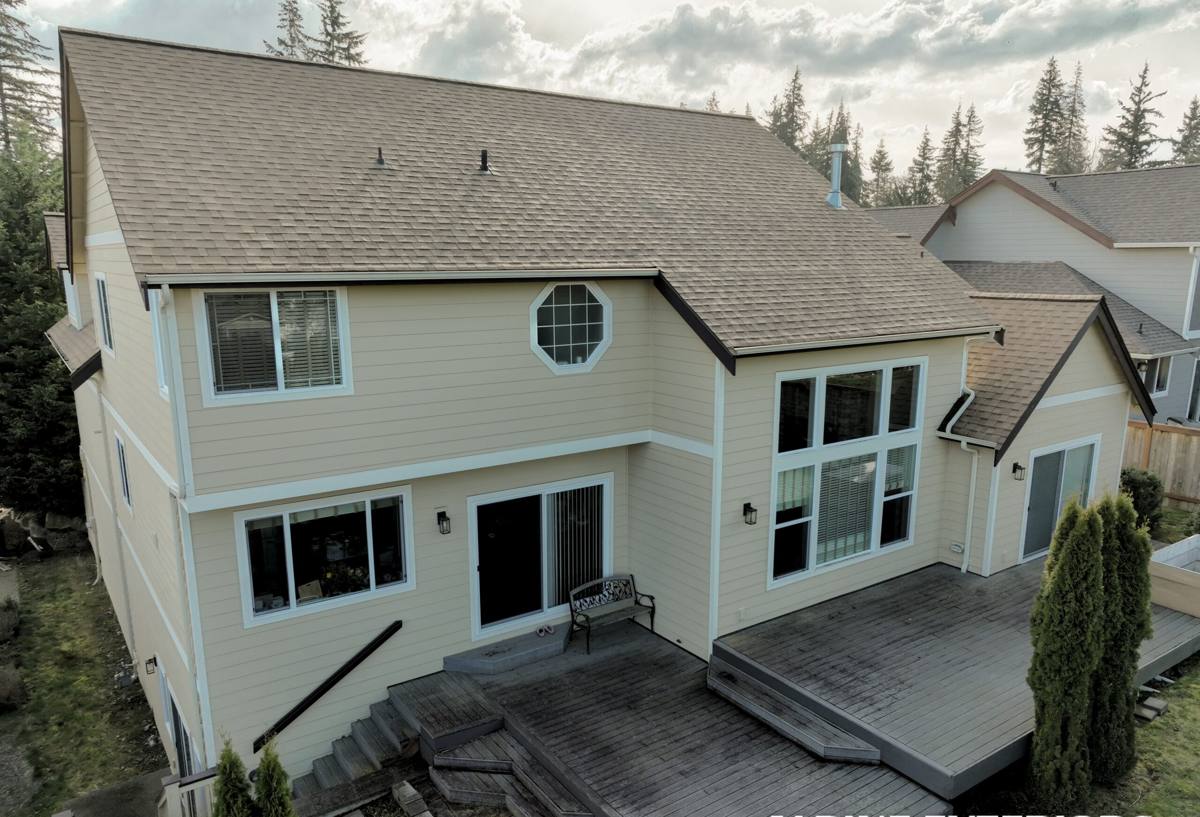
Signs a Lynden Home Needs Window Replacement
Most homeowners call us after noticing one or two symptoms, but window failure usually shows up as a cluster of small problems. Worth checking for:
- Condensation or fogging between double-pane glass (the seal has failed and the gas fill is gone)
- Soft, discolored, or swelling wood at the sill or bottom corners of the frame
- Visible daylight or a noticeable draft around the frame when it's windy
- Windows that are hard to open, close, or lock — often a sign the frame has shifted or swollen
- Moss or black staining forming on the exterior trim or sill, especially on north- and west-facing walls
- A noticeable jump in heating costs without any other change in the home
- Paint that keeps bubbling or peeling on interior or exterior trim near the window
One or two of these on a single window might mean a repair. Several of them across multiple windows, especially on the same side of the house, usually points to a systemic problem — often a flashing or sealant failure that's been letting moisture into the wall for a while.
What a Correct Window Replacement Job Actually Involves
It's Not Just Swapping Glass
A window replacement is only as good as the water management behind it. The window unit itself is a small part of the job; the flashing, sealant, and integration with the existing wall assembly matter more, especially in a climate where wind-driven rain regularly tests every seam. We treat every opening as a chance to correct whatever the original install got wrong, not just repeat it with a newer window.
Our Standard for Every Install
| Step | Why It Matters in This Climate |
|---|---|
| Remove old unit and inspect the rough opening | Catches hidden rot or moisture damage before it's sealed behind a new window |
| Repair or rebuild any damaged framing | A new window over a soft or wet frame just hides the problem, it doesn't fix it |
| Install proper flashing (sill pan, jamb, and head flashing) | Directs wind-driven rain back out instead of into the wall cavity |
| Set the window level, plumb, and square | Prevents stress on the seals and hardware that leads to early failure |
| Seal with the correct exterior sealant, not just caulk over gaps | Standard caulk breaks down faster under constant PNW moisture cycling |
| Insulate the gap between frame and rough opening | Stops the cold-air leaks and condensation points that show up around poorly filled gaps |
| Finish and match exterior trim | Keeps the home's water shedding and appearance consistent |
Skipping any one of these steps is how a "new" window ends up leaking within a few years. It's rarely the window unit itself that fails first — it's the installation around it.
Choosing Materials and Glass for Whatcom County Conditions
There's no single "best" window for every home, but there are trade-offs worth understanding before you decide. We walk Lynden homeowners through these honestly rather than pushing whatever has the best markup.
| Frame Material | Strengths | Trade-offs |
|---|---|---|
| Vinyl | Low maintenance, good insulation value, resists moisture well, moderate cost | Fewer color/finish options, can expand and contract with big temperature swings |
| Fiberglass | Very stable dimensionally, strong, handles moisture and temperature cycling well | Higher upfront cost than vinyl |
| Wood | Classic appearance, good insulator | Requires ongoing maintenance to prevent rot in a wet climate like ours |
| Wood-clad (wood interior, metal/vinyl exterior) | Interior warmth of wood with a weather-resistant exterior shell | Cladding seams need to be well-sealed or moisture can get trapped behind them |
| Aluminum | Strong, slim sightlines | Poor insulator unless thermally broken; can condense heavily in cold, damp weather |
For most Lynden homes, we lean toward vinyl or fiberglass because they hold up to sustained moisture without the upkeep that solid wood demands. That's a maintenance and moisture-behavior call, not a knock on wood windows in general — a well-maintained wood window can last decades, it's just a bigger ongoing commitment in this climate.
Glass Packages
Double-pane, low-E glass with argon gas fill is the practical baseline here. It cuts heat loss, reduces condensation risk on the interior pane, and blocks a meaningful amount of UV. Triple-pane glass adds further insulation and sound dampening, which is worth considering on north-facing rooms or homes closer to road noise, but it adds weight and cost that isn't necessary for every opening.
How Our Process Works, Start to Finish
1. On-Site Assessment
We look at each window individually — frame condition, sill and flashing state, sun and rain exposure on that side of the house — rather than quoting a flat per-window price sight unseen. Two windows on the same house can be in very different condition depending on which direction they face.
2. Honest Recommendation
We'll tell you plainly if a window needs full replacement, or if a repair (resealing, hardware fix, glass unit replacement) will genuinely hold up. We don't upsell replacements a home doesn't need.
3. Written Estimate
You get a clear breakdown of materials, labor, and scope before any work starts — no surprise add-ons once the old windows are already out of the wall.
4. Removal and Structural Check
Old windows come out carefully so we can inspect the rough opening underneath. This is the point where hidden rot or old flashing mistakes usually surface.
5. Installation
New units go in following the flashing and sealing standard described above — same process on every job, whether it's one window or a full-home replacement.
6. Walkthrough and Cleanup
We confirm every window opens, closes, and locks properly, clean up the job site, and go over basic care before we leave.
Cost Factors Homeowners Should Understand
Window replacement pricing varies a lot based on size, material, and site conditions, so we won't pretend there's a single number that applies to every Lynden home. What generally moves the price:
| Factor | Effect on Cost |
|---|---|
| Window size and number of openings | Larger and more numerous openings increase material and labor cost directly |
| Frame material chosen | Vinyl is typically the most economical; fiberglass and wood cost more |
| Condition of the rough opening | Rot or water damage found during removal adds repair time before the new window goes in |
| Glass package | Triple-pane and specialty coatings cost more than standard double-pane low-E |
| Access and second-story work | Harder-to-reach windows take more time and equipment |
| Trim and exterior finish work | Matching existing trim or siding profiles adds finishing labor |
We'd rather walk your home and give you real numbers than throw out a broad range that doesn't mean much once we see the actual openings.
Why It Matters to Hire a Crew That Already Works in Lynden
Window replacement done wrong doesn't usually show itself right away — it shows up two or three winters later as a soft sill, a musty smell, or a spike in the heating bill. A crew that works across Whatcom County regularly, including in and around Lynden, has already seen how the local moisture pattern, moss growth, and wind-driven rain expose weak installation work. That experience shapes how we flash, seal, and finish every opening, rather than applying a one-size-fits-all method meant for a drier climate.
We also know that Lynden homes span a wide range of ages and construction styles, from older farmhouses to newer builds. Each comes with different framing conventions and different failure points, and we adjust our approach to match what's actually behind the wall rather than assuming every house is the same.
Maintaining New Windows in a Wet Climate
New windows still need basic upkeep to hit their full lifespan here. A simple seasonal routine goes a long way:
- Rinse pollen, salt residue, and grime off exterior glass and frames a few times a year
- Check exterior caulk lines annually for cracking or separation, especially after a hard winter
- Clear debris and moss from sills and nearby gutters so water doesn't pool against the frame
- Vacuum and lubricate tracks on sliding or double-hung windows to keep hardware working smoothly
- Watch for condensation between panes, which signals a seal failure even on a newer window
- Trim back vegetation that keeps foliage or branches in constant contact with window frames
None of this is heavy maintenance, but skipping it is how even a well-installed window develops problems early in a climate this consistently wet.
Get a Straightforward Estimate
If your windows in Lynden are fogging, drafty, sticking, or just old enough that you're wondering whether repair still makes sense, we're happy to take a look. We'll give you a straight answer on what your windows actually need and a written estimate with no pressure to commit on the spot — just fill out the form below to get started.