 Blaine Siding
 Point Roberts' Window Problem Starts With Its Location
Point Roberts sits on its own patch of ground — a U.S. exclave hanging off the Tsawwassen Peninsula, surrounded on three sides by water and only reachable by road through Canada. That geography isn't just a quirk for road-trip planning. It means homes here take on marine exposure from multiple directions at once: wind and spray off Boundary Bay and Georgia Strait, near-constant humidity, and weather patterns that don't let up for long stretches of the year. Windows installed the way they'd be installed twenty miles inland in a drier part of Whatcom County simply don't hold up the same way out here.
We've worked on homes throughout Blaine and Point Roberts long enough to know that "window installation" isn't a one-size-fits-all job. What keeps a window performing on the Point is largely about what happens at the edges — the flashing, the sealant, the frame material — not just the glass in the middle.
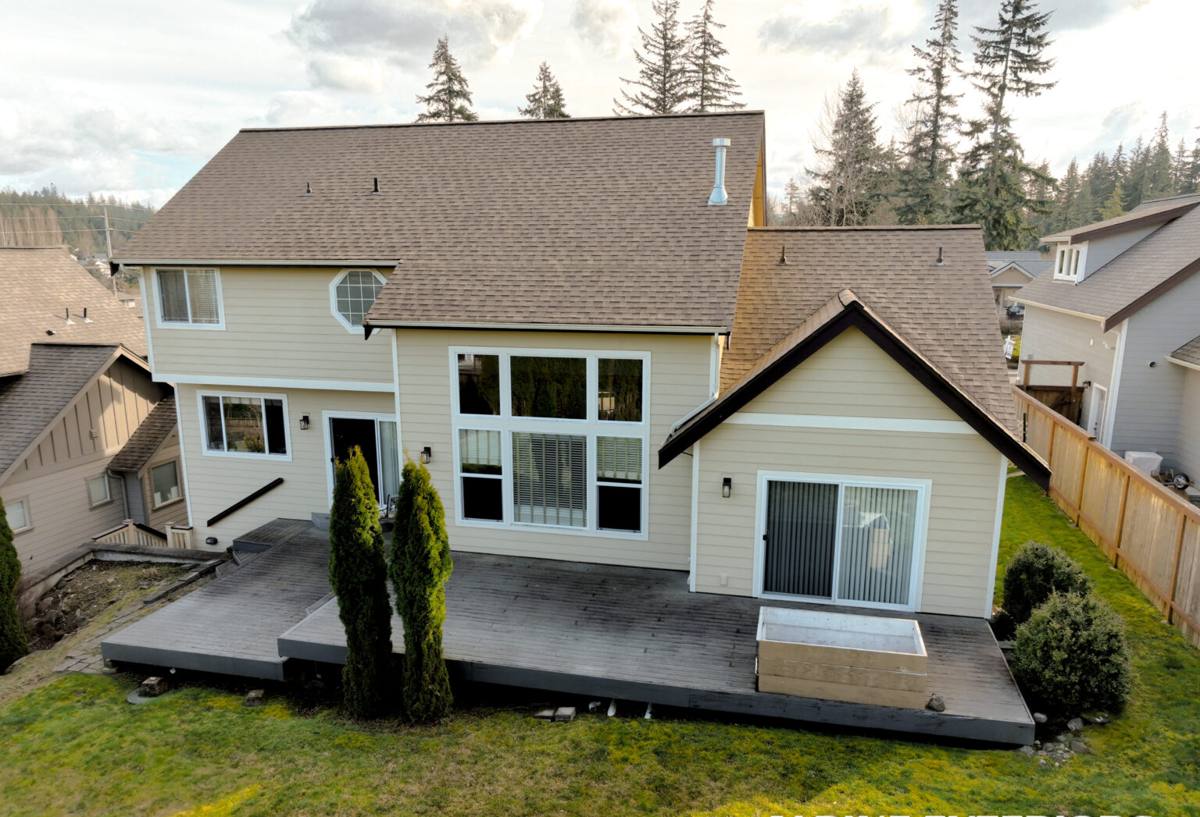
What Salt Air, Driving Rain, and a Long Moss Season Do to Windows Over Time
Three things wear on windows here more than almost anywhere else in the county:
Salt Air
Airborne salt corrodes metal hardware — hinges, locks, and especially aluminum components — faster than it would a few miles inland. Once corrosion starts on a window's moving parts, the window stops sealing tightly, and a window that doesn't seal tightly lets in more of the moisture that caused the problem in the first place.
Driving Rain
Rain that comes in sideways off the water doesn't behave like rain falling straight down. It gets pushed and pressured into any gap in the flashing or sealant around a window opening. A window can look perfectly fine and still be letting water into the wall cavity behind it, where it rots sheathing and framing out of sight for years before anyone notices a stain.
Moss and Prolonged Dampness
The long wet season that supports moss growth on roofs and siding does the same thing to window sills, trim, and the wood framing around older window openings. Moss and algae hold moisture against a surface long after the rain has stopped, which is exactly the condition that lets rot take hold in wood trim and sills that aren't properly flashed or finished.
None of this means Point Roberts homes need something exotic. It means the installation details that get skipped in easier climates can't be skipped here.
Signs Your Windows Are Losing the Battle
Most window failure on the coast is gradual. Here's what we tell Point Roberts homeowners to watch for:
- Fogging or moisture between panes of double-glazed glass — a sign the seal has failed
- Visible corrosion, pitting, or stiffness on window hardware and hinges
- Soft, discolored, or spongy wood trim or sill around the window frame
- Drafts you can feel near the frame, even with the window fully latched
- Difficulty opening, closing, or locking a window that used to operate smoothly
- Paint or finish peeling and bubbling specifically around window edges, not the whole wall
- Moss or dark staining building up on the sill or the trim below the window
- Noticeably higher heating bills without any other obvious cause
Any one of these on its own might be minor. Two or three together, especially on the same window, usually mean water has already found its way behind the frame.
What a Correct Installation Actually Involves
Anyone can set a window in a rough opening and run a bead of caulk around the outside. That approach might look fine for a season or two, but on a site exposed to driving rain and salt spray, it fails early — and by the time it fails, the damage is inside the wall, not on the surface where it's easy to see.
Flashing and Water Management
Before a new window ever goes in, the opening needs proper flashing — a sill pan to catch and direct any water that gets past the window itself, plus flashing tape integrated with the home's water-resistive barrier at the sides and top. This is the layer that decides whether water that reaches the wall drains back out or soaks into the framing.
Air and Moisture Sealing
The gap between the window unit and the rough opening gets sealed with a low-expansion foam or backer rod and sealant rated for exterior use, not just packed with fiberglass insulation and forgotten. This controls both drafts and the small amounts of moisture that inevitably find their way to that gap over time.
Trim, Finish, and Hardware
Exterior trim gets back-primed and properly caulked at the joints, not just face-nailed and painted. Hardware — hinges, locks, cranks — should be rated for coastal or marine environments where that's an option, since standard hardware corrodes faster under regular salt exposure.
Skip any one of these steps and the window may look right on installation day, but it's set up to fail years earlier than it should.
Choosing Materials That Hold Up on the Point
Frame material matters as much as glass quality in this environment. Here's how the common options compare for coastal exposure:
| Frame Material | Salt Air / Moisture Resistance | Maintenance Needs | Notes for This Area |
|---|---|---|---|
| Vinyl | Good — won't corrode or rot | Low; occasional cleaning | Common, cost-effective choice; quality varies by manufacturer |
| Fiberglass | Very good — stable in wet, salty conditions | Low | Handles temperature and moisture swings well; typically a higher upfront cost |
| Wood (unclad) | Poor without diligent upkeep | High — regular painting/sealing required | Attractive but demands real commitment in this climate; we're upfront about that trade-off |
| Wood-Clad (exterior-protected) | Good on the exterior face; interior stays wood | Moderate | Good compromise where a wood interior look is wanted |
| Aluminum | Fair — prone to corrosion and condensation near salt air | Moderate to high | Generally not our first recommendation for direct coastal exposure |
Glass matters too. A dual- or triple-pane unit with a Low-E coating and a warm-edge spacer holds up better to condensation and temperature swings than a bare double-pane unit, and it cuts down on the drafty feel that older single-pane or worn double-pane windows are known for.
Cost Factors to Expect
We don't quote prices sight unseen, but the biggest cost drivers on a Point Roberts window job are usually the same handful of things:
| Factor | Why It Affects Cost |
|---|---|
| Full-frame vs. insert replacement | Full-frame replaces the frame and flashing entirely; insert replacement reuses the existing frame and is faster but only appropriate when that frame is still sound |
| Window size and count | Larger openings and whole-house replacements naturally take more material and labor |
| Glass package | Impact-resistant, tinted, or higher-performance Low-E glass costs more than standard dual-pane |
| Existing damage | Rotted framing or sheathing found once trim is removed adds repair work that couldn't be priced in advance |
| Access and site conditions | Upper-story windows, tight side yards, or limited staging space affect labor time |
| Trim and finish work | Custom trim, painting, or matching existing exterior details adds scope beyond the window unit itself |
We walk through these with you during the estimate so there aren't surprises once work starts — and if we find hidden rot behind old trim, we'll show it to you before we touch it.
Why a Crew That Already Works Point Roberts Matters
Point Roberts isn't a quick in-and-out job site. Getting a crew and materials there means crossing the border, which takes planning that doesn't apply to a job in downtown Blaine. A crew that hasn't done it before can lose real time to under-ordering materials, forgetting a tool, or not accounting for border wait times in the schedule — all of which either drags the job out or gets passed along in cost.
There's also a permitting side to it. Window replacement work in Point Roberts falls under Whatcom County's building and permitting requirements, and knowing what does and doesn't trigger a permit for window work — egress changes, structural modifications to the opening, and so on — saves headaches later. A crew that's pulled permits here before knows the process instead of learning it on your job.
And frankly, a crew that's already seen how salt air and driving rain treat windows on the Point brings that knowledge to your install instead of applying generic techniques and hoping they hold up.
Our Process for Point Roberts Homes
When we take on a window job out on the Point, we plan the trip and the work together rather than treating it like a standard in-town job:
- An on-site assessment where we look at existing windows, trim condition, and any visible signs of water intrusion — not just measure for new units
- A written estimate that breaks out material, labor, and any anticipated repair work separately, so you know what's driving the number
- Material staging and scheduling that accounts for the border crossing, so the crew shows up with everything needed the first time
- Removal of the old window with a check of the framing underneath before anything new goes in
- Correct flashing, sealing, and installation of the new window per manufacturer specifications
- Exterior trim and finish work matched to your home, followed by a final walkthrough with you
We treat every Point Roberts trip as a chance to do the job right the first time, because coming back for a callback isn't a quick fix here — it's a half-day commitment for everyone involved.
If your windows are drafty, fogged, sticking, or just showing their age, we're happy to come take a look and put together a free, no-pressure estimate for your Point Roberts or Blaine home. Use the form below to get in touch.