 Blaine Siding
 Why Board & Batten Fits Birch Point's Waterfront Character
Birch Point sits right up against the water, and homes here tend to lean into that setting — clean lines, a coastal or craftsman feel, and exteriors that read as intentional rather than generic. Board and batten siding is one of the few siding styles that actually delivers that look. Wide vertical panels with narrow battens covering the seams create strong shadow lines and a timeless, cottage-to-farmhouse aesthetic that suits waterfront and near-waterfront properties in a way standard horizontal lap siding often doesn't.
But the look is only half the story. In Blaine, and especially in a low-lying, water-exposed community like Birch Point, the way a siding style handles wind-driven rain, salt-laden air, and long stretches of damp shade matters just as much as how it looks from the street. Board and batten done correctly sheds water well because of its vertical orientation — but done poorly, with the wrong flashing or the wrong fastening approach, the same style can trap moisture behind the battens and cause problems a homeowner won't see until they're expensive.
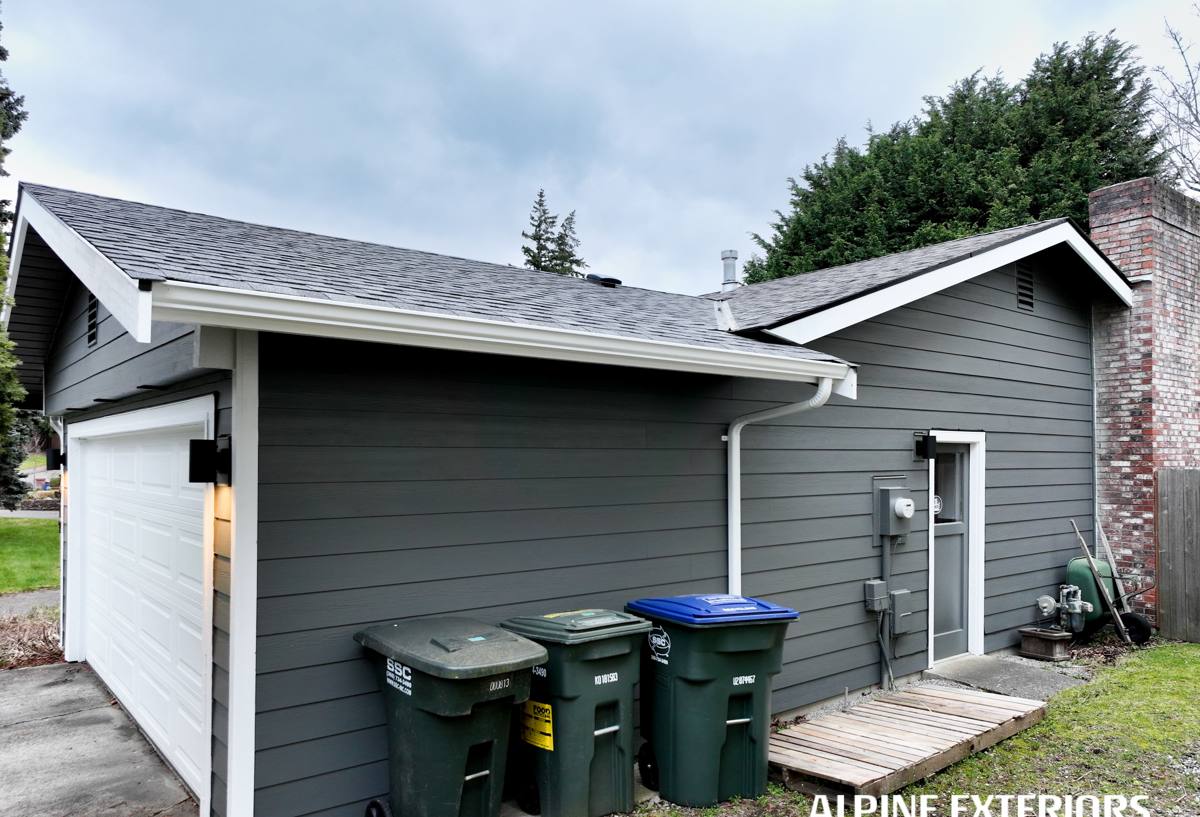
What Salt Air, Driving Rain, and Moss Season Actually Do to Siding Here
Whatcom County's marine climate is mild, but mild doesn't mean gentle on a house. Three things define what siding on a Birch Point home is up against:
- Salt air: Proximity to the water means airborne salt settles on exterior surfaces year-round. It accelerates corrosion of fasteners, hardware, and any metal flashing that isn't properly rated, and it can dull or degrade finishes that aren't formulated to resist it.
- Driving rain: Wind off the water doesn't just fall on a house, it drives into it — pushing water sideways into seams, laps, and penetrations that would stay dry in a calmer climate. Vertical board and batten needs correctly detailed seams and battens to handle that kind of lateral pressure.
- Moss and algae season: Long, wet stretches with limited direct sun, especially on north- and east-facing walls, create ideal conditions for moss and algae growth. Porous or untreated siding surfaces hold onto that moisture and give organic growth something to cling to.
None of this is unique to Birch Point, but the combination — direct water exposure, wind, and shade-driven dampness — is more concentrated here than it is a few miles inland in Blaine proper. A siding installation that would hold up fine on a sheltered inland lot can fail faster on a bay-facing wall.
What a Correct Board & Batten Installation Actually Involves
Water-Resistive Barrier and Flashing First
Before a single panel goes up, the water-resistive barrier (WRB) underneath has to be installed and lapped correctly, with flashing at every window, door, and roofline penetration. Board and batten in particular depends on this layer doing its job, because the battens themselves are not a waterproofing system — they're a trim detail. If the WRB and flashing aren't right, moisture that gets past the battens has nowhere to go but into the wall assembly.
Panel Layout and Fastening
Panel seams need to land over structural framing, be properly gapped per manufacturer spec, and be covered by battens fastened through to solid backing — not just through the panel face. Fastener spacing and placement affect both wind resistance (important given how exposed Birch Point lots can be) and how the siding performs over decades of expansion and contraction.
Finish and Sealant Detailing
Every cut edge, whether at a corner, window, or trim intersection, needs to be sealed and, where the factory finish has been cut into, treated so bare material isn't left exposed to weather. This is one of the most commonly rushed steps in siding installation generally, and it's exactly the kind of shortcut that shows up first in a salt-air, high-moisture environment.
Why We Install James Hardie for This
We install James Hardie fiber cement exclusively, and board and batten is one of the clearer cases for why. Hardie's vertical siding panels, paired with Hardie trim boards used as battens, give you the board and batten look built from a non-combustible, dimensionally stable material that doesn't swell, rot, or delaminate the way wood-based or engineered-wood products can when they take on repeated moisture.
Hardie also builds its siding with climate-engineered formulations meant for different regional conditions — including the kind of wet, marine-influenced exposure Blaine and Birch Point deal with — rather than a single one-size-fits-all product. The factory-applied ColorPlus finish is baked on before the material ever reaches the jobsite, which matters in a salt-air environment where field-applied paint tends to fade and chalk faster. Hardie backs that finish and the underlying panel with a strong, transferable warranty, which carries real weight on a waterfront property where buyers and appraisers pay attention to exterior condition and documentation.
We don't install LP SmartSide, vinyl, Cemplank, Allura, or unfinished cedar or spruce board and batten. Each of those has its own place, but each also comes with a trade-off — moisture sensitivity, maintenance burden, finish durability, or warranty structure — that we're not willing to put our name behind on a Birch Point exterior facing this kind of exposure.
Board & Batten Options: What Changes the Job
| Factor | Why It Matters in Birch Point | What Correct Work Looks Like |
|---|---|---|
| Wall orientation (bay-facing vs. sheltered) | Water- and wind-facing walls take far more driving rain and salt exposure than side or rear walls | Extra attention to flashing and sealant on exposed elevations; sometimes tighter fastener schedules |
| Existing wall condition | Older homes near the water may already have hidden moisture damage under the current siding | Full removal and inspection of sheathing before any new WRB or siding goes on |
| Panel and batten spacing | Wider spacing looks bolder but changes how the assembly sheds water | Spacing and fastening within manufacturer specification, not just aesthetic preference |
| Trim and corner details | Corners and window returns are where wind-driven rain finds its way in first | Proper flashing and caulking at every transition, not just where it's visible |
| Finish color | Darker factory finishes handle UV and salt exposure differently than lighter tones | Factory-applied ColorPlus finish rather than field-painted material |
How Our Process Works
Assessment
We walk the exterior with you, note which elevations take the most weather, and check the current siding and any visible signs of moisture intrusion, particularly around windows, roof-to-wall transitions, and lower wall sections closest to grade or water.
Prep and Removal
Old siding comes off, and we inspect the sheathing underneath before anything new goes on. If there's hidden rot or damage from years of moisture exposure, we address it before installing the new water-resistive barrier — covering over a problem is how small issues turn into structural ones.
Installation
WRB, flashing, panels, and battens go in following James Hardie's installation specifications, with fastening and sealant detailing suited to Birch Point's exposure level rather than a generic inland standard.
Final Walkthrough
We review the finished exterior with you, check seams and trim details, and make sure you understand basic care going forward before we consider the job done.
Maintenance Checklist for Birch Point Homeowners
- Rinse siding periodically to remove salt residue, especially on bay-facing walls
- Check north- and shade-heavy walls each fall for early moss or algae growth
- Inspect caulking at trim, windows, and corners annually for cracking or gaps
- Keep gutters and downspouts clear so runoff doesn't sheet down wall surfaces
- Trim back vegetation that keeps a wall shaded and damp longer than necessary
- Have any soft spots, discoloration, or visible fastener corrosion looked at promptly
Why Local Birch Point Experience Matters
A crew that only occasionally works this close to the water tends to install siding the same way they would ten miles inland — and that's exactly where corners get cut without anyone meaning to cut them. Knowing how hard wind-driven rain hits a bay-facing wall, which elevations in Birch Point stay damp longest into moss season, and how salt air changes the maintenance conversation with a homeowner isn't something you get from a spec sheet. It comes from having done the work here before.
That local familiarity shapes real decisions on a board and batten job: where to be more conservative with flashing, which walls need closer attention to fastener corrosion resistance, and how to set expectations for upkeep on a property that faces more weather than most. It's the difference between siding that looks right on install day and siding that still looks and performs right five and ten years into Blaine's weather.
If you're planning a board and batten project on a Birch Point home, we're happy to take a look and talk through what your specific site and exposure call for. Reach out for a free, no-pressure estimate using the form below.