 Blaine Siding
 Why Birch Point Decks Age Differently
Birch Point sits close enough to the water that every deck out here is doing double duty: holding up your furniture and family, and standing up to a shoreline climate that's harder on wood and hardware than most inland Whatcom County properties. Salt-laden air moves in off the water, driving rain comes in sideways during winter storms, and the long stretch of damp, low-light months between fall and spring keeps moss and algae established on horizontal surfaces for most of the year. A deck built or repaired without that in mind will show problems years before it should.
We repair decks throughout the Blaine area, and the ones on or near Birch Point consistently show a specific pattern of wear — corroded fasteners, soft spots near the house, and slick, moss-dark boards — that's different from what we see on decks a few miles inland. This page is about that pattern: what causes it, what a proper repair actually involves, and why it matters to hire a crew that already knows this stretch of coastline.
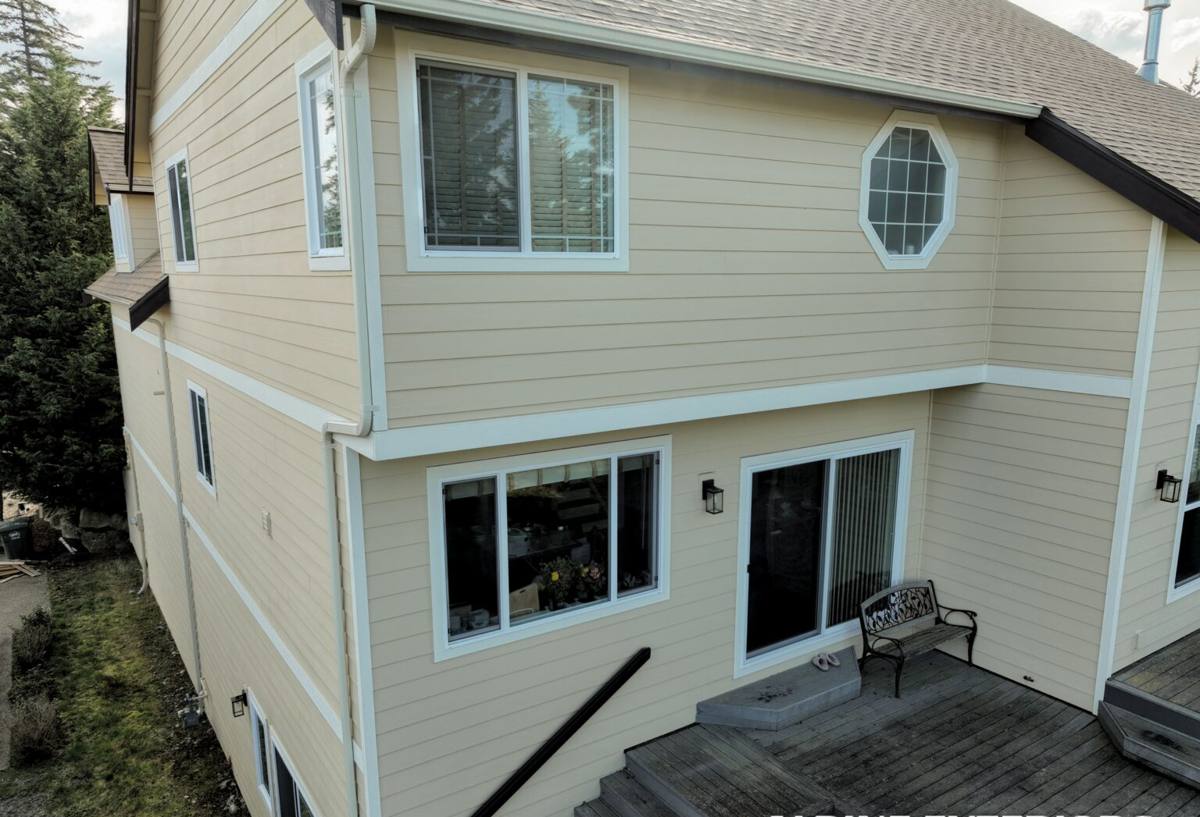
What Salt Air, Rain, and Moss Actually Do to a Deck
Corrosion at every metal connection
Salt air accelerates oxidation on anything metal — nails, screws, joist hangers, post bases, and railing hardware. Standard galvanized fasteners that would last decades inland can start rusting and weakening at Birch Point in a fraction of that time. Once a fastener corrodes, it loses holding strength, and the wood around it starts to move slightly with every step, which enlarges the hole and lets in more moisture. It's a cycle that feeds itself.
Water intrusion at the house and framing
Driving rain off the water doesn't just fall straight down — it gets pushed sideways into ledger boards, stair stringers, and any gap where the deck meets the house. The ledger board (where the deck attaches to the structure) is the single most important connection on the whole deck, and it's also the one most exposed to wind-driven rain. When flashing is missing, damaged, or was never installed correctly, water works its way behind the ledger and into the rim joist, and that's where we find the most serious rot.
Moss, algae, and trapped moisture
Whatcom County's long moss season means horizontal deck surfaces stay damp for extended stretches, especially in shaded or north-facing areas common near Birch Point's tree cover. Moss holds moisture directly against the wood fibers, which speeds up rot in boards and framing underneath, and it also turns decking into a slip hazard well before the wood itself looks obviously damaged. A deck can look mossy but structurally fine, or it can look clean on top and be rotting underneath — the two aren't the same problem, and treating them the same way is a common mistake.
Signs Your Deck Needs Repair — Not Just Cleaning
Some of these you can check yourself before calling anyone out:
- Boards that feel spongy, springy, or noticeably softer underfoot in one area compared to the rest of the deck
- Rust staining running down from screw heads or bleeding out of joist hangers
- Any gap, crack, or daylight visible between the ledger board and the house siding
- Railings or posts that wiggle or flex when you push on them — this is a safety issue, not cosmetic
- Persistent green or black growth that comes right back within weeks of cleaning
- A screwdriver or awl that sinks into the wood with light pressure (a simple rot test on suspect boards)
- Stairs that feel uneven, bouncy, or have visibly sagging stringers
- Standing water that doesn't drain within an hour or two after rain stops
If you're seeing more than one or two of these, especially anything near the ledger or main support posts, it's worth getting a professional look before the next storm season rather than after.
What a Correct Deck Repair Actually Involves
Deck repair done right isn't just pulling bad boards and dropping in new ones. A repair that holds up at Birch Point starts with the structure underneath, not the surface.
Structural framing first
We check joists, beams, posts, and footings before touching decking boards. Replacing surface boards over a compromised frame is a short-term fix that costs more in the long run — the new boards will show the same problems within a season or two if the framing underneath is still failing.
Ledger flashing and water management
Where a deck attaches to the house, we verify or install proper flashing that directs water away from the connection rather than trapping it. This is the repair most likely to be skipped by anyone doing surface-only work, and it's the one that prevents the most expensive future damage.
Fastener and hardware upgrades
Given the corrosion issue described above, repairs at Birch Point typically call for coated or stainless-rated fasteners and connectors rated for coastal exposure, not the standard hardware that's fine for an inland property. It costs a bit more up front and saves you from redoing the same repair in a few years.
Board-by-board decking repair
Not every board needs replacing. We remove and replace only what's actually failed, matching board profile and fastening pattern so the repair blends into the existing deck rather than creating a patchwork.
Railings and stairs
Railing posts anchored into deteriorated framing are a safety issue we won't ignore even if that wasn't the original request. If a post is loose because of what's underneath it, we address that as part of the repair.
Repair or Replace? Weighing the Real Factors
Homeowners often ask whether it's worth repairing an older deck versus starting over. The honest answer depends on how much of the structure is still sound.
| Factor | Favors Repair | Favors Replacement |
|---|---|---|
| Framing condition | Joists and posts are solid; damage is isolated | Rot is widespread across multiple structural members |
| Ledger connection | Ledger is sound once flashing is corrected | Ledger itself is rotted or improperly attached |
| Age of the deck | Deck is within its expected service life | Deck is well past typical lifespan for its material |
| Extent of surface damage | Damage is limited to a handful of boards | Most boards show cupping, splitting, or rot |
| Code compliance | Current structure meets or can be brought to code | Railings, spacing, or footings fall short of current code |
In practice, a lot of Birch Point decks fall in the middle — sound framing but corroded hardware and a handful of bad boards near the ledger or stairs. That's squarely a repair job, and it's usually a fraction of the cost of full replacement.
How Our Repair Process Works
- On-site inspection. We check framing, ledger flashing, fasteners, and decking board by board, including probing suspect areas rather than just looking at the surface.
- Honest scope and estimate. You get a clear breakdown of what actually needs repair versus what's cosmetic, with pricing tied to the real scope — not an upsell toward full replacement when repair will hold.
- Repair the structure first. Framing and ledger issues get fixed before any new decking goes down.
- Replace only what's failed. Boards, hardware, and railings are addressed based on actual condition.
- Clean handoff. We clear debris, check that railings and stairs are solid, and walk the finished repair with you before we call it done.
Materials That Hold Up in This Climate
For repair work near the water, we lean toward fasteners and connectors rated for coastal or marine-grade exposure, and we're upfront about the trade-offs between decking materials rather than pushing one option as universally "best."
Wood decking is affordable and easy to spot-repair board by board, but it needs more consistent maintenance — cleaning, sealing, and moss control — to keep up with this climate. Composite decking resists rot and doesn't need sealing, but it costs more upfront, can still grow surface algae in shaded, damp spots if it's not cleaned occasionally, and isn't always simple to source-match if a board needs replacing years later. Neither is wrong; it's about matching the material to how much upkeep you actually want to do and what the rest of the deck is built from.
Why It Matters to Hire a Crew That Already Works Birch Point
A contractor who only works inland properties may not think to ask about ledger flashing exposure to wind-driven rain, or default to standard hardware instead of coastal-rated fasteners, simply because they haven't seen the failure pattern this location produces. We've repaired enough decks along this stretch of Blaine's shoreline to know where the damage typically starts — the ledger connection, the fastener heads, the shaded north side where moss holds moisture longest — and we check those spots first instead of guessing. That local pattern recognition is often the difference between a repair that lasts and one that needs redoing in a few years.
Get a Straight Answer on Your Deck
If your deck is showing rust streaks, soft spots, or persistent moss, it's worth having someone look before another wet Whatcom County winter makes the problem bigger. We'll give you a clear, no-pressure estimate on what repair actually involves for your deck — use the form below to get started.