 Blaine Siding
 Why Birch Point Roofs Wear Differently Than Roofs Inland
Birch Point sits close enough to Semiahmoo Bay and Drayton Harbor that salt-laden air, near-constant onshore wind, and driving rain are part of daily life for homes out here, not occasional weather events. Add in the tree cover common to this part of Whatcom County and a roof at Birch Point is fighting three things at once: corrosion, wind-driven moisture intrusion, and a moss season that can run from fall through spring. A roof system built for a dry inland subdivision doesn't hold up the same way out here, and that's the gap we try to close with every installation.
Salt Air and Metal Components
Salt air accelerates corrosion on exposed fasteners, flashing, and any low-grade metal on a roof. It's not dramatic — you won't see it happen — but over years it shows up as rust streaking at nail heads, pitted flashing, and premature failure at the metal-to-shingle transitions. The fix isn't complicated: use fastener and flashing materials rated for coastal exposure and detail those transitions so water sheds instead of sitting.
Moss, Shade, and Slow-Drying Roof Decks
Shaded, north-facing slopes near mature trees stay damp far longer after a storm than a roof out in the open. That extended dry time is exactly what moss and algae need to establish. Once moss gets a foothold, it holds moisture against the shingle surface, lifts shingle edges, and works its way toward the deck over a few seasons. A new roof installation is the best point to build in the drainage, ventilation, and material choices that slow moss down before it starts, rather than fighting it every fall.
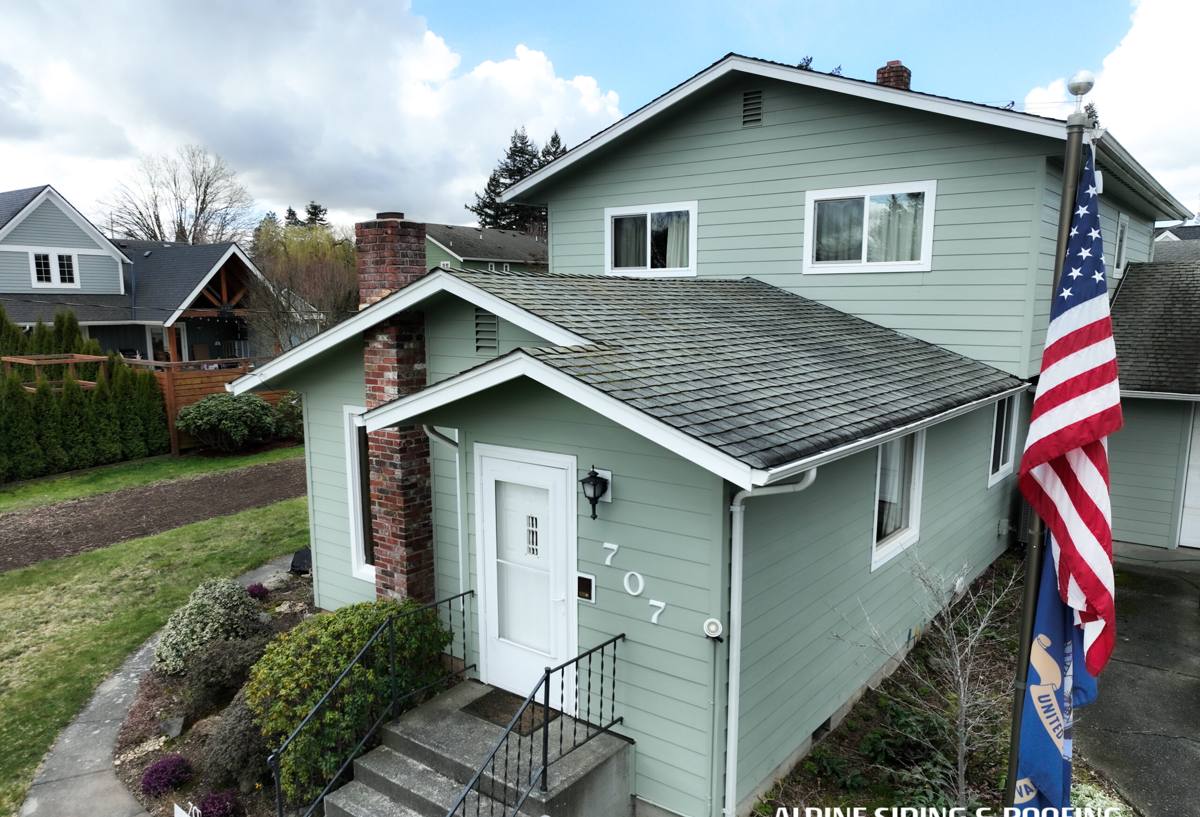
Signs a Birch Point Home Needs a New Roof, Not Another Patch
Coastal wear tends to show up gradually, which is why a lot of homeowners end up patching the same roof three or four times before deciding to replace it. These are the signs worth taking seriously:
- Granule loss heavy enough that you're finding shingle grit in gutters and downspouts each season
- Curling, cupping, or cracked shingles, especially on wind-exposed slopes facing the water
- Moss or algae staining that comes back within a year of cleaning
- Rusted or lifted flashing around chimneys, vents, and skylights
- Soft spots, sagging, or visible daylight in the attic where there shouldn't be any
- Interior water stains that appear or worsen after wind-driven rain, not just heavy downpours
- A roof approaching or past its expected service life with more than one layer of shingles already on it
One or two of these on their own might mean a repair is enough. Several together, especially on an older roof, usually means the underlying materials and flashing details are failing as a system — and patching one spot just shifts the problem to the next.
What a Correct New Roof Installation Involves Out Here
Full Tear-Off and Deck Inspection
We don't recommend installing over an existing layer on a Birch Point home. Full tear-off lets us actually see the deck, which matters a lot on a roof that's had years of coastal moisture working on it. Soft, delaminated, or water-stained sheathing gets replaced before anything new goes down — installing new roofing over a compromised deck just guarantees a shorter-than-expected lifespan.
Underlayment Built for Wind-Driven Rain
Standard felt underlayment is a minimum, not a standard, for a site this exposed. We use synthetic underlayment for its tear resistance and water resistance, and we run self-adhered ice-and-water membrane at eaves, valleys, and any low-slope transitions where wind can drive rain up and under the shingle course.
Ventilation That Matches the Attic, Not a Catalog Default
Balanced intake and exhaust ventilation keeps the underside of the deck dry and close to outdoor temperature, which slows condensation and helps shingles last through their rated life. On homes with additions, dormers, or complicated rooflines — common around Birch Point's older and remodeled properties — the ventilation plan has to be worked out for that specific attic, not assumed.
Flashing Detail at Every Penetration
Chimneys, plumbing vents, skylights, and roof-to-wall intersections are where the majority of leaks start, not the open field of shingles. We flash these with corrosion-resistant metal and step flashing sized and lapped correctly, since this is the detail that determines whether a roof stays dry through a real coastal storm.
Roofing Material Options for Coastal Whatcom County Homes
There's no single "best" roofing material for every Birch Point home — it depends on the roof's exposure, the home's style, and how much long-term maintenance you want to take on. Here's how the common options compare for this specific climate:
| Material | Typical Lifespan | Moss & Moisture Behavior | Coastal/Salt-Air Notes |
|---|---|---|---|
| Architectural asphalt shingle | 25–30 years | Good with proper ventilation; algae-resistant granules help on shaded slopes | Widely used, cost-effective, performs well when flashing and fasteners are corrosion-rated |
| Standing seam metal | 40–50+ years | Sheds moss well due to smooth, steep-shedding surface | Needs coastal-rated fasteners and finish; strong wind and rain performance |
| Synthetic/composite shingle | 30–50 years | Resists moisture absorption better than wood | Good option where a wood-shake look is wanted without wood's maintenance burden |
| Cedar shake | 20–30 years with upkeep | Requires regular treatment and cleaning to resist moss in shaded, damp conditions | Higher maintenance in salt air and shade; we're upfront about that trade-off before you commit |
We'll walk through these options against your roof's actual slope, shade exposure, and how much maintenance you realistically want to keep up with — not just what's cheapest up front.
Our Installation Process, Start to Finish
- On-site assessment — we inspect the existing roof, attic, and ventilation, and check the deck condition where accessible
- Written estimate — material options, scope, and pricing laid out clearly, with no vague allowances
- Scheduling around weather — we plan tear-off days around dry windows, which matters more here than in drier parts of the state
- Tear-off and deck repair — old roofing removed, deck inspected and any damaged sheathing replaced
- Underlayment, flashing, and ventilation installed — the layers that actually keep water out over time
- New roofing installed to manufacturer specifications and local code
- Final walkthrough — we review the completed roof with you and go over basic care before we leave
What Drives the Cost of a New Roof at Birch Point
Every estimate is specific to the home, but the factors that move the number are consistent. Broadly, a full replacement on a typical single-family home runs from the low thousands into the high five figures depending on size, material, and complexity — we'll give you an exact number after seeing the roof, not a phone-quote guess.
| Factor | Why It Affects Cost |
|---|---|
| Roof size and pitch | More surface area and steeper slopes mean more material and labor time |
| Number of existing layers | Tearing off multiple old layers takes longer and adds disposal cost |
| Deck condition | Rotted or delaminated sheathing found during tear-off needs replacement before new roofing goes down |
| Material choice | Asphalt, metal, synthetic, and cedar carry different material and labor costs |
| Roofline complexity | Valleys, dormers, and multiple penetrations add flashing labor |
| Ventilation upgrades | Correcting an unbalanced or absent ventilation system adds scope but pays off in roof life |
| Site access | Tree cover, waterfront lot layout, and staging space affect how efficiently a crew can work |
Why a Crew That Already Works Birch Point Matters
A roofing crew that's spent time on Birch Point roofs already knows which slopes take the worst of the wind off the bay, which yards need extra care for tree roots and landscaping during tear-off, and how local permitting works for a home in this part of Blaine and Whatcom County. That's not something you get from a crew that mostly works dry, inland neighborhoods and treats every job the same way. It shows up in the small decisions — where to run ice-and-water membrane, which fastener spec to use, how to sequence the job around the wet season — that add years to a roof's real-world life.
Maintaining Your New Roof After Installation
A correctly installed roof still benefits from basic upkeep, especially in a moss-prone, salt-air environment like this one.
Keep Moss From Getting a Foothold
Light moss growth is easiest to deal with before it spreads — gentle removal and periodic treatment on shaded slopes go a long way. Aggressive scraping or pressure washing can damage granules and shorten shingle life, so it's worth doing carefully or having it done professionally.
Clean Gutters and Downspouts
With tree cover common around Birch Point, gutters fill faster here than in more open areas. Clogged gutters back water up under the eave edge, which is exactly where ice-and-water membrane is doing its job — but it shouldn't have to work overtime.
Schedule Periodic Inspections
A quick look at flashing, vents, and shaded slopes once a year — ideally after the wet season eases — catches small issues while they're still small.
If your roof at Birch Point is showing wear, or you're just past due for a straight answer on whether it needs replacing, we're glad to take a look. Reach out for a free, no-pressure estimate — the form below gets you started.