 Blaine Siding
 Why Birch Point Siding Takes a Different Kind of Beating
Birch Point sits close enough to the water that homes here deal with a version of weather that inland Whatcom County properties simply don't see. Salt-laden air moves off the bay and settles on exterior surfaces day after day, year-round. Combine that with the driving rain that comes through this stretch of the Washington coast in fall and winter, plus a moss season that can run six months or longer in shaded, north-facing spots, and you've got siding that ages faster than the manufacturer's brochure ever accounts for.
We work Birch Point regularly, and the pattern we see is consistent: homes here fail at the seams, the fastener points, and the low corners long before the field of the siding itself gives out. That's useful information, because it means most Birch Point repair jobs aren't about replacing a wall — they're about correcting the handful of places where water and salt actually get in.
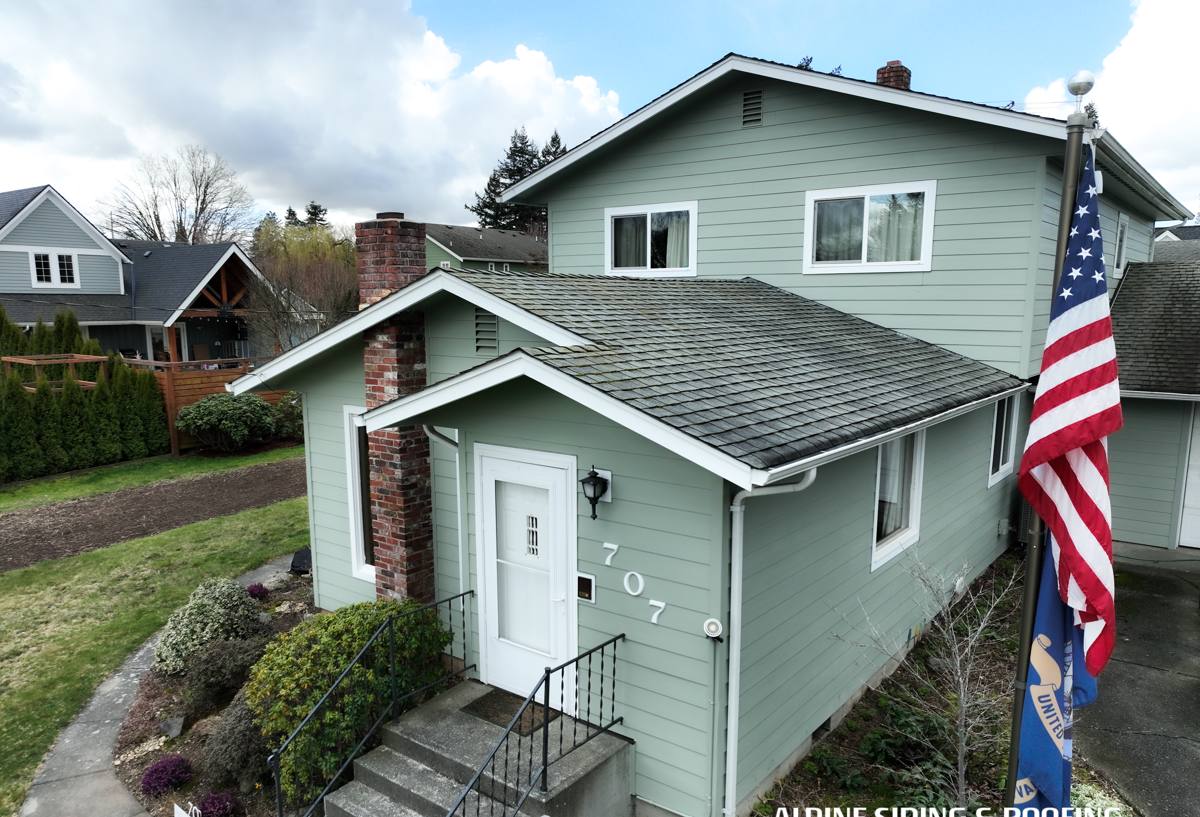
What Salt Air and Driving Rain Actually Do to Siding
It helps to understand the mechanism, not just the symptom.
- Salt air is mildly corrosive to exposed metal — nails, flashing, trim fasteners — and it also holds moisture against surfaces longer than dry inland air does, which keeps siding damp even between rain events.
- Driving rain off the water doesn't fall straight down; wind pushes it sideways into laps, butt joints, and anywhere caulking has started to fail. That's a very different load than a calm rainstorm, and a lot of siding details that work fine 20 miles inland aren't built for it.
- Moss and algae thrive in the shaded, damp microclimates common on Birch Point lots with mature trees or tight north-side clearances. Moss holds moisture against the siding surface for extended periods, which is exactly the condition that causes rot in wood-based products and finish breakdown in lesser fiber cement.
None of this means siding is doomed at Birch Point. It means the details — flashing, caulking, fastener placement, drainage gaps — matter more here than almost anywhere else in the county, and repairs that ignore those details tend to fail again within a couple of seasons.
The Repair Issues We See Most Often at Birch Point
Failed caulking and open joints
Caulk is the first line of defense at butt joints, trim intersections, and penetrations, and it's also the first thing to give out under sustained salt exposure and UV. Once it cracks or pulls away, wind-driven rain has a direct path behind the siding.
Corner and low-wall rot or delamination
Lower courses of siding, especially near grade, foundation splashback zones, and outside corners, take the brunt of both rain and moss growth. On wood-based or lower-grade fiber cement products, this shows up as soft spots, swelling, or delaminating layers. On correctly installed Hardie board, it shows up far less — but it's not immune if flashing or clearance was done wrong originally.
Rusting or failing fasteners
Improperly coated or exposed fasteners corrode faster in salt air, leaving streaking, loose boards, or small failure points that let water track behind the siding.
Moss and organic staining on north and shaded elevations
This is more cosmetic than structural in the short term, but left unaddressed it keeps moisture in contact with the wall system and accelerates whatever's underneath it.
Impact and settling damage
Cracked boards from storm debris, or gaps that open up as a house settles, are common everywhere — but at Birch Point, an open gap becomes a moisture problem much faster than the same gap would inland.
What a Correct Repair Actually Involves
A lot of siding "repair" in coastal Whatcom County is really just cosmetic patching — caulk over a crack, a fresh coat of paint over a stain — and it buys a homeowner a year or two before the same problem resurfaces. We approach it differently.
- Diagnose before we touch anything. We look at the damage and ask why it happened there. A cracked board near a downspout usually means a drainage issue, not just a siding issue. Rot at a corner usually traces back to a flashing detail, not a material failure.
- Address the water path, not just the visible damage. If we replace a damaged section without fixing the flashing or clearance behind it, the repair fails again — often faster the second time because the substrate is already compromised.
- Match material and profile correctly. Repairs need to tie into the existing siding cleanly, with matched reveal, profile, and factory finish where possible, so the patch doesn't stand out or create a new weak seam.
- Re-seal and re-flash to current best practice, even if the original installation didn't include it. Codes and installation standards have improved; a repair is a chance to bring a weak spot up to a better standard, not just replicate what failed.
Why We Repair With James Hardie Fiber Cement — and Only Hardie
We install and repair exclusively with James Hardie fiber cement siding. That's a deliberate standard, not a preference, and it matters more at a site like Birch Point than almost anywhere else we work.
Hardie's fiber cement is non-combustible and dimensionally stable — it doesn't swell, cup, or absorb water the way wood-based and some engineered wood products can, which is exactly the failure mode that salt air and prolonged moss coverage tend to trigger. Hardie's ColorPlus factory finish is baked on and warrantied against fading and peeling, which holds up better under sustained coastal UV and salt exposure than field-applied paint. And Hardie's HZ5 product line is specifically engineered for the kind of wet, freeze-adjacent climate zones the Pacific Northwest coast sits in.
Practically, that means when we repair a Hardie wall, we're repairing a system we understand completely — the fastening pattern, the joint treatment, the finish — and the patch performs the same as the original installation. When we're asked to repair a different product (LP SmartSide, vinyl, cedar, primed spruce, or lower-grade fiber cement like Cemplank or Allura), we'll still assess it honestly, but we'll also tell you plainly if the underlying material is working against you in this climate. In a lot of those cases, a full re-side with Hardie ends up being the more cost-effective long-term answer than repeated patching.
Repair vs. Replace: How We Think About It
| Situation | Usually a repair | Usually points to replacement |
|---|---|---|
| Damage extent | Isolated to one or two boards, one elevation, or a specific detail (corner, joint) | Recurs across multiple elevations or has already been patched more than once |
| Underlying material | Hardie fiber cement, sound substrate | Wood-based or lower-grade product showing widespread rot, delamination, or moss-driven decay |
| Cause | A single identifiable failure point (flashing, caulk, impact damage) | Systemic issue — poor original clearance, missing weather barrier, chronic moisture intrusion |
| Age and finish | Siding is within its expected service life and finish is largely intact | Finish is failing broadly and material is near or past typical service life |
We'll always tell you honestly which category your home falls into. A lot of Birch Point homes we look at genuinely just need a targeted, correctly executed repair — and we'd rather do that right than push a full re-side someone doesn't need.
Our Process on Birch Point Jobs
- On-site assessment. We walk the exterior, identify every problem area (not just the one you called about), and check the details behind visible damage — flashing, clearance, drainage.
- Clear, written scope. You get a plain-English explanation of what's failing, why, and what fixing it correctly involves — no vague line items.
- Matched materials. We source Hardie board, trim, and ColorPlus finish matched as closely as possible to your existing siding.
- Correct water management first. Flashing and drainage gaps get fixed before or during the repair, not skipped to save time.
- Clean, weathertight finish. Caulking, fastening, and joint treatment done to hold up against the next storm season, not just look good on the walkthrough.
A Homeowner Checklist: Signs It's Time to Call
- Soft, spongy, or visibly swollen siding, especially near the bottom of walls or at corners
- Caulking that's cracked, shrunk, or pulled away from joints and trim
- Persistent moss or dark staining that keeps returning after cleaning
- Streaking or discoloration around fastener heads
- Visible gaps, warping, or boards that have pulled away from the wall
- Interior signs near exterior walls — musty smell, discoloration, or soft drywall — that could point to moisture getting behind the siding
- Any repair patch from a previous job that's already failing again
Catching these early is the difference between a contained repair and a much bigger project once water has had time to work into the wall assembly — which, at a marine-exposed site like Birch Point, tends to happen faster than homeowners expect.
Why Local Experience at Birch Point Matters
Siding repair isn't one-size-fits-all across Whatcom County. A crew that mostly works drier, inland neighborhoods will size up damage differently than one that regularly works shoreline-exposed homes near Blaine. We know which elevations at Birch Point tend to take the worst of the wind-driven rain, which corners are chronic moss spots, and which original installation shortcuts tend to show up as repair calls five or ten years later. That local pattern recognition means a faster, more accurate diagnosis — and a repair that's built to actually hold up against the next few winters, not just pass a quick look.
If you're seeing early signs of trouble on your Birch Point home, or you've already had a repair that didn't hold, we're happy to take an honest look. Reach out for a free, no-pressure estimate — use the form below to get started.