 Blaine Siding
 Siding Installation Built for Life at Blaine Harbor
Blaine Harbor sits right where Drayton Harbor and Semiahmoo Bay meet the edge of town, and homes in that area deal with a different set of exterior conditions than houses even a short drive inland. Salt-laden air comes off the water on a near-daily basis, wind-driven rain arrives sideways instead of straight down, and the mild, humid stretch of the year that feeds moss growth runs longer here than in drier parts of Whatcom County. Siding installed without accounting for that reality tends to show problems well before it should. Siding installed correctly, in the right material, holds up for decades.
This page is specifically about siding installation for homes in and around Blaine Harbor — new work and full re-siding, not spot repair. We install James Hardie fiber cement exclusively, and everything below describes what that installation needs to look like on a property this close to the water.
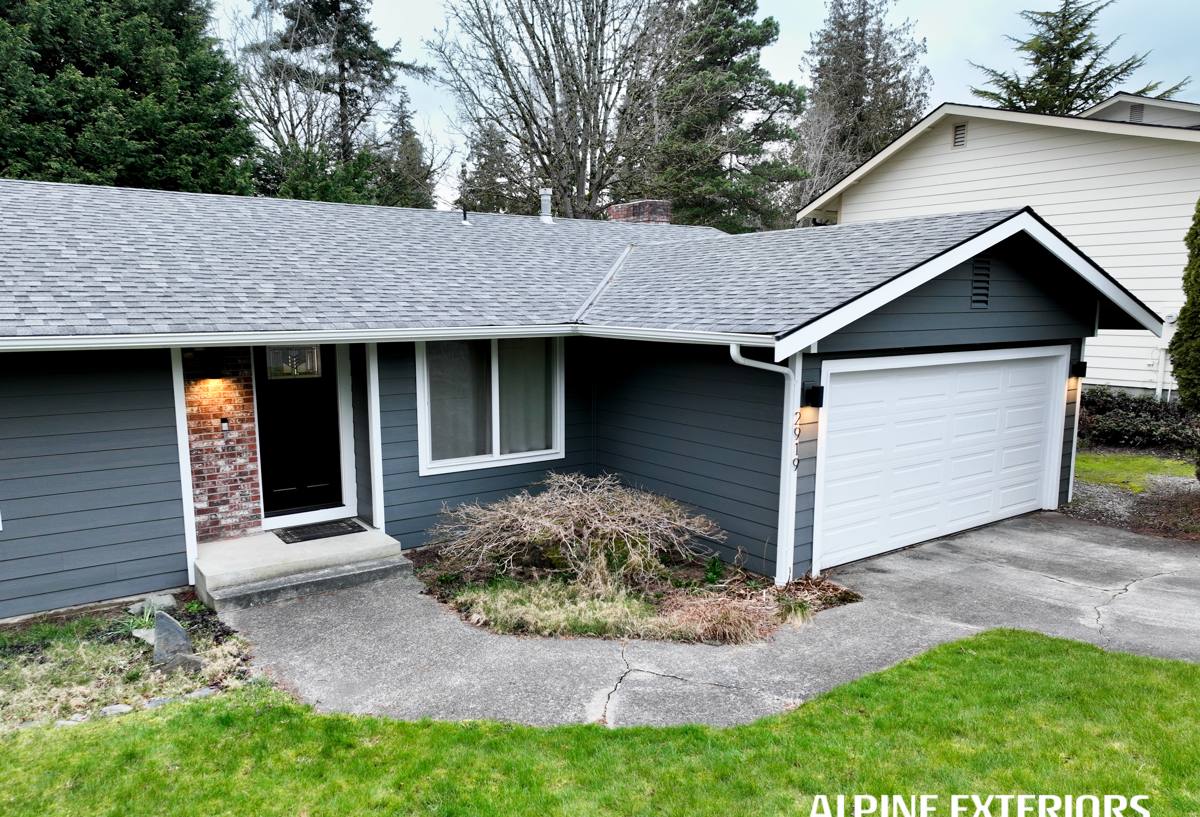
What the Harbor Climate Does to a Home's Exterior
Salt Air Off the Water, Every Day
Because Blaine Harbor sits directly on the water, homes there take on salt-laden air continuously rather than occasionally, the way an inland property might during a storm. That salt exposure accelerates corrosion in fasteners, flashing, and trim hardware, and it does it faster the closer a house sits to the shoreline. It also breaks down lower-quality paints and site-applied finishes faster than a drier setting would, which is one of the reasons a factory-cured finish matters more here than it does twenty miles inland.
Driving Rain That Doesn't Fall Straight Down
Open water in front of a property means wind has room to build before it hits the house. Rain that would fall straight down on a sheltered inland lot instead gets pushed sideways into panel joints, window and door flashing, and the seams where trim meets field siding. That's a heavier moisture load on those transition points than most siding installations in less exposed areas are ever tested against, and it's exactly where a rushed or generic installation tends to fail first.
A Moss Season That Runs Most of the Year
Mild temperatures and near-constant humidity off the harbor keep conditions favorable for moss and mildew growth for most of the year, not just a few wet months. North-facing walls, shaded sides of the house, and any surface that holds moisture against it are the first places that shows up. A siding installation that leaves the wall assembly with no way to dry out between wet spells is setting up a moss and staining problem long before the material itself would otherwise need attention.
Why James Hardie Is the Only Siding We Install at Blaine Harbor
We install James Hardie fiber cement and nothing else. We don't install LP SmartSide, vinyl siding, Cemplank, Allura, primed spruce, or cedar. Each of those has a legitimate place in the broader siding market, and plenty of homeowners elsewhere are satisfied with them. On a harbor-exposed property, though, we've made a professional call to stand behind one system rather than offer a cheaper option that quietly shifts long-term maintenance risk onto the homeowner.
- Non-combustible core: fiber cement doesn't feed a fire the way wood-based siding products can.
- Factory-applied ColorPlus finish: the color is baked on under controlled conditions rather than brushed on in the field, and it resists fading, chalking, and moisture intrusion far longer than site-applied paint does.
- Climate-engineered HZ product lines: Hardie's HZ5 formulation is built for regions with heavy moisture exposure and freeze-thaw cycling, which describes coastal Whatcom County well.
- Dimensional stability: fiber cement doesn't swell, cup, or warp the way engineered wood products can after repeated wetting over a long wet season.
- A strong transferable warranty backed by the manufacturer, as long as the installation follows Hardie's published spec.
What Correct Hardie Installation Requires in This Setting
Fiber cement only performs the way it's engineered to when the installation follows Hardie's spec to the letter — not a shortcut version of it. That means the correct fastener type and spacing for a coastal exposure, proper clearance from grade and roof lines, a water-resistive barrier that's lapped and taped correctly at every penetration, and cut edges sealed before they go up. A Hardie product installed loosely will still develop moisture problems in a climate like this one. The material is only as good as the install behind it.
What a Correct Installation Actually Involves
A siding job that holds up at Blaine Harbor isn't defined by the brand on the box. It's defined by a series of details, most of which are invisible once the crew packs up and leaves. That's part of why so many installation problems don't show up until a couple of winters later.
The Water-Resistive Barrier Comes First
Before any siding goes up, the wall needs a continuous water-resistive barrier, properly lapped shingle-style and taped or sealed at every seam, window, and door opening. This layer is doing the real work of keeping wind-driven rain out of the wall assembly. Siding is the visible finish; the barrier underneath it is what actually protects the structure if water gets past the surface.
Fastening and Spacing
James Hardie publishes exact fastener type, spacing, and placement requirements, and they vary by product line and exposure category. On a harbor-facing wall, that usually means corrosion-resistant fasteners driven at the correct depth and interval — not the minimum a crew can get away with. Fastening that doesn't follow spec shows up as loose panels, popped nails, or streaking within a few seasons, well before the siding itself would otherwise need attention.
Clearances at Grade, Roofline, and Decks
Hardie specifies minimum clearance between the bottom edge of the siding and grade, roofing, decks, and other horizontal surfaces. Those clearances exist to keep siding out of standing water and splash-back, which is a common failure point on older harbor-area homes where grade has been built up over the years or a deck was added after the original siding went in.
Flashing and Sealant at Every Penetration
Windows, doors, hose bibs, vents, and any fixture that interrupts the siding plane is a place water can get behind the cladding if it's flashed or sealed incorrectly. This is the slowest, least glamorous part of the job, and it's usually the part that decides whether a wall stays dry behind the siding for decades or starts trapping moisture within a few years.
Sealed Field Cuts
Every panel that gets cut on site — around a window, at a corner, at the end of a run — needs its cut edge sealed or primed according to Hardie's specification before installation. An unsealed field cut is one of the more common places fiber cement actually takes on water, not because the material failed, but because that one step got skipped.
Our Installation Process
We run the same disciplined process on every Blaine Harbor project, adjusted for the specific exposure and condition of the house.
- On-site assessment: we walk the exterior, check the current siding and wall assembly for existing moisture damage, and note the property's specific exposure to wind and salt air.
- Written scope and product selection: we put together a clear, written scope of work and confirm the correct Hardie product line and HZ formulation for the site before ordering material.
- Tear-off and wall prep: old siding and any compromised sheathing or trim come off, and the wall is inspected and repaired as needed before anything new goes on.
- Water-resistive barrier installation: a continuous barrier goes up first, lapped and sealed at every seam and penetration.
- Flashing at all penetrations: windows, doors, and fixtures get flashed before siding closes in around them.
- Siding installation to spec: panels go up with correct fastening, spacing, and clearance, and every field cut is sealed as it's made.
- Final walkthrough: we review the finished job with the homeowner and confirm everything matches the agreed scope.
Signs Your Current Siding Needs Attention Near the Harbor
Harbor-facing homes tend to show siding problems earlier than inland properties, simply because the exposure is heavier. It's worth checking your own exterior for these signs, especially on walls that face the water or stay shaded most of the day.
- Soft or spongy spots when you press on the siding, particularly near the bottom edge or below windows
- Visible warping, cupping, or panels that no longer sit flat against the wall
- Paint or finish that's peeling, bubbling, or chalking well ahead of its expected life
- Moss or mildew that keeps returning to the same spots after cleaning
- Rust streaking below fasteners or trim hardware
- Gaps opening up at seams, corners, or trim joints
- Interior signs like musty smells or staining on walls that back up to the exterior
What Siding Installation Cost Depends On at Blaine Harbor
There's no single price that applies to every harbor-area home, but the same handful of factors drive cost on nearly every project we quote. We give a specific number only after an on-site walk-through, but this is generally what moves the estimate up or down.
| Cost Factor | Why It Matters at Blaine Harbor |
|---|---|
| Extent of tear-off needed | Older homes near the harbor often have layered siding or hidden moisture damage that adds demolition and repair work |
| Wall assembly condition | Sheathing or framing damaged by years of moisture exposure needs repair before new siding can go on correctly |
| Home size and complexity | More corners, dormers, and trim detail mean more flashing and cut-edge sealing work |
| Siding profile and finish selection | Lap width, texture, and ColorPlus finish options carry different material costs |
| Site access and exposure | Waterfront lots with tight access or steep grades can affect staging and labor time |
| Trim, fascia, and accessory work | Coordinating trim and corner details adds to scope but is necessary for a weathertight result |
Why a Crew That Already Works Blaine Harbor Matters
A contractor who regularly installs siding on harbor-facing homes already knows how salt air, open wind, and prolonged moisture behave differently here than they do a few miles inland. That familiarity shows up in the decisions that don't make it onto a proposal — which fastener grade to use, how tightly to lap the water-resistive barrier, where to add extra clearance because a deck sits close to the wall. Those are exactly the details that decide whether an installation lasts one wet season or several decades on a property this exposed.
A Simple Checklist Before Hiring for Siding Work at the Harbor
- Ask what siding material they install and why, and whether they'll put it in writing
- Confirm current Washington contractor licensing and active liability insurance
- Ask how they detail the water-resistive barrier and flashing for wind-driven rain specifically
- Ask about fastener corrosion resistance for a saltwater-adjacent property
- Get a clear, written scope of work before signing anything
If you're weighing options for new siding or a full re-side on a Blaine Harbor property, we're glad to walk the exterior with you and give an honest read on what it actually needs. Reach out below for a free, no-pressure estimate.