 Blaine Siding
 Board & Batten in a Bellingham Climate
Board and batten siding has become one of the most requested looks in Bellingham and the surrounding Whatcom County neighborhoods — the vertical lines read as modern farmhouse on some homes and craftsman-adjacent on others, and it pairs well with the mix of new construction and older homes being updated throughout the area. But the look is only half the story. Bellingham sits close enough to the water that salt-laden air is a real factor, rainfall is heavy and prolonged for much of the year, and shaded, north-facing walls under mature trees can stay damp long enough to grow moss for months at a stretch. A board and batten installation that isn't detailed for those conditions will show problems — usually moisture-related — well before it should.
This page focuses specifically on board and batten siding for Bellingham properties: what the climate actually demands from the material and the install, what we do differently, and why the batten profile in particular needs more installation discipline than a standard lap siding job.
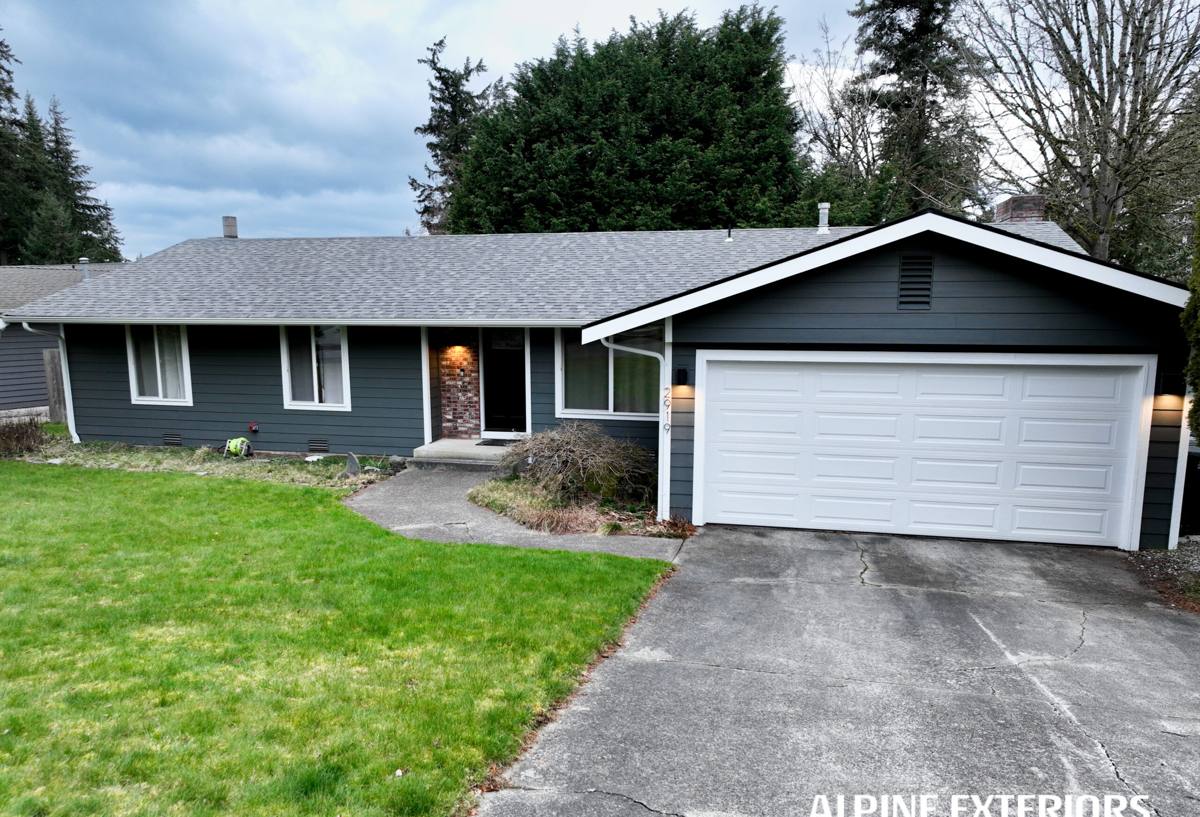
Why Board & Batten Is Less Forgiving Than Lap Siding
Vertical board and batten relies on a different water-management logic than horizontal lap siding. Lap siding sheds water downward across overlapping courses by design. Board and batten depends much more on the quality of the seams, the fastening pattern, and — critically — what's happening behind the panels. Every vertical seam between a board and its batten is a potential path for water if it isn't installed with the right gap, fastener placement, and drainage plane behind it.
In a drier inland climate, small installation shortcuts on a board and batten job might go unnoticed for years. In Bellingham, with driving rain coming off the water and long stretches of damp weather that don't let wall assemblies fully dry out between storms, those same shortcuts show up much faster — as staining, soft spots at the base of boards, or paint and finish failure at the seams.
What Bellingham's Climate Demands From the Assembly
Salt Air
Proximity to Bellingham Bay and the broader Puget Sound means airborne salt is a slow, steady stressor on exterior materials — it accelerates corrosion of fasteners and trim metal and can degrade paint and finish coatings faster than in inland climates. This matters more for board and batten than it might seem, because the batten strips add roughly double the fastener count and double the seam length compared to a plain panel installation. Every one of those fasteners and seams is an exposure point.
Driving Rain
Storms in this part of Washington frequently come with wind-driven rain rather than straight-down rainfall, which pushes water sideways against wall surfaces and into any gap that isn't properly flashed or caulked. Vertical board and batten has more vertical seam length per square foot of wall than lap siding, which means more potential entry points if the rainscreen gap, flashing, and sealant details aren't right.
Long Moss Season
Shaded walls, tree cover, and persistent damp conditions mean moss and algae growth are a near year-round concern on north- and east-facing elevations in Bellingham, not just a winter issue. Moss holds moisture against the siding surface far longer than bare wall, which is exactly the kind of prolonged dampness that breaks down substrates not built to handle it.
Material Choice: Why We Only Install James Hardie for This Profile
Board and batten can be built from several materials, and we get asked regularly why we standardized on one. Here's the honest comparison for this specific climate and this specific profile.
| Material | How it holds up in this climate | Where it falls short for board & batten |
|---|---|---|
| Solid wood boards | Traditional look, workable on site | Absorbs moisture at seams and end grain; needs frequent repainting; rot risk rises sharply in a long-wet, mossy climate |
| Vinyl board & batten panels | Low upfront cost, no repainting | Can warp or become brittle with temperature swings; seams are harder to seal fully; not fire-resistant; look is often visibly "panel-like" up close |
| Engineered wood (OSB-based) | More dimensionally stable than solid wood | Still moisture-sensitive at cut edges and fastener penetrations; failures tend to show up at seams and bottoms of boards first |
| James Hardie fiber cement | Engineered for Pacific Northwest moisture exposure (HZ10 product line); factory-applied ColorPlus finish resists fading and doesn't require repainting on the same cycle; non-combustible | Heavier material, requires correct fastening and blade handling — installation quality matters more than with lighter materials |
We install James Hardie exclusively — not LP SmartSide, not vinyl, not primed cedar or spruce boards. Hardie's fiber cement doesn't absorb water the way wood-based products do, its ColorPlus factory finish holds color and resists the fading and chalking that salt air and UV accelerate, and the HZ10 formulation is specifically engineered for high-moisture climates like ours. For a profile with as much seam exposure as board and batten, that moisture resistance is not a minor upgrade — it's the difference that matters most over a 20- or 30-year timeline.
What a Correct Board & Batten Installation Involves
The board and batten look is simple. Getting it to perform for decades in a wet coastal climate is not. A correct installation includes:
- A properly furred-out rainscreen gap behind the panels so any moisture that does get behind the siding can drain and the wall can dry out between rain events
- Correct flashing at every window, door, and roof-to-wall intersection — board and batten's vertical lines make flashing details more visually prominent, so they need to be done cleanly as well as correctly
- Manufacturer-specified fastener spacing and placement, accounting for the added fastening the batten strips require
- Sealed and back-primed cut ends, since factory finish doesn't extend to field cuts
- Proper clearance at the base of the wall — board and batten run too close to grade, a deck, or a patio surface will wick moisture and hold splash-back, which is a common source of premature failure regardless of material
- Consistent batten spacing and reveal, which affects both the finished appearance and how water sheds at each seam
Our Process for Bellingham Board & Batten Projects
1. On-Site Assessment
We look at wall orientation, tree cover, existing moisture or moss patterns, and any current siding condition before recommending anything. A north-facing wall shaded by mature trees gets a different level of attention than a sun-exposed south wall.
2. Scope and Product Selection
We walk through Hardie's board and batten options — including panel width and batten spacing — and how each performs given the specific exposure of the home.
3. Tear-Off and Substrate Check
Existing siding comes off and we check the sheathing and water-resistive barrier underneath for hidden moisture damage before anything new goes up. This step gets skipped by crews trying to move fast, and it's the step most likely to catch a problem before it's covered up again.
4. Rainscreen, Flashing, and Installation
We install the furring/rainscreen system, integrate flashing at every penetration and transition, and install panels and battens to Hardie's fastening specifications — not a generalized "close enough" pattern.
5. Final Walkthrough
We review seams, reveals, and trim details with the homeowner before calling the job finished.
Maintenance Expectations in This Climate
Board and batten in Bellingham isn't maintenance-free, but a correctly installed Hardie system is low-maintenance relative to the alternatives. Realistic expectations:
- Occasional gentle rinsing to keep salt residue and organic buildup from accumulating, especially on shaded or wind-exposed elevations
- Periodic visual checks at seams, trim, and the base of the wall for any early signs of moisture staining
- Trimming back vegetation and tree limbs that keep walls shaded and damp, which slows moss and algae growth
- ColorPlus finish means repainting isn't part of the routine maintenance cycle the way it is with site-painted wood siding
Cost Factors for a Bellingham Board & Batten Project
| Factor | Why it affects cost |
|---|---|
| Wall exposure and orientation | Walls with heavy moisture or moss exposure may need more substrate repair before new siding goes on |
| Existing siding removal | Tear-off and disposal of old material adds labor beyond a straightforward re-side |
| Rainscreen system | Furring and a proper drainage gap add material and labor but are what make board and batten hold up long-term in this climate |
| Panel and batten configuration | Batten spacing and reveal choices affect material quantity and installation time |
| Trim and flashing detail | Homes with more windows, dormers, and roof intersections require more flashing work |
We don't quote board and batten jobs off a flat per-square-foot number — the rainscreen detailing and flashing work vary too much house to house, especially given how differently Bellingham properties are exposed to wind, rain, and shade depending on lot and orientation.
Signs of a Board & Batten Job Done Right
- Consistent, tight reveals at every batten with no visible gaps or waviness
- Clean, sealed flashing at windows, doors, and roof lines with no exposed gaps
- Visible clearance between the bottom of the siding and grade, decks, or patios
- Fastener heads properly seated, not overdriven or missed into studs
- No cut ends left unsealed or unprimed at corners and trim returns
Why Hiring a Crew That Already Works This Area Matters
A board and batten install that would hold up fine in a drier region can fail early in Bellingham if it's built to a generic standard instead of the local one. A crew that regularly works Whatcom County properties already accounts for salt exposure near the water, knows which wall orientations tend to hold moss and moisture longest, and builds the rainscreen and flashing details to match — rather than treating this as a one-size-fits-all siding job. That local pattern recognition is part of what you're paying for as much as the labor itself.
If you're considering board and batten siding for a home in Bellingham, we're happy to walk the property, look at how the specific walls are exposed to weather, and put together a straightforward, no-pressure estimate using James Hardie fiber cement siding.