 Blaine Siding
 Why California Creek Roofs Take More of a Beating
Blaine sits at the northern edge of Whatcom County, close enough to Semiahmoo Bay and the Strait of Georgia that salt-laden air is a daily fact of life for anything mounted on a roof. Homes around California Creek deal with three things working against them at once: airborne salt that speeds up corrosion on fasteners, flashing, and vent metal; long stretches of wind-driven rain that push water sideways into laps, valleys, and wall intersections instead of straight down; and a shaded, damp climate that keeps moss and algae growing on north-facing slopes for much of the year. None of these problems is unique to this neighborhood, but the combination is harder on a roof than what a home thirty miles inland has to deal with.
An asphalt shingle roof built for this part of Whatcom County isn't just a roof installed correctly by the book — it's one installed with these specific pressures in mind, from the fasteners chosen to how the valleys are flashed and how the attic breathes.
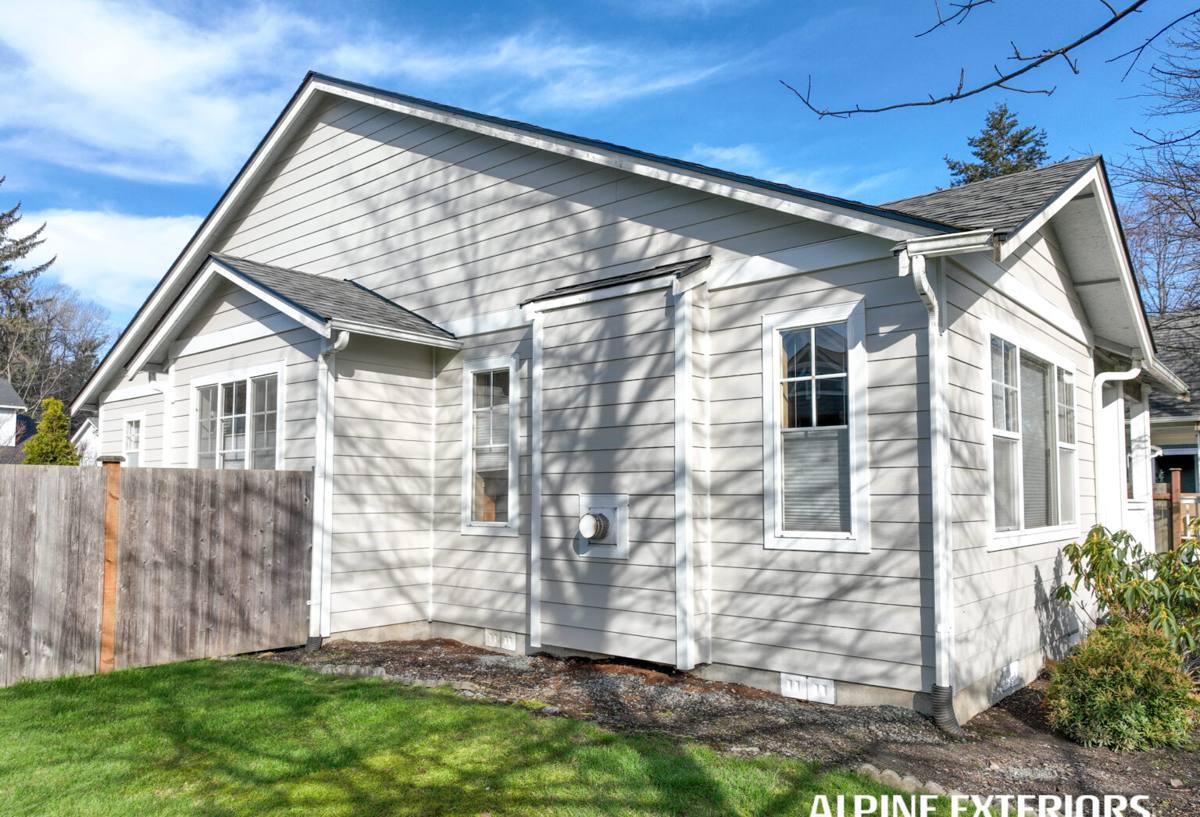
Signs Your Roof Is Losing the Fight
Most asphalt shingle roofs don't fail all at once. They lose ground slowly, and the early signs are easy to write off as cosmetic. Here's what we look for on a California Creek roof, and what you can check from the ground or the attic yourself:
- Granules collecting in gutters or at the base of downspouts — a sign shingles are wearing thin
- Curling, cupping, or lifted shingle edges, especially on slopes that catch the prevailing wind
- Thick moss mats on north-facing or heavily shaded sections of the roof
- Dark streaking across the field of the roof (algae, not just dirt)
- Soft or spongy spots when walked, particularly near valleys, chimneys, or eaves
- Daylight, water stains, or a musty smell in the attic
- Rust bleeding from nail heads, vent stacks, or flashing
- New leaks or drips that show up specifically after a windstorm, not just steady rain
Any one of these on its own isn't necessarily an emergency. Several together, or moss combined with soft decking, usually means the roof needs more than a patch.
What a Correct Asphalt Shingle Roof Actually Involves
Tear-Off and Deck Inspection
We remove existing layers down to the deck rather than laying new shingles over old ones. Overlaying hides problems — and in a climate where moss holds moisture against a roof for weeks at a time, those hidden problems are usually rot. A full tear-off lets us inspect every square foot of decking, replace anything soft or delaminated, and confirm the deck is fastened tight before anything new goes down.
Underlayment and Ice-and-Water Protection
Self-adhering waterproof membrane goes down first at the eaves, in every valley, and around chimneys, skylights, and other penetrations — the spots where wind-driven rain is most likely to find a way in. The rest of the deck gets synthetic underlayment, which handles wind-blown moisture better than old-style felt and doesn't sag or tear as easily during a multi-day install.
Flashing That Actually Sheds Water
Flashing is where most roof leaks in this area actually start, not the shingles themselves. That means step flashing woven into each course at wall intersections, proper counter-flashing at chimneys, solid metal in the valleys, and drip edge along every eave and rake. In a salt-air environment the metal itself matters — we use flashing and fasteners rated to hold up against corrosion rather than the cheapest option available, since replacing failed flashing under a good field of shingles a few years later means tearing into the roof again.
Ventilation Balance
A shingle roof needs balanced intake at the soffits and exhaust at the ridge to work the way it's designed to. Without it, moisture gets trapped in the attic, which shortens shingle life from underneath and feeds the exact moss and mildew growth this climate already encourages on top. We check and correct ventilation as part of every replacement, not as an upsell after the fact.
Choosing a Shingle That Can Handle Salt Air and Moss
Not every asphalt shingle is built the same way, and the differences matter more here than in a drier, inland climate. The table below is a general guide to the tiers available, not a recommendation of one manufacturer over another — the right pick depends on your roof's exposure, pitch, and budget.
| Shingle Type | Typical Lifespan | Wind Rating | Algae Resistance | Best For |
|---|---|---|---|---|
| 3-tab (standard) | 15–20 years | Lower | None unless upgraded | Budget-conscious, less exposed slopes |
| Architectural / dimensional | 25–30 years | Moderate–high | Optional (algae-resistant granules) | Most California Creek homes |
| Premium / designer | 30+ years | High | Standard on most lines | Heavily shaded lots, high wind/salt exposure |
For a lot near tree cover or a north slope that stays damp most of the year, we generally steer homeowners toward a shingle with algae-resistant granules from the start. It costs a little more up front but avoids the dark streaking that shows up within a few years on standard shingles here, and it cuts down on how often the roof needs a gentle moss treatment.
Our Process, Start to Finish
- On-site inspection. We walk the roof and the attic, not just look from the driveway, and give you a straight answer on whether you need a full replacement, a repair, or nothing yet.
- Written estimate. You get shingle options, a clear scope of work, and a price — no vague allowances that turn into surprises later.
- Scheduling. We work around Whatcom County's wetter stretches where possible and won't start a tear-off with rain moving in on an open deck.
- Tear-off and deck repair. Old material comes off, decking gets inspected and replaced where needed.
- Underlayment, flashing, and ventilation. The waterproofing and airflow details go in before a single shingle is nailed down.
- Shingle installation. Installed to manufacturer nailing pattern and exposure specs — not sped up in ways that void the warranty.
- Cleanup and magnetic sweep. Debris and stray nails are cleared from the yard, driveway, and planting beds.
- Final walkthrough. We review the finished roof with you and hand over warranty paperwork.
What Affects the Cost of Your Roof
Every roof is priced on its own specifics, but these are the factors that move the number most on a California Creek home:
| Cost Factor | Why It Matters |
|---|---|
| Roof pitch and steepness | Steeper roofs take longer and require more safety setup |
| Number of existing layers | Extra tear-off time and disposal weight |
| Decking condition | Rot from long-term moss or moisture means added repair, usually found once tear-off starts |
| Valleys, chimneys, skylights | Each one needs custom flashing work, which adds labor |
| Shingle tier and algae resistance | Higher-tier shingles cost more per square but hold up longer here |
| Ventilation upgrades | Adding or correcting soffit and ridge venting protects the new roof from the inside out |
Why Local California Creek Experience Matters
A crew that already works this pocket of Blaine knows which slopes take the brunt of the wind coming off the water, which streets hold moss the longest because of tree cover, and how to time a tear-off around the wetter months instead of gambling on an open deck. That familiarity shows up in small decisions — which valleys get extra underlayment, which fastener spec holds up against the salt air, how much ventilation a shaded roof actually needs — that a crew unfamiliar with this specific stretch of coastline might not think twice about. It also means a faster response when a windstorm off the Strait knocks shingles loose and you need someone who already knows the roof types common to the area.
Keeping Your New Roof Ahead of the Moss Season
A correctly installed roof still needs a little attention in this climate to reach its full lifespan. Clear gutters and downspouts before the fall rains start, since a clogged gutter backs water up under the eave edge. Have moss treated gently rather than pressure washed, since pressure washing can strip granules and shorten shingle life. Trim back branches that keep a section of roof shaded and damp longer than the rest. And after any significant windstorm, a quick visual check for lifted or missing shingles catches small problems before they become interior leaks.
If your California Creek roof is showing any of the signs above, or you're simply due for a straight assessment of what shape it's in, we're glad to take a look. Reach out for a free, no-pressure estimate using the form below.