 Blaine Siding
 Siding Replacement for Cherry Point Homes
Cherry Point sits on an exposed stretch of Whatcom County shoreline near Blaine, out where the water is close and the weather off it arrives with little to slow it down. Homes here don't get the shelter that a more inland lot might, and over years that exposure shows up in the siding first — well before it shows up anywhere else on the house. We work this stretch of the county regularly, and siding replacement in Cherry Point is a specific job with specific requirements, not a smaller version of the same project we'd do somewhere more sheltered.
We install James Hardie fiber cement siding exclusively. For a property in Cherry Point dealing with salt air, driving rain, and a moss season that runs longer than it does further inland, that's a professional standard we hold to, not a default we fall back on because it's easier.
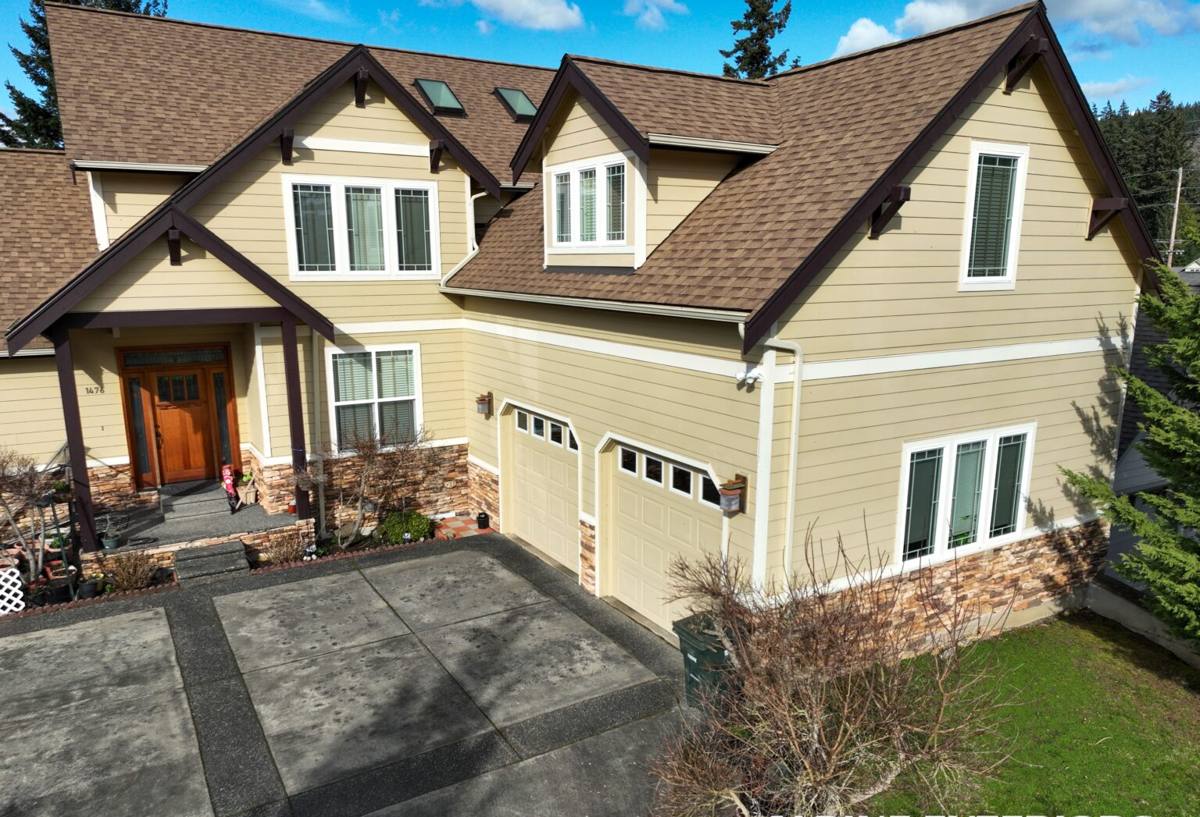
What Cherry Point's Exposure Does to Siding
Salt Air Off the Water
Being this close to open water means a steady, low-grade dose of salt in the air, even on days without a storm in sight. Salt is hard on anything metal — fasteners, flashing, trim edges — and it wears down lower-grade paints and coatings faster than a dry inland climate ever would. On a house this exposed, the difference between a corrosion-resistant fastener and a standard one, or a factory finish and a field-applied one, isn't a fine point. It's the difference between siding that still looks and performs the same in fifteen years and siding that's already showing streaks and soft spots.
Driving Rain
Storms off the water rarely fall straight down by the time they reach a wall. Wind pushes rain sideways into siding joints, window trim, and anywhere a roofline meets a wall, and that sideways load tests an installation in a way that ordinary vertical rainfall doesn't. Cherry Point's open position means this pattern shows up more often, and with more force, than it does on a lot with more tree cover or a building or two breaking the wind. Siding and flashing that aren't detailed to shed wind-driven rain — not just rain falling straight down — tend to fail first at seams and corners.
A Long Moss Season
Mild temperatures and near-constant moisture in this part of Whatcom County add up to a moss and mildew season that can run most of the year on shaded or north-facing walls. It starts as staining, then green growth, and it's more than a cosmetic problem — sustained moss growth holds moisture directly against the wall behind it, which is exactly the condition that leads to hidden rot if it isn't cleaned off and addressed. On a Cherry Point property with any real tree cover or a wall that doesn't get much winter sun, this is usually the first visible sign that siding is starting to lose the fight.
Signs a Cherry Point Home Needs Siding Replacement
Some of these show up gradually enough that homeowners get used to them before recognizing what they actually mean. Worth checking for:
- Soft or spongy siding when pressed, especially low on the wall or around window and door trim
- Moss or dark staining that comes back quickly after cleaning, particularly on shaded or north-facing walls
- Cracked, warped, or separating boards, especially at butt joints and corners
- Peeling or bubbling paint that keeps recurring in the same spots year after year
- Rust staining around fasteners or trim, which shows up faster this close to salt air
- Visible gaps at seams, corners, or where trim meets siding
- A noticeable rise in heating costs that isn't explained by anything else in the house
One or two of these on their own might point to a repair. Several at once, especially combined with an older, non-Hardie product that's nearing the end of its expected life, usually means the wall assembly behind the siding has been taking on moisture for a while.
What a Correct Siding Replacement Involves Here
Tear-Off and Substrate Check
A full tear-off is the only way to actually see what's happening behind the old siding, and on an exposed Cherry Point lot that step matters more than it would on a sheltered one. We check the sheathing and framing underneath for soft spots, staining, or rot before anything new goes on. Covering over hidden moisture damage with new siding doesn't solve the problem — it just hides it again for a while.
Moisture Management Details
This is where a lot of siding jobs quietly fall short, and it's the part that matters most on a wall this exposed to wind-driven rain. A correct install includes a rain screen gap so any moisture that does get past the surface can drain and evaporate instead of sitting against the sheathing, house wrap and flashing lapped correctly at every seam and penetration, and butt joints and trim transitions sealed rather than just butted together. None of it is visible once the job is finished, which is exactly why it's the part worth asking about before hiring anyone.
Fasteners and Installation Spec
Hardie specifies fastener type and spacing for a reason, and loose spacing or the wrong fastener is one of the more common causes of early siding failure we find on tear-offs. In a salt-air environment, corrosion-resistant fasteners aren't optional extras — they're the difference between trim that holds its line for decades and trim that starts showing rust streaks within a few years.
Why James Hardie Is What We Install
We used to install a wider range of siding products. We narrowed to one system after seeing, repeatedly, which materials held up under sustained coastal exposure and which ones turned into maintenance problems within a decade. For a Cherry Point property specifically, the case is straightforward:
- Non-combustible core: fiber cement doesn't feed a fire the way wood-based siding products can.
- Factory-applied ColorPlus finish: baked on under controlled conditions instead of brushed on site, so it resists fading and moisture intrusion far longer than field-applied paint.
- Climate-engineered HZ formulations: built for regions with sustained moisture exposure, which describes this stretch of coastline well.
- Dimensional stability: fiber cement doesn't swell, cup, or warp the way engineered wood products can after repeated wet-season cycles.
- Strong transferable warranty: a real warranty structure, provided the installation follows spec, rather than a marketing line.
We don't install LP SmartSide, vinyl siding, Cemplank, Allura, primed spruce, or cedar. Each has its place in the broader market and homeowners elsewhere who are satisfied with them. But on a lot this exposed to salt air and driving rain, we'd rather install one system we fully stand behind than offer a cheaper option that quietly shifts maintenance risk back onto the homeowner a few years down the road.
Our Siding Replacement Process
- Walk-through and assessment: we look at the current siding, trim, and any visible signs of moisture damage before recommending anything.
- Honest scope and estimate: a clear answer on whether you're looking at a repair, a partial re-side, or a full tear-off, with a written estimate and no pressure to sign on the spot.
- Tear-off and substrate repair: old siding comes off, sheathing and framing get inspected, and any rot or moisture damage gets repaired before new siding goes on.
- Installation to spec: rain screen, house wrap, flashing, fastener spacing, and trim details installed to Hardie's manufacturer spec, not shortcut on the parts that are hard to see once finished.
- Final walkthrough: we go over the finished work with you before calling the job done.
Cost Factors for Cherry Point Siding Replacement
| Factor | What It Affects | Why It Matters in Cherry Point |
|---|---|---|
| Tear-off vs. overlay | Labor scope and access to sheathing | Full tear-off reveals hidden moisture damage common on exposed shoreline lots |
| Substrate condition | Repair costs before new siding goes on | Long-term wind-driven rain exposure can rot sheathing and framing behind older siding |
| Fastener and flashing spec | Material and labor requirements | Salt air calls for corrosion-resistant fasteners and more careful flashing detail than an inland job |
| Trim and window count | Labor time and material needs | Every trim transition and window opening is a place wind-driven rain can find a gap |
| Site access | Staging and equipment needs | Shoreline and rural properties can have different access and staging needs than in-town lots |
These are general drivers, not a quote. Every home along this stretch sits at a slightly different distance from the water and under different tree cover, so we walk the property in person before putting a real number on the work.
Why a Crew That Already Works Cherry Point Matters
A contractor who works this part of Whatcom County regularly has actually seen how salt air, driving rain, and a long moss season behave on real Cherry Point homes over a full year — not just how a product performs on a spec sheet. That experience shapes decisions on install day: which walls stay wet longest, where extra flashing attention earns its keep, and which fastener choices are worth the added time so you're not dealing with a callback after the next storm off the water. A crew unfamiliar with this specific exposure tends to apply the same generic approach they'd use anywhere else in the county, and on a lot this exposed, that gap shows up faster than it would somewhere more sheltered.
If your Cherry Point home needs new siding, or you're just not sure whether what you're seeing is a repair or the start of something bigger, we're glad to take a look. Reach out using the form below to schedule a free, no-pressure estimate.