 Blaine Siding
 Decking Built for Grandview's Coastal Reality
Grandview sits close enough to the water and open enough to the weather that a deck here works harder than one built twenty miles inland. Salt-laden air, wind-driven rain off the Strait, and a moss season that can stretch from October well into spring all put steady stress on outdoor structures. A deck that looks fine on install day can start showing problems within a couple of seasons if the material and the build weren't matched to this specific climate.
We build and replace decks in Blaine and the surrounding Whatcom County neighborhoods regularly, and Grandview's mix of older framing, mature tree cover, and proximity to salt air shows up in almost every project we look at. This page is about what a composite deck actually needs to hold up here — not a generic decking pitch.
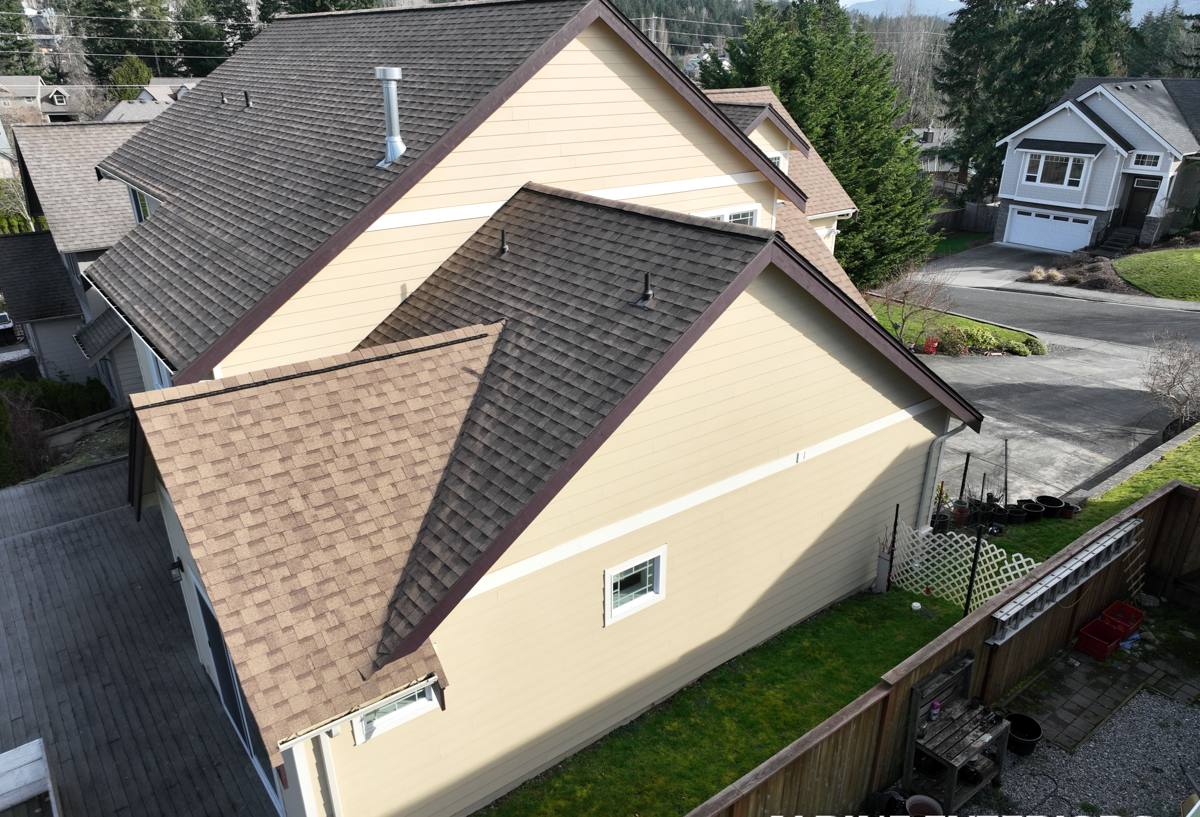
What the Local Climate Actually Does to a Deck
It helps to be specific about the forces at work, because they don't all attack a deck the same way.
Salt Air
Even a few miles from saltwater, airborne salt settles on fasteners, flashing, and railing hardware. Over time it accelerates corrosion on anything that isn't rated for coastal exposure — a problem that shows up as rust streaks, loosened connections, and eventually structural fasteners that fail quietly, out of sight, under the deck boards.
Driving Rain
Whatcom County rain doesn't just fall straight down — wind pushes it sideways, into ledger connections, under railing posts, and into any gap where water can find a way in. A deck built without real attention to flashing and drainage will trap water in places you can't see until rot or mold has already started.
A Long Moss Season
Shade, moisture, and mild temperatures are exactly what moss and algae need. On a wood deck, moss holds moisture against the board and speeds up decay. Composite doesn't feed moss the way wood fibers do, but it isn't immune — surface growth still needs to be planned for in board selection and layout, not just cleaned after the fact.
Why Composite Makes Sense for This Neighborhood
Composite decking is made from a blend of wood fiber and plastic, usually with a cap layer that resists moisture absorption and fading. For a Grandview property dealing with salt air and near-constant dampness for parts of the year, that construction solves the two biggest headaches of a wood deck: rot from trapped moisture and the endless cycle of sanding, staining, and sealing.
That doesn't mean composite is maintenance-free — no exterior product truly is in this climate — but it shifts the maintenance burden from structural (fighting rot, replacing warped boards) to cosmetic (rinsing off pollen, moss film, and salt residue).
- Capped composite boards resist moisture absorption far better than uncoated wood, which matters directly with our rain volume.
- Consistent color and density mean less risk of cupping or splitting from repeated wet-dry cycles.
- No annual staining or sealing, which matters if your deck is shaded and slow to dry between rain events.
- Most manufacturers back composite boards with 25-to-limited-lifetime warranties against rot and structural degradation — worth reading carefully, since terms vary by brand and tier.
What a Correct Installation Actually Involves
The board itself is only part of the equation. Most deck failures we get called out to inspect trace back to installation shortcuts, not the decking material. In a climate like ours, a handful of details separate a deck that lasts from one that doesn't.
Ledger and Flashing
Where the deck attaches to the house, proper flashing keeps wind-driven rain from working its way behind the siding and into the wall framing. This is the single most common failure point we find on older Grandview decks, and it's invisible until there's already damage.
Substructure and Fasteners
Composite decking is only as good as what's underneath it. Joists should be protected with joist tape to block moisture at every fastener point, and hardware needs to be rated for coastal, high-moisture exposure — stainless or coated fasteners, not standard galvanized, given the salt air.
Hidden Fasteners and Board Spacing
Correct gapping between boards allows water to drain through rather than pool on the surface, which matters when you're getting frequent, sustained rain rather than short bursts. Hidden fastener systems also keep the deck surface free of exposed screw heads that can corrode and streak the board over time.
Ventilation Underneath
Low clearance under a deck traps moisture and encourages the same moss and mildew growth that plagues shaded yards here. Proper substructure height and airflow planning reduce that risk substantially.
Composite vs. Other Decking Materials in This Climate
| Material | Moisture Behavior | Maintenance | Typical Lifespan Here |
|---|---|---|---|
| Composite (capped) | Resists absorption; minimal warping | Occasional rinse/cleaning | 25-30+ years |
| Pressure-treated wood | Absorbs moisture; prone to cupping/splitting | Annual staining/sealing | 10-15 years |
| Cedar | Naturally rot-resistant but still absorbs water | Regular sealing to hold color/protection | 15-20 years |
| PVC/vinyl decking | Fully moisture resistant | Low, but can feel less natural underfoot | 25-30+ years |
Wood options aren't wrong choices everywhere, but in a shaded, salt-exposed, high-rainfall spot like Grandview, they demand more upkeep to reach the same service life a well-installed composite deck delivers with far less attention.
How We Approach a Grandview Deck Project
Our process is the same whether it's a full rebuild or a first-time deck addition, and it's built around catching the issues specific to this area before they become problems.
- On-site assessment: We check existing framing (if replacing an old deck), ledger condition, drainage patterns around the foundation, and sun/shade exposure that affects moss risk.
- Material and layout planning: We walk through composite board tiers, color options, and railing systems suited to coastal exposure, and plan board direction and spacing for the site's drainage.
- Structural work first: Ledger flashing, joist protection, and fastener selection happen before a single composite board goes down — this is where long-term durability is actually decided.
- Installation: Hidden fastener systems, proper board gapping, and attention to clearance and ventilation underneath.
- Final walkthrough: We go over basic care specific to this climate — what to expect from moss and salt residue, and how often a simple rinse-down keeps the deck looking right.
What Affects the Cost of a Composite Deck
| Factor | Why It Matters |
|---|---|
| Deck size and shape | More linear footage and cuts around angles or curves increase material and labor |
| Existing framing condition | Rot or undersized joists on an older deck often require substructure repair or replacement first |
| Board tier and brand | Entry-level composite costs less than premium capped or high-end color lines |
| Railing system | Composite or metal railing adds cost over basic wood, but matches longevity to the decking |
| Stairs and multiple levels | Each added level increases framing, railing, and labor complexity |
| Permit and inspection requirements | Blaine and Whatcom County permitting can affect timeline and cost depending on deck height and attachment |
We don't quote a job without seeing the site — framing condition alone can swing the cost significantly, and that's not something we'll guess at over the phone.
Living With a Composite Deck Here: A Realistic Maintenance Checklist
Composite cuts down maintenance dramatically, but "low-maintenance" isn't "no-maintenance" in a climate with this much moisture and salt exposure.
- Rinse the deck surface every few months to clear salt residue, pollen, and organic debris before it builds up.
- Sweep or soft-brush shaded areas more often during moss season to prevent film buildup on the board surface.
- Check railing hardware and fastener points periodically for corrosion, especially on decks facing open water or prevailing wind.
- Keep gutters and downspouts near the deck clear so runoff isn't dumping extra water onto or under the structure.
- Trim back overhanging branches where possible to reduce shade and speed up drying time after rain.
Why Local Experience With Grandview Homes Matters
A lot of deck problems we're called to fix started with a crew that built a technically fine deck for a different climate. The framing choices, fastener grade, and flashing details that hold up in a dry inland region aren't automatically enough for a property dealing with salt air and sustained coastal rain. Working regularly in Blaine and the Grandview area means we've already seen how local conditions expose weak points in a build, and we plan around them from the start instead of discovering them years later.
If you're weighing a new deck or replacing one that's showing its age, we're happy to take a look and talk through what makes sense for your specific site — no pressure, no obligation. Reach out for a free estimate using the form below.