 Blaine Siding
 Decking in Lynden Has to Answer to the Weather First
Lynden sits inland from Blaine along the Nooksack River, but it doesn't escape what the rest of Whatcom County deals with every winter: long stretches of driving rain, low winter sun that never quite dries out a north-facing deck, and a moss season that can run from October through May in a wet year. Homes closer to Blaine's shoreline pick up salt-laden air on top of that, and it moves inland further than most people expect, especially with the wind patterns that come off the Strait. A deck built without that reality in mind doesn't fail dramatically. It fails quietly — a soft spot near a post base, a green film on the walking surface that never fully goes away, fasteners that start weeping rust stains into the boards.
Composite decking, installed correctly, is a good answer to that pattern. It doesn't mean maintenance-free, and we won't tell you it is. It means a board that doesn't absorb water the way wood does, doesn't need annual staining, and holds up to the freeze-thaw cycles and constant damp that define a Whatcom County winter — provided the structure underneath it is built right and the board itself is a decent product installed the way the manufacturer actually specifies.
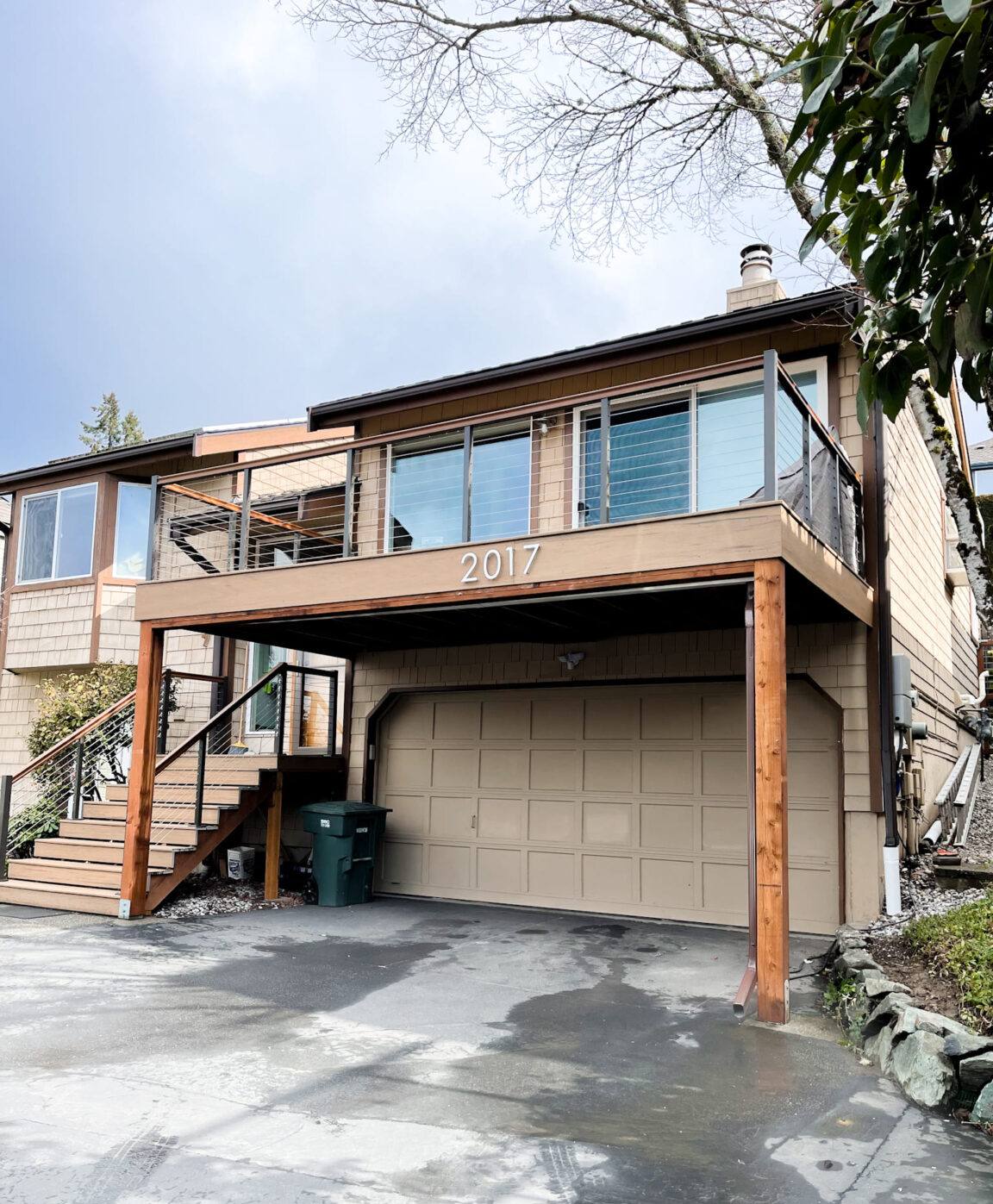
What Rain, Moss, and Moisture Actually Do to a Deck Here
Moisture that never fully leaves
The problem in Lynden isn't a single hard storm. It's the cumulative effect of a deck surface that's damp more days than it's dry for five or six months straight. Wood decking swells and shrinks with that cycle, which loosens fasteners and opens gaps where water sits. Composite doesn't swell the same way, but it still needs airflow underneath and around it, because trapped moisture against any decking material — composite included — is what breeds the mold and mildew that shows up as dark staining.
Moss and algae growth
Moss needs shade, moisture, and organic debris to get a foothold, and a lot of Lynden yards have mature trees that supply all three. On composite decking, moss doesn't root into the board the way it can into softwood, but it will grow on the surface film if a deck stays shaded and wet and isn't cleaned periodically. The board itself resists rot; it doesn't resist a green film forming on top of it.
Salt-influenced air near Blaine
For Lynden properties closer to Blaine or with more open exposure toward the water, airborne salt accelerates corrosion on anything metal — fasteners, post brackets, railing hardware. This is one of the more overlooked failure points on composite decks: the board holds up fine, but a cheap fastener or bracket rusts and stains the surface around it within a couple of seasons.
Why Composite Makes Sense for This Climate — With Honest Trade-Offs
We install composite decking because it holds up to this specific weather pattern better than most wood species do without constant upkeep. That doesn't mean it's the right call for every homeowner or every budget, and we'll tell you where the trade-offs are instead of overselling it.
| Factor | Composite Decking | Pressure-Treated Wood |
|---|---|---|
| Moisture absorption | Low — resists swelling and rot | Higher — swells, checks, and can rot at fastener points over time |
| Annual maintenance | Periodic wash-down, no staining | Cleaning plus staining/sealing every 1-2 years to hold up here |
| Upfront cost | Higher material cost | Lower material cost |
| Moss/algae resistance | Resists rooting, but surface film needs periodic cleaning | Moss can take hold in soft, damp grain |
| Typical lifespan here | 25-30+ years with proper install | 10-15 years before boards need replacing |
| Fastener/hardware sensitivity | Still matters — use corrosion-resistant hardware | Matters equally, often overlooked |
Where composite doesn't win: it costs more up front, and cheaper composite boards can fade or streak faster than a mid- or top-tier product. We won't put a low-grade board on a Lynden deck and call it a long-term fix, because the payoff of composite is the low-maintenance lifespan, and that only holds up with a decent board.
Capped vs. Uncapped Composite — Why It Matters Here Specifically
Not all composite decking is built the same, and the difference matters more in a wet climate than a dry one.
- Capped composite has a polymer shell wrapped around the wood-plastic core, which is what actually keeps moisture out of the board over the long haul. This is our default recommendation for Lynden installs.
- Uncapped composite is a solid wood-plastic blend with no protective shell. It's a lower cost option, but the exposed material can absorb more moisture at the surface over time, which shows up as fading and occasional mold susceptibility faster than a capped board.
- Board profile — grooved boards for hidden fastener systems shed water differently than solid-edge boards, and that affects how quickly a board dries between rain events.
We'll walk through the specific product lines that make sense for your budget and the deck's sun/shade exposure rather than pushing one brand across every job.
The Substructure Is Where Decks Actually Fail
Most deck problems we get called out for in this area aren't the decking material — they're what's underneath it. This is true whether the old deck was wood or composite.
Ledger board and house connection
Improper flashing where the deck ties into the house is the single most common source of hidden water damage. It needs proper flashing tape and a drainage gap, not just caulk, because caulk fails long before the deck does.
Joist spacing and protection
Composite decking generally needs tighter joist spacing than wood — usually 16 inches on center, sometimes less depending on the board and installation angle. We also wrap or tape joists to keep them from wicking moisture, since a rotted joist under a perfectly good composite board is still a failed deck.
Airflow underneath
Low decks close to grade, common on a lot of Lynden lots, need real thought given to ventilation and drainage below the frame. Without it, the underside stays damp all winter regardless of what's on top.
Footings and post bases
Frost depth and drainage around footings matter in our freeze-thaw pattern. A post base sitting in standing water will corrode and move over time no matter how good the decking above it is.
How We Approach a Composite Decking Install
- On-site assessment of the deck's exposure — sun, shade, drainage, proximity to trees, and how exposed it is to prevailing wind and rain direction.
- Review of the existing structure if this is a replacement, including ledger connection, joists, and footings, before assuming they can be reused.
- Product selection based on budget, board style, and how much shade/moisture the specific deck deals with.
- Framing work — proper joist spacing, joist protection, and correct flashing at the ledger board.
- Composite board installation using hidden fastener systems where the product calls for it, with corrosion-resistant hardware throughout.
- Final walkthrough covering drainage, gaps for expansion, and what maintenance actually looks like for the specific board installed.
What a Homeowner Should Check Before Hiring Anyone for This
- Do they inspect the substructure before quoting, or just measure the deck footprint?
- Do they specify joist spacing appropriate for composite, not just default wood spacing?
- Do they use corrosion-resistant fasteners and hardware, given our air and moisture exposure?
- Do they address ledger board flashing specifically, not just "we'll caulk it"?
- Are they familiar with how the manufacturer's warranty terms tie to installation method?
- Can they explain the real maintenance expectations instead of calling it maintenance-free?
Maintenance That Actually Keeps a Composite Deck Looking Right Here
Composite decking in Lynden still needs seasonal attention, just less of it than wood. A periodic wash-down with a soft-bristle brush and mild soap clears surface debris before it turns into the organic film that feeds moss and algae. Keeping gutters and nearby vegetation trimmed back reduces how much shade and standing debris the deck deals with, which is often the biggest factor in how fast a deck grows moss versus staying clean. Checking railing hardware and fastener heads once a year for early rust staining catches a cheap problem before it becomes a board replacement.
Why Local Experience on This Specific Climate Matters
A deck built to a generic spec sheet and a deck built for Whatcom County's actual weather pattern can look identical on installation day and behave very differently three winters later. Working regularly in and around Lynden and Blaine means we're not guessing at how much rain exposure a north-facing deck gets in January, how far salt air travels inland toward the river valley, or how aggressive moss growth gets under mature trees in this specific area. That's the difference between a deck that needs real work in year eight and one that's still solid at year twenty-five.
If you're planning a new composite deck or replacing one that's showing its age, we're glad to come take a look and give you a straight, no-pressure estimate — including an honest read on what your specific site needs before we ever talk product or price. There's a form below to get that started.