 Blaine Siding
 Board & Batten Siding Built for Custer's Coastal Climate
Custer sits in the part of Whatcom County where Pacific storm systems, salt-laden air moving off the Strait of Georgia and Semiahmoo Bay, and shaded, tree-lined lots all combine to put real stress on exterior siding. Board and batten is one of the most requested looks out here — the vertical lines read as clean, modern farmhouse, or classic Pacific Northwest depending on the trim and color, and it fits both the newer builds and the older rural properties scattered through this part of the county. But board and batten is also one of the least forgiving siding styles to install poorly. Get the layout, flashing, and fastening wrong, and the same style that looks sharp on day one becomes a moisture problem by year five. This page walks through what board and batten siding needs to hold up in Custer specifically, what a correct installation actually involves, and why we install it only in James Hardie fiber cement.
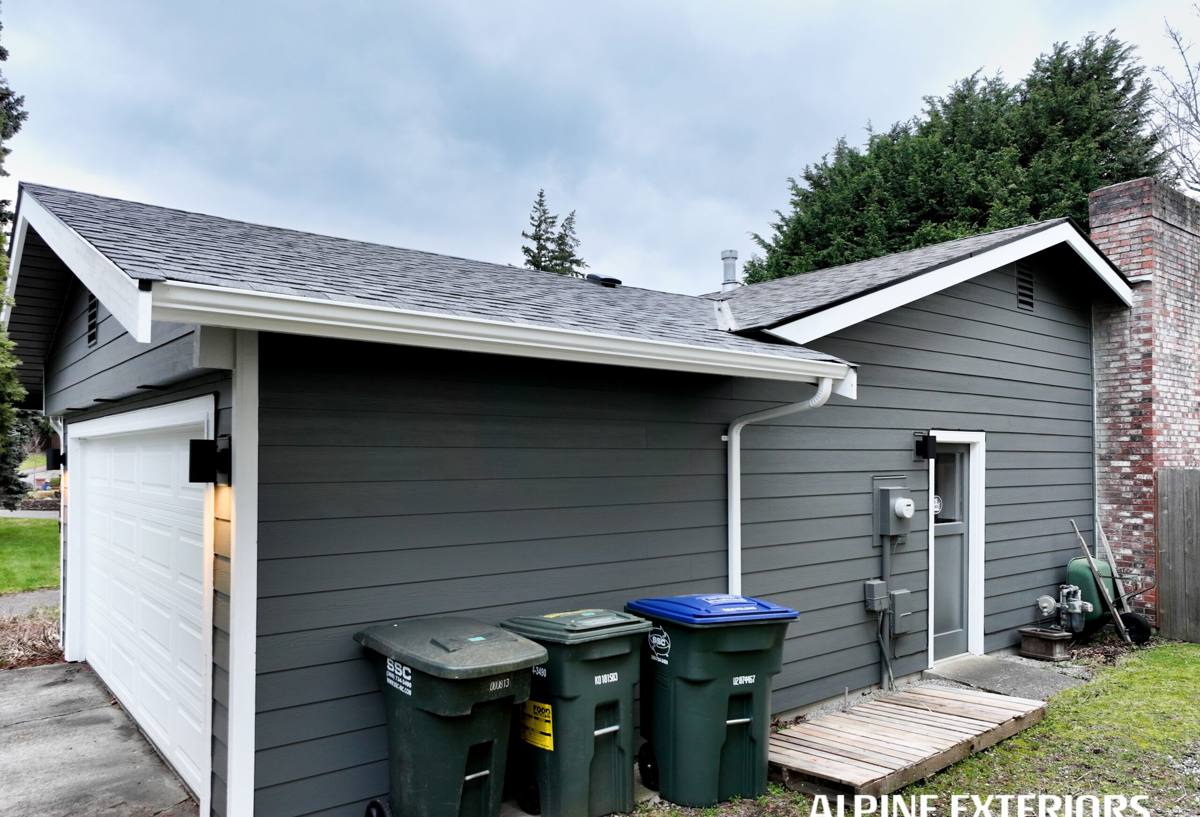
What Board & Batten Siding Actually Is
Board and batten is a vertical siding pattern: wide flat panels or boards run up the wall, and narrow strips called battens cover the seams between them. The result is a rhythm of raised vertical lines instead of the horizontal shadow lines you get with lap siding. It's traditionally associated with barns and farmhouses, which is part of why it reads so naturally on rural and semi-rural Whatcom County properties, but it's also become a popular accent for modern homes — often mixed with horizontal lap siding on gables, entries, or a single feature wall.
A Style With Deep Roots, Built Differently Today
Original board and batten construction used raw wood boards face-nailed to sheathing, with battens covering the gaps to keep weather out. That approach relied entirely on the wood staying stable and the battens staying tight, which is exactly why old board and batten buildings are notorious for cupping, splitting, and rot around the battens. Modern fiber cement versions solve the material problem — the panels don't expand and contract with humidity the way wood does — but the installation still has to respect the same basic physics: water finds the seams, and the seams have to be built to shed it, not just cover it.
Why Custer's Climate Is Tougher on Vertical Siding Than It Looks
Board and batten looks simple, but its vertical seams and exposed batten fasteners make it more climate-sensitive than standard horizontal lap siding. In Custer, three specific conditions matter most.
Salt Air and Fastener Corrosion
Custer's proximity to Semiahmoo Bay and the Strait of Georgia means the air carries a steady, low-level dose of salt, especially on west and south-facing walls that catch onshore weather. Salt air accelerates corrosion in anything less than corrosion-resistant fasteners and flashing. On board and batten, that matters more than on lap siding because battens are typically fastened through the panel below, meaning every batten nail is a potential point of failure if it starts to rust and lose its grip or streak the finish.
Driving Rain and the Seams Behind Every Batten
Wind-driven rain off Pacific storm systems doesn't just fall on a wall, it gets pushed sideways into it. Vertical siding creates a straight, uninterrupted path for water to run down every seam, so the joint behind each batten is under more sustained water pressure than a horizontal lap joint, which is designed to shed water downward and outward by nature of its overlap. If that seam isn't properly gapped, flashed, and backed, driving rain will eventually find its way behind the batten and into the wall assembly.
A Long Moss Season
Shaded, tree-lined lots and the long damp stretch of a Northwest Washington fall through spring give moss and algae plenty of time to establish, especially on north-facing walls and anywhere siding stays damp longer than it can dry. Moss holds moisture against the siding surface, and on any siding with exposed seams or fasteners, prolonged dampness is what eventually turns a cosmetic issue into a structural one.
Why We Only Install James Hardie for Board & Batten
We don't install board and batten in LP SmartSide, vinyl, primed spruce, or cedar. Each of those has a real place in the market, but none of them handle Custer's combination of salt air, driving rain, and moss season as predictably as James Hardie fiber cement. Wood-based panels like cedar and primed spruce move with moisture and are the most vulnerable to the rot and cupping that board and batten is historically known for. Vinyl board and batten profiles can work loose or warp under sustained wind-driven rain and temperature swings. James Hardie panels are non-combustible fiber cement engineered specifically for climates like this one — the HZ5 product line is formulated for the wetter, cooler weather patterns of the Pacific Northwest, and the factory-applied ColorPlus finish resists the fading and moisture absorption that raw or field-painted materials struggle with over time. It's not the cheapest option on paper, but it's the one we're willing to stand behind on a Custer home.
What a Correct Board & Batten Installation Involves
Board and batten is unforgiving of shortcuts specifically because its seams run vertically and its fasteners are more exposed than on lap siding. A correct install addresses three things every time.
Drainage Plane and Rain Screen Gap
Behind every panel there needs to be a proper weather-resistive barrier and, ideally, a rain screen gap that lets any water that does get past the surface drain and dry out instead of sitting against the sheathing. This matters more on vertical siding than horizontal, because a vertical seam gives water a straight, gravity-fed path downward if it gets behind the panel.
Flashing and Fastening
Every horizontal transition — window heads, water tables, the base of the wall — needs proper metal flashing, not just caulk. Battens need consistent fastening into structural framing, not just the panel, and in a salt-air environment like Custer's, that means corrosion-resistant fasteners, not standard galvanized ones that will eventually bleed rust streaks down the face of the siding.
Trim, Corners, and the Factory Finish
Board and batten lives or dies on clean, consistent reveal spacing and tight corner detailing — sloppy layout is much more visible on vertical lines than horizontal ones. Using Hardie's factory ColorPlus finish instead of field-applied paint also matters here: the factory finish is baked on and warrantied against fading and cracking, which holds up better through repeated wet-dry cycles than a job-site paint job.
Our Process for Custer Homes
We start with an on-site walkthrough of the home, not a phone estimate, because board and batten decisions depend on wall orientation, existing sheathing condition, and how exposed each elevation is to prevailing wind and rain. We check what's currently behind the existing siding where accessible, identify any trouble spots — areas with past moss buildup, staining, or soft trim — and build the scope around the drainage plane and flashing details first, panel selection second. During installation we sequence the work to keep the home weather-tight at every stage, since an open wall in the middle of a Whatcom County rain event is not a risk worth taking. We finish with a walkthrough of the completed work, including where the ColorPlus finish is warrantied and what routine maintenance looks like going forward.
Living With Board & Batten Siding in Custer
James Hardie board and batten is low-maintenance compared to wood, but "low-maintenance" doesn't mean "no maintenance" in this climate. A simple annual rinse-down, especially on shaded or north-facing walls, keeps moss and algae from getting a foothold before they need scrubbing. It's worth walking the exterior once a year to check caulking at trim joints and around penetrations like hose bibs and light fixtures, since sealant is the first line of defense against wind-driven rain finding a seam. Salt air also means it's worth a periodic look at any exposed metal flashing or fasteners for early signs of corrosion, particularly on walls facing the water.
What Board & Batten Siding Costs in Custer
Board and batten pricing depends on more than square footage. The table below covers the main factors that move the estimate up or down on a typical Custer project.
| Cost Factor | Why It Matters |
|---|---|
| Tear-off and wall prep | Removing old siding and repairing any water-damaged sheathing found underneath adds labor before a single new panel goes up. |
| Home height and access | Two-story walls, steep grades, and tight side yards common on rural Custer lots increase staging and labor time. |
| Reveal spacing and batten layout | Tighter batten spacing and precise reveal consistency take more layout time and material than a wider, more forgiving pattern. |
| Trim and corner detailing | Board and batten shows off clean corners and window trim more than lap siding does, so detailed trim work adds cost but also visual payoff. |
| Full board and batten vs. accent use | Many Custer homes use board and batten as a gable or entry accent paired with lap siding, which costs less than full-elevation coverage. |
Why a Crew That Already Works Custer Matters
Siding crews that mostly work drier inland regions or dense urban lots don't always build in the drainage and fastening margins this stretch of coastline actually needs. A crew that regularly works Custer and the surrounding Blaine area already knows which elevations catch the worst of the driving rain, which lots hold moss longest, and how much of a corrosion allowance the fastener schedule needs. Before hiring anyone for a board and batten project here, it's worth checking for a few specific things.
- Manufacturer training or certification specific to James Hardie installation, not general siding experience
- A written explanation of how they'll handle the rain screen gap and drainage plane, not just "we'll caulk it well"
- Corrosion-resistant fastener specs called out in the estimate, not left as an assumption
- A flashing plan for window heads, water tables, and any horizontal transitions on the wall
- Willingness to walk the exterior with you and point out the specific elevations that need the most attention
If a contractor can't answer those questions clearly before the job starts, that's worth noticing before they start.
If you're weighing board and batten siding for a home in Custer, we're glad to walk your exterior with you and put together a straightforward, no-pressure estimate — no obligation, just a clear look at what your walls actually need. The form below is the easiest way to get started.