 Blaine Siding
 Custer's Climate Asks More of Your Siding Than Most Places
Custer sits in a part of Whatcom County where three things work against a house's exterior at the same time: salt-laden air moving in off the water, long stretches of driving rain, and a moss season that can run most of the year in shaded and north-facing spots. Individually, any one of those is manageable. Together, they punish siding materials that aren't built to handle sustained moisture exposure combined with airborne salt and organic growth. We install James Hardie fiber cement siding exclusively, and homes in and around Custer are a good example of why that standard exists.
This page focuses on one thing: what a correct James Hardie siding installation looks like on a Custer home, why the product itself is suited to this specific stretch of coastline, and what our process involves from first look to final walkthrough.
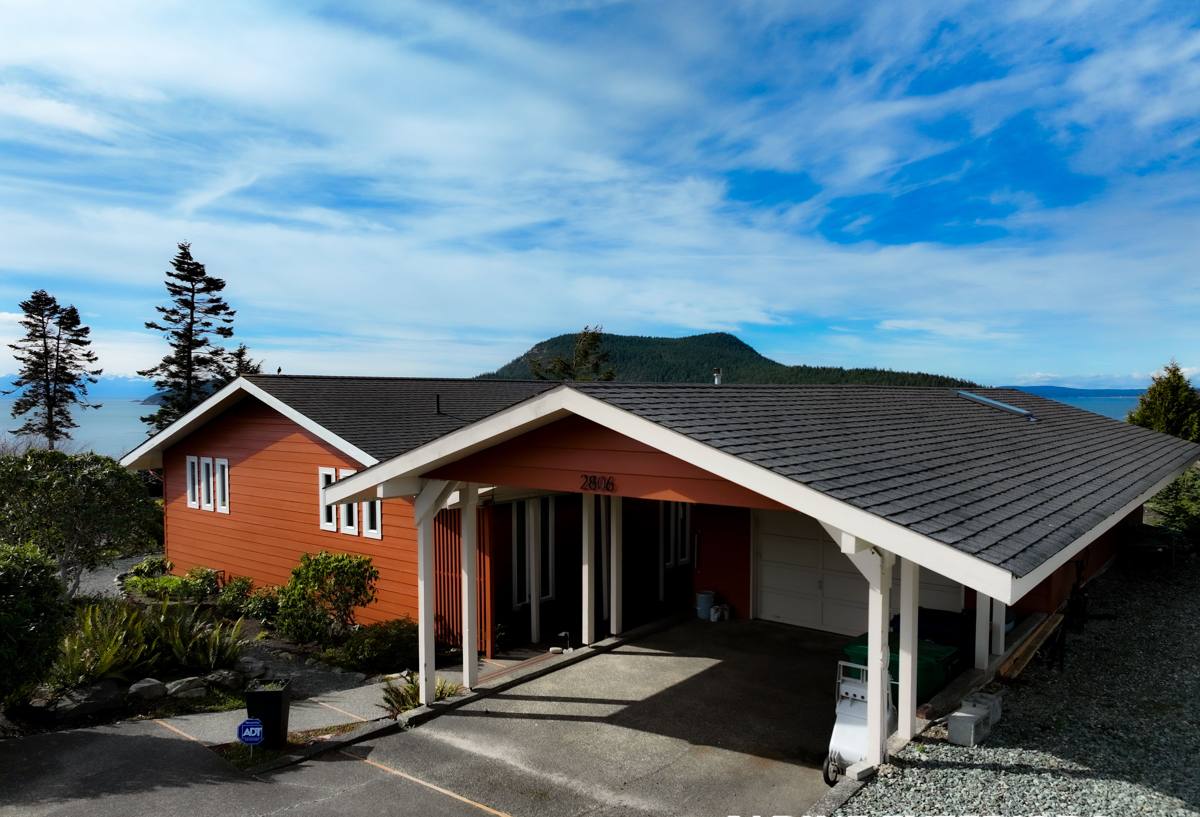
Salt Air and Driving Rain: What They Actually Do to Siding
Salt air doesn't just corrode metal fasteners and flashing over time — it also settles into porous or absorbent siding materials and holds moisture against the substrate longer than it would in a drier inland location. Combine that with wind-driven rain, which pushes water sideways into laps, seams, and butt joints instead of letting it simply run off, and you get a house exterior that's under near-constant low-grade moisture stress for much of the year.
Wood-based and wood-composite sidings are the most vulnerable here. They rely on paint or factory coatings to keep water out, and any breach — a nail pop, a hairline crack, a poorly caulked joint — gives moisture a path into material that will swell, soften, or rot once it's wet. Vinyl doesn't rot, but it flexes and gaps with temperature swings and coastal wind loads, which opens small channels for wind-driven rain to get behind the panel. James Hardie fiber cement is dimensionally stable and doesn't absorb water the way wood or wood-composite products do, which is exactly the property that matters most in a salt-air, high-rainfall environment like this one.
The Moss Season Problem
Whatcom County's wet season is long, and Custer's tree cover and proximity to water mean shaded walls and north- and west-facing elevations often stay damp for days after a storm passes. That's the environment moss and algae need to establish. On porous or textured siding surfaces, moss doesn't just sit on top — it can hold moisture against the material and, over years, contribute to surface breakdown, especially where paint has thinned or cracked.
James Hardie's factory-applied ColorPlus finish is baked on under controlled conditions and is denser and more uniform than a field-applied paint coat, which gives moss and algae less to grip and makes the surface easier to clean without stripping protective coating off in the process. No siding is moss-proof in this climate — anything can grow a film of algae in the right conditions — but the difference between a surface that sheds a gentle wash and one that needs repainting after cleaning is significant over a 15- or 20-year window.
What a Correct Installation Involves
James Hardie siding performs the way it's rated to perform only when it's installed to the manufacturer's specifications. Most of the "Hardie failures" homeowners hear about trace back to installation shortcuts, not the product itself. In a climate like Custer's, the margin for error is smaller because any gap in the installation gets tested by weather more often.
Clearance and Flashing
Correct installation keeps siding a set distance above grade, decks, patios, and roof lines, and uses proper flashing at every horizontal transition — window heads, door tops, roof-to-wall intersections, and butt joints. In a high-rainfall area, flashing details are what actually stop water intrusion; the siding itself is the visible layer, but flashing is what does the real work at vulnerable transitions.
Fastening and Joints
Hardie panels and planks need to be fastened per the manufacturer's nailing pattern, with the right fastener type for coastal exposure, and joints need to be treated correctly — whether that's a sealed butt joint, an H-molding, or a shadow-line overlap depending on the product. Over-driven or under-driven nails, wrong fastener spacing, and skipped caulking at joints are the most common defects we find when we're asked to look at another crew's work.
Weather-Resistive Barrier and Rainscreen
Behind the siding, a properly lapped weather-resistive barrier and, where conditions call for it, a rainscreen gap give any moisture that does get past the cladding a way to drain and dry instead of sitting against the sheathing. This detail matters more in wind-driven-rain areas than in drier climates, and it's easy for a crew unfamiliar with coastal installs to treat it as optional.
James Hardie Product Lines That Fit This Area
James Hardie engineers its HardieZone system for regional climate conditions, and homes in this part of Whatcom County fall into the HZ5 climate zone, which accounts for higher moisture exposure and freeze-thaw cycling compared to milder inland zones. That affects the formulation and specification of the boards we install here.
- HardiePlank lap siding — the most common choice for Custer homes; available in several width and texture options, gives a traditional horizontal-lap look with strong water-shedding geometry.
- HardiePanel vertical siding — often used for accent sections, gables, or a modern look, with fewer horizontal joints for water to work into.
- HardieShingle — for homes wanting a shingle-style look without the moisture vulnerability of actual wood shingles in a wet climate.
- HardieTrim — matched trim boards that resist the same moisture and insect issues as wood trim, used around windows, corners, and fascia.
All of these are available in ColorPlus factory finishes, which matters specifically for salt-air and moss-prone sites because the finish is more consistent and easier to keep clean than a field-applied coat over the long term.
How Hardie Compares for This Kind of Exposure
| Factor | James Hardie Fiber Cement | Wood / Engineered Wood | Vinyl |
|---|---|---|---|
| Moisture absorption | Very low | Moderate to high if coating fails | None, but panels flex and gap over time |
| Salt air resistance | Strong; non-organic material | Weak; organic material vulnerable to salt-driven moisture retention | Fair; UV and coastal wind can make panels brittle |
| Moss/algae surface | Dense factory finish, easier to clean | Porous, holds growth against coating | Smooth but can trap moisture behind panel |
| Fire resistance | Non-combustible | Combustible | Combustible, can melt/warp |
| Typical repaint interval | 15+ years (ColorPlus) | 5–8 years | N/A, but color fades and can't be easily refreshed |
Our Process for a Custer Siding Job
We keep the process straightforward because most homeowners just want to know what's going to happen and when.
- On-site assessment — we walk the exterior, check for existing moisture damage, look at flashing and grade clearance issues, and note any areas — shaded walls, low-clearance sections — that need particular attention given this site's exposure.
- Product and color selection — we go over plank, panel, and shingle options along with ColorPlus color choices, factoring in sun exposure and how the home sits relative to prevailing wind and rain direction.
- Prep and removal — old siding comes off, sheathing is inspected and repaired where needed, and the weather-resistive barrier and any required rainscreen components go in before a single piece of Hardie is hung.
- Installation to spec — correct fastening, flashing at every transition, proper clearances, and sealed joints, following James Hardie's published installation requirements for our climate zone.
- Final walkthrough — we go over the finished work with you, including care and cleaning guidance specific to a salt-air, high-moss-pressure site.
Cost Factors for a Custer Home
Every home is different, but the same handful of factors drive most of the cost variation we see on siding jobs in this area.
| Factor | Why It Matters Here |
|---|---|
| Home size and wall complexity | More corners, gables, and dormers mean more cutting, flashing, and labor time |
| Existing siding removal and sheathing condition | Salt air and long moisture exposure can mean hidden sheathing repair once old siding comes off |
| Product selection | Plank, panel, and shingle profiles carry different material and labor costs |
| Trim and accent work | Matched HardieTrim around windows, corners, and fascia adds material and detail labor |
| Access and site conditions | Tree cover, slope, and setback affect scaffolding and staging time |
We give a written, itemized estimate after the on-site assessment rather than a ballpark over the phone — siding pricing depends too much on the specifics of your walls to guess accurately from a description.
Keeping Hardie Siding Performing in This Climate
- Rinse shaded and north-facing walls periodically to keep moss and algae from establishing a foothold.
- Keep gutters clear so overflow isn't running down siding faces during heavy rain.
- Keep landscaping and tree limbs trimmed back from walls to reduce shade and improve airflow along siding.
- Inspect caulking at trim and joint lines every couple of years; recaulk before gaps let water behind the siding.
- Check that grade, mulch, or hardscaping hasn't crept up to reduce the siding's clearance above ground over time.
Why a Crew That Already Works This Area Matters
Installation specs don't change from town to town, but judgment calls do — how much clearance to build in on a low spot, where a rainscreen gap earns its keep versus where it's unnecessary, which joints need extra attention given a wall's sun and wind exposure. A crew that's worked houses in Custer and around Blaine has already made those calls on homes facing the same salt air, the same driving rain, and the same moss pressure yours does. That experience shows up in fewer callbacks and siding that's still doing its job cleanly a decade or two down the road.
If you're planning a siding project on a Custer home, we're happy to come take a look and walk the exterior with you. The estimate is free, there's no pressure, and you'll leave the conversation with a clear, written picture of what your home needs and what it will cost.