 Blaine Siding
 Custer Roofs Take a Different Kind of Beating
Custer sits close enough to the water that salt air is part of daily life, and close enough to the tree line that shade and moisture never really let up. That combination is hard on a roof in ways that don't show up overnight. Salt-laden air speeds up corrosion on exposed metal fasteners and flashing. Driving rain off winter storms finds its way into laps and seams that would stay dry in a calmer climate. And a long moss season, stretching from fall through spring in the shaded, moisture-heavy pockets around Custer, works roofing material apart at a pace most homeowners underestimate.
None of that means every storm event causes damage. But when a windstorm rolls through Whatcom County, or a heavy rain system sits over the area for a few days, it's often the roof that takes the first hit and shows the last symptoms — a stain on a ceiling weeks later, a soft spot underfoot, a shingle that finally lets go during the next blow. Storm damage repair in Custer isn't just about patching what broke. It's about understanding what this specific stretch of coastline and tree cover does to a roof over time, and repairing it so the next storm doesn't find the same weak point.
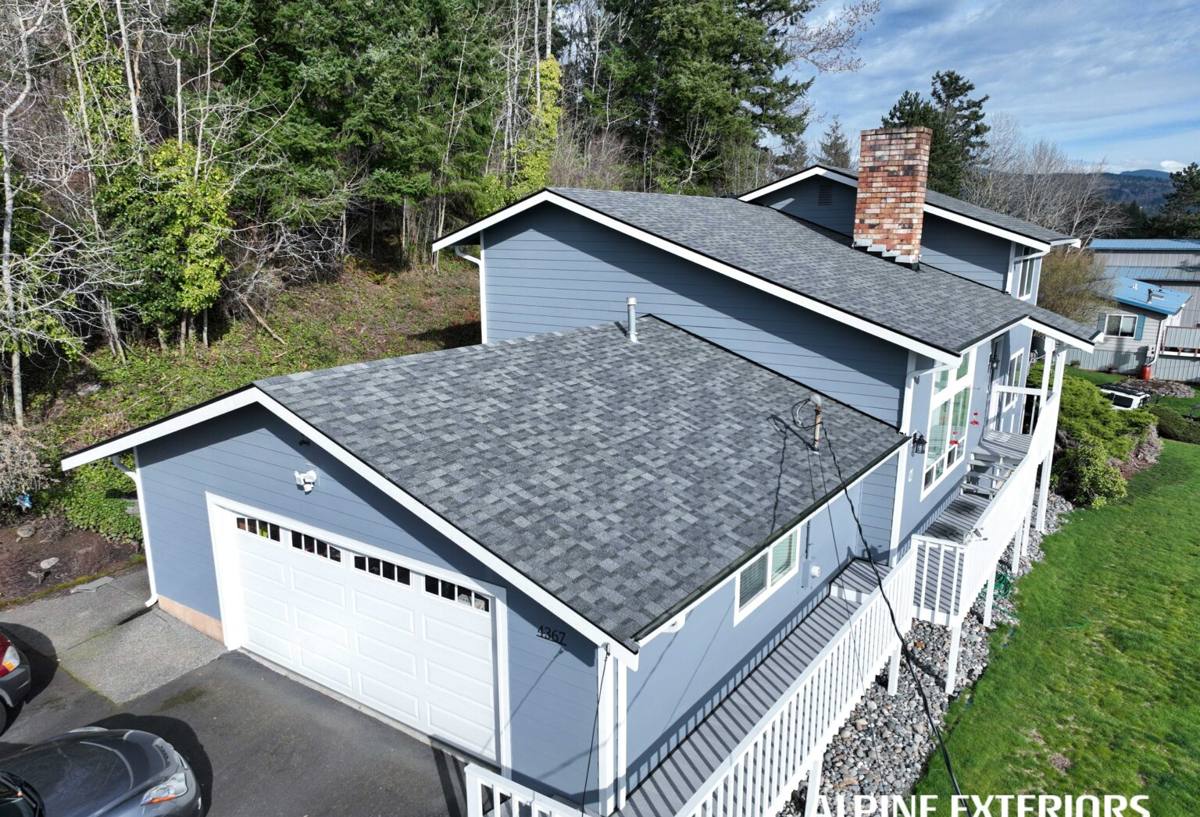
What Actually Causes Storm Damage Here
Wind
Whatcom County gets its share of strong wind events, including outflow winds that funnel down from the Fraser Valley in the colder months. Wind damage to a roof is rarely just "a shingle blew off." More often, wind lifts an edge, breaks the seal, and lets water start working underneath even if the shingle itself stays in place. That's the damage that's easy to miss from the ground.
Driving Rain
Rain that comes in sideways behaves differently than rain that falls straight down. It gets pushed under shingle laps, around flashing, and into any gap that wouldn't normally be a problem. A roof that's held up fine for years can still develop a leak the first time it takes rain from an unusual angle during a strong storm.
Moss and Trapped Moisture
Custer's mix of tree cover and coastal humidity means moss isn't a once-in-a-while nuisance — it's a recurring seasonal fact. Moss holds moisture against the roofing material long after the rain stops, and its root structure works into shingle granules and seams. Left alone through a full moss season, it can turn what would have been a simple maintenance issue into an actual repair.
Debris and Impact
Windstorms bring down branches, and sometimes whole limbs, from the mature trees common around Custer properties. Impact damage can crack shingles, dent metal roofing, or crush underlayment in a way that's not always visible from the ground but compromises the roof's ability to shed water.
Signs Your Roof May Have Storm Damage
Some damage is obvious. Most isn't. After a significant wind or rain event, it's worth checking for:
- Shingles that look lifted, curled, or out of alignment with the row around them
- Granules collecting in gutters or at the base of downspouts
- New or spreading water stains on ceilings or in the attic
- Soft or spongy spots when walking the roof (should only be checked by a professional)
- Dented, creased, or displaced metal flashing around chimneys, vents, or skylights
- Visible daylight through the roof deck when viewed from inside the attic
- Moss buildup that's thickened noticeably since the last check
- Debris, branches, or granule buildup in valleys where water concentrates
If you notice any of these after a storm, the priority is getting a professional look before the next rain event, not after.
What a Correct Storm Damage Repair Involves
A repair that only addresses the visible symptom tends to fail again in the next storm. A correct repair starts with figuring out how water is actually moving, not just where it's showing up.
Full Inspection, Not a Spot Check
We look at the whole roof plane, not just the area near the reported leak. Water often travels along the underlayment or decking before it shows up somewhere else entirely, so the visible stain and the actual entry point are frequently in different spots.
Underlayment and Decking Check
If water has been getting in for any length of time, the underlayment and the decking underneath it need to be checked for saturation or rot. Replacing shingles over compromised decking doesn't solve anything — it just hides the problem for another season.
Flashing and Seam Repair
Flashing around chimneys, vents, skylights, and roof-to-wall transitions is one of the most common failure points after wind and driving rain. Salt air accelerates corrosion on lower-grade fasteners and flashing metal, so we check these areas closely on any Custer roof, storm-damaged or not.
Matching Materials
Where a section of roofing needs to be replaced rather than patched, we match the existing material as closely as possible so the repair blends in and performs consistently with the surrounding roof, rather than creating a new weak seam where old and new material meet.
Our Process, Start to Finish
- Contact and initial questions. We ask what you're seeing and when it started, which helps us prioritize the inspection.
- On-site inspection. We physically check the roof, attic, and any interior areas showing signs of water intrusion.
- Written assessment. You get a clear explanation of what we found, what's actually causing it, and what repair options make sense — no pressure toward the most expensive fix if a targeted repair will hold.
- Repair. Work is scheduled and completed with attention to matching materials and sealing the actual point of failure, not just the visible symptom.
- Follow-up. We check our own work after the next significant rain where possible, especially on repairs made during active storm season.
Repair or Replace? What Actually Determines It
Not every storm-damaged roof needs full replacement, and not every roof that "just needs a patch" should get one. The right call depends on a few honest factors.
| Factor | Repair Usually Makes Sense | Replacement Should Be Considered |
|---|---|---|
| Roof age | Well within its expected service life | Already near or past the end of its typical lifespan |
| Extent of damage | Isolated to one section or a few points of failure | Spread across multiple roof planes or recurring in several spots |
| Decking condition | Solid, dry, no soft spots | Soft, rotted, or saturated in multiple areas |
| Prior repair history | First significant issue in years | Repeated patch jobs on the same roof over recent seasons |
| Moss and moisture damage | Surface-level, recently addressed | Long-term, with granule loss or shingle breakdown underneath |
We'll tell you honestly which category your roof falls into. A targeted, correctly done repair on a sound roof can add years of service. Patching a roof that's already compromised in multiple places usually just delays a bigger expense.
Insurance and Storm Claims
Many storm damage repairs in this area do go through homeowner's insurance, particularly after a documented wind event. We can provide a written inspection report and photos that describe the damage and its likely cause, which your insurer or adjuster can use as part of a claim. We don't handle the claim itself or make promises about coverage — that's between you and your insurance company — but we make sure the documentation reflects what's actually there so the process isn't slowed down by vague or incomplete information.
Materials That Hold Up in a Custer Climate
Given the salt air and moss exposure here, we favor fasteners, flashing, and underlayment rated for coastal and high-moisture conditions rather than the minimum required by code. It costs a little more up front but reduces the odds of a repeat repair on the same section a few years later. On shingle roofing, we pay particular attention to sealing at laps and valleys, since that's where wind-driven rain and standing moisture from moss tend to cause the most trouble in this specific climate.
Why It Matters That We Already Work in Custer
A roofing crew that only sees your property once, for one job, is working from a generic checklist. A crew that already works Custer and the surrounding Blaine area regularly has a working sense of which storm patterns cause which kind of damage locally, which roof orientations catch the worst of the driving rain, and how fast moss actually comes back on shaded roof sections in this particular microclimate. That local pattern recognition shows up in faster, more accurate diagnosis — we're not guessing at what a Whatcom County storm does to a roof, we're checking against what we've already seen it do.
If your roof took a hit in a recent storm, or you're not sure whether what you're seeing is cosmetic or structural, we're happy to come take an honest look. The estimate is free, there's no pressure attached to it, and you'll get a straight answer about what's actually going on. Use the form below to get started.