 Blaine Siding
 Custom Windows for Peace Arch-Area Homes
The Peace Arch area sits right at the edge of Blaine, close enough to the water and the border that its homes take a different kind of weather beating than houses even a few miles inland. Salt-laden air off the Strait of Georgia, wind-driven rain that comes in sideways more often than straight down, and a long gray stretch of the year where moss and algae get a real foothold on anything that stays damp — all of it works on window frames, sills, and seals year-round. Standard off-the-shelf windows, especially ones installed to fit a rough opening rather than built for it, tend to show that wear early: swollen sashes, chalky vinyl, corroded hardware, and seals that give out well before their rated life.
Custom windows solve a different problem than most homeowners expect. It's not just about style — it's about getting a window built to the exact dimensions of your opening, in a material and glazing package suited to this specific stretch of Whatcom County, installed with flashing and sealing details that actually hold up to what this coastline throws at a house.
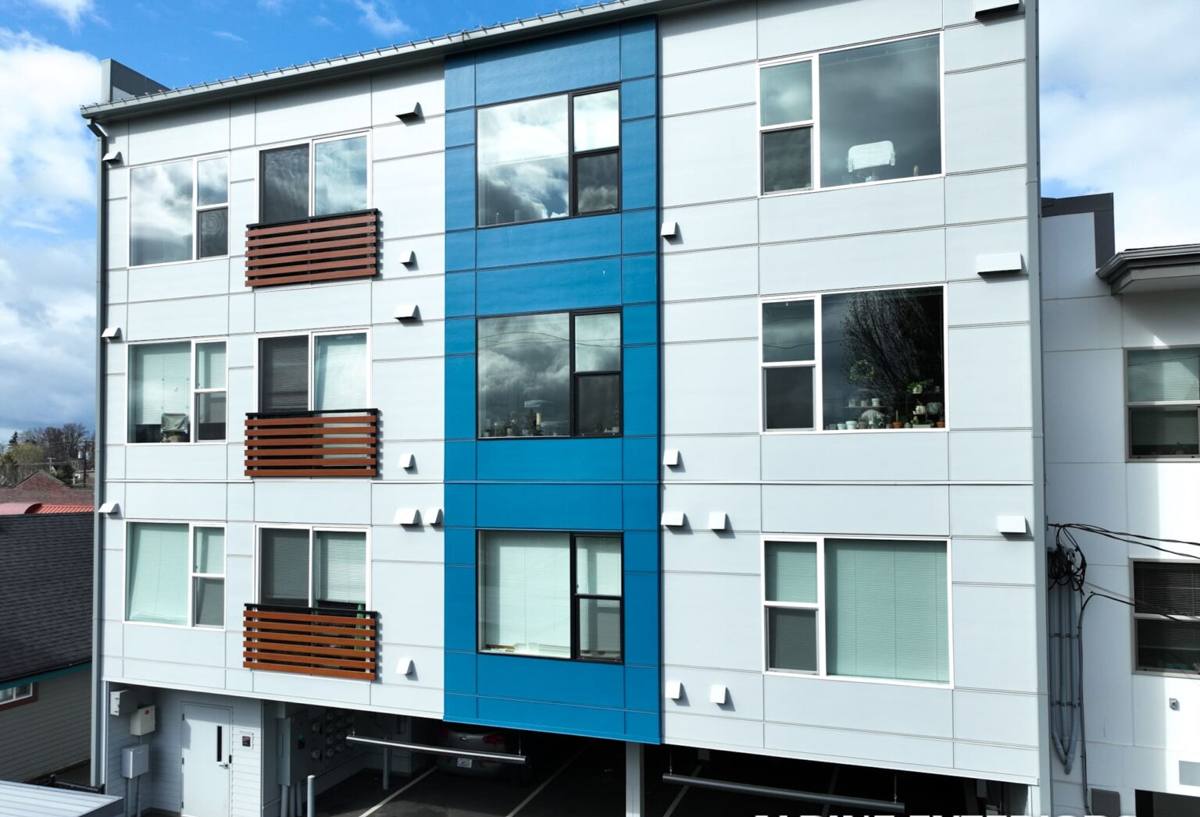
What Blaine's Climate Does to Windows Over Time
Every coastal contractor in this part of Washington sees the same failure patterns, and Peace Arch homes are no exception:
Salt Air
Airborne salt accelerates corrosion on window hardware — hinges, cranks, balance systems, and screws — faster than it does a few miles inland. It also degrades cheaper vinyl and low-grade coatings, leading to chalking, discoloration, and brittleness sooner than the manufacturer's warranty timeline would suggest.
Driving Rain
Wind off the water doesn't just fall on a window, it pushes into it. That means the flashing, sill pan, and sealant detail around a window matter as much as the window unit itself. A well-built window installed with lazy flashing will still leak. A modest window installed correctly usually won't.
Moss and Persistent Moisture
Long stretches of overcast, damp weather keep exterior surfaces wet longer than in drier climates. Wood sills and trim that aren't properly sealed or that sit in constant shade develop moss, algae, and eventually soft spots. Once moisture gets behind a window's exterior trim, rot can spread into the framing before it's visible from inside the house.
What "Custom" Actually Means for This Job
"Custom" isn't a marketing word here — it describes a measuring and manufacturing approach, not a price tier. Most older Peace Arch homes, especially anything built before standardized window sizing became common, have openings that don't match modern stock dimensions. Custom windows are built to your actual rough opening, which matters for two practical reasons:
- A properly sized custom unit needs less shimming and filler material, which means fewer gaps for air and water to exploit later.
- It preserves your existing trim and siding lines instead of forcing a resize of the opening, which keeps the exterior weather barrier intact.
Custom also covers non-standard shapes and configurations — bays, picture windows paired with operable units, or openings where a previous remodel left an irregular size. If your home has any of these, custom manufacturing is usually the only way to get a proper fit without expensive framing changes.
Choosing Materials and Glazing for This Area
Material choice matters more here than in a dry inland climate. We steer homeowners toward options that hold up to salt exposure and constant moisture without high upkeep, and we're upfront about the trade-offs of each.
| Material | How It Handles Salt Air & Rain | Maintenance | Typical Trade-Off |
|---|---|---|---|
| Vinyl (quality-grade) | Good — won't corrode or rot; UV-stable grades resist chalking | Low | Frame profiles are thicker than fiberglass or wood |
| Fiberglass | Very good — dimensionally stable, resists moisture and salt corrosion | Low | Higher upfront cost than vinyl |
| Wood-clad | Fair — cladding protects the exterior, but any breach exposes wood to rot | Moderate to high | Best interior look, but sensitive to installation quality |
| Aluminum | Poor without thermal breaks — conducts cold and can corrode near salt air | Low | We generally don't recommend it for this location |
For most Peace Arch homes we recommend vinyl or fiberglass with a marine-appropriate hardware finish and a glazing package with a good moisture-resistant spacer system — the small aluminum-alternative strip between panes that keeps condensation and fogging from developing at the seal over time. Wood-clad windows still have a place, especially on homes where interior wood trim is part of the look, but we're honest that they demand more attention to the exterior seal and more upkeep long-term than vinyl or fiberglass.
What a Correct Installation Involves
The window unit itself is maybe half the job. The other half is the installation detailing that keeps wind-driven rain out for the next twenty-plus years. On a coastal job like this, we don't skip steps that don't show once the trim goes back on.
- Remove the old unit and inspect the framing and sill for hidden rot or moisture damage before anything new goes in
- Install a proper sill pan flashing to direct any water that gets past the window back outside, not into the wall
- Use flashing tape and house-wrap integration at the head, jambs, and sill in the correct shingle-lap order so water sheds downward and outward
- Set the window level, plumb, and square with appropriate shimming — not just wedged into the opening
- Seal the interior air barrier separately from the exterior water barrier — these are different jobs and mixing them up causes trapped moisture
- Finish exterior trim and caulking with a marine-grade sealant rated for constant moisture and UV exposure
- Test operation and seal on every unit before calling the job complete
Skipping any one of these doesn't usually cause an immediate problem — it shows up as a soft spot in the sill two or three winters later, which is a much more expensive fix than doing the flashing right the first time.
Our Process for Peace Arch Jobs
1. On-Site Assessment
We look at your existing windows and the condition of the framing around them, not just the glass. If there's already moisture damage, we tell you before we quote anything — that's a separate conversation from window replacement.
2. Precise Measurement
Every opening gets measured individually. On older Peace Arch homes it's common to find openings that vary slightly from one window to the next, even on the same wall.
3. Manufacturing
Units are built to those measurements in the material and glazing package we've agreed on, sized for a proper fit rather than a forced one.
4. Installation
Full flashing and sealing detail as outlined above, done by the same crew that measured the job — not handed off to a different install team unfamiliar with your specific openings.
5. Walkthrough
We check operation, seal, and finish work with you before considering the job done.
What Custom Windows Typically Cost
Pricing depends heavily on size, material, glazing package, and how much flashing and trim work each opening needs — a straightforward swap costs less than a job where we're also repairing rotted framing. Broadly, here's how the main cost drivers break down:
| Cost Factor | Impact |
|---|---|
| Material (vinyl vs. fiberglass vs. wood-clad) | Largest single factor in per-unit price |
| Window size and configuration (single unit vs. bay or combination) | Larger and multi-unit configurations cost more per opening |
| Glazing package (standard vs. upgraded moisture-resistant spacer, coatings) | Moderate increase, but pays off in condensation and seal longevity here |
| Condition of existing framing | Hidden rot repair adds cost but is essential to do right the first time |
| Number of openings done in one visit | Doing several windows together reduces per-unit labor cost |
We'll always give you a written, itemized quote before starting, so you know exactly what you're paying for material versus labor versus any framing repair.
Why a Crew That Already Works Peace Arch Matters
Window installation quality is hard for a homeowner to judge until years later, which is exactly why the installer's experience with your specific location matters. A crew that regularly works Blaine's Peace Arch area already knows which exposures take the worst of the wind-driven rain, which older homes in the neighborhood tend to have non-standard openings, and how much flashing detail is genuinely necessary versus overkill. That's the difference between a contractor reading a manufacturer's install manual for the first time and one who's seen how these specific conditions play out on real houses nearby, across real winters.
It also means faster, more accurate quotes — we're not guessing at how Whatcom County's coastal exposure affects your particular home, we're applying what we already know works here.
If you're weighing whether it's time to replace windows on a Peace Arch-area home, we're happy to take a look and give you an honest, no-pressure assessment. Use the form below to request a free estimate — no obligation, and no pressure to decide on the spot.